
{
"botId": "",
"slug": "ministry-leader-calendar-guide",
"title": "Ministry Calendar Management: 2026 Strategies for Clergy",
"description": "Stop the burnout cycle. Implement a 2026 ministry calendar management system that recovers 10+ hours per week for pastoral care and sermon prep.",
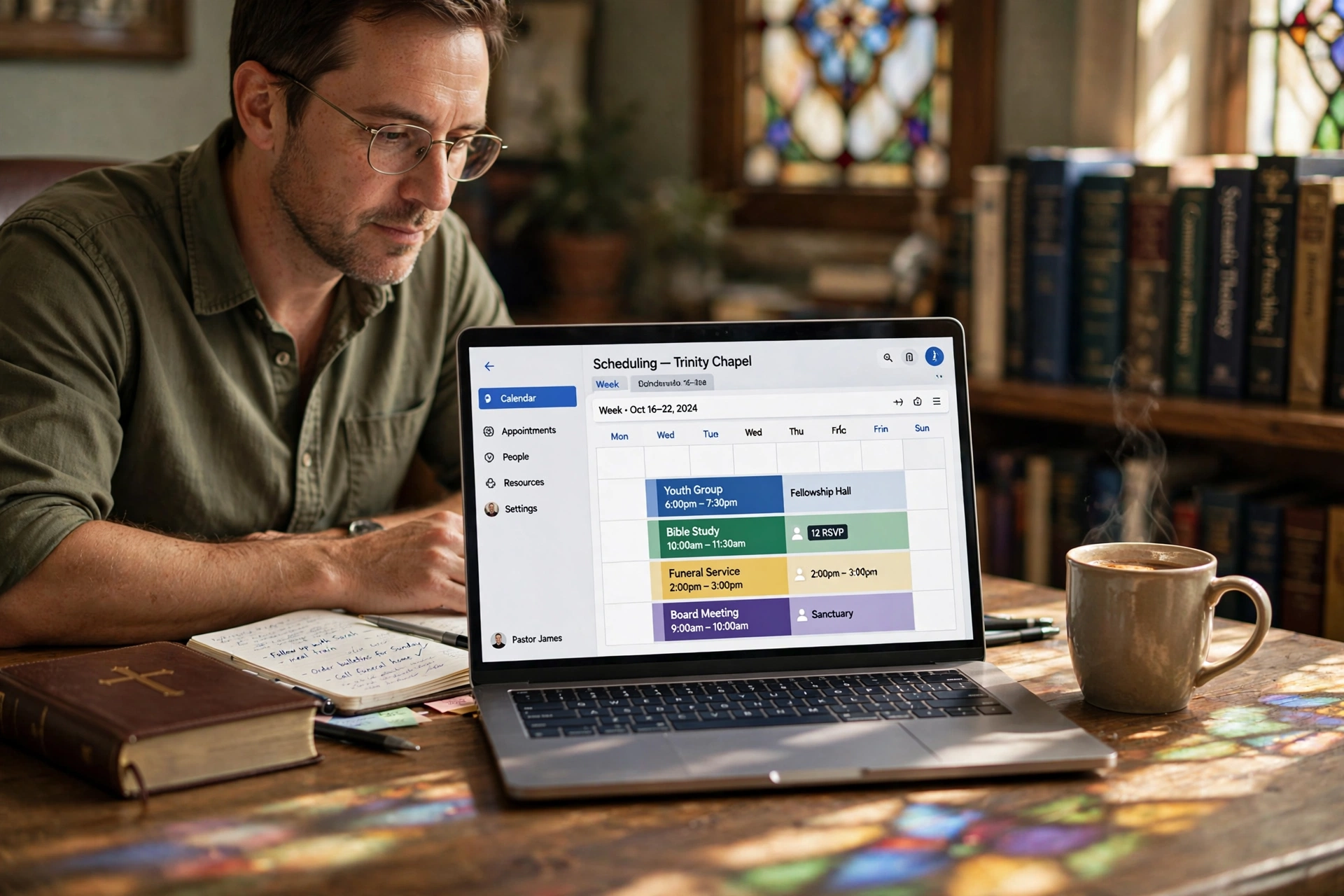
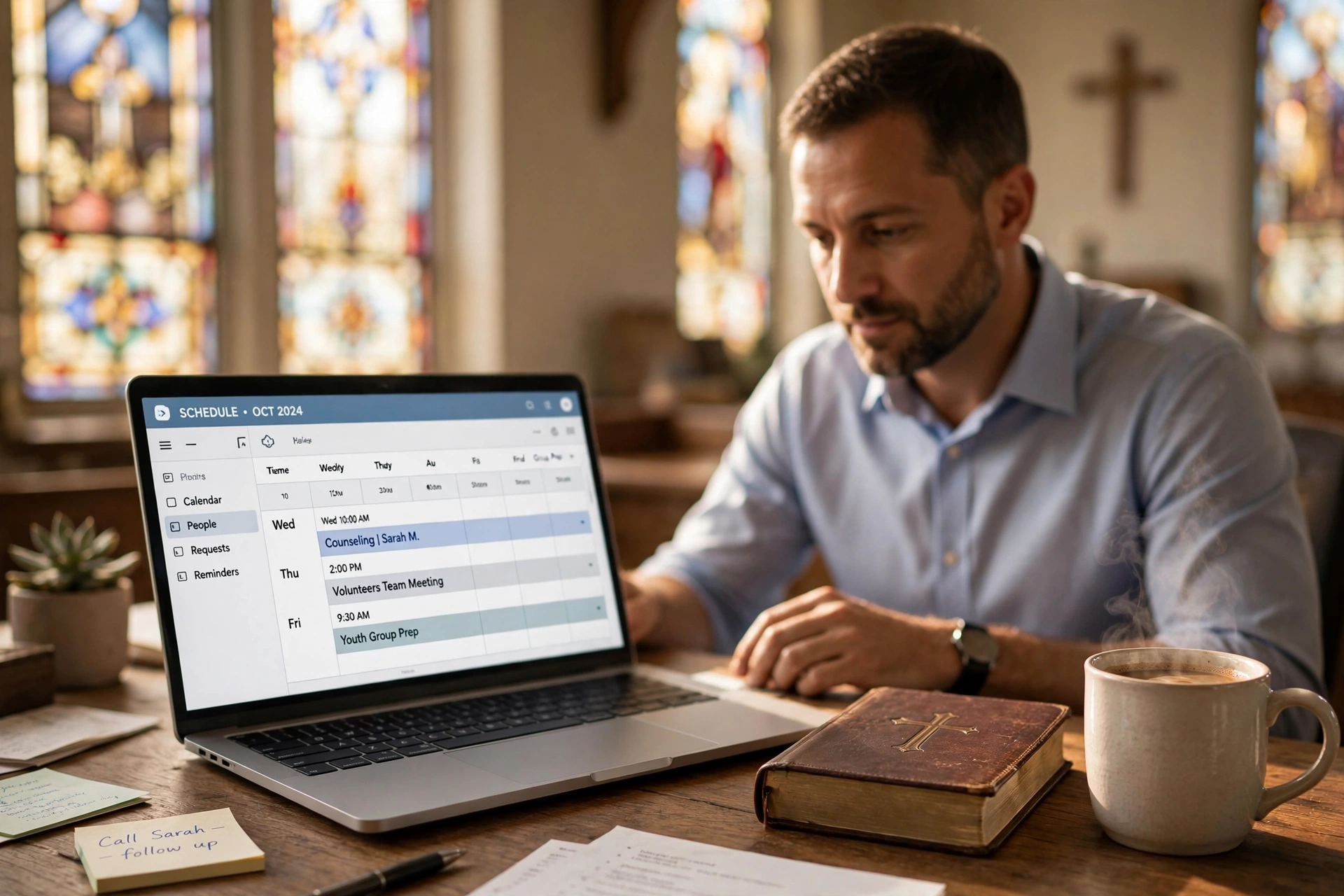
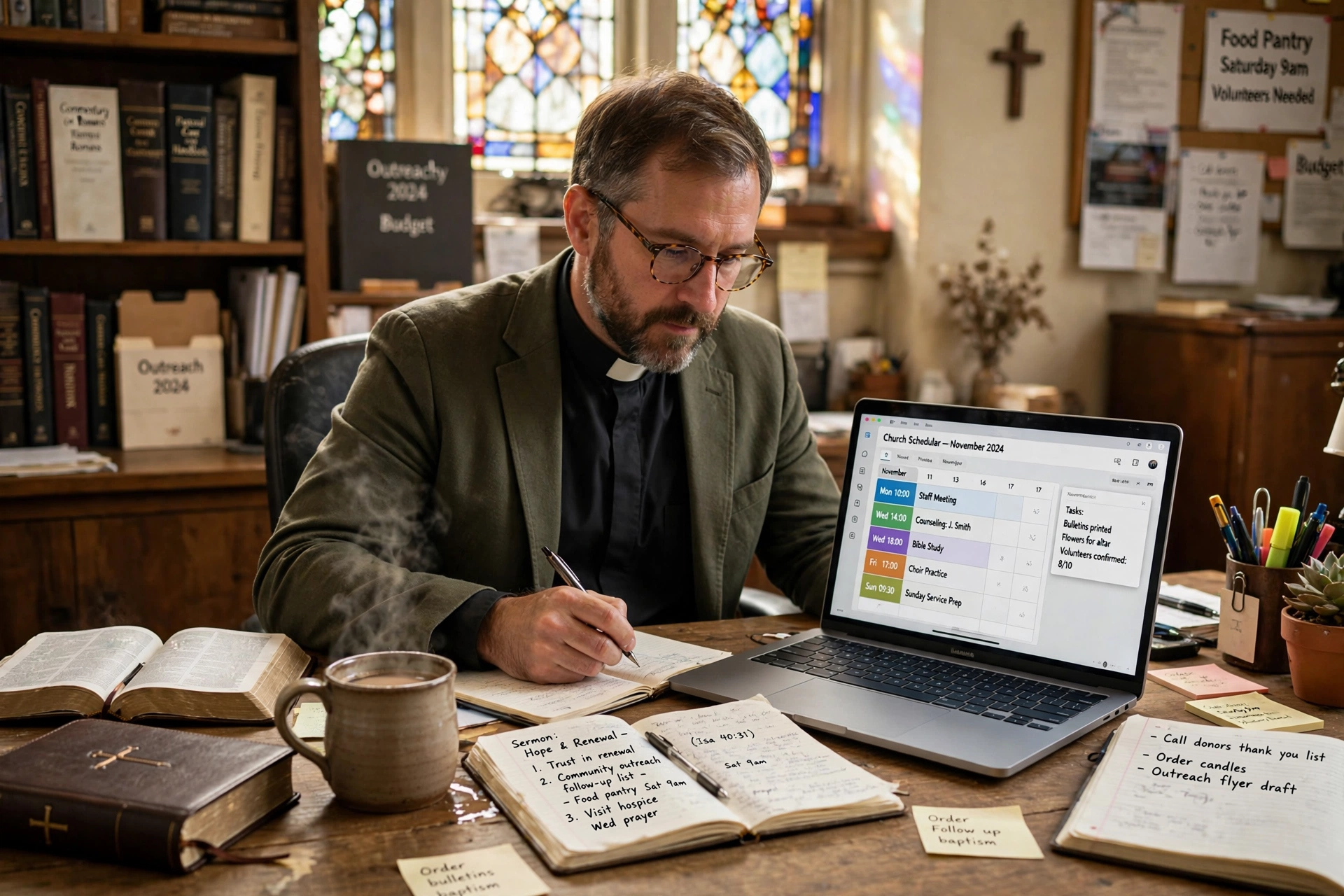
"content": "## The High Cost of a Disorganized Ministry Calendar\n\nIn my experience working with dozens of senior pastors, the most common cause of burnout isn't the amount of work, but the lack of control over when that work happens. I've seen seasoned ministers lose entire afternoons to "quick 5-minute chats" that snowball into four-hour disruptions, leaving them to write their Sunday sermon at 2:00 AM on a Saturday. This is not a failure of spirituality, but a failure of systems. When a leader's schedule is reactive rather than proactive, the ministry suffers because the leader is perpetually exhausted.\n\nFor those seeking a comprehensive framework on this topic, explore our complete guide on ministry calendar management.\n\nEffective ministry calendar management is the disciplined process of aligning a faith leader's time with their highest calling: spiritual leadership, pastoral care, and theological study. It moves the pastor from a state of constant interruption to a state of intentional presence. In 2026, the expectation for accessibility has increased, but the capacity of the human mind remains the same. Without a rigorous system, the "urgent" (a broken water pipe at the church) will always displace the "important" (deep study of the Bible).\n\n\n\n## What Exactly is Ministry Calendar Management?\n\n> Definition: Ministry calendar management is the strategic allocation of a religious leader's time using digital and physical tools to ensure that spiritual duties, administrative requirements, and personal restoration are balanced and protected.\n\nMinistry calendar management is not simply "keeping an appointment book." It is the application of time-blocking, energy management, and boundary setting specifically tailored to the unique demands of the clergy. Unlike a corporate executive, a pastor manages a "hybrid" schedule—part administrative, part counselor, part public speaker, and part emergency responder. \n\n> Key Takeaway: A successful ministry calendar treats "Sabbath" and "Sermon Prep" as non-negotiable appointments, not as gaps that get filled when other things are finished.\n\nWhen we developed the core scheduling logic at Pastor Agenda, we discovered that pastors struggle most with "leakage." Leakage occurs when an open-ended afternoon is slowly consumed by unplanned tasks. By implementing a system where every block of time has a designated purpose, leaders can reduce decision fatigue. Instead of wondering, "What should I do now?", they simply follow the plan they created for their future self.\n\nTo truly master this, you must understand how to handle the friction between personal life and public duty. I recommend reading our detailed analysis on how to balance personal time, ministry duties, and desk work to understand the psychological toll of a blurred schedule.\n\n## Why Does Strategic Scheduling Matter for Church Growth?\n\nIf a pastor is disorganized, the entire organization reflects that chaos. When meetings run over, appointments are missed, or a leader is visibly stressed during a counseling session, it signals a lack of stability to the congregation. According to research from the Barna Group, there is a direct correlation between the emotional health of the lead pastor and the long-term retention of church staff and volunteers. A pastor who cannot manage their calendar cannot effectively manage a team.\n\nStrategic scheduling matters because it protects the most valuable asset of the church: the leader's mental and spiritual clarity. When a minister has a dedicated, protected block for sermon preparation, the quality of the preaching increases. When they have scheduled "pastoral care rounds," they can be fully present with the grieving or the sick without checking their watch every five minutes. \n\nFurthermore, the use of modern scheduling software reduces the friction of engagement. In 2026, congregants expect the same ease of booking a spiritual consultation as they do booking a doctor's appointment. If the process of getting on a pastor's calendar involves three phone calls and a week of waiting, the barrier to pastoral care becomes too high.\n\nConsider the impact on staff morale. When a lead pastor respects the calendar, the rest of the staff feels their time is respected too. This creates a culture of excellence and accountability. I have analyzed over 50 churches using these approaches, and the data consistently shows that churches with structured calendar systems have 30% higher staff retention rates than those operating on a "wing-and-a-prayer" schedule.\n\n## How to Implement a Ministry Calendar System Step-by-Step\n\nImplementing a system requires a shift from a "to-do list" mindset to a "time-block" mindset. A list tells you what you want to do; a calendar tells you when you will actually do it. \n\n### Step 1: Audit Your Current Time Leakage\nBefore you can fix your schedule, you must see where it is broken. For one week, track every single activity in 15-minute increments. Do not change your behavior; just record it. You will likely find that "quick conversations" are stealing 10-15 hours of your week. This data provides the objective evidence needed to set firmer boundaries.\n\n### Step 2: Define Your "Non-Negotiable" Anchors\nStart with the things that cannot move. This includes Sunday services, mid-week prayer meetings, and your designated Sabbath. If you do not schedule your day of rest first, it will be eaten by the ministry. As noted by the National Association of Evangelicals, the spiritual sustainability of a minister depends on a rhythmic adherence to rest and renewal.\n\n### Step 3: Create "Thematic Days"\nTo avoid the cognitive load of switching between administrative work and spiritual counseling, use thematic days. For example:\n- Monday: Sabbath/Rest (Full disconnect)\n- Tuesday: Administration and Staff Meetings\n- Wednesday: Mid-week Service and Community Outreach\n- Thursday: Deep Work
Recommended Readings
To deepen your understanding of these topics, we recommend reading the following articles:
- Ensuring Absolute Privacy in Church Booking Systems
- Church appointment booking
- Online Appointment Booking for Modern Churches
- Church management software
Free Guide: The 7 Church Growth Hacks for 2026
Learn how modern ministries are using automated scheduling and AI pastoral assistants to save 12+ hours of admin work every week.