
The Invisible Burden of Pastoral Trust
I remember a conversation with a senior pastor in 2026 who was devastated to find that a well-meaning church secretary had accidentally shared a calendar view that listed the names of individuals seeking counseling for marital crisis and addiction. The breach wasn't malicious, but the damage to the trust within that congregation was instantaneous. In the realm of ministry, privacy isn't just a legal checkbox; it is a spiritual imperative. When a member of a congregation reaches out for pastoral care, they are often at their most vulnerable, offering a level of trust that must be guarded with professional-grade security.
For a comprehensive overview, explore our guide on church booking system privacy to understand how to build a sustainable digital infrastructure for your ministry.
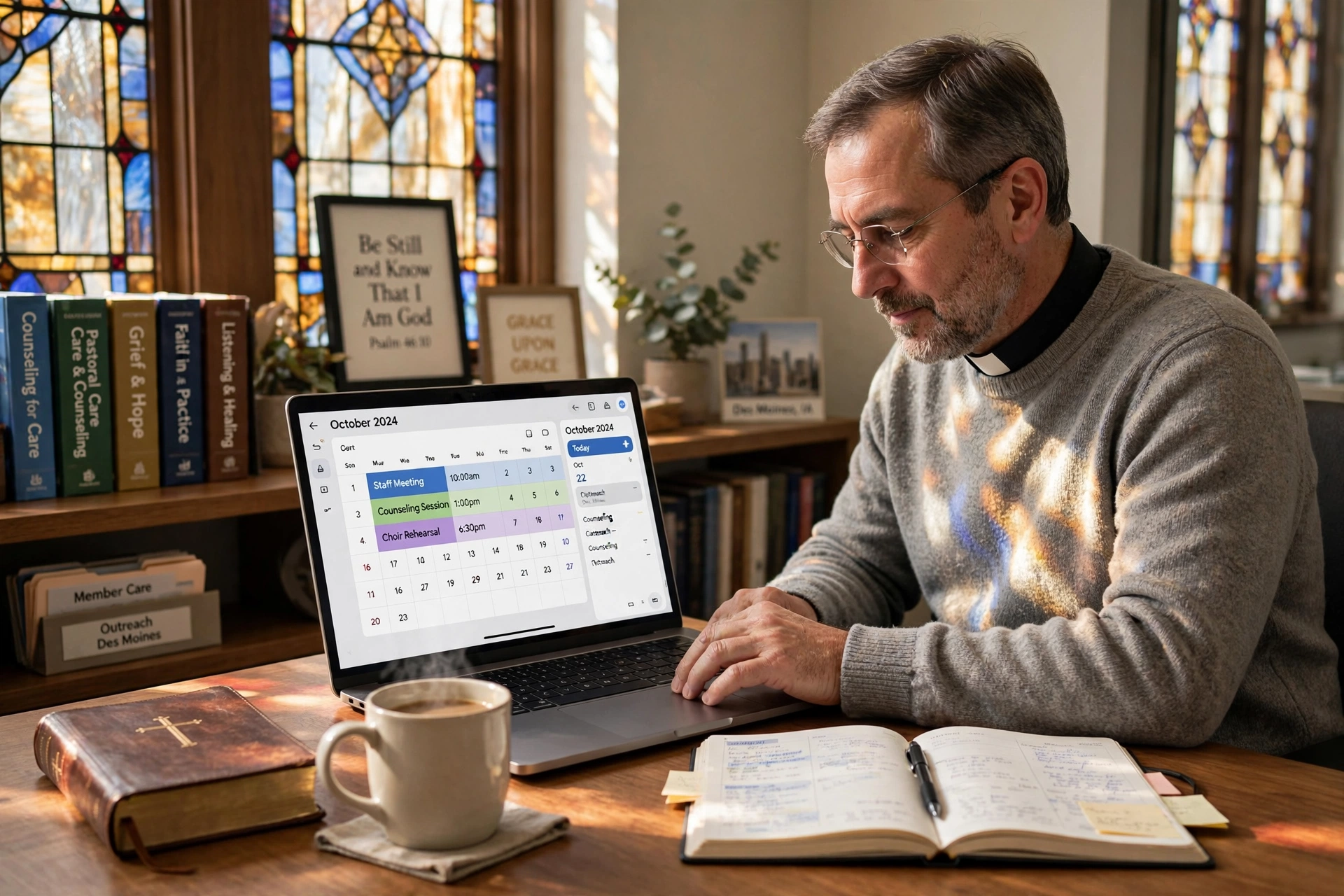
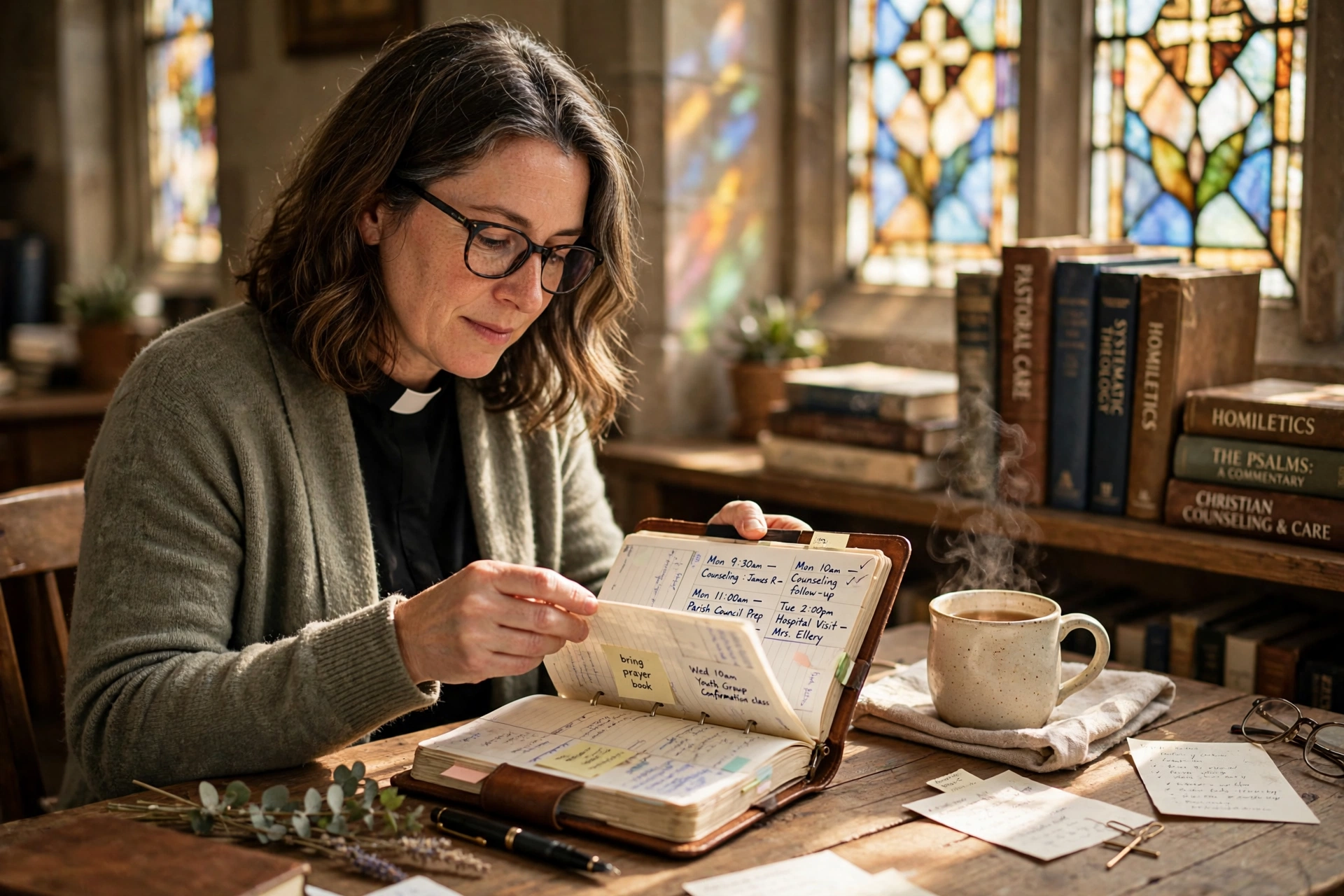
Many churches still rely on fragmented systems: a mix of paper planners, personal Google Calendars, and haphazard email chains. While these methods are familiar, they are fundamentally insecure. In an era where digital footprints are permanent and data leaks are common, the way a church handles scheduling for confidential meetings can either strengthen or shatter the bond between the pastor and the flock. Using a dedicated system like Pastor Agenda allows a ministry to separate administrative logistics from sensitive pastoral data, ensuring that the right people have access, and the wrong people are locked out.

What is Church Booking System Privacy?
📚
Definition
Church booking system privacy is the implementation of technical, administrative, and physical safeguards within a scheduling platform to ensure that sensitive information regarding congregants' appointments, counseling needs, and personal identities remains confidential and accessible only to authorized clergy.
Church booking system privacy refers to the holistic approach of managing how appointment data is collected, stored, and accessed. Unlike a standard business appointment tool, a church booking system must account for the high sensitivity of pastoral counseling. This means the system cannot simply be "secure" in a general sense; it must be designed for anonymity and strict permissioning. When we talk about privacy in this context, we are discussing the intersection of digital security (encryption, access logs) and ministerial ethics (confidentiality, boundaries).
In my experience working with various ministries, I have found that most churches mistake "privacy" for "secrecy." Secrecy is hiding information; privacy is the controlled, intentional management of who has access to that information. A truly private booking system allows a pastor to know who is coming and why, without leaving a digital trail that a curious staff member or a hacked email account could exploit. This requires a system that supports granular permissions, where the administrative assistant can see that a time slot is "booked," but cannot see the name of the person or the reason for the visit.
💡
Key Takeaway
True privacy in church scheduling requires a separation of the "slot" (the time) from the "identity" (the person), ensuring administrative efficiency doesn't compromise congregant confidentiality.
To fully master this, you should also read our guide on how to protect congregant privacy in digital booking platforms.
Why Does Privacy in Scheduling Matter for Your Ministry?
Privacy in scheduling is the foundation of the "safe space" required for effective pastoral care. If a congregant suspects that their request for help might be visible to others in the church office, they will either withhold the truth or avoid seeking help altogether. This creates a dangerous gap in the ministry's ability to provide essential support during crises.
According to research from the Barna Group, the health of a church is often tied to the perceived trust and transparency of its leadership. When privacy is breached, the ripple effect extends beyond the individual; it creates a culture of suspicion. In 2026, as more people move toward digital-first interactions, the risk of "digital gossip"—where screenshots of calendars or leaked emails circulate—has increased. A secure system mitigates this risk by removing the data from vulnerable channels.
Furthermore, the legal landscape for religious organizations is evolving. While clergy-penitent privilege provides some protections, the storage of personal data on unsecured servers can still lead to liabilities. Church Law & Tax emphasizes that governance and administrative management must be rigorous to avoid unnecessary legal exposure. If you are storing data about mental health or addiction, you are moving into a territory that requires more than just a password-protected spreadsheet.
Consider the following comparison of scheduling approaches:
| Approach | Traditional (Manual/Generic) | Generic AI/Cheap Tool | Modern Professional (Pastor Agenda) |
|---|---|---|---|
| Data Privacy | High risk of physical/verbal leaks | Medium risk (Data mining/Cloud leaks) | High (Encrypted, Role-based access) |
| Anonymity | Impossible to maintain consistently | Basic (Limited custom fields) | Advanced (Anonymous booking options) |
| Efficiency | Slow, prone to double-booking | Fast, but impersonal | Fast, personalized, and secure |
| Audit Trail | Non-existent | Basic logs | Full transparency on who accessed data |
By implementing a professional system, you aren't just buying software; you are investing in a trust-building mechanism. For those dealing with specific regulatory concerns, we recommend reviewing GDPR and HIPAA considerations in pastoral counseling data storage.
How to Implement a Privacy-First Booking Workflow
Moving to a privacy-first workflow requires a shift in how the church views its data. You cannot simply plug a new tool into an old, leaky process. You must redefine the flow of information from the moment a congregant decides to seek help to the moment the session ends.
Step 1: Establish Role-Based Access Control (RBAC)
The first step is to ensure that not everyone in the church office has "Administrator" rights. In a secure system, the Secretary or Admin should have "Scheduler" access—meaning they can see that a 2:00 PM slot is taken, but they cannot click into the appointment to see the congregant's name or the notes. Only the Pastor should have "Full Access" to the identity and the sensitive details of the meeting.
Step 2: Deploy Anonymous Entry Points
Not every meeting requires a full name and email at the point of booking. For initial inquiries or highly sensitive issues, provide a way for congregants to book using a pseudonym or a secure code. This allows the pastor to set aside time without the system capturing permanent PII (Personally Identifiable Information) before the pastor has decided how to handle the case.
Step 3: Sanitize Calendar Syncs
One of the biggest privacy leaks occurs during calendar synchronization (e.g., syncing a booking tool to a public Google Calendar). Ensure that the sync settings are configured to label all confidential appointments as "Private" or "Busy." The external calendar should never display "Counseling with Jane Doe"; it should simply show "Busy."
Step 4: Implement a Data Purge Policy
Data that does not exist cannot be leaked. Establish a policy where sensitive booking notes are moved to a secure, encrypted permanent file (like a locked physical folder or a high-security digital vault) and deleted from the scheduling software after the session is completed. This minimizes the "attack surface" in the event of a digital breach.
Step 5: Educate the Staff
Technology is only as strong as the people using it. Conduct a brief training session for all staff on the importance of not sharing screens and the ethics of pastoral confidentiality. Make it clear that accessing a pastor's private calendar is a breach of trust and a violation of church policy.
If you are struggling with how to actually set up these links, our guide on how to offer anonymous scheduling links for confidential meetings provides a technical walkthrough.
Common Mistakes in Church Data Privacy
In my time analyzing how churches manage their digital presence, I've seen a recurring set of mistakes. These are often made with good intentions but lead to disastrous results.
1. Using Personal Email for Scheduling
Many pastors use their personal Gmail or Outlook to coordinate counseling. This is a mistake because personal accounts lack the professional permission layers of a dedicated tool. Furthermore, if a pastor's personal account is compromised, every single congregant's private struggle is exposed. Using a dedicated platform like Pastor Agenda ensures a professional boundary between personal life and ministry data.
2. Over-Collecting Information at the Booking Stage
I often see booking forms that ask for too much: "What is the nature of your crisis? Please provide a detailed history." This information is now stored in a cloud database. If the user is in a crisis, they might be impulsive in what they share. A better approach is to ask for the minimum required to categorize the urgency and save the details for the face-to-face meeting.
3. Neglecting Two-Factor Authentication (2FA)
Many church staff find 2FA "annoying." However, a password is not enough. Most data breaches occur through credential stuffing or simple password guessing. Requiring 2FA for anyone accessing the scheduling system is the single most effective way to prevent unauthorized access to congregant data.
4. Assuming "Private" Settings are Absolute
Some platforms have a "private" toggle, but that often only hides the event from other users of the same account—not from the system administrators or the company hosting the data. It is essential to use tools specifically designed for sensitive appointments rather than generic business tools that monetize data.
5. Failing to Audit Access Logs
Many ministries never check who has been accessing their data. A professional system provides an audit trail. If you notice that an administrative account has been accessing the pastor's private counseling notes at 11:00 PM on a Saturday, you have a problem. Without logs, you are flying blind.

Deep Dive: The Psychology of Digital Trust
When a member of a congregation interacts with a booking page, they are performing a subconscious risk assessment. They are asking: "Is this safe? If I click this button, who will know?" If the interface looks like a generic corporate tool or, worse, a clunky old website, the perceived risk increases.
This is where the user experience (UX) of Pastor Agenda becomes a ministerial tool. By providing a clean, professional, and explicitly private interface, you are communicating safety before the pastor even speaks a word. The act of providing a secure, private booking path is, in itself, a form of pastoral care. It tells the congregant, "I value your privacy enough to have built a secure system for you."
According to the National Association of Evangelicals, the role of the pastor is increasingly complex, requiring a balance of spiritual leadership and administrative excellence. Neglecting the administrative side—specifically privacy—can undermine the spiritual side. When a leader demonstrates excellence in protecting their people, it reinforces their authority and reliability in other areas of ministry.
Frequently Asked Questions
Is a free scheduling tool sufficient for pastoral counseling?
No, free tools are rarely sufficient for the high-stakes privacy required in ministry. Most free platforms monetize through data collection or lack granular permission settings. In a free tool, you often cannot hide the identity of the attendee from the account admin. For pastoral care, you need a tool that allows for role-based access and potentially anonymous booking, features typically reserved for professional, paid platforms that prioritize data sovereignty over data monetization.
How do I handle a privacy breach if a congregant's data is leaked?
First, contain the leak by changing all passwords and revoking unauthorized access. Second, be transparent. According to guidelines found in Christianity Today, honesty is the only way to recover trust. Contact the affected individuals privately and sincerely. Explain what happened, what steps you are taking to fix it, and offer support. Finally, conduct a full audit of your system and migrate to a more secure platform like Pastor Agenda to ensure it never happens again.
Can I keep my scheduling system private while still allowing my secretary to manage my time?
Yes, this is achieved through Role-Based Access Control (RBAC). You should configure your system so that your secretary has "View-Only" or "Slot-Only" access. This means they can see that you are unavailable from 2 PM to 3 PM, but the details of the appointment (name, reason, notes) remain encrypted or hidden from their view. Only you, the pastor, should hold the keys to the sensitive data.
Do I need to comply with HIPAA if I am a pastor?
Generally, pastors are not "covered entities" under HIPAA unless they are billing insurance for mental health services. However, following HIPAA-like standards is a best practice. Even if not legally required, treating pastoral counseling data with the same rigor as medical data protects you from liability and demonstrates a higher standard of care for your congregation. Using encrypted storage and strict access logs mimics these professional standards.
What is the best way to offer anonymous booking?
The best way is to use unique, non-identifiable booking links. Instead of requiring a name and email to secure a spot, allow users to enter a "nickname" or a code. You can then coordinate the actual identity via a secure, encrypted messaging channel or a phone call. This prevents the scheduling database from becoming a directory of people's private struggles, which is a significant security risk.
How often should I update my privacy policies for digital tools?
Your policies should be reviewed at least once a year, specifically in January of each year (as of 2026). Digital threats evolve rapidly, and new software features often change how data is handled. Ensure your congregants know exactly how their data is stored, who has access, and when it is deleted. A clear, written privacy policy posted on your booking page builds immense trust.
Should I sync my church booking system with my personal phone calendar?
You can, but you must be extremely careful with the sync settings. Ensure the sync is set to "Busy" or "Private" for all events coming from the booking system. If you sync full details to your phone, a simple notification popping up on your screen while you are in a public meeting could accidentally reveal a congregant's name and the fact that they are seeking counseling.
Does using a specialized tool like Pastor Agenda actually reduce my liability?
Yes, because it moves the data from insecure, fragmented channels (like SMS and email) into a centralized, encrypted environment. By implementing professional safeguards, you demonstrate "due diligence" in protecting your congregants. In the event of a legal inquiry, being able to show that you used a professional system with audit logs and restricted access is far better than admitting you managed confidential counseling via a shared Google Sheet.
Recommended Readings
To deepen your understanding of these topics, we recommend reading the following articles:
- Church appointment booking
- Online Appointment Booking for Modern Churches
- Church management software
- Pastor scheduling
Conclusion
Privacy in the digital age is not a luxury; it is a foundational requirement for any ministry that seeks to be a sanctuary for the broken. When you implement a robust church booking system privacy framework, you are not just managing a calendar; you are guarding the hearts of your people. The transition from manual, insecure methods to a professional system like Pastor Agenda is a statement of value. It tells your congregation that their trust is sacred and that you have taken every technical precaution to protect it.
Remember that trust takes years to build but only seconds to destroy. A single leaked calendar can undo a decade of pastoral relationship-building. By separating administrative needs from confidential data, utilizing anonymous booking links, and enforcing strict access controls, you create a digital environment that reflects the safety of your physical sanctuary.
For those ready to move beyond the risks of generic tools, we invite you to explore how we can help you secure your ministry. For a comprehensive overview, explore our guide on church booking system privacy and start building a more secure future for your congregation today.
Visit pastoragenda.com to learn more about professional scheduling designed specifically for the unique needs of the clergy.
Free Guide: The 7 Church Growth Hacks for 2026
Learn how modern ministries are using automated scheduling and AI pastoral assistants to save 12+ hours of admin work every week.