
How Does the Process to Schedule With Pastor Work?
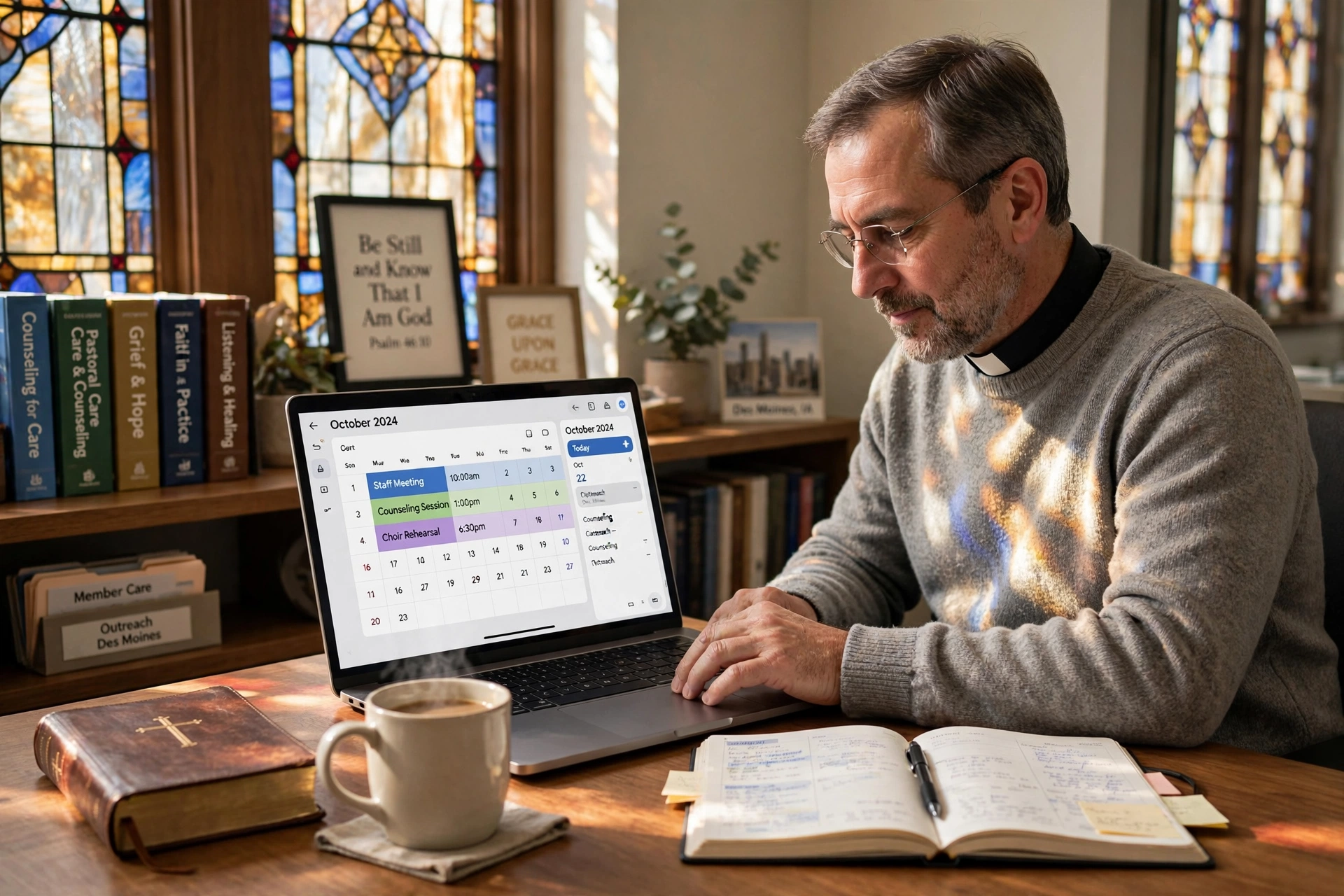
Many ministry leaders operate on a "first-come, first-served" basis via text messages and handwritten notes, which inevitably leads to double-bookings and burnout. To effectively schedule with pastor leadership, a church must transition from manual coordination to a synchronized digital system where available time slots are publicized and claims are made in real-time. This process eliminates the "back-and-forth" email chain by allowing the congregant to select a verified open window that syncs immediately with the minister's primary calendar.
In my experience working with various church administrations, the biggest friction point isn't the lack of will to meet, but the lack of a clear gateway. When a member doesn't know how to request time, they often interrupt the pastor during Sunday service or via personal social media, which disrupts the boundaries essential for sustainable leadership. By implementing a structured booking flow, the pastor regains control over their time while the congregation feels seen and valued.

What is the Core Mechanism of Digital Pastoral Scheduling?
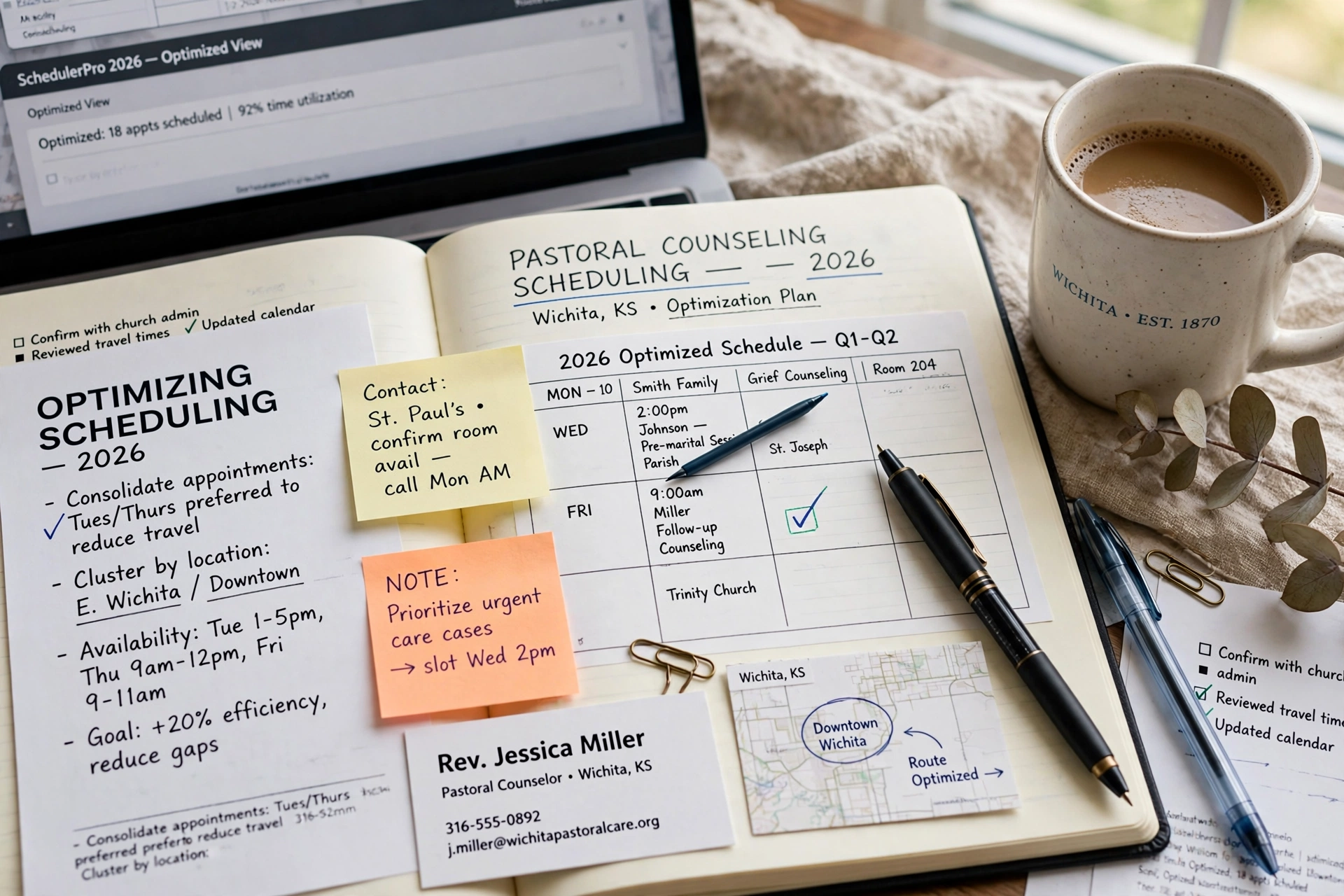
At its simplest level, the ability to schedule with pastor leaders relies on a "buffer-and-block" logic. The system doesn't just show a calendar; it applies specific rules to that calendar to protect the minister's mental health and preparation time. For example, a pastor may want to allow bookings for pastoral care but block out four hours of "deep work" on Tuesday mornings for sermon study.
📚
Definition
Digital Scheduling is the use of software to automate the booking of appointments by syncing a provider's real-time availability with a user-facing interface, removing the need for manual confirmation.
When a congregant accesses a booking link, they are seeing a filtered version of the pastor's reality. They don't see the internal notes or the private family events; they only see the "Available" blocks. Once a slot is chosen, the system triggers an automated confirmation, adds the event to both parties' calendars, and can even send a reminder via SMS or email. This automation is not about removing the "personal touch" of ministry; it is about removing the administrative burden so the personal touch can happen during the actual meeting.
According to research from the Barna Group, pastoral burnout is a significant trend in modern ministry, often exacerbated by the blurring lines between professional duties and personal time. Systems that formalize the way people schedule with pastor leadership act as a digital boundary, ensuring that the minister is not "on call" 24/7, which is fundamental for long-term ministerial health.
Why Does Formalizing Your Booking Process Matter?
The implications of a chaotic schedule extend far beyond a missed meeting; they affect the perceived reliability of the church's leadership. When a pastor forgets a counseling session or double-books a hospital visit, it can be interpreted by the congregant as a lack of care, even if the reality is simply a clerical error.
The business impact of inefficiency in a non-profit or religious context is measured in "lost ministry hours." If a church secretary spends five hours a week playing "phone tag" to coordinate three meetings, those are hours stolen from other vital church operations. In a professional setting, this is known as "administrative drag." For a church, it is a barrier to pastoral care.
Data from Christianity Today suggests that the most effective modern ministries are those that embrace "organizational health," which includes clear systems for communication and accessibility. When the process to schedule with pastor leadership is transparent, it reduces anxiety for the congregant. They no longer wonder if their request was seen or if they are bothering the pastor; the system provides an immediate "Yes" and a confirmed time.
Furthermore, using a dedicated tool allows for the collection of "intent data." When a person schedules, they can be asked to provide a brief reason for the meeting (e.g., "Marriage Counseling" vs. "Financial Question"). This allows the pastor to prepare mentally and spiritually before the meeting even begins, significantly increasing the quality of the interaction.
How to Implement a Professional Scheduling Flow Step-by-Step
Implementing a system to schedule with pastor leaders requires more than just turning on a piece of software; it requires a change in church culture. You are moving from an "interrupt-driven" culture to a "scheduled" culture.
Step 1: Define Your Availability Windows
The first mistake I see constantly is pastors opening their entire calendar to the public. This is a recipe for disaster. Instead, create specific "Office Hours." For example, designate Wednesdays from 1 PM to 4 PM as the primary window for pastoral counseling.
Step 2: Establish Meeting Types
Not all meetings are created equal. A 15-minute "quick check-in" requires a different slot than a 60-minute "deep pastoral counseling" session. In Pastor Agenda, you can create different appointment types, each with its own duration and buffer time.
Step 3: Set Up Buffer Times
Never allow back-to-back appointments. A pastor needs time to pray, take notes, or simply breathe between sessions. Set a mandatory 15-minute buffer before and after every appointment to ensure the previous session doesn't bleed into the next.
Step 4: Publicize the Gateway
The link to schedule with pastor leadership should be omnipresent. Place it in the church's Instagram bio, on the "Contact" page of the website, and in the weekly email newsletter.
Step 5: Train the Congregation
Announce the new system from the pulpit. Explain that this is being done because the pastor cares about giving each person their undivided attention. When the congregation understands that the system protects the quality of the meeting, they will embrace it.
💡
Key Takeaway
The goal of a scheduling system is not to distance the pastor from the people, but to ensure that when the pastor is with the people, they are fully present and not distracted by the chaos of a mismanaged calendar.

Comparing Scheduling Methods: Which One Fits Your Ministry?
Not every church needs the same level of sophistication. Some may find a simple shared calendar sufficient, while others require a robust engine like Pastor Agenda.
| Feature | Manual/Email Method | Generic Tools (e.g., Calendly) | Pastor Agenda |
|---|---|---|---|
| Effort | High (constant back-and-forth) | Low (automated) | Very Low (ministry-specific) |
| Boundaries | Weak (people text at 2 AM) | Moderate (time-slot based) | Strong (customized ministry blocks) |
| Context | Scattered (emails/texts) | Basic (form fields) | High (integrated congregant data) |
| Professionalism | Low (prone to errors) | High (corporate feel) | Very High (pastoral focus) |
| Best For | Very small house churches | Individual consultants | Growing churches and ministries |
Most guides get this wrong by suggesting that "any free tool" will work. While a generic tool can handle the time slot, it doesn't understand the nuances of pastoral care. For instance, a generic tool doesn't prioritize the spiritual nature of the appointment or integrate with the specific needs of a congregation's engagement.
Common Misconceptions About Pastoral Scheduling
There is a persistent myth that using a system to schedule with pastor leadership is "unspiritual" or "too corporate." This is a dangerous misconception. In reality, stewardship applies to time just as much as it applies to money. Using a tool to manage your time is an act of stewardship that prevents burnout and ensures that no one falls through the cracks.
Another common error is the belief that "the pastor should just be available whenever the flock needs them." While the biblical mandate for care is clear, the physical limitation of a human being is also clear. A pastor who is "always available" often ends up being "effectively unavailable" because they are too exhausted to provide quality counsel. By channeling requests through a system, you aren't saying "no" to the flock; you are saying "yes" to a focused, quality interaction.
Finally, many believe that technology replaces the personal touch. On the contrary, technology handles the transaction (the date and time) so that the interaction (the soul-care) can be the sole focus. When the logistics are settled, the pastor can enter the room focusing on the person, not on whether they are running late for the next appointment.
Frequently Asked Questions
Does using a scheduling tool make the pastor seem unapproachable?
Actually, it often does the opposite. Many congregants are hesitant to "bother" a pastor with a phone call or a text because they don't know if the pastor is busy. A public link to schedule with pastor leadership provides a clear, "permission-given" path to access. It removes the guesswork and the fear of intrusion, making the pastor more approachable by providing a guaranteed appointment.
How do I handle emergency pastoral needs that can't wait for a scheduled slot?
A scheduling system is for planned care, not emergency triage. In your booking description, clearly state: "For non-urgent counseling and meetings, please use this link. For immediate emergencies or crisis intervention, please call [Emergency Number/Deacon Line]." This ensures that the system handles the 90% of routine needs, leaving the pastor's manual availability open for the 10% of urgent crises.
What happens if a congregant is not tech-savvy and cannot use the link?
The system should supplement, not replace, all forms of access. Your church office staff or a designated deacon can act as the "digital proxy." When a senior member calls to request a meeting, the staff member simply opens the pastor's link and books the slot on their behalf. This maintains a single source of truth for the calendar while ensuring that no one is excluded due to a digital divide.
Can I limit the number of appointments I take per week to avoid burnout?
Yes, and you should. Most professional tools allow you to set "appointment limits." For example, you can cap your pastoral care at 10 sessions per week. Once those slots are filled, the system automatically shows no availability for that week. This prevents the "death by a thousand cuts" where a pastor says yes to everyone until they are physically and emotionally depleted.
Is my congregants' data safe when they use an online booking system?
When using a professional platform like Pastor Agenda, data security is a priority. Unlike a random spreadsheet or a shared Google Doc, professional scheduling software uses encrypted connections and follows data privacy standards. It is essential to use a tool specifically designed for professional use rather than "free" versions that may sell data or lack basic security protocols to protect the sensitive nature of pastoral requests.
Final Thoughts on How to Schedule With Pastor Leadership
The transition from a chaotic, interrupt-driven calendar to a streamlined system is one of the most impactful moves a church leader can make in 2026. By clarifying the process to schedule with pastor leadership, you are not just organizing a calendar; you are protecting the spiritual health of the leader and the emotional health of the congregation.
Efficiency in administration is not a distraction from ministry; it is the foundation that allows ministry to flourish without the friction of logistical errors. When you remove the stress of coordination, you create space for genuine connection.
If you are ready to stop the "phone tag" and start focusing on your flock, explore how Pastor Agenda can automate your booking process and restore your boundaries.
Recommended Readings
To deepen your understanding of these topics, we recommend reading the following articles:
- Church appointment booking
- Online Appointment Booking for Modern Churches
- Church management software
- Pastor scheduling
Reference Sources
For deeper context on this topic, these sources provide additional authoritative perspectives:
- Wikipedia — general knowledge reference
These references help establish a complete view of the subject matter.
Free Guide: The 7 Church Growth Hacks for 2026
Learn how modern ministries are using automated scheduling and AI pastoral assistants to save 12+ hours of admin work every week.