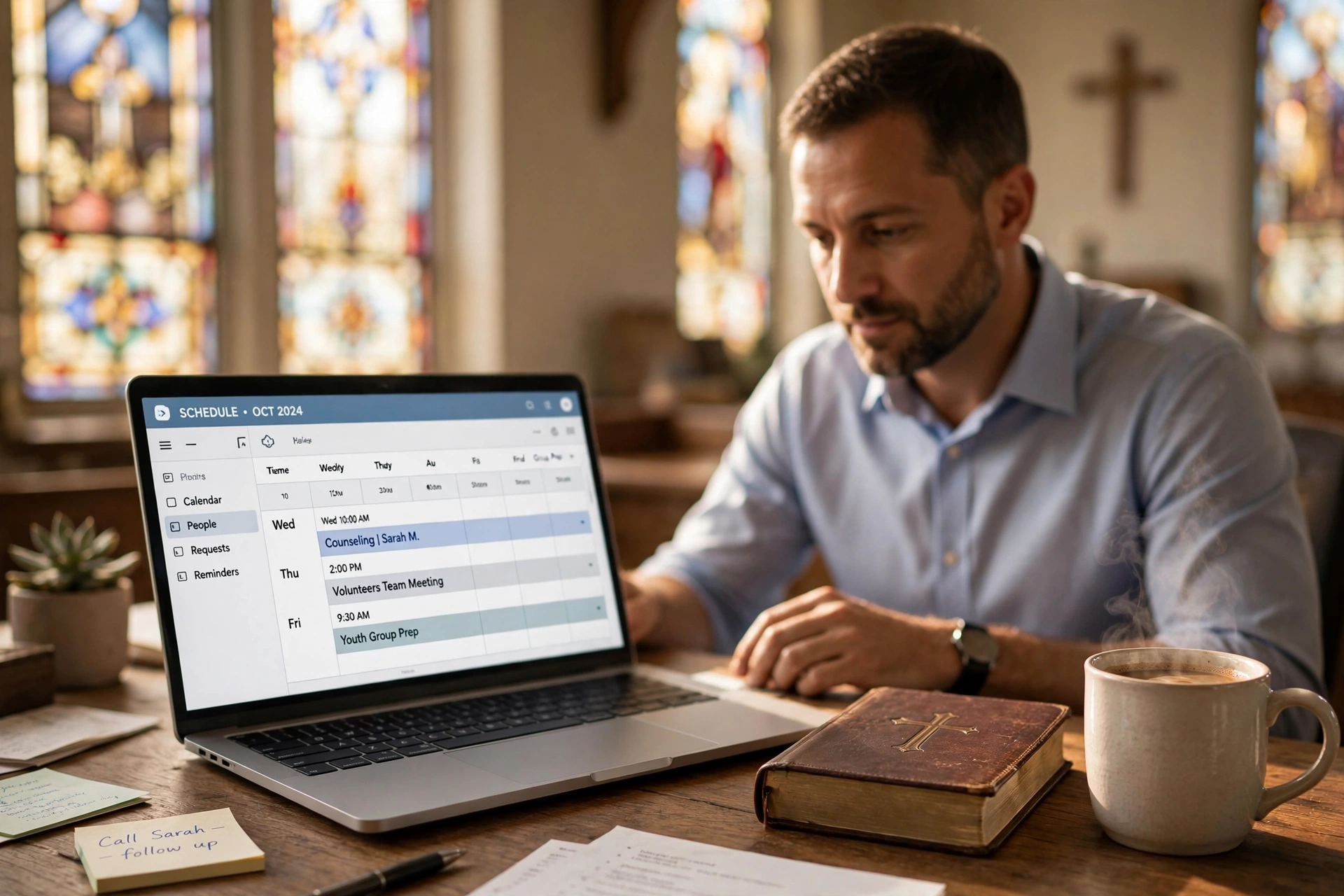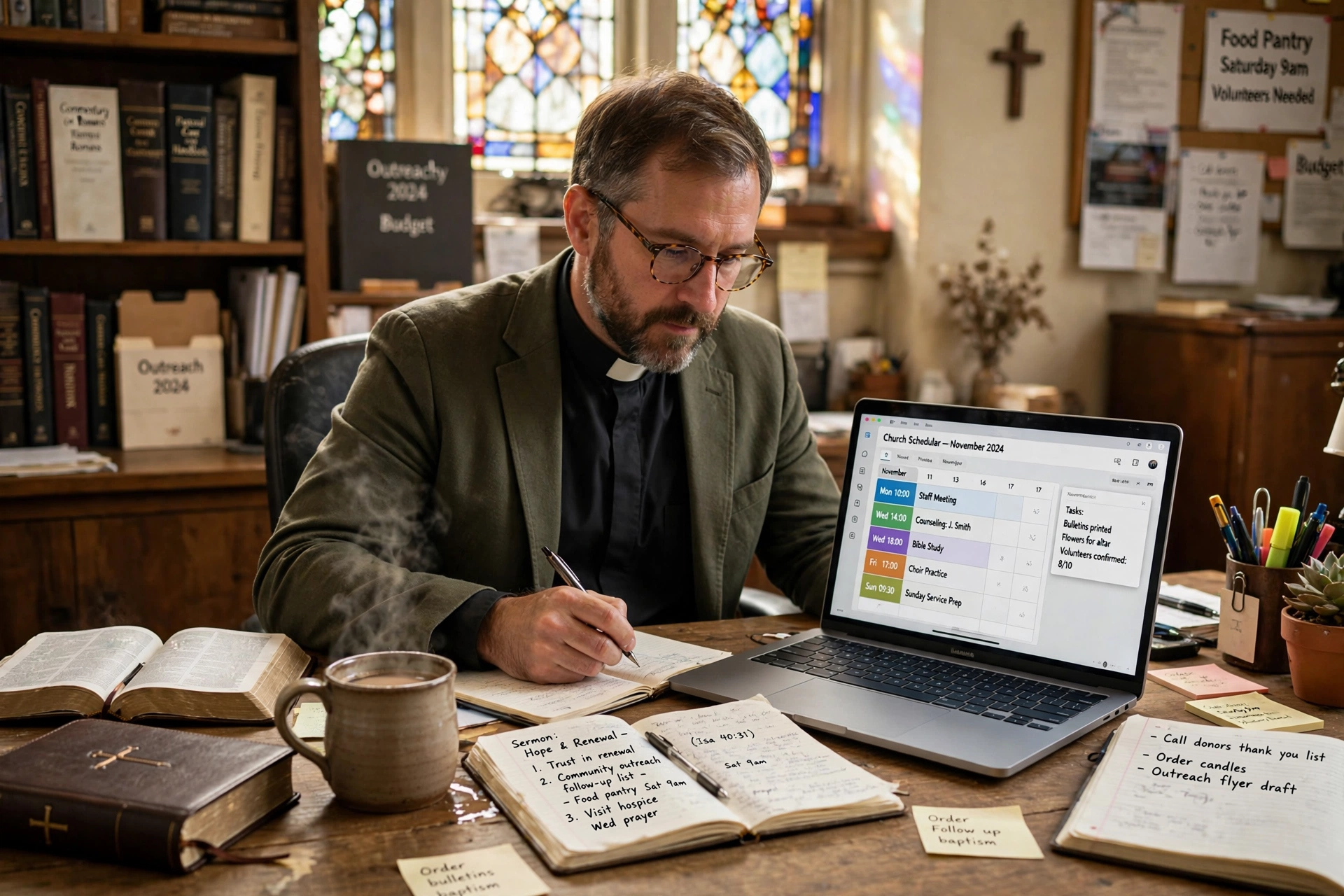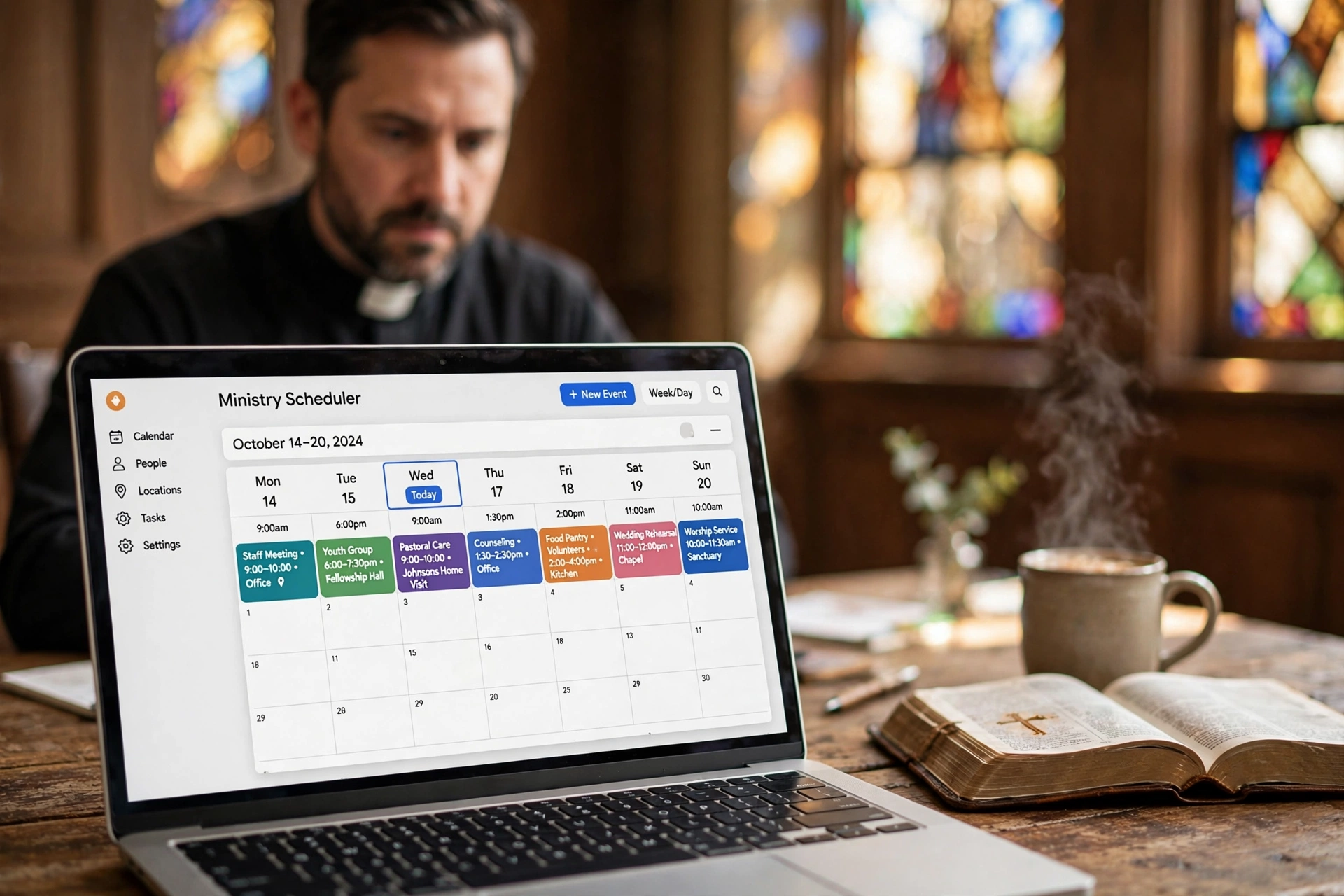

How Much Does Pastor Scheduling Software Cost in 2026?
Managing a church calendar through manual spreadsheets or fragmented email threads often costs a ministry more in lost time and missed appointments than any software subscription ever would. Most professional pastor scheduling software solutions currently range from $15 to $60 per month, depending on the volume of appointments and the level of automation required. For larger congregations needing advanced coordination, enterprise-level systems can exceed $100 per month. The real cost, however, isn't the monthly fee; it's the operational friction that prevents a pastor from focusing on pastoral care because they are trapped in a cycle of "scheduling gymnastics."
In my experience working with church leaders, the most expensive mistake is choosing a "free" generic tool that lacks the privacy and ecclesiastical nuance required for ministry. I've seen dozens of pastors lose hours of their week simply because their booking tool didn't sync with their personal boundaries, leading to burnout and scheduling conflicts that affect the entire congregation.
What Exactly Is Pastor Scheduling Software and How Is It Priced?
When we talk about tools for ministerial organization, we aren't just discussing a digital calendar. We are discussing a specialized layer of infrastructure designed to mediate the relationship between a spiritual leader and their flock.
📚
Definition
Pastor scheduling software is a dedicated appointment booking and management system designed specifically for clergy, allowing congregants to book time for counseling, home visits, or administrative meetings while protecting the pastor's boundaries and integrating with church-specific workflows.
The pricing for these tools generally falls into three models: flat-fee monthly subscriptions, per-user pricing, or "freemium" models. Flat-fee models are the gold standard for churches because they provide budget predictability. Per-user pricing can become prohibitively expensive as a church grows and adds associate pastors or youth ministers to the platform.
According to Barna Group, the mental health and burnout rates among pastors have surged, with a significant percentage of leaders citing "administrative overload" as a primary stressor. This data proves that the value of a scheduling tool isn't just in the "booking" but in the "boundary setting." When a system allows a pastor to set specific "office hours" or "soul care" blocks, it transforms from a utility into a wellness tool.
Now, here's where it gets interesting: many generic tools claim to be suitable for churches, but they fail to account for the unique nature of ministry. For example, a standard business tool doesn't understand the difference between a "crisis counseling session" (which needs immediate priority) and a "monthly budget review" (which can wait). Professional software allows for custom intake forms that categorize the urgency of the request before the appointment is even confirmed.
Why Does the Right Investment in Scheduling Tools Matter for Ministry?
The financial cost of a subscription is negligible compared to the cost of administrative chaos. When a ministry relies on a "text me and we'll figure it out" approach, the result is rarely a flexible schedule; instead, it is a fragmented life where the pastor is always "on call" but never "on time."
From a data perspective, the impact of automation is staggering. Research from Harvard Business Review suggests that automating routine administrative tasks can recover up to 20% of a professional's work week. For a pastor working 50 hours a week, that is 10 hours reclaimed. Imagine the impact of 10 extra hours spent on sermon preparation or visiting the sick, rather than replying to "Are you free Tuesday at 4?" emails.
The consequences of avoiding a professional system include:
- Scheduling Leakage: Appointments that are forgotten or double-booked, leading to congregants feeling neglected.
- Boundary Erosion: The "always available" culture that leads to rapid ministerial burnout.
- Data Fragmentation: No central record of who was visited, when, and why, which makes long-term pastoral care tracking impossible.
As Christianity Today has frequently noted, the sustainability of a pastor's tenure is directly linked to their ability to manage their time effectively. A pastor who is overwhelmed by the "how" of scheduling cannot effectively lead the "what" of the spiritual mission. The investment in a tool like Pastor Agenda isn't just about software; it's an investment in the longevity of the leader's ministry.
How to Implement a Professional Scheduling System Step-by-Step
Transitioning from a manual system to an automated one requires more than just a login; it requires a change in the church's culture of communication. If you simply post a link without guidelines, you may find your calendar filled with trivial requests that disrupt your deep-work blocks.
First, define your Availability Architecture. Do not open your entire week. Instead, create "Booking Windows." For example, Tuesday mornings for administrative meetings and Thursday afternoons for pastoral counseling. This ensures that you are not context-switching every 30 minutes, which is the fastest way to exhaust your mental energy.
Second, implement Custom Intake Forms. This is a feature where Pastor Agenda excels. Instead of a blank slot, require the user to select the type of meeting. "Crisis/Emergency," "New Member Orientation," or "General Inquiry." This allows you to prioritize the "crisis" requests and move the "general" ones to less critical times.
Third, integrate with your existing Digital Ecosystem. Your scheduling software must talk to your primary calendar (Google, Outlook, iCloud). If there is a gap between your booking tool and your actual calendar, you are just creating a new way to double-book yourself.
💡
Key Takeaway
The most effective scheduling systems are those that act as a filter, not just a funnel. By using intake forms and strict availability windows, you protect your time while remaining accessible to those in genuine need.
Fourth, communicate the change to the congregation. Frame it as a way to improve care, not a way to limit access. Tell them, "To ensure I can give you my full, undivided attention, I've moved to a new system that helps me organize my visits and counseling more effectively."
Comparing Your Scheduling Options: Manual vs. Generic vs. Specialized
Many leaders struggle to decide if they need a specialized tool or if a free generic app will suffice. The reality is that the "free" options often come with hidden costs in the form of limited features and poor user experience for the congregant.
| Feature | Manual/Paper System | Generic AI/Free Tools | Pastor Agenda Approach |
|---|---|---|---|
| Effort | High (Constant back-and-forth) | Medium (Setup is fast, usage is rigid) | Low (Tailored to ministry flow) |
| Privacy | Low (Paper left on desks) | Medium (Standard encryption) | High (Clergy-focused data care) |
| Boundaries | Non-existent | Hard limits only | Dynamic "Soul Care" blocks |
| Intake | Memory-based | Simple form | Context-aware ministry forms |
| Best For | Very small house churches | Single-person side hustles | Growing, healthy ministries |
Generic tools are often designed for salespeople. They want to maximize "leads" and "conversions." In a church setting, you aren't looking for a "lead"; you are looking to support a soul. A salesperson wants a 15-minute "discovery call." A pastor needs a 60-minute "counseling session." When you use a tool not designed for your context, you spend half your time fighting the software to make it act like a ministry tool.
That said, the jump to a specialized system like Pastor Agenda is where the ROI becomes visible. When the software understands the nuances of a church calendar—such as recurring worship services and seasonal fasting periods—it removes the friction that makes other tools feel like a chore.
Common Questions and Misconceptions About Scheduling Costs
Most guides on this topic get it wrong by focusing solely on the monthly subscription price. They treat software like a utility bill rather than a productivity investment.
Myth 1: "A free tool is just as good as a paid one for a small church."
This is a dangerous misconception. Free tools often lack the ability to set "buffer times." In ministry, you cannot jump from a heavy grief counseling session directly into a joyful wedding planning meeting without 15-30 minutes of mental transition. Paid tools allow you to automate these buffers, preventing the emotional exhaustion that comes from back-to-back contrasting sessions.
Myth 2: "Automated scheduling makes the pastor seem impersonal or cold."
Actually, the opposite is true. When a pastor is stressed and frazzled by a chaotic schedule, they are less present in the room. By automating the logistics, you free up the emotional capacity to be fully present with the person. The "coldness" isn't in the tool; it's in the stress of a poorly managed calendar.
Myth 3: "We can just use a shared Google Calendar for everything."
A shared calendar is a visibility tool, not a scheduling tool. It tells you where someone is, but it doesn't handle the request for time. Using a calendar as a booking system leads to "calendar clutter," where the pastor's personal life and professional duties bleed into one another without clear demarcations.
Frequently Asked Questions
How does pastor scheduling software improve congregational engagement?
By removing the friction of "playing phone tag," you make it easier for people in crisis to get help. When a member of the congregation is struggling, the anxiety of trying to reach a busy pastor can be a barrier. A clear, accessible booking link provides an immediate sense of "I am seen and there is a place for me." This transparency in availability signals that the pastor is organized and ready to serve, which increases trust and engagement across the entire church body.
Is it possible to integrate these tools with existing church management systems (ChMS)?
Yes, most professional scheduling tools are designed to be agnostic, meaning they sync with the calendars that your ChMS likely already uses (such as Google or Outlook). While some specialized tools have direct API integrations, the most reliable method is a two-way calendar sync. This ensures that if you add a "Board Meeting" to your primary calendar, that time slot is automatically blocked off in your scheduling software, preventing any overlap without requiring you to update two different systems.
How do I handle "emergency" appointments if I use a restricted booking system?
The key is to provide a "Dual Path" for access. Your scheduling software is for planned care—counseling, visits, and meetings. For emergency care, you should maintain a separate, clearly communicated protocol (such as a specific phone number or a "Crisis" button on your website). In my experience, clearly defining "Planned Care" vs. "Emergency Care" actually helps the congregation understand the boundaries of the ministry and ensures that those in genuine crisis get immediate attention while others respect the scheduled blocks.
What is the average ROI for a church investing in professional scheduling?
While it is difficult to put a dollar sign on spiritual care, the ROI is found in "recovered hours." If a pastor saves 5 hours a week on administration, that is 260 hours per year. If those hours are spent in community outreach or deeper study, the growth in church health and leader retention is immeasurable. According to National Association of Evangelicals, leadership stability is one of the strongest predictors of church growth; therefore, any tool that prevents burnout and organizes the leader's life has a direct impact on the church's growth trajectory.
Can I use this software to manage volunteers or a staff team as well?
Absolutely. While the primary focus is often on the pastor's time, the same logic applies to associate ministers, youth leaders, and administrative staff. By creating a "Team Page" where congregants can choose which leader they need to see, you distribute the administrative load across the team. This prevents the lead pastor from becoming the sole bottleneck for every request in the church, fostering a healthier, more decentralized leadership structure where staff members are empowered to manage their own availability.
Final Thoughts on Pastor Scheduling Software
Choosing the right pastor scheduling software is not about finding the cheapest monthly fee; it is about calculating the cost of your current inefficiency. If you are spending your Sunday evenings manually coordinating Tuesday's visits, you are paying a "complexity tax" that drains your energy and diminishes your ministry's impact.
Whether you are leading a small plant or a multi-site congregation, the transition to a professional system like Pastor Agenda allows you to move from a reactive state to a proactive state. You stop wondering "who is calling me" and start knowing "who I am serving."
The investment in professional tools is an admission that your time is a stewardship. By organizing your schedule, you are not distancing yourself from your people; you are creating the space necessary to love them more effectively. Visit pastoragenda.com today to reclaim your time and refocus your energy on the calling that matters most.
Recommended Readings
To deepen your understanding of these topics, we recommend reading the following articles:
- Ensuring Absolute Privacy in Church Booking Systems
- Church appointment booking
- Online Appointment Booking for Modern Churches
- Church management software
Free Guide: The 7 Church Growth Hacks for 2026
Learn how modern ministries are using automated scheduling and AI pastoral assistants to save 12+ hours of admin work every week.