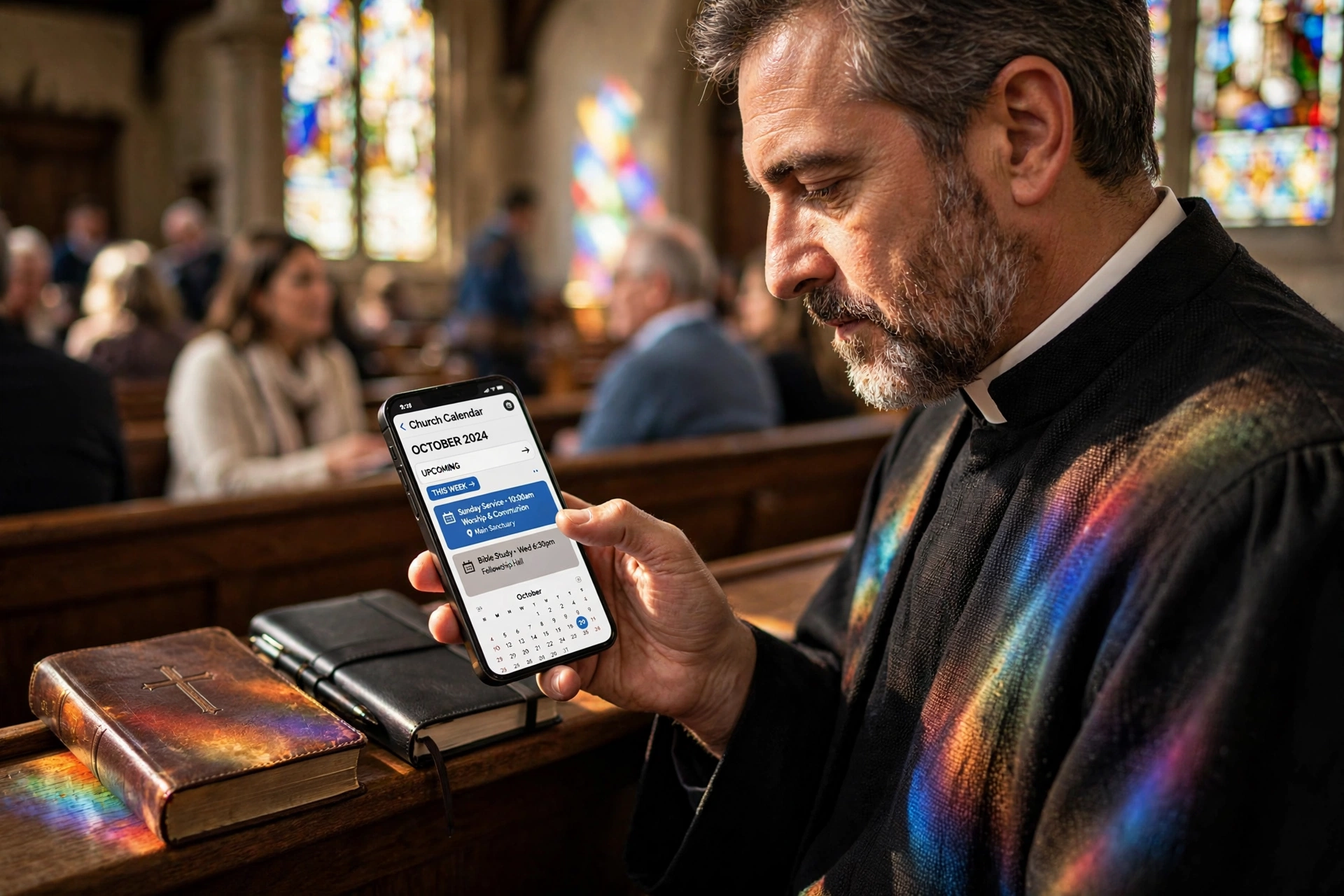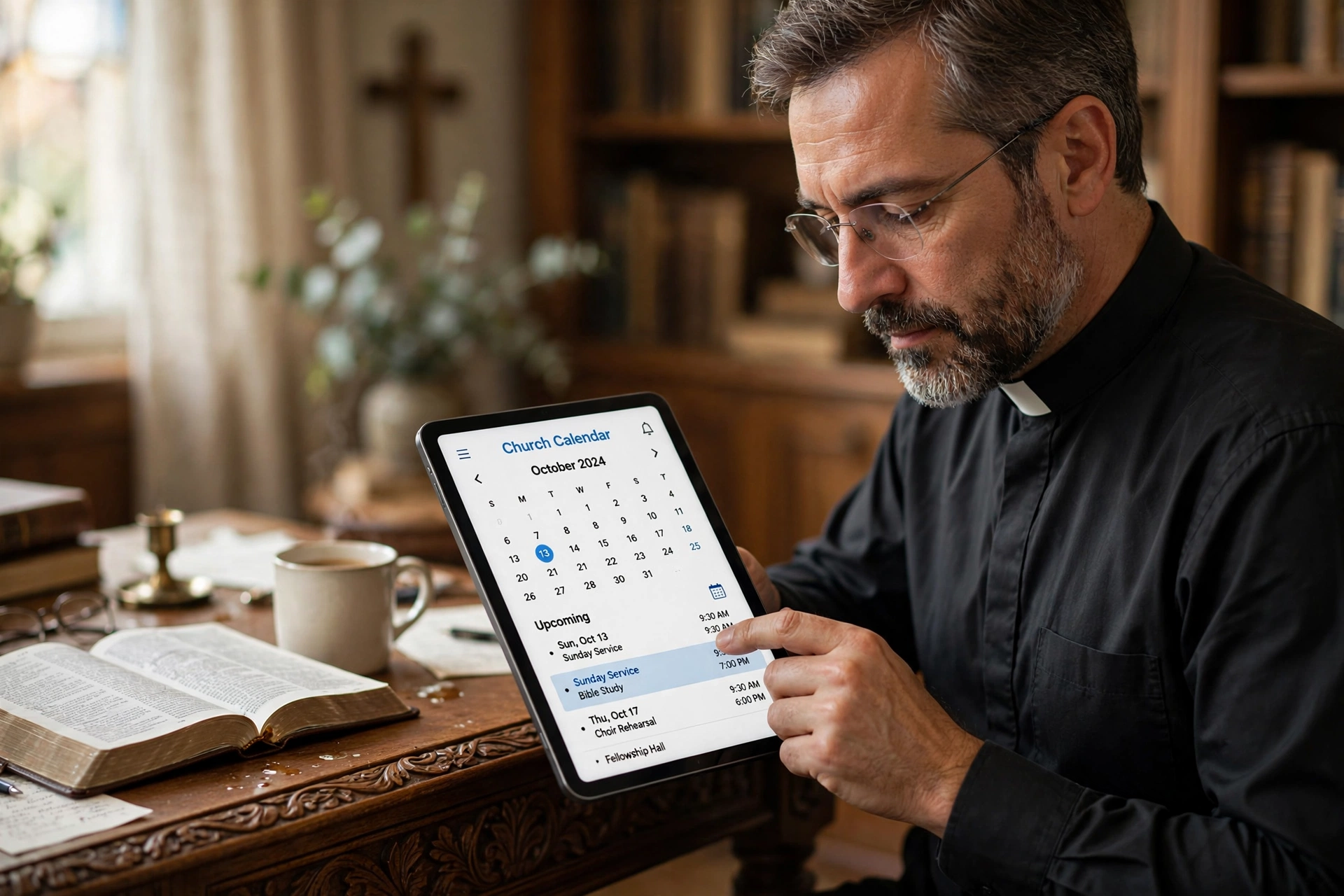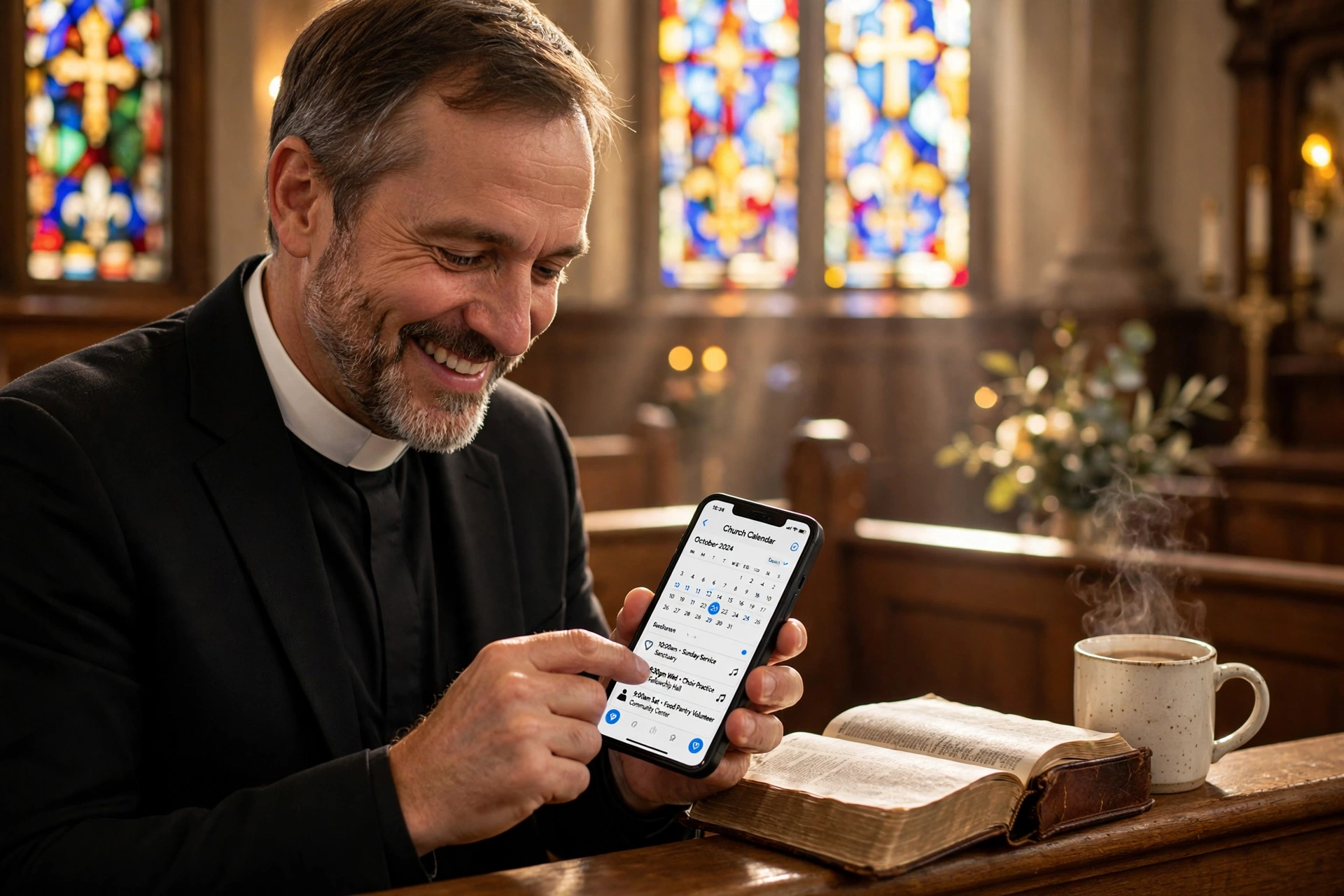
Why Most Churches Fail at Scheduling and How a Church Calendar App Fixes It
Managing a ministry without a centralized system is a recipe for burnout and missed opportunities. I have seen countless pastors spend more time playing "phone tag" with volunteers than they do in prayer or sermon preparation. The reason a church calendar app is no longer optional in 2026 is that congregational expectations have shifted; members now expect the same frictionless scheduling experience in their faith community that they get from their healthcare provider or professional services. When a church relies on paper planners or fragmented group chats, they aren't just losing efficiency, they are creating a barrier to pastoral care.
What Exactly Is a Specialized Church Calendar App?
To understand the value, we must first differentiate between a generic digital calendar and a dedicated ministry tool. A standard calendar simply marks a date and time. A professional system designed for the church environment manages the intersection of people, spaces, and spiritual priorities.
📚
Definition
A church calendar app is a specialized piece of appointment scheduling software that integrates venue management, volunteer coordination, and pastoral availability into a single, synchronized interface accessible to both clergy and congregants.
In my experience working with dozens of growing congregations, the biggest mistake leaders make is trying to "force" a corporate tool like Google Calendar or Outlook to handle ministry needs. Those tools are designed for linear business productivity, not for the relational nuances of a church. For example, a business meeting is a transaction; a pastoral counseling session is a sacred trust. A dedicated tool allows a pastor to set specific "ministry windows" for different types of care, ensuring that urgent crises are prioritized over routine administrative check-ins.
When we developed the logic behind Pastor Agenda, we discovered that pastors don't just need a "date" on a screen; they need a buffer. Most generic tools don't account for the emotional weight of a pastoral visit. A dedicated church calendar app allows for automatic "buffer times" between appointments, preventing the burnout that occurs when a pastor jumps straight from a funeral planning session into a youth group meeting without a moment to breathe.

According to research from the Barna Group, pastoral burnout is at an all-time high, often driven by the "always-on" nature of modern ministry. By implementing a system that defines boundaries through technology, leaders can reclaim their sabbath and personal time without sacrificing the quality of their pastoral care.
Why the Lack of a Scheduling System Destroys Ministry Growth
The consequences of not acting on your scheduling infrastructure are often invisible until a crisis occurs. When a church lacks a streamlined church calendar app, they suffer from "administrative friction." This is the hidden energy spent on the logistics of meeting, rather than the purpose of the meeting.
Consider the data: efficiency in administration directly correlates to the capacity for outreach. According to the National Association of Evangelicals, effective governance and administrative health are foundational to the long-term sustainability of a ministry. When a pastor spends 10 hours a week managing a calendar manually, that is 10 hours taken away from sermon study, community visitation, or leadership development.
Now, here's where it gets interesting: the cost of "manual scheduling" is not just time; it is the risk of human error. A double-booked sanctuary or a forgotten baptismal date doesn't just cause a logistical headache; it signals a lack of care to the congregation. In a digital-first world, if a member finds it difficult to book a time for pastoral counseling, they may simply stop seeking that support. This creates a "care gap" where the most vulnerable members of the flock fall through the cracks because the process of reaching the pastor was too cumbersome.
Furthermore, the lack of a centralized system leads to "information silos." When only the church secretary knows the schedule, the pastor is dependent on a middleman for every movement. This bottleneck slows down decision-making and prevents the church from being agile in responding to community needs. If a crisis hits the community on a Tuesday morning, the leadership needs to know exactly which rooms are available and who is on call without spending thirty minutes searching through emails.
Practical Implementation: Moving from Chaos to Order
Transitioning to a professional system requires more than just installing an app; it requires a shift in ministry culture. You are moving from a "come as you are, whenever" approach to a "structured availability" model. This actually increases the quality of care because the pastor is fully present during the scheduled time, rather than being distracted by the chaos of an unplanned schedule.
To implement this effectively, I recommend a four-step approach:
- Audit Your Availability: Before touching the software, the pastor must define their "non-negotiables." This includes study time, family time, and sabbath. These are "blocked" on the church calendar app to ensure they are never overwritten by appointments.
- Categorize Your Care: Create different "appointment types." For instance, a "First-Time Visitor Meeting" might be 30 minutes, while a "Crisis Counseling Session" is 90 minutes. By assigning durations to types, the software automatically manages the day's flow.
- Empower the Congregation: Give the congregation a direct link to the booking page. This removes the "gatekeeper" friction. When a member can see that the pastor is available on Thursday at 2 PM, they book it instantly, and the confirmation is sent to both parties.
- Sync Across Devices: Ensure the app integrates with the pastor's mobile device. Ministry happens in the hallways and the parking lots, not just behind a desk. Real-time synchronization prevents the "I forgot I had that" syndrome.
Using a tool like Pastor Agenda makes this process seamless. Instead of fighting with a complex enterprise system, Pastor Agenda provides a streamlined interface specifically for religious leaders. It handles the booking, the reminders, and the organization, allowing the pastor to focus on the soul of the person they are meeting with, not the logistics of the clock.
💡
Key Takeaway
The goal of a church calendar app is not to make the pastor "more productive" like a corporate CEO, but to protect the pastor's time so they can be more present for their people.

Choosing the Right Tool: Generic vs. Specialized
Many leaders struggle to decide between a free tool and a paid, specialized service. The "free" option often seems attractive until you realize the cost is paid in time and frustration.
| Feature | Traditional/Manual Way | Generic AI/Free Apps | Pastor Agenda Approach |
|---|---|---|---|
| Booking Process | Phone calls and emails | Open links, no context | Ministry-specific appointment types |
| Boundary Control | Hard to enforce; "always on" | Basic time blocks | Integrated buffer times and sabbath protection |
| Member Experience | High friction; wait for reply | Low friction, but impersonal | Seamless, professional, and welcoming |
| Data Privacy | Paper logs (low security) | Cloud-based (generic) | Secure, ministry-focused data handling |
| Coordination | Secretary as bottleneck | Scattered notifications | Centralized, real-time synchronization |
Most guides get this wrong by suggesting that any digital calendar is "good enough." It is not. A generic app doesn't understand the difference between a "board meeting" and a "hospital visit." It doesn't understand that a pastor might need an hour of silence after a difficult counseling session before they can enter a public-facing role. The professional approach acknowledges the emotional and spiritual labor of the ministry and builds a schedule that sustains the human being behind the title.
Common Misconceptions About Digital Scheduling in Ministry
There is a persistent myth that using a church calendar app "depersonalizes" the ministry. Some argue that asking a member to book a time online is "cold" or "corporate."
Here is the reality: nothing is more depersonalizing than a pastor who is distracted, rushed, or forgets an appointment because they relied on a handwritten note. When a member receives a professional confirmation and a reminder, they feel valued. They know the pastor has carved out a specific, dedicated space for them. The technology doesn't replace the relationship; it protects the space where the relationship happens.
Another common misconception is that "my church is too small to need this." I've seen this constantly. Small churches often have the most chaos because the pastor wears ten different hats. When you are the preacher, the counselor, the administrator, and the facility manager, a church calendar app isn't a luxury; it is a survival tool. It prevents the "burnout spiral" where a leader becomes so overwhelmed by administration that they lose the joy of the calling.
Finally, some believe that technology will lead to "appointment saturation," where the pastor is booked solid. On the contrary, a system allows the pastor to see the data. If you notice that you are spending 80% of your time on administrative meetings and only 20% on pastoral care, the app provides the evidence needed to delegate tasks to other leaders. You cannot manage what you do not measure.
Frequently Asked Questions
Does a church calendar app replace the need for a church secretary?
No, it evolves the role of the secretary. Instead of spending their entire day acting as a human switchboard for appointments, the secretary becomes a coordinator of ministry. By automating the "where and when" of scheduling, the administrative staff can focus on higher-value tasks, such as community outreach, event planning, and member care. A tool like Pastor Agenda doesn't eliminate the human element; it removes the tedious parts of the job so the staff can be more relational.
How do I handle emergency appointments if everything is scheduled?
A professional system allows you to keep "emergency slots" open. In my experience, the best practice is to leave a few unbookable gaps in the weekly schedule specifically for crises. If a member has a genuine emergency, the pastor can manually insert them into those gaps. This ensures that the "planned" ministry doesn't crowd out the "urgent" ministry. It provides a structured way to be flexible without collapsing the rest of the week's commitments.
Is it difficult for older members of the congregation to use?
This is a common concern, but usually, it is unfounded. Most people are comfortable with basic web forms. To ensure inclusivity, the church can offer a hybrid approach: the pastor's secretary can book appointments on behalf of those who aren't tech-savvy, using the same system. This keeps the record centralized regardless of how the appointment was made. The goal is a single source of truth for the schedule, not to force every member to become a tech expert.
Will using an app make my ministry feel too corporate?
Actually, the opposite is true. When a pastor is disorganized, forgets meetings, or is constantly rushing, the ministry feels chaotic. Professionalism in administration is a form of stewardship. When you manage your time well, you are stewarding the gift of your leadership. By using a church calendar app, you are signaling to your congregation that their time is valuable and that you are committed to giving them your undivided attention.
Can I manage multiple church locations or campuses with one app?
Yes, provided the software supports multi-calendar synchronization. For churches with multiple campuses, it is essential to have a system that can distinguish between different venues and staff members. This prevents the nightmare of booking a meeting in a room that is already being used by another campus. A centralized system allows the lead pastor to maintain a bird's-eye view of all activities across the entire organization while giving local campus pastors autonomy over their specific schedules.
Final Thoughts on the Church Calendar App
The transition from manual chaos to digital order is not about adopting a trend; it is about sustainable leadership. When a pastor is freed from the cognitive load of managing a complex schedule, they regain the mental clarity needed for deep spiritual work. The "WHY" behind adopting a church calendar app is simple: you cannot effectively shepherd a flock if you are exhausted by the logistics of the fold.
By implementing a system that respects boundaries, automates the mundane, and provides clear access to care, you are investing in the health of your leadership and the well-being of your members. In 2026, the most effective ministries are those that leverage technology to create more human connection, not less.
If you are ready to stop the scheduling chaos and reclaim your time for what truly matters, explore how Pastor Agenda can transform your ministry. Visit pastoragenda.com to start organizing your calling today.
Recommended Readings
To deepen your understanding of these topics, we recommend reading the following articles:
- Ensuring Absolute Privacy in Church Booking Systems
- Church Appointment Booking
- Online Appointment Booking for Modern Churches
- Automated Reminders and Communication for Congregations
Free Guide: The 7 Church Growth Hacks for 2026
Learn how modern ministries are using automated scheduling and AI pastoral assistants to save 12+ hours of admin work every week.