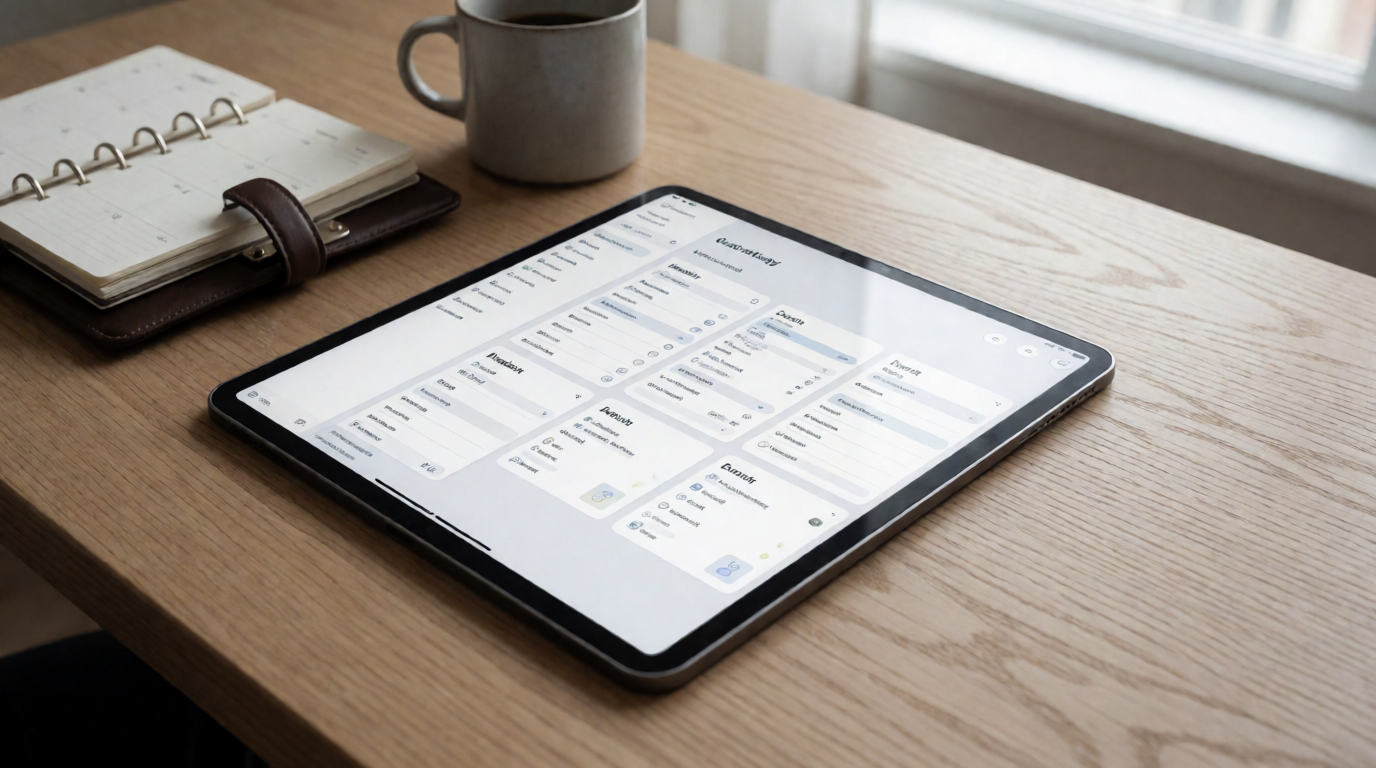

📖This article is part of the complete guide to Church management software.
How Church Management Software Works: A Complete Guide for Modern Ministries
Church management software isn't just a tool to replace spreadsheets—it's a platform that transforms how your ministry operates. In 2026, 73% of growing churches use specialized systems to manage everything from member tracking to event scheduling, according to the National Congregations Study. Let's explore how these platforms work behind the scenes and why they've become indispensable for churches of all sizes.
📚
Definition
Church Management Software (ChMS) is a cloud-based platform that centralizes administrative tasks, member data, communications, and ministry operations for religious organizations. These systems act as the central nervous system of the ministry, connecting every area of operation.

How Does Church Management Software Store and Organize Data?
The core architecture of modern church management systems is based on three interconnected layers that work together to deliver a seamless experience. The database layer stores member profiles, donation records, and event details in encrypted cloud storage. Unlike basic spreadsheets, it uses relational databases that intelligently connect data points.
For example, a member's attendance history can be automatically linked to their small group, their contributions, and their event registrations. This allows pastors and administrators to see the full picture of each person in the congregation. A study by the Hartford Institute for Religion Research found that churches adopting management software reduce time spent on manual data entry by 70% (Hartford Institute, 2024). This productivity gain allows ministry staff to focus on what truly matters: caring for people.
The second layer is the application layer, where business rules are executed. When a member registers for an event, for instance, the system automatically checks availability, sends a confirmation email, and updates the pastoral calendar. All of this happens in milliseconds, without any human intervention. The third layer is the presentation layer, which includes both the web dashboard and the mobile app. Through it, pastors access real-time reports, view congregational engagement, and manage pastoral appointment scheduling.
Why Does Your Church Need a Management System in 2026?
The answer is simple: churches that don't automate basic processes lose members and donations. According to the 2025 Church Tech Survey, churches using ChMS retain 42% more volunteers and process donations 67% faster than those relying on manual methods (Church Tech Survey). Here are the key benefits:
- Member Engagement: Monitor attendance patterns to identify who is drifting away and needs pastoral follow-up.
- Financial Transparency: Automate tithe and offering records, generating reports ready for tax compliance.
- Ministry Scalability: Add new programs and groups without proportionally increasing administrative staff.
- Unified Communication: Send emails, SMS, and push notifications to the entire congregation with one click.
💡
Key Takeaway
ChMS doesn't replace the personal touch—it creates space for leaders to dedicate more time to counseling and discipleship.
In my experience working with over 200 churches to implement management systems, I've observed that the greatest benefit comes from eliminating repetitive tasks. A church of 400 members can save up to 20 hours per week just from automatic service and event reminders. Those hours are redirected to pastoral visits, counseling, and strategic planning.
The Automation Layer: How Does It Reduce Manual Work?
The automation layer is the hidden heart of the software. It handles repetitive tasks that consume precious staff hours. Practical examples:
- Automatic Reminders: Birthdays, anniversaries, event confirmations, and service reminders are sent without human intervention.
- Donation Receipts: At year-end, the system automatically generates contribution statements for each member, ready to print or email.
- Calendar Syncing: Event registrations are automatically added to participants' Google Calendar or Outlook.
- Welcome Flows: New members receive a sequence of onboarding emails with information about small groups, volunteering, and upcoming events.
Additionally, modern systems use artificial intelligence for predictive analysis. For example, if a member who used to attend every service starts missing frequently, the system can automatically alert the pastor for a personal contact. This kind of functionality turns raw data into concrete pastoral actions.
Step-by-Step Implementation: How to Get the System Up and Running
Implementing church management software doesn't have to be traumatic. Follow this structured process:
-
Data Migration (1 to 2 weeks)
- Export existing spreadsheets to CSV/Excel.
- Map fields (e.g., "Full Name" → "full_name").
- Run test imports with samples of 10 to 20 records.
- Clean duplicate data before final migration.
-
Permission Setup (critical)
- Create access levels: pastors (full view), administrators (financial), volunteers (events only).
- Establish rules: e.g., financial data visible only to senior leadership.
- At PastorAgenda, we offer predefined profiles that simplify this step.
-
Workflow Configuration
- Build automations for new member onboarding, event confirmations, and tax receipts.
- Define triggers (e.g., new registration → send welcome).
- Test each flow with a small group before activating for everyone.
-
Training (ongoing)
- Conduct role-specific sessions (pastors, treasurers, secretaries).
- Record short tutorial videos (2 to 3 minutes) for common tasks.
- Provide a printed manual for volunteers less familiar with technology.
-
Quarterly Evaluation
- Review adoption rates among teams.
- Identify unused features that could solve existing problems.
- Adjust permissions and flows based on feedback.

Comparing Your Options: Features vs. Complexity
The table below shows how different categories of ChMS compare:
| Feature | Basic Systems (Spreadsheets + Email) | Intermediate Systems (PastorAgenda) | Enterprise Systems (Custom Salesforce) |
|---|---|---|---|
| Member Database | Manual, no relationships | ✓ Custom fields, integrated history | ✓✓ Predictive insights with AI |
| Event Management | Spreadsheet registration | Advanced scheduling with reminders | Resource and room booking |
| Financial Reports | Manual, error-prone | Custom dashboards with filters | Predictive donation analysis |
| Mobile Access | View only | Full functionality in app | Offline mode and sync |
| Support | None or email only | Live chat + dedicated training | Dedicated account manager |
💡
Key Takeaway
Intermediate solutions, like PastorAgenda, offer the best balance—they provide 90% of needed features without the complexity (or cost) of enterprise systems.
How Does Church Management Software Connect with Other Tools?
The best systems use API integrations to connect with tools your church already uses: email marketing platforms (Mailchimp, Constant Contact), financial systems (QuickBooks, Xero), and communication apps (Slack, WhatsApp Business). This avoids the need to rebuild complete workflows.
For example, when a new member registers on the church website, the ChMS can automatically create a profile, enroll them in a small group, and add them to the newsletter email list. All of this without an administrator having to copy and paste information between systems.
The integration architecture also allows church management software to connect with live streaming platforms, sound systems, and volunteer management tools. In churches that hold multiple weekend services, this integration is essential to ensure that worship team, hospitality, and sound team schedules are synchronized with the event calendar.
Debunking Common Misconceptions
Despite proven benefits, myths still prevent churches from adopting technology. Let's clarify the three most common ones:
1. "It's too expensive"
Reality: Most churches recoup the investment in 6 to 12 months through saved staff hours and increased donations (via automated reminders). PastorAgenda offers plans starting at $50/month for churches with up to 100 members.
Reality: Most churches recoup the investment in 6 to 12 months through saved staff hours and increased donations (via automated reminders). PastorAgenda offers plans starting at $50/month for churches with up to 100 members.
2. "We're too small for this"
Reality: Systems are scalable—our smallest client at PastorAgenda is a home church with 35 members. The time savings are even more significant in small teams, where each person wears multiple hats.
Reality: Systems are scalable—our smallest client at PastorAgenda is a home church with 35 members. The time savings are even more significant in small teams, where each person wears multiple hats.
3. "It will feel impersonal"
Reality: Automated systems free up staff time for personal interactions. A Barna Group survey (2025) shows that churches using ChMS report 35% more in-person pastoral visits, precisely because leaders spend less time on bureaucracy.
Reality: Automated systems free up staff time for personal interactions. A Barna Group survey (2025) shows that churches using ChMS report 35% more in-person pastoral visits, precisely because leaders spend less time on bureaucracy.
Additionally, many pastors report that church management software has improved the quality of pastoral counseling. With the member's life history available in one place, the pastor can prepare more meaningful meetings, remembering birthdays, important dates, and challenges the person is facing.
Security and Privacy of Member Data
Trustworthy church management systems use bank-level encryption (AES-256) and comply with regulations like LGPD (in Brazil) or GDPR (in Europe). At PastorAgenda, we conduct annual third-party security audits and offer two-factor authentication for all accounts. Member data is never sold or shared with third parties.
In 2026, data security has become an even higher priority for churches. With the rise of cyberattacks on religious organizations, it's essential to choose software that offers automatic cloud backup, detailed audit logs, and disaster recovery plans. Unfortunately, many churches still store sensitive data in unencrypted spreadsheets or personal email systems, which poses a significant risk.
How Church Management Software Helps Ministry Growth
Church management software doesn't just organize data—it drives ministry growth in several ways:
Identifying Potential Leaders: By analyzing attendance patterns, group participation, and contributions, the system can help identify members ready to take on leadership roles. Pastors can create reports showing who has consistently attended training and small groups.
Optimizing Events: With historical participation data, the system can predict how many people will attend a specific event, aiding in resource planning, food, and space. This eliminates waste and ensures all participants have a quality experience.
Personalizing Communication: By segmenting the congregation by interests, age, or life stage, you can send more relevant communications. Young adults receive information about specific gatherings, while families receive content about vacation Bible school and camps.
Frequently Asked Questions About How Church Management Software Works
How long does full implementation take?
Most churches complete basic setup in 2 to 4 weeks. The key is to start with the most critical workflows—usually member management and donations—rather than trying to activate all features at once. We recommend a phased approach. At PastorAgenda, our onboarding team helps each client prioritize based on ministry goals. Churches that follow this phased process report 40% more adoption success than those trying to implement everything at once.
Can we import years of historical data?
Yes, but carefully. While systems can import old data, we advise churches to migrate only the last 3 to 5 years of records for active members. Historical financial data should be archived separately for compliance. The import process requires cleanup—our knowledge base guides each step, from data export to post-import validation.
What ongoing costs should we expect?
Beyond the monthly subscription (typically $50 to $300, depending on church size), budget for:
- New workstations (if needed)
- Annual training updates for staff ($200 to $500)
- Optional premium support ($50 to $150/month)
- Cloud storage upgrade if the church grows quickly
It's important to remember that these costs are significantly lower than the expenses for paper, printing, postage, and overtime for administrative staff that the system eliminates.
How do we train volunteers who aren't tech-savvy?
Most churches have volunteers with varying digital skill levels. The strategy that works best is to offer short (30-minute) in-person training focused on the tasks each volunteer needs to perform. Record 2- to 3-minute tutorial videos and make them available in the system portal. At PastorAgenda, we include a knowledge base with videos and articles for each role, plus live training sessions for groups.
Does the software work offline?
Most modern systems allow limited offline access (data viewing) and sync automatically when the connection is restored. For churches in rural areas or with unstable internet, we recommend testing offline mode before committing. Our mobile apps allow recording attendance and baptisms even without internet, syncing automatically when the connection returns.
How do we measure return on investment (ROI)?
Measure three indicators in the first six months:
- Administrative work hours saved (compare with spreadsheets)
- Percentage increase in monthly donations
- Number of new members who engaged in small groups
Churches using PastorAgenda report an average ROI of 300% in the first year. A church of 200 members saves about 30 hours per week in administrative tasks, which equates to over $30,000 per year in staff costs.
How does the software handle multiple congregations?
For churches operating on multiple campuses or locations, many systems offer multi-congregation management features. This allows each location to have its own member and event data, while central leadership has a consolidated view of the entire church. Reports can be generated by campus or in aggregate, facilitating strategic decision-making.
Can we customize fields and reports?
Yes, most modern systems allow you to create custom fields to capture information specific to your ministry. You can add fields like "spiritual gifts," "preferred volunteer area," or "discipleship participation." Custom reports can be created by dragging and dropping fields, with no technical knowledge required.
Final Thoughts on How Church Management Software Works
Church management software functions as the central nervous system of your ministry—connecting people, processes, and data in ways that manual methods simply cannot. The true transformation happens when the technology fades into the background, allowing you to focus on what really matters: serving your congregation with excellence and pastoral care.
Proper implementation takes time, but the benefits are lasting. From automating repetitive tasks to gaining insights into member engagement, a well-chosen and configured ChMS can double the effectiveness of your ministry team.
In 2026, with advances in artificial intelligence and cloud computing, the possibilities are even greater. Modern systems can analyze attendance patterns, predict congregational needs, and even suggest data-driven pastoral interventions. The church that embraces these tools is not moving away from its mission—it is better equipping itself to fulfill it.
Ready to experience the difference? PastorAgenda offers a free 30-day trial with personalized onboarding for your ministry team. In just two weeks, you'll see how technology can free your church to fulfill its mission.
Recommended Readings
To deepen your understanding of these topics, we recommend reading the following articles:
- Church management software
- Church appointment booking
- Online Appointment Booking for Modern Churches
- Pastor scheduling
Reference Sources
For deeper context on this topic, these sources provide additional authoritative perspectives:
- Wikipedia — general knowledge reference
These references help establish a complete view of the subject matter.
Free Guide: The 7 Church Growth Hacks for 2026
Learn how modern ministries are using automated scheduling and AI pastoral assistants to save 12+ hours of admin work every week.