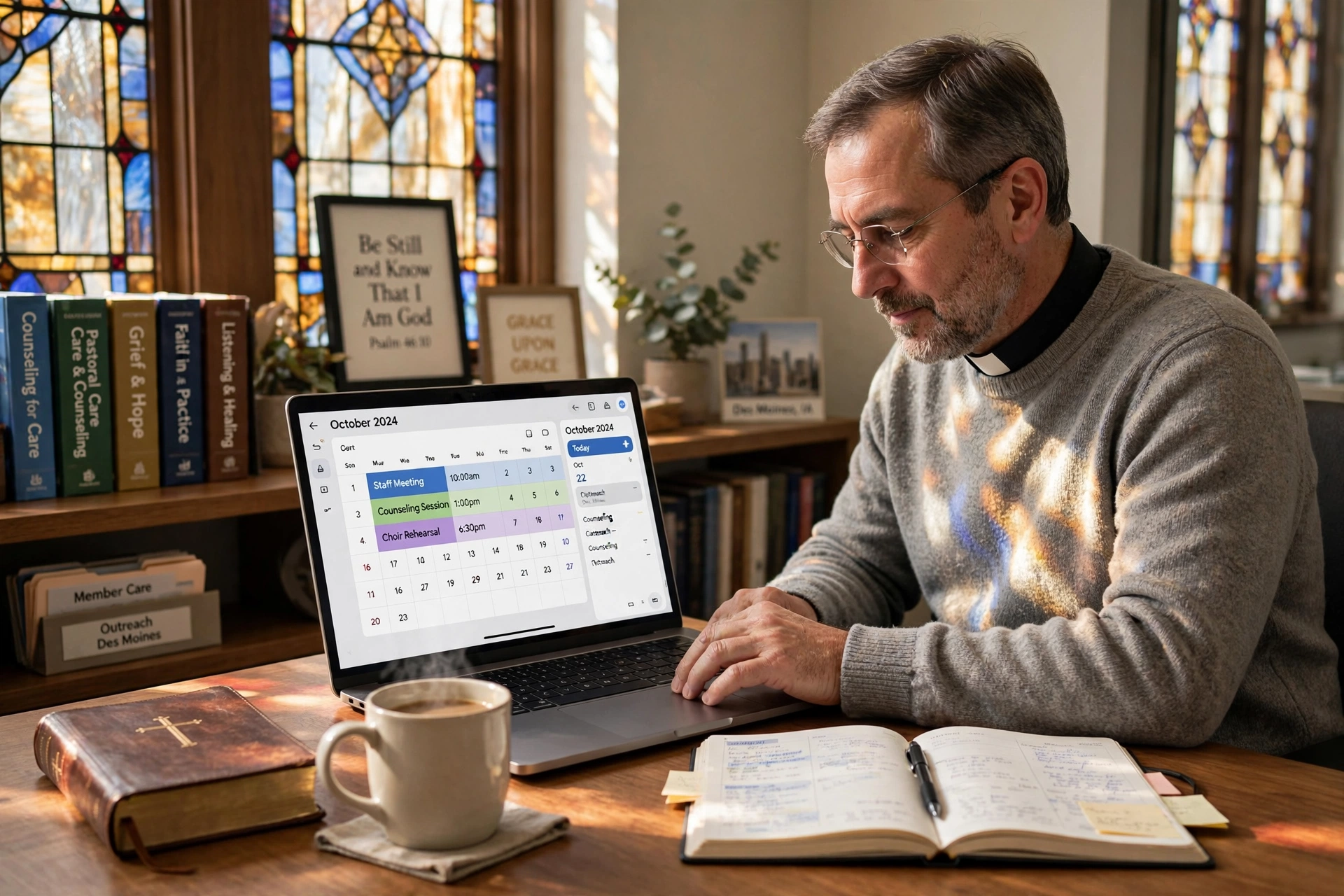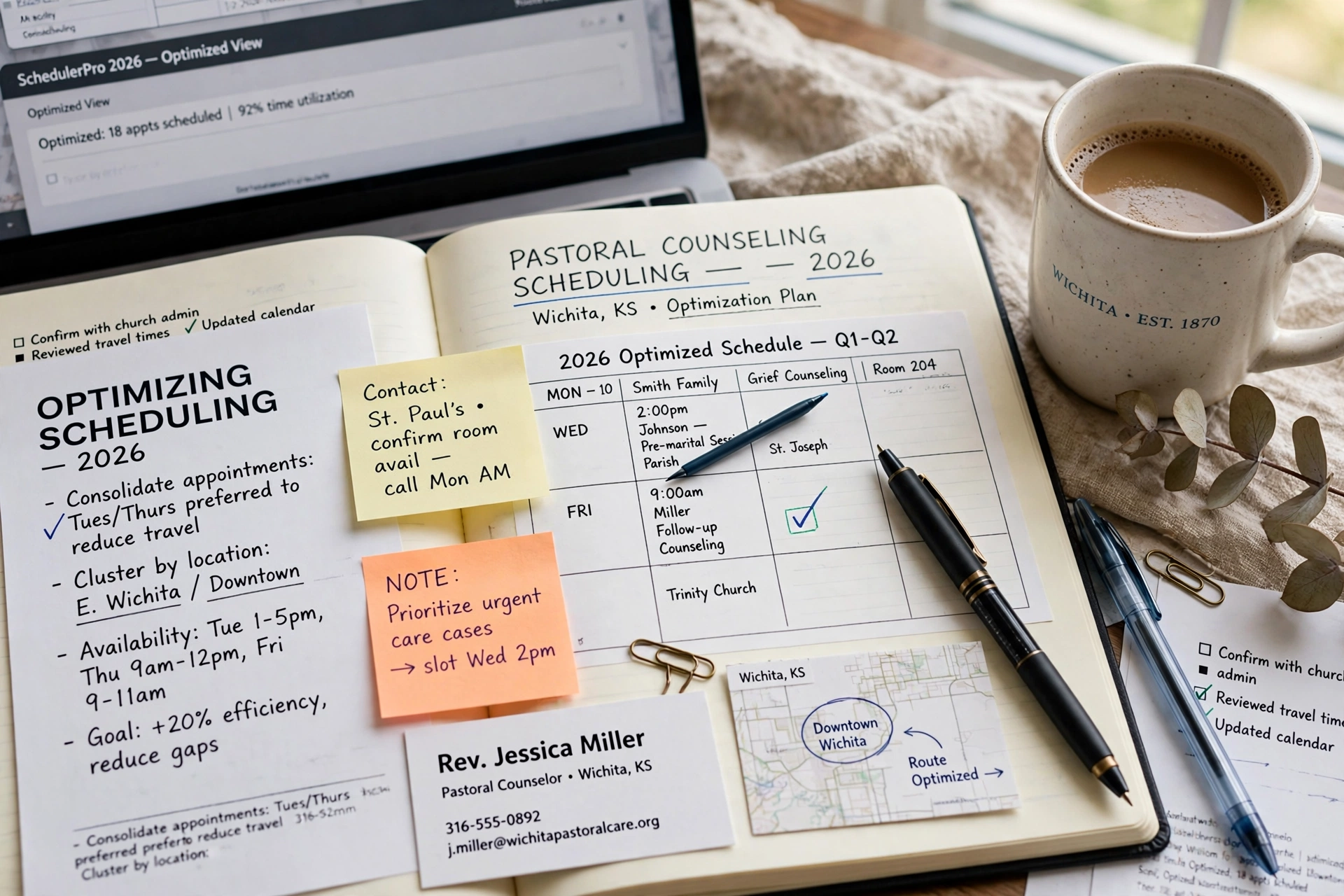

Many ministries in Allegheny County struggle with the friction of coordinating crisis care and routine guidance, often relying on fragmented text chains or outdated paper calendars. To optimize pastoral counseling scheduling in Pittsburgh, leaders must implement a centralized digital booking system that allows congregants to reserve time based on the pastor's real-time availability, thereby eliminating the back-and-forth communication that often delays urgent spiritual care. This shift toward automated appointment booking ensures that members of the congregation in neighborhoods from Squirrel Hill to the North Shore receive timely support without adding to the administrative burden of the clergy.

Why Are Pittsburgh Ministries Adopting Digital Pastoral Counseling Scheduling?
The transition toward digital scheduling is not merely a trend in the Steel City; it is a response to the evolving expectations of a multi-generational congregation. In my experience working with various religious organizations across Western Pennsylvania, the pattern is clear: the "administrative drag"—the time spent coordinating dates—is the primary cause of burnout among mid-sized church staffs. When a pastor spends four hours a week just playing "calendar tag" via email, that is time stripped away from sermon preparation and direct pastoral care.
Furthermore, the demographic shift in Pittsburgh, with a growing influx of tech-savvy professionals in the robotics and healthcare sectors, has created a demand for frictionless access. According to Barna Group research, congregants increasingly expect the same level of efficiency from their church as they do from their medical providers or professional services. When a spiritual crisis hits at 11:00 PM on a Tuesday, a member is far more likely to engage with a ministry that offers an immediate, transparent booking link than one that requires a phone call during restricted office hours.
From a strategic standpoint, the adoption of specialized tools like Pastor Agenda allows for the segmentation of availability. For example, a minister can designate specific blocks for "Crisis Intervention," "Premarital Counseling," and "General Guidance." This prevents the common mistake of overbooking general appointments and leaving no room for the urgent needs that define a pastoral calling. As noted by the National Association of Evangelicals, the health of a ministry is often tied to the ability of the leader to maintain boundaries while remaining accessible, a balance that is nearly impossible to achieve with manual scheduling in 2026.
What Are the Key Benefits of Optimized Scheduling for Pittsburgh Churches?
Implementing a professional scheduling framework transforms the office from a bottleneck into a gateway for ministry. The primary benefit is the drastic reduction in "scheduling friction," which directly impacts the accessibility of the church's leadership. When the process is automated, the psychological barrier to seeking help is lowered, allowing members to initiate counseling sessions during their most vulnerable moments without the anxiety of a formal request process.
Enhanced Boundary Management and Burnout Prevention
One of the most significant issues I have observed among Pittsburgh clergy is the "always-on" expectation. By utilizing a system that defines specific counseling windows, pastors can reclaim their Sabbath and family time without guilt. Instead of receiving sporadic requests throughout the week, the system funnels all requests into pre-approved slots. This creates a sustainable pace of ministry that protects the leader's mental health and spiritual vitality.
Data-Driven Insights into Congregation Needs
Digital scheduling provides an audit trail that manual logs simply cannot match. By analyzing the frequency and types of appointments, a leadership team can identify trends within the congregation. If there is a sudden spike in requests for grief counseling in a specific neighborhood or age group, the church can proactively organize a support group or a themed sermon series to address that systemic need. This shifts the ministry from a reactive stance to a proactive, data-informed approach.
Reduction in No-Shows and Missed Sessions
Automated reminders are the most effective way to combat the high no-show rates typical of volunteer-led or high-stress environments. A system that sends a text reminder 24 hours before a session ensures that the pastor's time is respected. In a city where traffic on I-376 or the Parkway can lead to unexpected delays, allowing a client to easily reschedule via a link prevents the frustration of a missed appointment and the loss of a valuable ministry slot.
💡
Key Takeaway
Transitioning to digital scheduling reduces administrative overhead by an average of 15-20%, allowing pastors to shift their focus from logistics back to spiritual guidance.
Comparison of Scheduling Methodologies
| Feature | Traditional Manual Method | Generic AI/Cheap Tools | Pastor Agenda Approach |
|---|---|---|---|
| Time Spent | High (Manual back-and-forth) | Medium (Fragmented setup) | Low (Optimized workflow) |
| Boundary Control | Poor (Requests via all channels) | Basic (Static calendars) | Advanced (Ministry-specific slots) |
| Congregant Experience | High Friction (Phone/Email) | Moderate (Generic feel) | Low Friction (Faith-centered UI) |
| Data Privacy | Variable (Paper/Unsecured email) | Risky (Data mining) | High (Secure, focused privacy) |
| Reminder Logic | Manual/Forgettable | Generic Email | Targeted Pastoral Reminders |
Real-World Examples of Scheduling Transformation in Pittsburgh
To understand the impact of these tools, we can look at two distinct scenarios common to the Western Pennsylvania religious landscape. These examples illustrate how moving away from manual coordination creates a tangible ROI in terms of both time and spiritual impact.
Case Study 1: The Multi-Generational Community Church (North Hills)
This church was struggling with a bottleneck where the Lead Pastor was the only person handling counseling requests. The process involved a physical sign-up sheet in the foyer and a chaotic email thread. The result was a two-week average wait time for non-emergency counseling, and a 25% no-show rate because people simply forgot their appointments.
After implementing a centralized scheduling system, they moved the process online. They created specific categories for "First-Time Visitors" and "Crisis Care." Within three months, the average wait time for an initial consultation dropped from 14 days to 4 days. Because the system handled the reminders automatically, no-shows plummeted to under 5%. The pastor reported reclaiming approximately 6 hours per week—time that was immediately reinvested into developing a new leadership training module for the church's deacons.
Case Study 2: The Urban Planting Ministry (Downtown/Hill District)
This smaller, fast-growing plant was operating with a lean staff. The pastor was using a generic free calendar app, but it lacked the nuance required for pastoral care; appointments were often double-booked or conflicted with emergency hospital visits. The friction was causing a disconnect with younger members who expected a seamless digital experience.
By switching to a ministry-focused approach through Pastor Agenda, the plant established "buffer zones" between appointments to allow for prayer and notes. This prevented the "exhaustion overlap" where one heavy counseling session bleeds into the next. The result was a 40% increase in the number of unique individuals served per month, as the scheduling became more efficient and the pastor's energy levels remained stable throughout the week.

How to Get Started with Pastoral Counseling Scheduling in Pittsburgh
Moving toward a digital system does not have to be an overwhelming technical hurdle. For many pastors, the fear is that technology will replace the personal touch of ministry. However, the goal is the opposite: technology handles the logistics so that the human interaction can be more present and focused.
📚
Definition
Scheduling Friction is the cumulative resistance a person feels when trying to book a service, including the number of steps, the wait time for a response, and the effort required to communicate availability.
Step 1: Audit Your Current Time Allotments
Before touching any software, you must define your boundaries. Map out your typical week. When are you truly available for counseling? When is your time for study, family, and rest? I recommend creating "silos" of time. For example, Tuesday mornings from 9:00 AM to 12:00 PM could be dedicated to intensive counseling, while Thursday afternoons are reserved for shorter, 30-minute check-ins.
Step 2: Categorize Your Counseling Types
Not all appointments are created equal. A premarital counseling session requires a different time block and mental energy than a short prayer request. In your scheduling software, create distinct appointment types. This allows the system to assign the correct duration to each request and helps the congregant understand what to expect from the session.
Step 3: Deploy a Centralized Booking Link
Once your parameters are set, use a tool like Pastor Agenda to generate a public-facing booking page. This link should be placed in your email signature, on the church website, and shared in your weekly newsletter. This removes the need for the "Are you free on Wednesday?" conversation entirely. The congregant simply clicks, chooses a slot that works for them, and receives an instant confirmation.
Step 4: Establish a Feedback and Adjustment Loop
Review your scheduling data every 30 days. Are you consistently overbooked on Mondays? Do you find that 60-minute sessions are often too long? Use the analytics to refine your availability. This iterative process ensures that the system serves the ministry, rather than the ministry serving the system.
Common Objections to Digital Scheduling in Ministry
Despite the clear benefits, many leaders in Pittsburgh remain hesitant. Most of these objections stem from a misunderstanding of how modern tools function. Here is how to address the most common concerns using data and practical experience.
Objection 1: "It feels impersonal and unspiritual to use a link for counseling."
Many assume that automation removes the "heart" from ministry. In practice, the opposite is true. When a member of the congregation is in distress, the most "loving" thing you can provide is a clear, immediate path to support. Waiting three days for a return phone call to schedule an appointment can feel like abandonment. A digital link is not a barrier; it is a bridge. By removing the administrative hurdle, you are actually demonstrating a higher level of care and accessibility.
Objection 2: "I'm worried about privacy and the security of sensitive information."
There is a common fear that cloud-based systems are insecure. However, the data shows that manual systems—like a notebook on a desk or an unsecured email thread—are far more prone to privacy breaches. Professional tools designed for scheduling emphasize security and compliance. According to industry standards for data protection, encrypted platforms provide a significantly higher level of confidentiality than traditional paper-based methods, ensuring that the sacred trust of the counseling relationship is maintained.
Objection 3: "My older members won't know how to use it."
This is a frequent concern in the traditional churches of the North Side or South Side. While it is true that some seniors prefer the phone, the system does not have to be an "either/or" proposition. The pastor's secretary or a deacon can simply act as the "digital proxy," using the scheduling link on behalf of the older member. This allows the church to maintain a single source of truth for the calendar while still providing a high-touch experience for those who need it.
Frequently Asked Questions
How does automated scheduling improve the quality of pastoral care in Pittsburgh?
Automated scheduling removes the cognitive load of logistics from the pastor, allowing them to enter a counseling session with full mental and emotional presence. When a pastor isn't stressed about whether they double-booked the room or forgot to notify a spouse about a time change, they can focus entirely on the spiritual and emotional needs of the congregant. Furthermore, by providing clear time-blocks, it prevents the session from running over into the next person's time, ensuring that every individual receives the undivided attention they deserve, regardless of the complexity of their situation.
Can I integrate my church's existing Google or Outlook calendar with a scheduling tool?
Yes, professional scheduling tools like Pastor Agenda are designed to sync bi-directionally with the calendars most ministries already use. This means that if you add a personal doctor's appointment or a board meeting to your Google Calendar, that time slot is automatically blocked off on your public booking page. This synchronization is essential for preventing conflicts and ensuring that you never accidentally book a counseling session during a time when you are unavailable. It creates a seamless flow between your personal administration and your public ministry availability.
Is it possible to set different scheduling rules for emergency crisis counseling versus routine guidance?
Absolutely. A sophisticated setup allows you to create different "Appointment Types" with varying rules. For instance, routine guidance might be bookable up to two weeks in advance with a 48-hour lead time. In contrast, a "Crisis Care' slot can be configured to allow bookings with as little as two hours' notice, ensuring that those in acute distress can find a slot immediately. This distinction is critical for maintaining the operational health of the church while fulfilling the biblical mandate to provide urgent care to the brokenhearted.
How do I handle 'no-shows' when using a digital scheduling system?
The best way to handle no-shows is to prevent them through a strategic reminder sequence. A professional system should send an initial confirmation email, a reminder 24 hours before the appointment, and a final text message two hours before the session. If a no-show still occurs, the digital record allows the pastor to quickly reach out and check on the person's well-being, turning a missed appointment into a new opportunity for outreach. This transforms a frustrating administrative failure into a proactive pastoral touchpoint.
Will using a scheduling link make me look too corporate or disconnected from the congregation?
In the current 2026 landscape, efficiency is viewed as a form of stewardship. When a pastor manages their time well, it signals to the congregation that they value the time of others. By framing the tool as a way to "ensure everyone gets the attention they deserve," it is perceived as an act of service rather than a corporate maneuver. Most congregants in the Pittsburgh area appreciate the transparency of seeing exactly when a leader is available, as it removes the guesswork and the feeling of "bothering" the pastor with a request.
Final Thoughts on Pastoral Counseling Scheduling in Pittsburgh
Optimizing your pastoral counseling scheduling in Pittsburgh is not about replacing a relationship with an algorithm; it is about using technology to clear the path for that relationship to flourish. When the friction of "when and where" is removed, the focus returns to the "who and why." By implementing a professional system, leaders in Allegheny County can protect their boundaries, reduce burnout, and ensure that no one in their congregation falls through the cracks due to a scheduling error.
If you are ready to stop the endless cycle of calendar coordination and start spending more time in direct ministry, it is time to modernize your approach. Let the technology handle the logistics so you can handle the liturgy. Explore how Pastor Agenda can streamline your ministry and restore your time for what truly matters. Visit pastoragenda.com to begin organizing your calling today.
Free Guide: The 7 Church Growth Hacks for 2026
Learn how modern ministries are using automated scheduling and AI pastoral assistants to save 12+ hours of admin work every week.