📖This article is part of the complete guide to Organizing Church Events and Services Efficiently.
Managing a growing congregation often leads to a fragmented administrative nightmare where registration forms and actual calendars live in two different worlds. I've seen many ministries struggle with 'ghost events', registrations that were paid for or confirmed via email but never actually made it onto the pastor's primary schedule. This disconnect doesn't just create logistical chaos; it damages the trust of the congregation when a minister arrives unprepared or a room is double-booked.
For a comprehensive overview of these processes, explore our guide on church event management.
What Does it Mean to Integrate Church Registrations with a Calendar?
📚
Definition
Calendar integration for churches is the automated synchronization of data between a registration platform (where members sign up for events) and a digital calendar (where the pastor manages time and resources), eliminating the need for manual data entry.
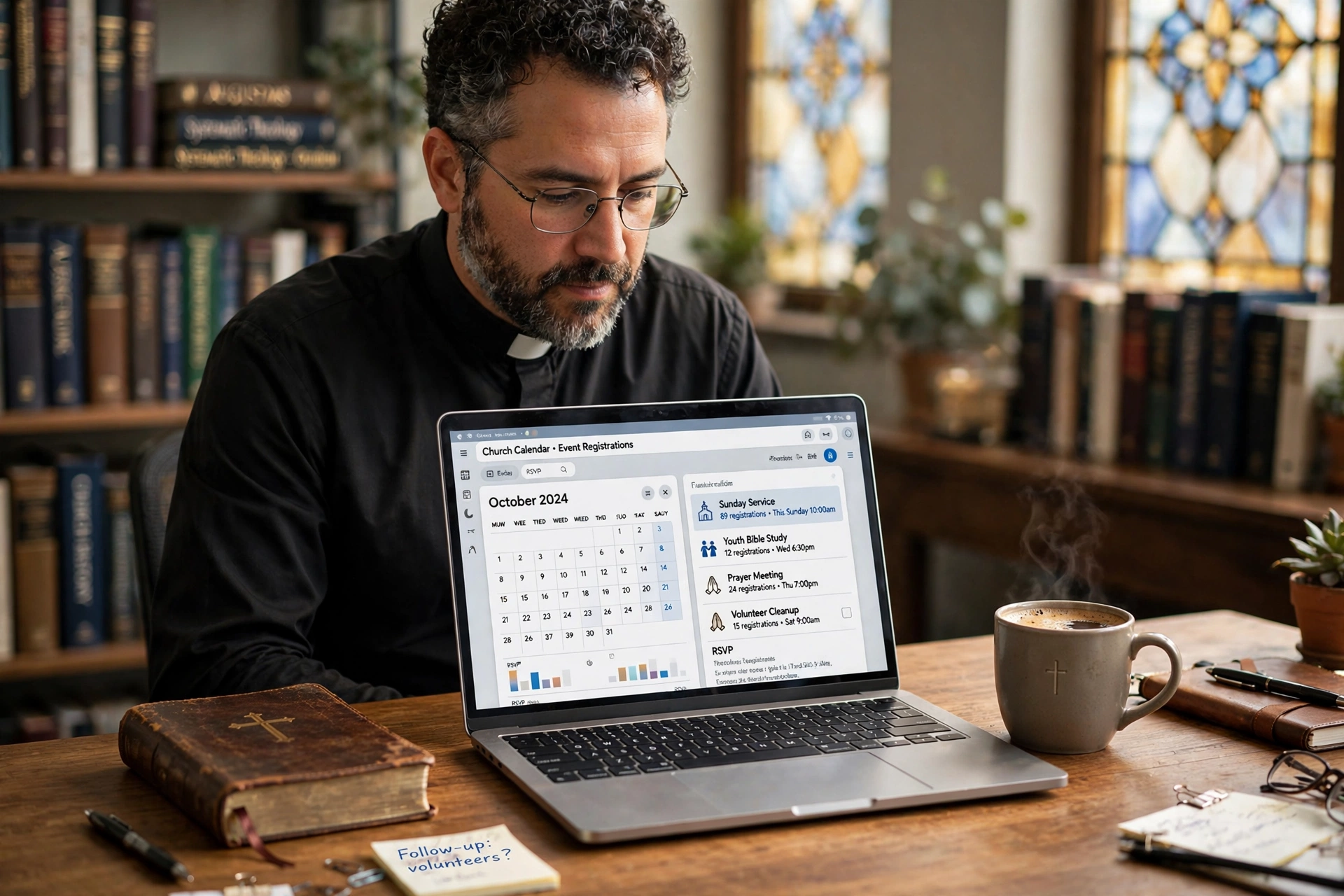
To integrate church registrations with a calendar means creating a seamless data pipeline. When a member of the congregation fills out a form for a marriage counseling session, a baptismal class, or a special ministry workshop, the system automatically creates a time block on the pastor's calendar. This process usually involves an API (Application Programming Interface) or a middleware connector that triggers an action in the calendar app based on a submission in the registration app.
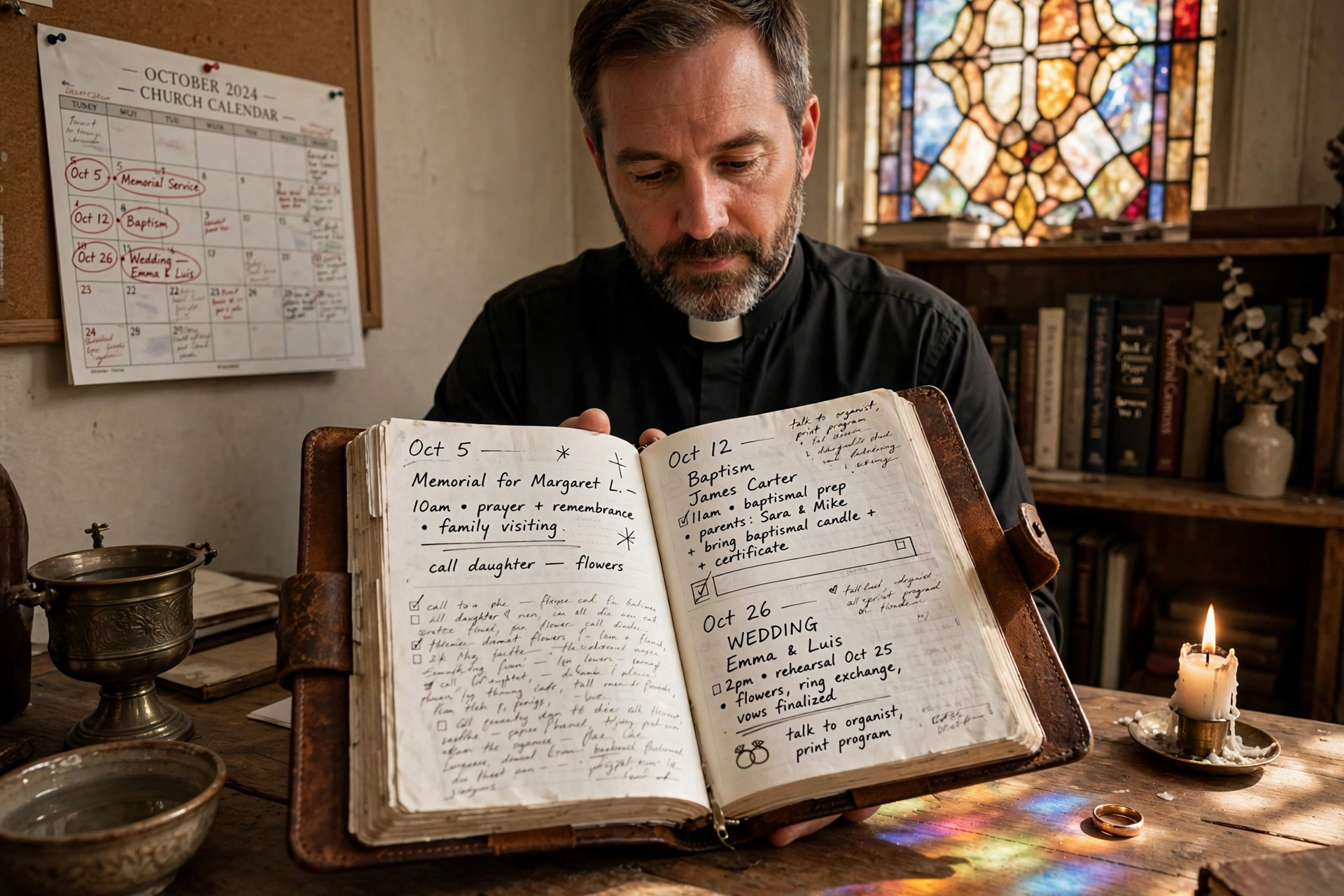
In my experience working with church administrators, the most common failure point is the "manual bridge." This is when a secretary checks a spreadsheet every Tuesday and then manually adds events to a Google or Outlook calendar. This method is prone to human error and time lags. True integration ensures that the moment a registration is confirmed, the time is locked. This is fundamental for maintaining the sanctity of the pastor's time, allowing them to focus on pastoral care rather than administrative firefighting.

Why This Integration Matters for Modern Ministry
Automating the flow of data from registration to scheduling is not about replacing the human touch in ministry; it is about removing the administrative friction that prevents that touch from happening. When you integrate church registrations with a calendar, you are protecting the most valuable resource in the church: the leader's time.
First, it eliminates the risk of double-booking. In a busy church environment, the pastor is often the center of multiple ministries. Without integration, a registration for a new member's class might overlap with a scheduled pastoral counseling session. According to Barna Group, pastoral burnout is a significant risk in modern ministry, often exacerbated by administrative overwhelm and the inability to maintain healthy boundaries. Automation provides a digital boundary that prevents the calendar from becoming an unsustainable mess.
Second, it enhances the member experience. When a registration is integrated, the confirmation email can include a calendar invite (.ics file). This ensures the member has the event on their own device, reducing no-shows. High-friction registration processes, where members wait days for a confirmation email, often lead to lower engagement in church programs.
Third, it provides real-time visibility. When the entire leadership team can see that an event is filling up via the integrated calendar, they can make informed decisions about venue size or the need for additional volunteers. This level of operational transparency is what separates an efficiently run organization from one that operates in a state of constant crisis management.
How to Integrate Church Registrations with Your Calendar Step-by-Step
Implementing a professional integration requires a shift from "form-thinking" to "system-thinking." You are not just collecting names; you are managing time slots.
Step 1: Audit Your Current Tool Stack
Before adding new software, identify where your data currently lives. Are you using Google Forms, a specialized church management system (ChMS), or a website plugin? Determine if your calendar is Google Calendar, Microsoft Outlook, or a proprietary system.
Recommended Readings
To deepen your understanding of these topics, we recommend reading the following articles:
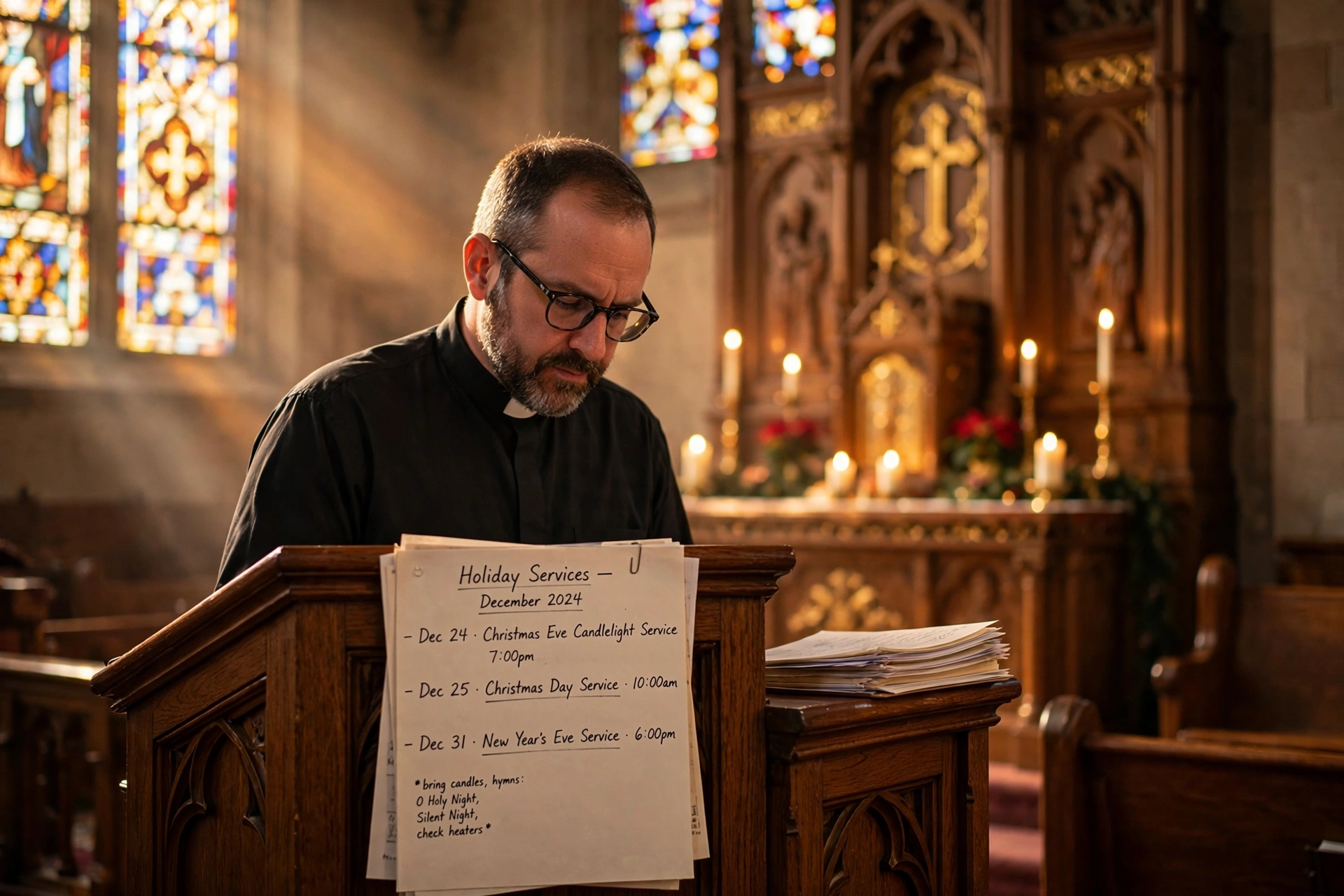
- Best Practices for Scheduling Special Church Services During Holiday Seasons
- How to Manage Calendars for Baptisms, Weddings, and Funerals
- Ensuring Absolute Privacy in Church Booking Systems
- Church Appointment Booking
Free Guide: The 7 Church Growth Hacks for 2026
Learn how modern ministries are using automated scheduling and AI pastoral assistants to save 12+ hours of admin work every week.