📖This article is part of the complete guide to Organizing Church Events and Services Efficiently.
Managing the sacred milestones of a congregation is often a logistical nightmare that happens behind the scenes of a spiritual victory. I have seen countless ministers reach a point of total burnout not because of the emotional weight of their ministry, but because they were managing a multi-million dollar facility and a complex schedule using a paper planner and a prayer. When a funeral request arrives on the same Saturday as a high-profile wedding, the tension isn't just administrative; it becomes a pastoral crisis. For a comprehensive overview of these systems, explore our guide on church event management.
What Does it Mean to Properly Schedule Weddings and Baptisms in Church?
📚
Definition
Sacred Milestone Scheduling is the process of coordinating venue availability, clergy availability, and liturgical requirements for life-cycle events (weddings, baptisms, funerals) while ensuring no overlap with regular church ministry.
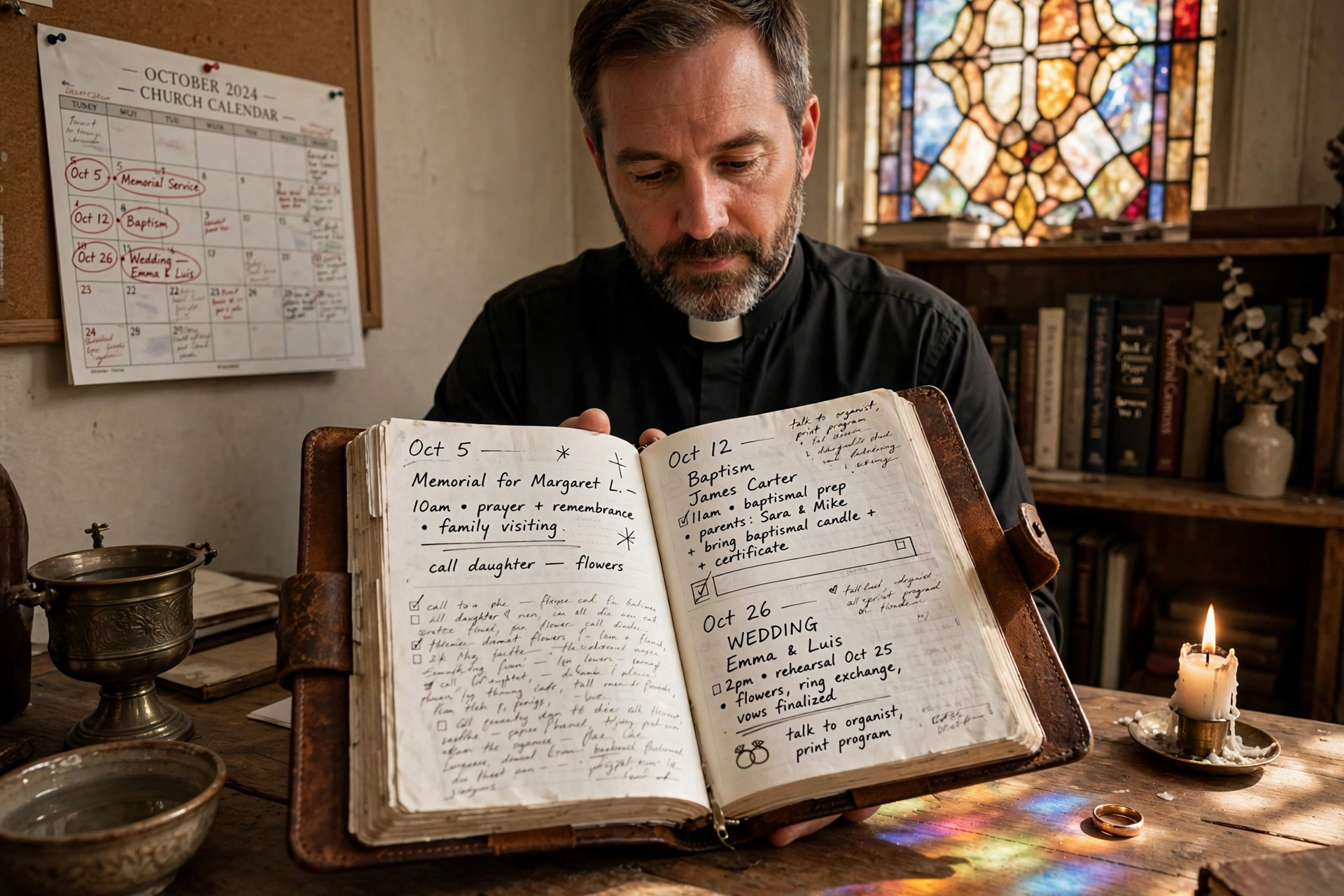
To effectively schedule weddings and baptisms in church settings, you must move beyond simple time-blocking. It is about managing the intersection of three distinct variables: the physical space (sanctuary, fellowship hall, dressing rooms), the human resource (the pastor, musicians, ushers), and the spiritual preparation (pre-marital counseling, baptismal classes). In my experience working with growing congregations, the most common failure point is treating these events as single-point entries on a calendar. A wedding is not a two-hour event; it is a six-month process involving multiple counseling sessions, rehearsals, and setup windows.
When you use a dedicated system like Pastor Agenda, you shift from reactive scheduling to proactive management. Instead of asking "Is Saturday open?", you are managing a pipeline. This means the calendar reflects not just the ceremony, but the prerequisite steps. For example, a baptism should not be scheduled until the candidate has completed the required theology of baptism class. By integrating these dependencies into your scheduling logic, you protect the sanctity of the ritual and the sanity of the staff.

Why Does Specialized Milestone Scheduling Matter for Ministry?
Precision in scheduling is not about corporate efficiency; it is about pastoral care. When a funeral is scheduled haphazardly, or a wedding rehearsal is double-booked, it sends a message to the family that their most significant life moment is an afterthought. According to research by the Barna Group, pastoral burnout is frequently linked to the "blurring of boundaries" between professional duties and personal recovery. Managing calendars for high-emotion events without a strict system is the fastest way to erode those boundaries.
First, there is the issue of facility stewardship. A church sanctuary is not just a room; it is a consecrated space that requires preparation. If a baptism is scheduled for 10:00 AM and a wedding for 1:00 PM, the window for cleaning the baptismal font and resetting the altar is dangerously slim. Without a buffer-time protocol, you risk the wedding party seeing the remnants of the previous service, which diminishes the experience.
Second, the emotional labor of these events is immense. A pastor cannot effectively transition from a grieving family at a funeral to a joyful couple at a wedding within a thirty-minute window. Specialized scheduling allows for "emotional decompression blocks." By building these into your calendar, you ensure that you are spiritually present for each family, rather than just physically present.
Third, compliance and governance are essential. As noted by Church Law & Tax, proper documentation of church events is vital for insurance and liability reasons. A centralized digital record of who was on the premises and when provides a layer of protection for the organization. When you move away from fragmented notes and toward a unified system, you create an audit trail that protects the church's assets and its leadership.
How to Implement a Milestone Scheduling System Step-by-Step
To stop the chaos of double-bookings, you need a system that prioritizes constraints over convenience. The goal is to create a workflow where the calendar is the "single source of truth."
Step 1: Define Your Event Templates
Do not start with a blank calendar. Create "Event Packages." For a wedding, a package should include: Pre-marital counseling (4-6 sessions), the Rehearsal (2 hours), and the Wedding Ceremony (3 hours). When you schedule the wedding date, the system should automatically prompt you to schedule the prerequisites. This prevents the common mistake of agreeing to a date and then realizing you have no time for the required counseling.
Step 2: Establish Buffer Zones
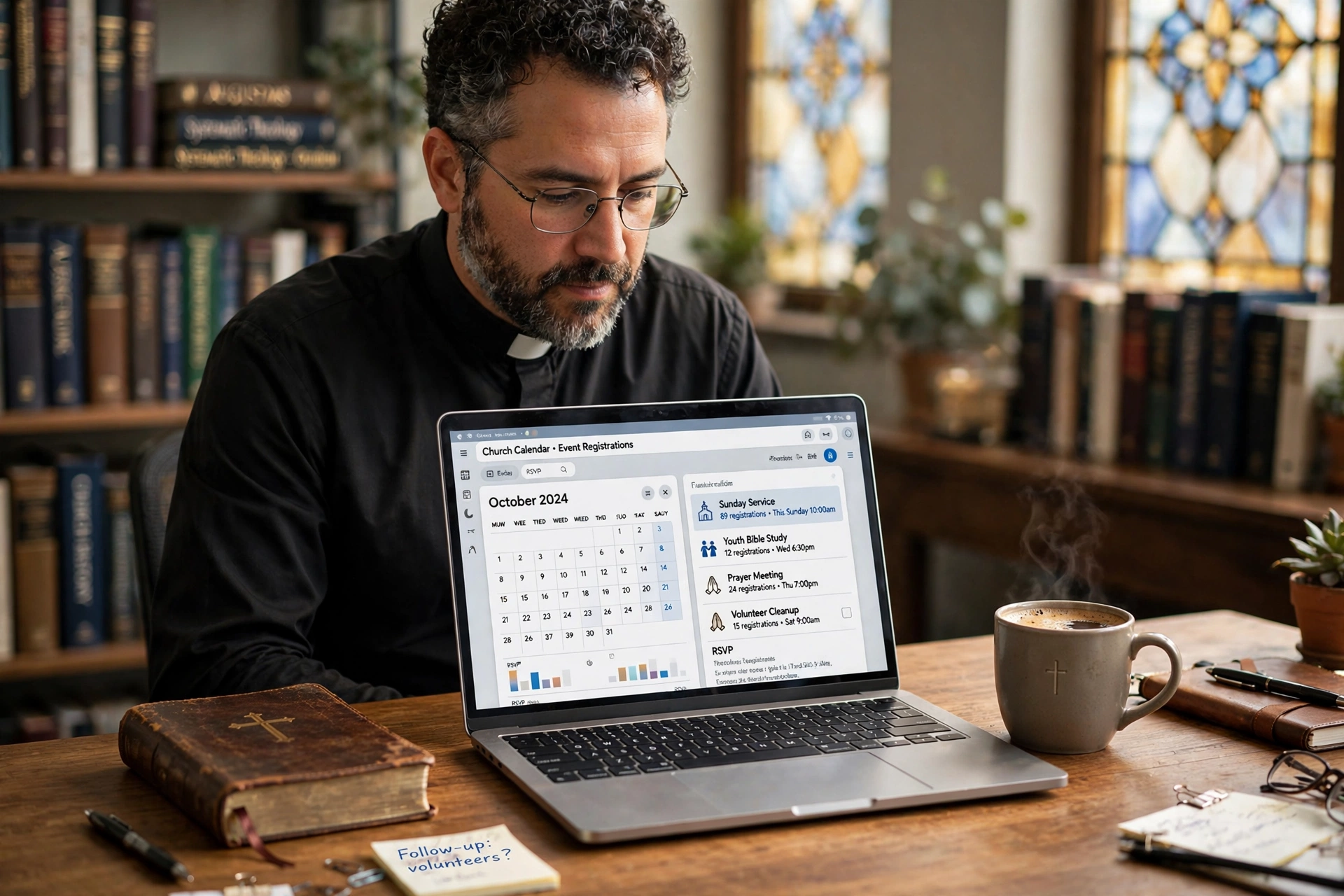
Never schedule events back-to-back. Implement a mandatory 90-minute "Reset Window" between any two major events. This time is for the custodial staff to clean, the musicians to transition, and the pastor to reset mentally. If you are using integrating event registrations with pastor calendars, ensure the registration software adds these buffers automatically so the public sees only the available windows.
Step 3: Create a Request Hierarchy
Not all requests are equal. A funeral usually takes immediate priority over a wedding request for a date six months away. Establish a clear policy for priority. Use a request form that captures all necessary details (estimated guest count, required rooms, specific liturgical needs) before the event ever touches the calendar. This eliminates the "back-and-forth" email chains that lead to errors.
Step 4: Synchronize with Staff and Volunteers
Your calendar is useless if the sound technician or the sexton doesn't know about the event. Use a system that allows for multi-person notification. When a baptism is confirmed, the notification should go to the pastor, the music director, and the facility manager simultaneously. This ensures the baptismal water is heated and the towels are ready without the pastor having to send five separate texts.
Step 5: Implement a Confirmation Lockdown
Events should remain "Tentative" until a deposit is paid or a required form is signed. Once the criteria are met, the status changes to "Confirmed." This prevents your calendar from being cluttered with "maybe" dates that block other families from booking their milestones.
💡
Key Takeaway
A successful church calendar manages the process, not just the point in time. By scheduling the prerequisites and the buffers, you protect the quality of the ministry.
Traditional vs. AI-Driven vs. Professional Scheduling
To understand why a specialized tool like Pastor Agenda is necessary, we must look at the evolution of church administration.
| Feature | Traditional (Paper/Email) | Generic AI/Cheap Tools | Professional (Pastor Agenda) |
|---|---|---|---|
| Conflict Detection | Manual check (High error risk) | Basic overlap alerts | Dependency-based blocking |
| Prerequisite Tracking | Memory or sticky notes | Manual reminders | Integrated workflow steps |
| Buffer Management | "Hope for the best" | Static time blocks | Dynamic, role-based buffers |
| Staff Coordination | Phone calls and texts | Generic email blasts | Synchronized multi-role alerts |
| Data Security | Physical ledger (Risk of loss) | Cloud storage (Generic) | Secure, ministry-specific silos |
As the table demonstrates, generic tools often fail because they do not understand the nature of ministry. A generic scheduling app doesn't know that a wedding requires a rehearsal; it just sees a block of time. The Professional approach understands the liturgical flow and ensures that every operational need is met before the event begins.
Common Mistakes and How to Avoid Them
In my years of analyzing church operations, I have seen the same five mistakes repeated across different denominations. Avoiding these will put you in the top 1% of organized ministries.
1. The "Open Door" Fallacy
Many pastors feel that putting limits on their calendar is "unpastoral." They believe they should be available whenever a grieving family needs them. However, the National Association of Evangelicals emphasizes the importance of sustainable leadership. If you do not have a system for scheduling, you will eventually fail the people you are trying to serve because you will be exhausted and disorganized. Set clear "Office Hours" for scheduling consultations while maintaining an "Emergency Protocol" for funerals.
2. Ignoring the "Invisible" Staff
Scheduling the pastor is only 20% of the battle. The mistake is forgetting the sexton, the organist, or the flower guild. When an event is added to the calendar, it must trigger a checklist for the support staff. If the baptism is scheduled but the baptismal font isn't filled, the event is a failure regardless of the pastor's readiness.
3. Overlooking the Transition Period
I've seen pastors attempt to move from a high-tension funeral to a joyful wedding in 15 minutes. This is a recipe for emotional collapse. You must schedule "Mental Reset" blocks. This is not wasted time; it is a professional necessity that ensures you provide a high quality of pastoral care to each party.
4. Not Budgeting for "The Unexpected"
Church life is unpredictable. If every single Saturday in 2026 is booked for weddings, you have no room for the inevitable emergency funeral. Always keep at least one Saturday per month as a "Ministry Reserve" date. This prevents the trauma of having to ask a wedding couple to move their date because of a death in the congregation.
5. Relying on Manual Reminders
Human memory is the weakest link in any administrative chain.
Recommended Readings
To deepen your understanding of these topics, we recommend reading the following articles:
- How to Integrate Event Registrations Directly with Pastor Calendars
- Best Practices for Scheduling Special Church Services During Holiday Seasons
- Ensuring Absolute Privacy in Church Booking Systems
- Church Appointment Booking
Free Guide: The 7 Church Growth Hacks for 2026
Learn how modern ministries are using automated scheduling and AI pastoral assistants to save 12+ hours of admin work every week.