How Does Online Booking For Pastors Actually Work?
Managing a church calendar often feels like trying to organize a puzzle where the pieces keep changing shape. For years, the standard process involved a flurry of phone calls, handwritten notes, and the inevitable double-booking of a counseling session during a board meeting. The shift toward online booking for pastors solves this by replacing manual coordination with a digital gateway where congregants can see real-time availability and claim a slot without a single back-and-forth email. This system integrates a public-facing calendar, a set of predefined availability rules, and an automated notification engine to ensure the minister is never overwhelmed and the member feels seen.

What Is the Core Mechanism of Online Scheduling for Ministry?
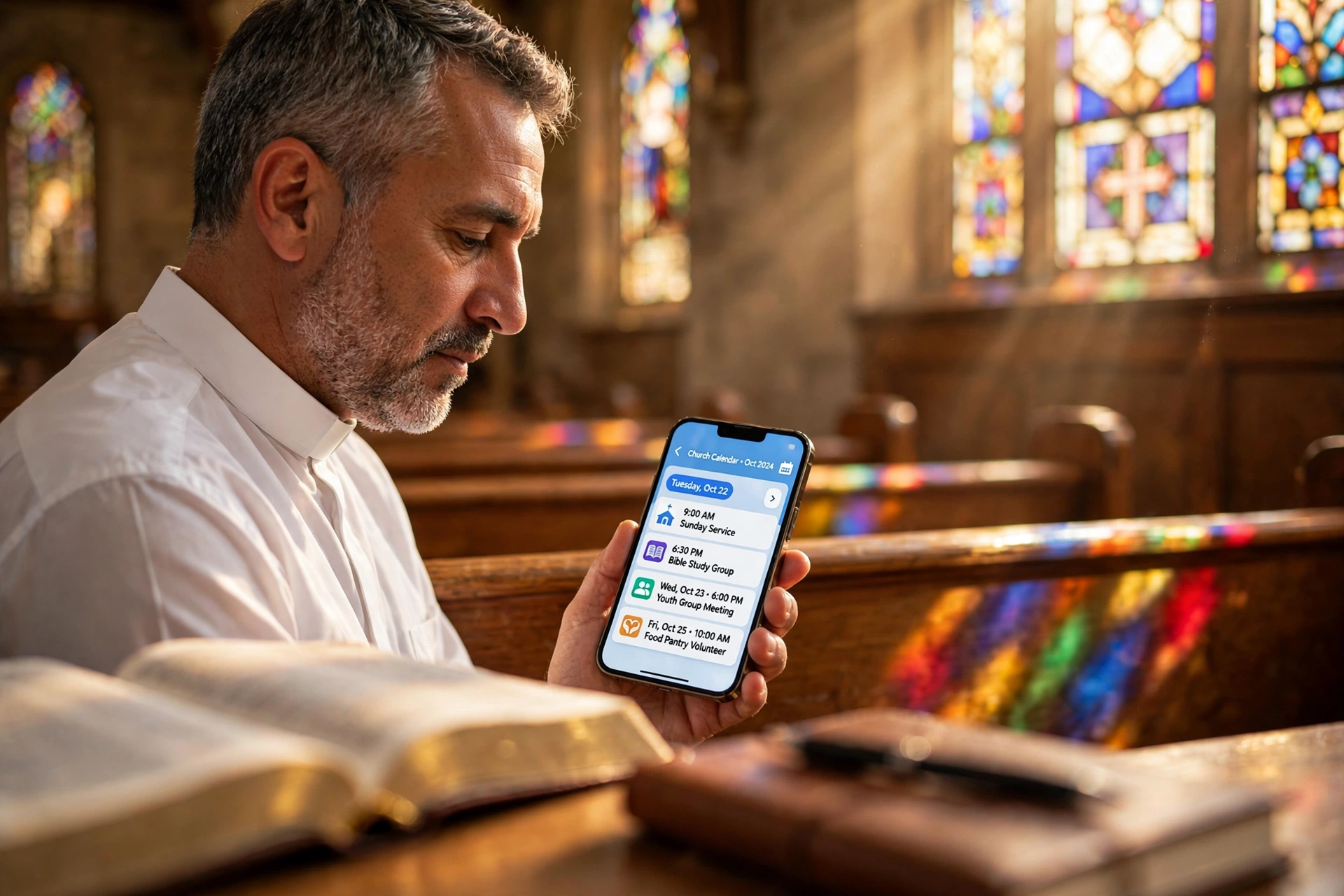
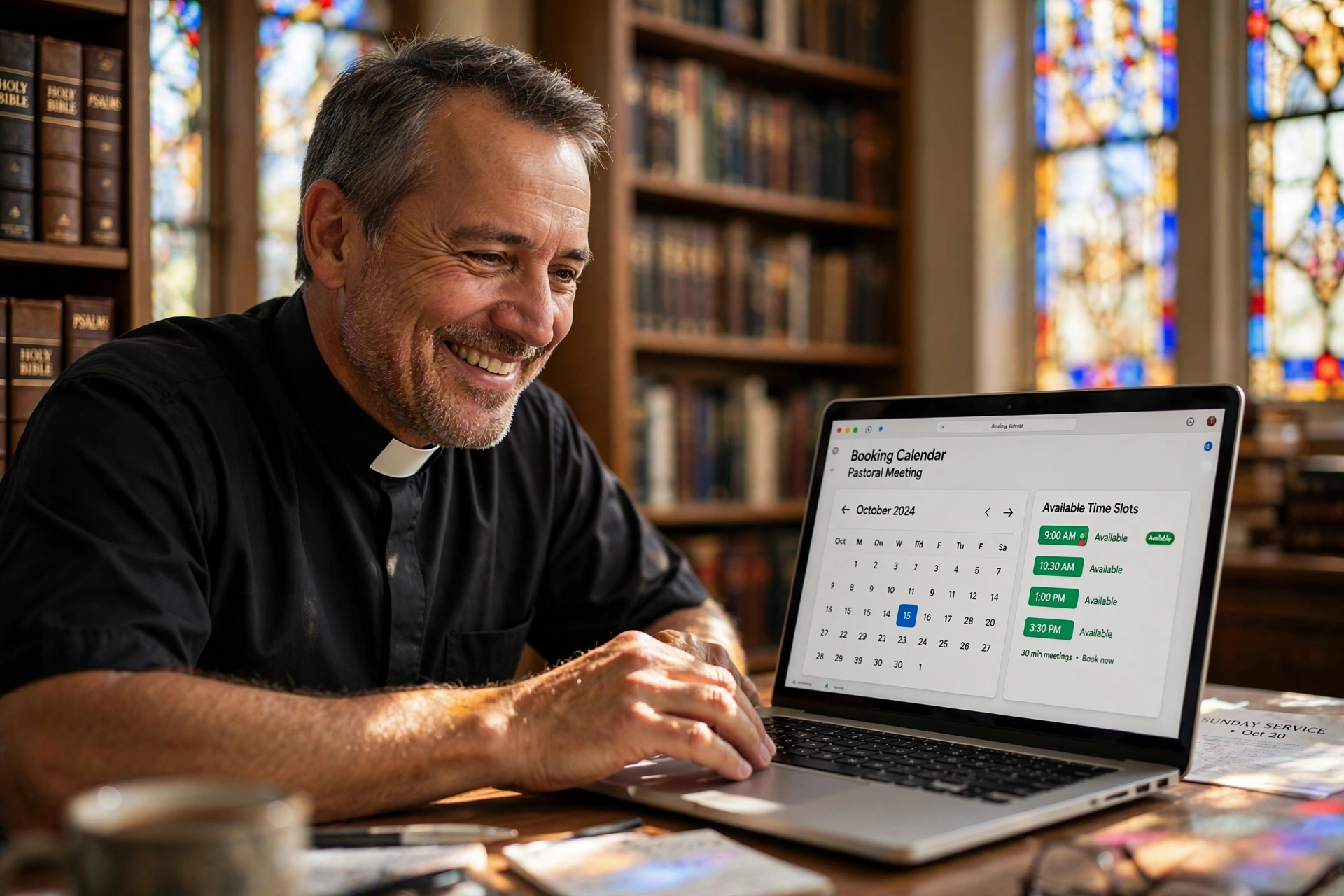
At its heart, online booking is a synchronization engine. It bridges the gap between a pastor's private calendar (where they manage their personal life and study time) and a public interface (where the congregation requests time). When a church member visits a booking page, they aren't seeing the pastor's entire schedule; they are seeing "available windows" that the pastor has explicitly designated for specific types of ministry.
📚
Definition
Online booking for pastors is a cloud-based system that allows church members to schedule appointments, counseling sessions, or home visits by selecting a pre-approved time slot from a digital calendar, which then automatically synchronizes with the minister's primary schedule.
In my experience working with dozens of church leaders, the biggest hurdle isn't the technology itself, but the fear of losing control over their time. Many pastors worry that a public link will lead to a calendar full of appointments with no room for prayer or sermon preparation. However, the mechanism is designed for boundaries. You can set "buffer times" (e.g. 15 minutes between sessions) and "lead times" (e.g. no appointments can be booked less than 24 hours in advance).
This level of organization is not just a convenience; it is a necessity for mental health in ministry. According to the Barna Group, pastoral burnout is a recurring crisis in the modern church, often driven by the "always-on" expectation of congregants. By implementing a structured booking system, a pastor shifts from a reactive state (responding to every urgent text) to a proactive state (allocating specific hours for pastoral care), which significantly reduces emotional exhaustion.
Why Does Automated Scheduling Matter for Church Growth?
The administrative friction associated with scheduling often acts as a silent barrier to pastoral care. When a member in crisis has to wait three days for a secretary to call them back to confirm a time, the window for impactful intervention can close. Online booking removes this friction, providing immediate confirmation and a sense of security to the believer.
From a data perspective, the impact is measurable. While specific church-industry ROI is harder to track than corporate metrics, the general trend in appointment-based services shows that automation increases "conversion" (in this case, the transition from a need for care to an actual meeting) by reducing the cognitive load on the user. Research by Christianity Today emphasizes that the effectiveness of leadership in the 2026 landscape depends on the ability to balance digital accessibility with personal boundaries.
Consider the cost of a "scheduling leak." This happens when a pastor spends 30 minutes a day managing emails and texts just to set up three meetings. Over a year, that is over 180 hours of wasted time, nearly an entire month of full-time work, spent on logistics rather than liturgy. When you automate this, you reclaim that time for sermon study or direct ministry.
Furthermore, the psychological impact on the congregation is profound. In an era of instant gratification, a member who can book a 15-minute "check-in" session instantly feels a stronger connection to the church's infrastructure. It signals that the leadership is organized and that the member's time is valued.
How to Implement Online Booking in Your Ministry Step-by-Step
Transitioning to a digital system requires more than just a link; it requires a strategy for how you want your time to be used. The mistake I made early on, and that I see constantly in new users, is opening the calendar to "everyone for everything" without categories.
Step 1: Define Your Appointment Types
Do not create one generic "Meeting" slot. Instead, create categories:
- Pastoral Counseling (60 min): High-intensity, requires maximum privacy.
- New Member Orientation (30 min): Standardized, can be grouped on a specific day.
- Quick Check-in (15 min): Low-friction, ideal for brief questions.
- Home Visit/Hospital Call (90 min): Includes travel time.
Step 2: Map Your "Ministry Windows"
Decide when you are "bookable." For example, Tuesday mornings might be dedicated to counseling, while Thursday afternoons are for administration. By blocking off your "Deep Work" time for sermon preparation, you ensure that the online booking system protects your productivity rather than eroding it.
Step 3: Configure Your Technical Stack
This is where a specialized tool like Pastor Agenda becomes essential. While generic tools exist, a ministry-focused platform understands the nuances of church life. You need a system that allows you to embed your booking link directly into your church website or link it in your social media bios.
Step 4: Set Your Boundaries (The "Buffer" Rule)
Always implement a buffer. If a counseling session ends at 10:00 AM, the next slot should not start until 10:15 AM. This allows you to pray, take notes, and reset emotionally.
💡
Key Takeaway
The secret to a successful booking system is not the software, but the boundaries. If you do not define your availability, the system will simply help people take your time more efficiently.
Step 5: Communicate the Shift to the Congregation
People are creatures of habit. They will still text you "Are you free tomorrow?" You must gently redirect them. "I've moved my scheduling to a new system to make sure I give everyone my full attention. Please use this link to find a time that works for you."

Comparing Scheduling Approaches: Manual vs. Generic vs. Specialized
Not all scheduling solutions are created equal. Many pastors start with a manual approach, move to a generic tool, and eventually realize they need a professional ministry solution.
| Approach | Process | Pros | Cons | Best For |
|---|---|---|---|---|
| Manual/Traditional | Phone calls, texts, and paper calendars | High personal touch | High friction, frequent double-booking, burnout | Very small house churches (< 30 members) |
| Generic AI/Tools | General tools like Calendly or Google Calendar | Fast setup, reliable sync | Lacks ministry context, feels impersonal, no "pastoral" categories | Individual consultants or secular professionals |
| Modern Ministry Solution | Pastor Agenda specialized platform | Boundary-focused, integrated with church needs, professional | Requires a small shift in habit for the congregation | Growing churches seeking sustainable leadership |
Here's the thing though: generic tools often fail because they treat a counseling session like a business discovery call. In a business context, if a meeting runs over, you just reschedule. In a ministry context, if a member is weeping or in crisis, you cannot simply cut them off because your "calendar app" says the next person is arriving. A specialized approach allows for the flexibility and grace required in pastoral care.
Common Misconceptions About Digital Booking in the Church
There are several myths that keep pastors from adopting these systems. Most guides get this wrong by focusing on "efficiency," whereas the real issue is "stewardship."
Myth 1: "It's too impersonal and cold."
The opposite is true. When a pastor is stressed and frazzled by a chaotic schedule, they are less present during the actual meeting. By automating the logistics, you arrive at the meeting calm and focused. The "personally" happens during the session, not during the scheduling of the session.
Myth 2: "My members won't know how to use it."
In 2026, the vast majority of the population is comfortable with a "click-and-book" interface. For the elderly or those less tech-savvy, the church secretary can simply use the pastor's link to book on their behalf. The system benefits the leader even if the member doesn't touch the software.
Myth 3: "I'll lose the ability to prioritize urgent needs."
A booking system is for scheduled care, not crisis care. You still keep your phone for the emergency hospital call. The system is designed to move the "I just want to chat" appointments out of the way so that you actually have the mental space to handle the true emergencies.
Frequently Asked Questions
How do I handle emergency appointments with an online booking system?
An online booking system is designed for planned interactions, not crises. To manage emergencies, you should maintain a separate "Emergency Contact" protocol. This usually involves a specific phone number or a designated deacon who screens calls. In your booking page description, explicitly state: "For immediate crises or emergencies, please contact the church office at [Phone Number] rather than using this scheduler." This ensures that while your routine care is automated, your urgent care remains human and immediate.
Will online booking for pastors make me look unavailable to my congregation?
Actually, it does the opposite. It shows that you are intentional about your time and that you have dedicated slots specifically for them. When a member sees a calendar with available slots, they know exactly when they can reach you, which eliminates the anxiety of "bothering" the pastor. It transforms the perception from "The pastor is too busy for me" to "The pastor has reserved this time specifically for me."
Can I integrate my personal Google or Outlook calendar with Pastor Agenda?
Yes, synchronization is the backbone of any professional scheduling tool. The system reads your "busy" events from your personal calendar and hides those times from the public booking page. This means if you have a doctor's appointment or a family dinner on your private calendar, those slots automatically disappear from the public view. This prevents the nightmare of double-booking and ensures your private life remains private.
What happens if a member books a time and then forgets to show up?
No-shows are a challenge in every profession, including ministry. To mitigate this, online booking systems provide automated reminders via email or SMS. By sending a reminder 24 hours and 2 hours before the appointment, the "forgetfulness" rate drops significantly. Additionally, you can set a cancellation policy in your booking terms, asking members to notify you if they cannot make it, which fosters a culture of mutual respect for time.
Is it a security risk to put my availability online?
When configured correctly, there is very little risk. You are not publishing your address or your specific location; you are publishing a "window of availability." Most professional tools use secure, encrypted connections. To further increase security, you can create "secret links" that you only send to members who have already been vetted or who are already part of the church directory, rather than posting the link on a public-facing website.
Final Thoughts on Online Booking For Pastors
Moving toward a digital system is not about replacing the "shepherd's heart" with an algorithm; it is about protecting the shepherd from burnout so they can lead more effectively. When you implement online booking for pastors, you are essentially building a fence around your time, ensuring that your study, your family, and your health are not sacrificed to the chaos of manual scheduling.
The transition from a reactive calendar to a proactive one allows you to move from "surviving" your week to "leading" your congregation. By utilizing a platform like PastorAgenda Blog, you can ensure that every member feels cared for while you maintain the mental clarity needed to deliver a powerful sermon every Sunday.
Stop letting your calendar dictate your peace of mind. It is time to reclaim your hours and refocus your energy on what truly matters: the spiritual growth of your people.
Recommended Readings
To deepen your understanding of these topics, we recommend reading the following articles:
- Ensuring Absolute Privacy in Church Booking Systems
- Church Appointment Booking
- Online Appointment Booking for Modern Churches
- Automated Reminders and Communication for Congregations
Free Guide: The 7 Church Growth Hacks for 2026
Learn how modern ministries are using automated scheduling and AI pastoral assistants to save 12+ hours of admin work every week.