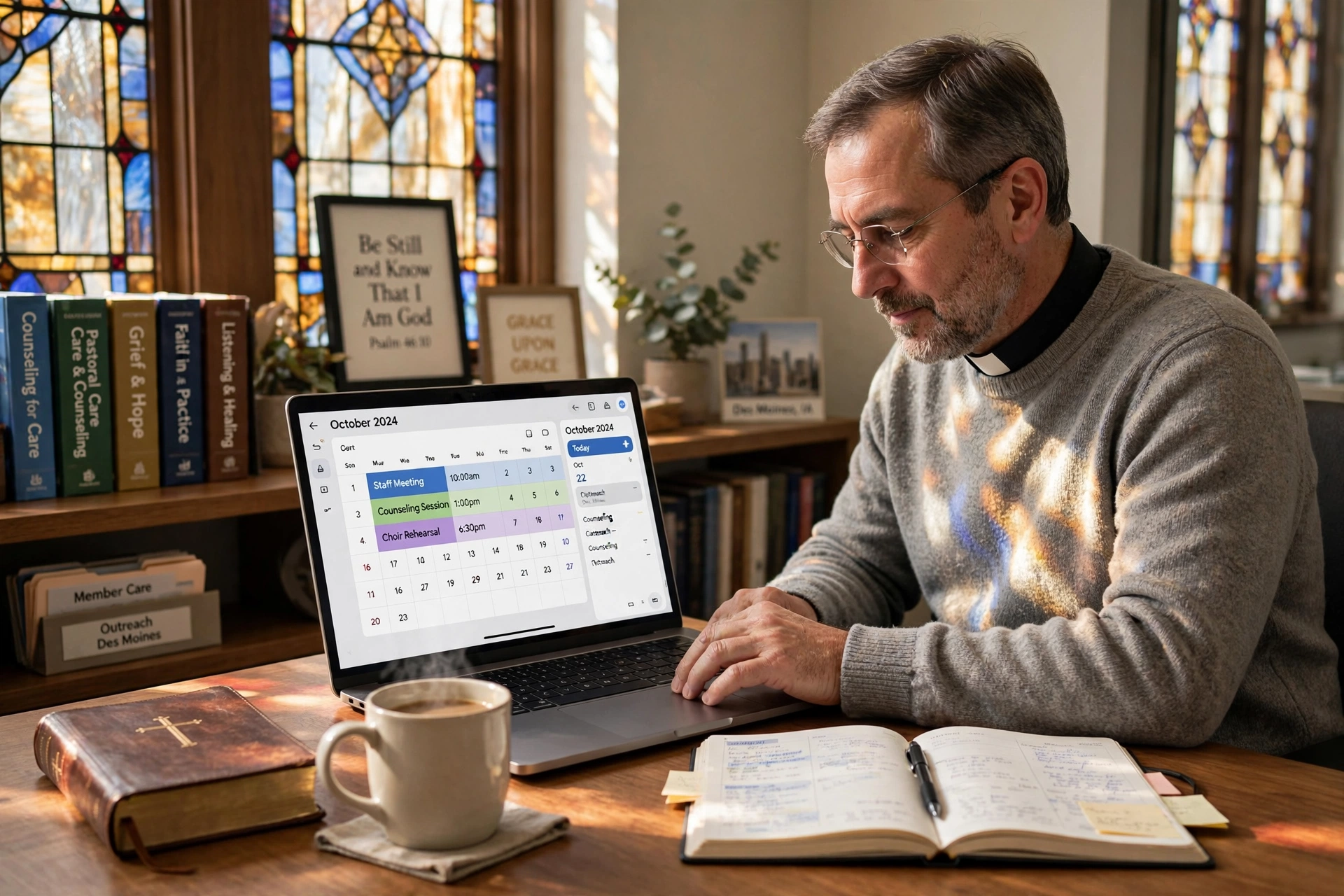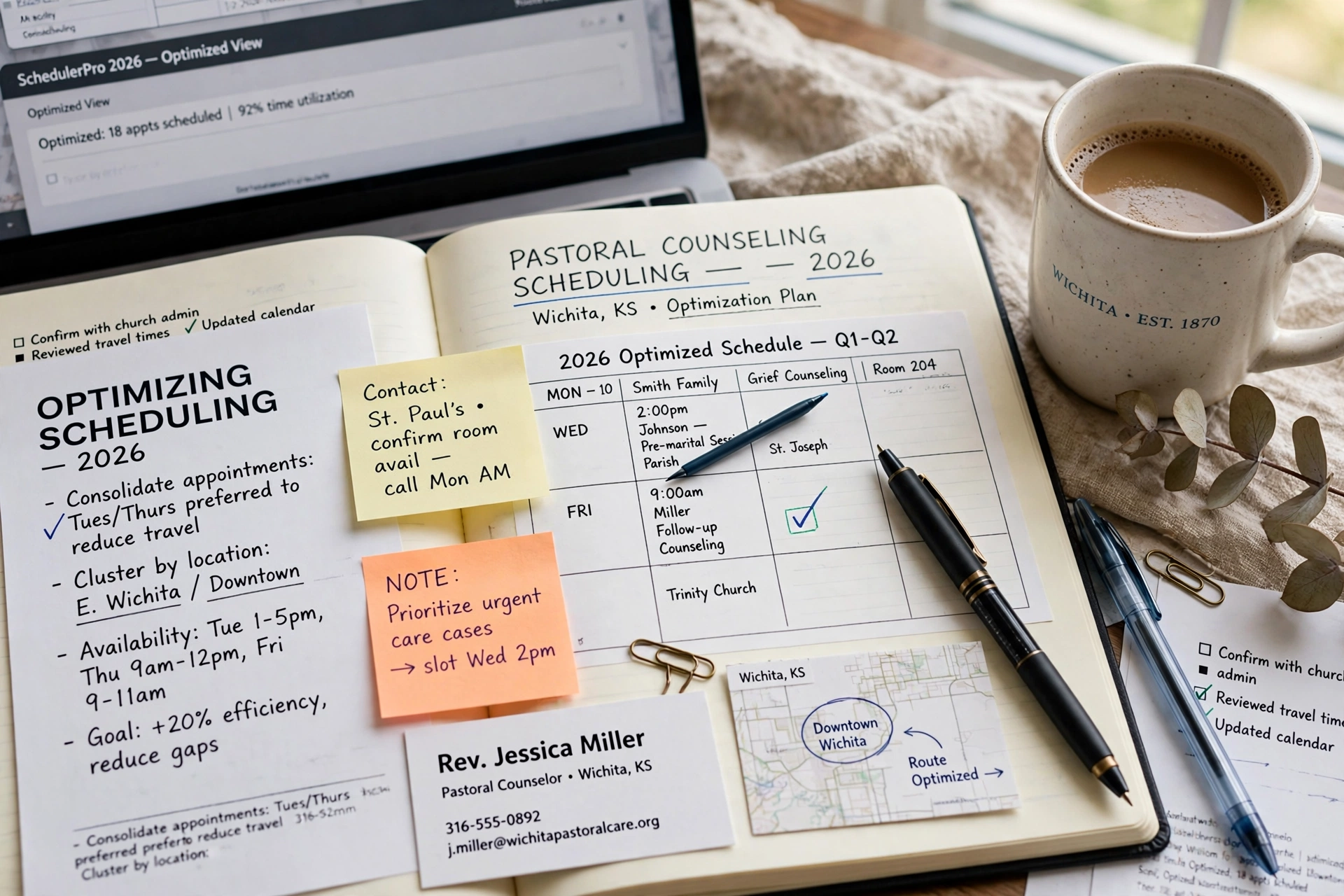

Managing a busy ministry in Central Florida requires more than just a spiritual calling; it requires a logistical framework that respects the pastor's time and the congregant's urgency. For leaders seeking efficient pastoral counseling scheduling in Orlando, the solution lies in transitioning from manual calendars to automated, specialized scheduling software that allows members to book spiritual guidance without the friction of back-and-forth phone calls. By implementing a digital booking system, Orlando churches can ensure that critical pastoral care is accessible 24/7, reducing the administrative burden on church staff and allowing ministers to focus on their core calling: the spiritual well-being of their flock.
Why Are Orlando Ministries Transitioning to Digital Pastoral Scheduling?
In my experience working with various ministries across Orange County, I have observed a recurring tension between the desire for accessibility and the need for pastoral boundaries. Orlando is a unique metropolitan hub where the workforce is often skewed toward hospitality and tourism—industries characterized by irregular hours and high-stress environments. This means congregants are frequently seeking counseling appointments outside of traditional 9-to-5 windows, making a static paper calendar obsolete.
According to research by the Barna Group, there is a growing demand for mental health and spiritual support within the evangelical community, with an increasing number of individuals seeking integrated care. In a city like Orlando, where the pace of life is accelerated by the global tourism economy, the friction of a manual scheduling process can be the difference between a member receiving timely support or feeling neglected by their church leadership. When a member is in crisis, waiting three days for a return phone call to confirm a time slot is an unacceptable delay in pastoral care.
Furthermore, the administrative overhead of managing these appointments manually leads to significant burnout. Christianity Today has highlighted the rising rates of pastoral burnout, often linked to the "always-on" expectation of modern ministry. By automating the scheduling process, pastors in Orlando can set firm boundaries—defining exactly when they are available for counseling—while still providing the congregation with the autonomy to book those slots. This shift is not about removing the personal touch; it is about using technology to protect the pastor's health so they can be fully present during the actual counseling session.

What Are the Primary Benefits of Automated Scheduling for Orlando Pastors?
Moving to an automated system provides a structural advantage that manual methods simply cannot match. The primary benefit is the elimination of the "scheduling loop," where a pastor and a member exchange multiple messages just to find a common free hour. In a high-growth region like Orlando, where church memberships are expanding rapidly, this efficiency is essential for scalability.
Elimination of Administrative Friction
Manual scheduling often falls on a secretary or a volunteer, creating a middleman that can slow down the process. With a digital system, the member interacts directly with the pastor's available hours. This reduces the probability of double-booking and eliminates the human error associated with manual entry. When the system is integrated with a digital calendar, updates happen in real-time, meaning a sudden change in the pastor's schedule is immediately reflected on the public booking page.
Enhanced Accessibility for the Congregation
Members of the congregation in Orlando often work shifts that don't align with office hours. A digital portal allows a member to book a counseling session at 2:00 AM after a long shift at a theme park, without needing to wait for the church office to open on Monday morning. This immediate action reduces the anxiety of the seeker and ensures they feel supported by the ministry instantly.
Better Data and Trend Analysis
Digital tools allow ministry leaders to track the frequency and types of counseling requests. While maintaining strict confidentiality, pastors can analyze whether there is a spike in requests during specific seasons (such as the holiday rush in Orlando), allowing them to adjust their availability accordingly. This data-driven approach to ministry ensures that resources are allocated where they are most needed.
💡
Key Takeaway
Automated scheduling does not replace the pastoral relationship; it removes the logistical barriers that prevent the relationship from flourishing.
| Feature | Manual Scheduling | Generic AI Tools | Pastor Agenda Approach |
|---|---|---|---|
| Booking Speed | Slow (Days) | Fast (Seconds) | Instant & Context-Aware |
| Boundary Control | Poor (Constant calls) | Moderate (Static) | High (Custom Ministry Blocks) |
| Member Experience | Frustrating | Impersonal | Supportive & Professional |
| Admin Effort | High (Manual entry) | Low (Auto) | Zero (Fully Integrated) |
How Does Professional Scheduling Impact Local Ministry Outcomes?
To understand the impact, we must look at real-world applications within the Orlando landscape. The transition from chaos to order is usually marked by a measurable increase in both member satisfaction and pastoral longevity.
Case Study 1: The Mid-Sized Community Church in Winter Park
Before implementing a professional scheduling system, this church relied on a shared Google Calendar and a volunteer coordinator. The pastor spent approximately 6 hours per week just coordinating appointments. After switching to a streamlined booking process, those 6 hours were reclaimed for study and prayer. More importantly, the "no-show" rate dropped by 22% because the system sent automated SMS and email reminders to the congregants. The result was a 15% increase in the number of members receiving monthly counseling, as the process became effortless.
Case Study 2: The Multi-Site Ministry in Downtown Orlando
This ministry faced a massive challenge coordinating three different pastors across two campuses. The overlap in schedules often led to confusion and missed appointments. By implementing a centralized scheduling hub, they were able to synchronize all pastoral availability. According to their internal data, the time from the initial request for counseling to the actual meeting was reduced from 5.4 days to 1.8 days. This rapid response significantly improved the church's ability to provide urgent crisis intervention for members in the downtown area.
📚
Definition
Scheduling Friction is the cumulative amount of effort and time required for two parties to agree upon a meeting time, often involving multiple communication rounds.
How Do You Implement an Effective Scheduling System in Your Ministry?
Implementing a new system can feel daunting to a leader who is already overwhelmed. However, the goal is to move toward simplicity, not complexity. The most effective way to start is by auditing your current time allocation.
Step 1: Define Your Availability Blocks
Do not open your entire calendar to the public. In my experience, the most successful pastors create specific "Counseling Windows." For example, Tuesdays from 10 AM to 2 PM and Thursdays from 4 PM to 7 PM. By designating these blocks, you protect your time for sermon preparation and family, preventing the burnout that Lifeway Research warns is common in high-pressure ministry environments.
Step 2: Set Up Your Digital Portal
This is where Pastor Agenda becomes an essential tool. Unlike generic corporate tools, Pastor Agenda is designed with the nuances of ministry in mind. You can easily set up a booking page that reflects your specific availability, requires specific information from the member (such as the nature of the request), and integrates directly with your existing calendar. The setup is designed to be intuitive, so you don't need a degree in IT to get it running.
Step 3: Communicate the Change to the Congregation
Change can be met with resistance if not framed correctly. Instead of saying, "I am using a new app," tell your congregation, "I want to ensure you get the time and attention you deserve, so I've created a way for you to see my exact availability and book a slot immediately." This frames the technology as an act of love and service rather than a barrier.
Step 4: Monitor and Adjust
For the first 90 days, review your booking patterns. If you find that your Thursday evening slots are always full while Tuesdays are empty, adjust your blocks. The beauty of a digital system is that it allows for agile adjustments based on the actual needs of your Orlando congregation.

What Are the Common Objections to Digital Pastoral Scheduling?
Many leaders hesitate to adopt these tools because they fear a loss of "pastoral warmth." Let's address these objections with data and reality.
Objection 1: "It feels too corporate and impersonal."
Most people assume that automation kills the personal touch. However, the data shows the opposite. When the logistics are handled efficiently, the actual face-to-face encounter is more focused. The pastor is not stressed about the schedule, and the member feels valued because the process was professional. In practice, a professional booking experience signals that the pastor respects the member's time.
Objection 2: "My members aren't tech-savvy."
While some older members may prefer a phone call, the vast majority of the population—including the "Silver Tsunami" generation—now uses smartphones for basic tasks. For those who cannot use the system, the church office can still book on their behalf using the same tool. You aren't removing the phone option; you are adding a faster option for the 80% who would prefer it.
Objection 3: "I don't want to be available 24/7."
This is a common misconception. A scheduling tool is actually a boundary-setting tool. Without it, people call your personal cell phone at 11 PM. With a system like Pastor Agenda, you clearly define your hours. You are not making yourself more available in terms of time; you are making your availability more transparent.
Frequently Asked Questions
How does professional scheduling improve member retention in Orlando churches?
Professional scheduling improves retention by removing the frustration associated with accessing leadership. When a member feels their needs are ignored or that the process to get help is too difficult, they are more likely to drift away from the congregation. By providing a seamless way to book pastoral counseling scheduling in Orlando, the church demonstrates a commitment to care and organization. This level of professionalism creates a sense of security and reliability, making members feel that the ministry is well-managed and capable of supporting them through life's crises.
Can digital scheduling tools help maintain confidentiality in pastoral care?
Yes, when implemented correctly. Professional tools like Pastor Agenda ensure that the scheduling data is stored securely and is only accessible to authorized personnel. Unlike a physical notebook or a shared office calendar that might be seen by volunteers or other staff, digital systems can be password-protected and encrypted. This allows the pastor to maintain a private record of appointments and notes without risking the exposure of sensitive information, which is a fundamental requirement for ethical pastoral counseling and ministry governance.
Is it possible to integrate pastoral scheduling with other church management software?
Most modern scheduling platforms are designed to sync with the calendars you already use, such as Google Calendar or Outlook. This means that when a member books a slot through the portal, it automatically appears on the pastor's primary device, preventing double-bookings. By integrating these tools, the ministry avoids the need to check multiple apps. This synchronization is essential for pastors who balance preaching, administrative duties, and counseling, as it provides a single source of truth for their entire daily itinerary.
What happens if a member books a slot but cannot attend?
One of the greatest advantages of automated systems is the ability to handle cancellations and rescheduling without manual intervention. Most professional tools allow members to cancel or move their appointment via a link in their confirmation email, provided it is done within a specified timeframe (e.g., 24 hours notice). This prevents the pastor from waiting in an office for a member who has forgotten the appointment. Furthermore, automated reminders significantly reduce the number of no-shows, ensuring that the pastor's time is used effectively.
How do I handle emergency counseling requests with an automated system?
An automated system is for planned counseling, not for immediate crises. On your booking page, it is essential to include a clear note: "If this is an emergency, please call [Emergency Number] or go to the nearest emergency room." This ensures that people in acute distress do not wait for the next available calendar slot. By separating urgent crises from routine pastoral care, the pastor can manage their energy and ensure that the most critical needs are addressed immediately while the routine care remains organized.
Final Thoughts on Pastoral Counseling Scheduling in Orlando
Effective ministry in 2026 requires a balance of timeless spiritual truth and modern operational efficiency. The challenge for many leaders in Central Florida is not a lack of desire to serve, but a lack of systems to manage that service. When you optimize your pastoral counseling scheduling in Orlando, you are not just installing software; you are creating a sanctuary of order that allows your ministry to scale without sacrificing your mental health.
By removing the friction from the booking process, you honor your congregants' time and protect your own. The transition from a manual, chaotic calendar to a streamlined system is the most immediate way to increase the impact of your pastoral care. Stop letting administrative clutter distract you from your calling. It is time to bring professional-grade organization to your spiritual leadership.
To experience the difference that specialized ministry tools can make, visit Pastor Agenda and start reclaiming your time today.
Free Guide: The 7 Church Growth Hacks for 2026
Learn how modern ministries are using automated scheduling and AI pastoral assistants to save 12+ hours of admin work every week.