
Which Church Management Software Is Best for Your Ministry?
Many ministry leaders spend months chasing "all-in-one" platforms only to realize they've paid for 50 features they never use while still struggling to schedule a single pastoral counseling session. The "best" church management software isn't the one with the most checkboxes on a feature list; it is the one that aligns with your specific operational bottleneck—whether that is member tracking, financial transparency, or calendar congestion. For most growing congregations in 2026, the ideal choice is a lean, purpose-built tool that prioritizes scheduling and pastoral care over complex corporate HR functions.

What Exactly Is Church Management Software and How Does It Work?
To make an informed decision, we first have to strip away the marketing jargon. At its core, these systems are designed to centralize the disparate data streams of a religious organization into a single source of truth.
📚
Definition
Church Management Software (ChMS) is a category of specialized Customer Relationship Management (CRM) tools tailored for religious organizations to manage member databases, contributions, event scheduling, and communication.
In my experience working with various ministries, I've seen a recurring pattern: churches often confuse "management" with "administration." Administration is about keeping records; management is about facilitating ministry. A true ChMS should automate the administrative friction—like the back-and-forth emails to find a time for a baptism or a house visit—so the pastor can focus on the actual care of the soul.
Most of these platforms operate on a SaaS (Software as a Service) model, meaning the data is hosted in the cloud. This allows for real-time updates across multiple devices, which is fundamental for a team that is often split between the sanctuary, the community center, and the home. According to research from the Barna Group, the shift toward digital integration in church leadership has accelerated as congregations expect the same level of seamless interaction from their church that they receive from every other professional service in their lives.
When evaluating these tools, you must look at the "friction coefficient." If a software requires a 20-hour training course for your church secretary to understand, it isn't an asset; it's a liability. The most effective systems today use intuitive interfaces that mirror the apps we already use daily, reducing the learning curve and increasing adoption across the volunteer base.
Why Selecting the Right System Matters for Congregation Health
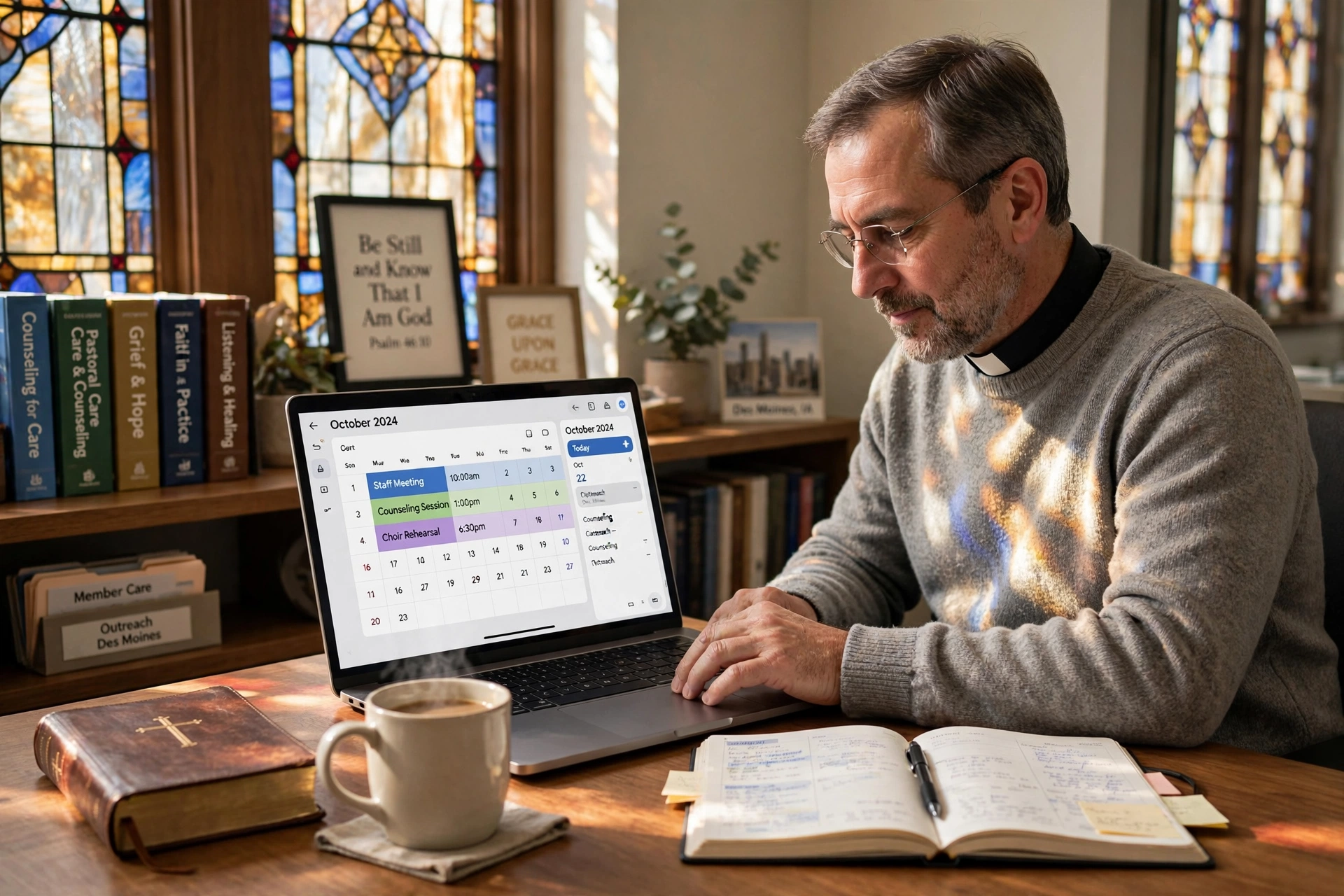
The choice of software has a direct impact on the emotional and spiritual health of a congregation. When a member requests pastoral counseling and it takes three days to get a response because the pastor's calendar is a chaotic mess of paper notes and digital alerts, that member feels unseen.
The administrative burden on clergy is a primary driver of burnout. Data from Lifeway Research indicates that pastoral burnout is frequently tied to the "administrative creep"—the gradual expansion of managerial duties that eat into time meant for prayer, study, and direct ministry. By implementing a streamlined system, a pastor can reclaim hours of their week.
Consider the financial implications as well. Inefficient tracking of tithes and offerings isn't just a bookkeeping headache; it's a governance risk. A professional system provides an audit trail that protects the leadership and builds trust with the donors. When members see that their contributions are handled with professional rigor, their confidence in the leadership grows.
Furthermore, the ability to segment your congregation allows for more personalized care. Instead of sending a generic blast email to 500 people, a well-implemented system allows you to identify who hasn't attended in three weeks or who just joined a specific small group. This transition from "mass communication" to "targeted care" is where the real value lies. If you continue to rely on spreadsheets, you are effectively treating your congregation as a list of names rather than a flock of individuals.
How to Implement a Decision Framework for Your Ministry
Choosing a system shouldn't be based on a demo that looks pretty. You need a clinical approach to selection. Here is the step-by-step process I recommend after analyzing dozens of failed software migrations:
- Audit Your Primary Friction Point: Before looking at software, spend one week logging every time you say "I don't know when I'm free" or "Where is that member's contact info?" If 80% of your stress is scheduling, you don't need a complex financial suite; you need a powerhouse scheduling tool.
- Map Your User Personas: Who will actually touch the software? The Lead Pastor, the Administrative Assistant, and the Small Group Leaders all have different needs. If the tool is too complex for the volunteer leader, they will stop using it, and your data will become obsolete within a month.
- Test the "Time-to-Value" Metric: Sign up for a trial. Try to book one appointment and add one new member. If this process takes more than five minutes of clicking, the software is too bloated.
- Prioritize Integration Over Features: It is better to have a tool that does one thing perfectly and connects to your email and calendar than a tool that does ten things poorly and keeps your data in a "walled garden."
This is where Pastor Agenda excels. While many systems try to be everything to everyone, Pastor Agenda focuses on the most critical intersection of ministry: the appointment and the engagement. By streamlining the scheduling process, it removes the administrative wall between the pastor and the congregation.
💡
Key Takeaway
The goal of church software is to disappear. The best system is the one that handles the logistics so quietly that the congregation only experiences the result—more available leadership and better care.

Comparing the Three Main Approaches to Church Management
When you start searching, you will find three distinct philosophies of software. Most guides will tell you to go for the biggest one, but that's often a mistake.
| Approach | Pros | Cons | Best For |
|---|---|---|---|
| The Legacy Giant | Comprehensive; handles everything from payroll to building rentals. | Expensive; steep learning curve; often feels like "corporate" software. | Mega-churches with dedicated full-time admin staffs. |
| The Generic AI Tool | Cheap; flexible; can be "prompted" to do many things. | High risk of data hallucinations; no ministry-specific logic; fragmented. | Tech-savvy individuals managing very small home cells. |
| The Purpose-Built Lean Tool | Fast implementation; focused on pastoral care/scheduling; high adoption. | May require external tools for complex accounting. | Growing churches prioritizing relational ministry and accessibility. |
The "Legacy Giant" approach often leads to "feature fatigue." I've seen churches pay thousands of dollars a year for modules that track "volunteer certifications" when they actually just need a way for members to book 15 minutes of the pastor's time. On the other hand, generic AI tools lack the privacy frameworks and the specific workflow logic required for sensitive pastoral counseling.
The lean, purpose-built approach—exemplified by Pastor Agenda—operates on the principle of "essentialism." It identifies that the heartbeat of the church is the relationship between the leader and the member. By optimizing the booking and management of those interactions, it solves the most pressing pain point without adding the weight of an enterprise ERP system.
Common Misconceptions About Church Software
There is a lot of misinformation in the "church tech" space. Most guides get this wrong by focusing on the software's capabilities rather than the humans using it.
Myth 1: "We need an all-in-one system to be efficient."
This is the biggest lie in the industry. "All-in-one" usually means "average at everything." In reality, a "Best-of-Breed" stack—where you use a dedicated tool for scheduling (like Pastor Agenda) and a dedicated tool for accounting—is almost always more efficient. It prevents a single point of failure and allows you to swap out one piece of the puzzle without collapsing your entire administrative structure.
Myth 2: "The software will organize the church for us."
Software does not create order; it amplifies existing patterns. If your current scheduling process is chaotic, a new software will simply allow you to be chaotic faster. You must define your pastoral boundaries and availability before you digitize them.
Myth 3: "Our congregation is too traditional for digital booking."
I hear this constantly. However, I've found that the "traditional" members are often the ones most frustrated by the lack of clarity in scheduling. While they may not want to use a complex app, they love receiving a professional confirmation text or email that confirms their appointment. The technology should be the engine under the hood, not the steering wheel the member has to wrestle with.
Frequently Asked Questions
How do I know if my church is too small for professional management software?
No church is too small to benefit from basic organization, but you are likely "too small" for enterprise-level systems. If you are spending more than two hours a week manually coordinating appointments, you have already hit the threshold where a tool like Pastor Agenda becomes a necessity. The cost of the software is usually far less than the "opportunity cost" of a pastor spending their Sunday afternoon playing email tag with a member in crisis. Focus on tools that scale with you rather than tools that require you to be a certain size to be useful.
Will moving to a digital system alienate my older members?
Only if you force them to do the administration. The goal of church management software is to empower the leader to serve the member better. Your older members don't need to log into a dashboard; they just need to know that when they call the office, the secretary has a clear, digital view of the pastor's availability. In fact, digital systems often improve the experience for seniors by reducing the "lost appointment" syndrome and ensuring that follow-ups happen on time.
How does church management software improve pastoral care?
It improves care by removing the "administrative barrier." When a pastor is bogged down by the logistics of how to meet, they have less mental energy for what to discuss during the meeting. A streamlined scheduling system ensures that the pastor enters the room knowing exactly who they are meeting with and why, without having to dig through a notebook. This creates a more present, attentive environment for the member, which is the essence of quality pastoral counseling.
What is the difference between a CRM and a ChMS?
A CRM (Customer Relationship Management) tool is designed to move a "lead" through a "sales funnel" to a "conversion." A ChMS (Church Management Software) is designed to move a "seeker" through a "discipleship path" to "membership." While the underlying technology is similar, the logic is different. A ChMS prioritizes things like spiritual growth tracking, baptism records, and ministry volunteerism over "sales quotas" and "lead scoring." Using a corporate CRM for a church often feels cold and transactional, which can damage the culture of the ministry.
Is my congregation's data safe in the cloud?
Security is a valid concern, but manual paper files are often less secure than encrypted cloud databases. Most professional tools use SSL encryption and secure hosting environments that far exceed the security of a filing cabinet in a church office. The key is to choose a provider that is transparent about their data policies and does not sell member data to third parties. Always check for GDPR or local data protection compliance to ensure that sensitive pastoral notes remain confidential and protected from unauthorized access.
Final Thoughts on Choosing the Right Church Management Software
The search for the "best" software ends the moment you stop looking for a magic pill and start looking for a tool that solves your specific pain. If your ministry is struggling with the friction of scheduling, the burden of administrative overhead, and the desire to provide more intentional pastoral care, you don't need a corporate behemoth. You need a streamlined, intuitive system that puts the relationship back at the center of the process.
Investing in the right infrastructure is not a distraction from the ministry; it is a foundation for it. When the logistics are handled, the leadership is freed to do what they were actually called to do: shepherd the people.
To eliminate the scheduling chaos and reclaim your time for ministry, explore how Pastor Agenda can simplify your leadership today.
Recommended Readings
To deepen your understanding of these topics, we recommend reading the following articles:
- Church appointment booking
- Online Appointment Booking for Modern Churches
- Pastor scheduling
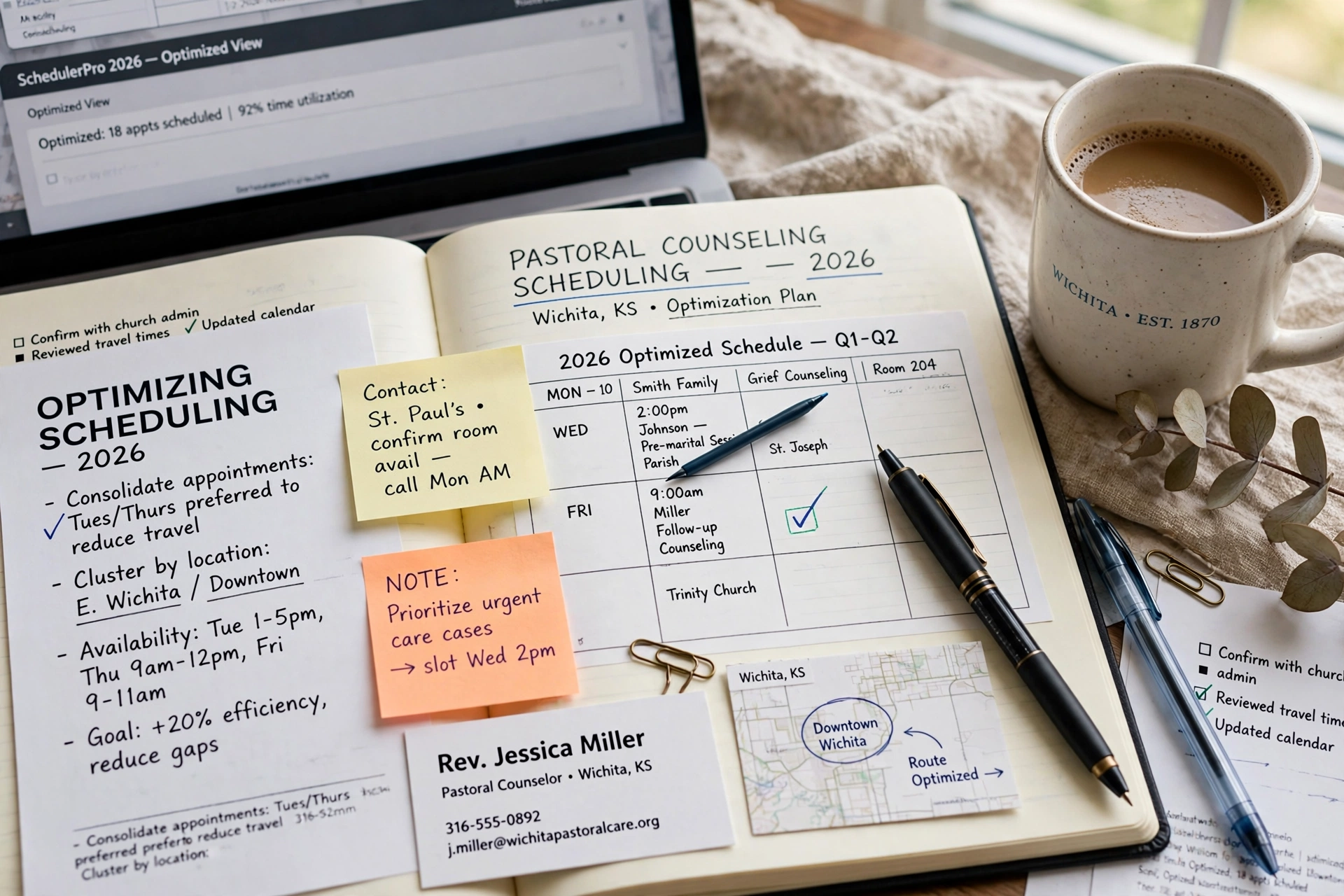
- Pastoral counseling scheduling
Free Guide: The 7 Church Growth Hacks for 2026
Learn how modern ministries are using automated scheduling and AI pastoral assistants to save 12+ hours of admin work every week.