
Where to Find the Right Church Management Software for Your Ministry?
Many church leaders spend months searching through generic app stores or outdated forums, only to realize they've implemented a tool that doesn't understand the unique rhythms of pastoral care. The reality is that the best church management software isn't found in a general directory; it is discovered through specialized ecclesiastical platforms, verified peer referrals from other ministers, and dedicated SaaS (Software as a Service) environments designed specifically for faith-based organizations. Whether you are looking for a comprehensive system to handle membership or a lean tool for scheduling, the "where" depends entirely on whether you prioritize scale, simplicity, or deep integration.

What is the Modern Ecosystem for Church Management Software?
When we talk about where to find these tools, we are really talking about the shift from local installations to the cloud. In the early days of digital ministry, you would find software on a CD-ROM or a local server. Today, the environment is almost entirely cloud-based, meaning the "location" of your software is a secure remote server accessible from any device.
📚
Definition
Church Management Software (often abbreviated as ChMS) is a specialized category of database and administrative tools designed to track member attendance, manage tithes and offerings, coordinate volunteer schedules, and facilitate pastoral counseling records.
In my experience working with various congregations, the mistake I see constantly is leaders looking for "church software" in the same place they look for accounting software. While a tool like QuickBooks handles the numbers, it doesn't handle the soul of the ministry. You won't find true ChMS solutions by searching "business productivity tools"; you find them in specialized niches. According to the Barna Group, the digital transformation of the church is not just about the tools used, but how those tools facilitate authentic human connection. If the software creates a barrier between the pastor and the congregation, it is in the wrong location—technologically and spiritually.
The modern ecosystem is divided into three primary "locations":
- All-in-One Platforms: These are comprehensive hubs that handle everything from the website to the giving portal.
- Modular Micro-SaaS: These are "best-of-breed" tools, such as dedicated scheduling platforms like Pastor Agenda, which do one thing exceptionally well.
- Custom-Built Legacy Systems: Rare and expensive, these are found in mega-churches with dedicated IT departments.
Why Does the Source of Your Software Matter for Your Ministry?
The environment where you source your software dictates the support and scalability you will receive. If you find a generic scheduling tool and try to "bend" it to fit a church's needs, you will likely encounter friction in pastoral care. For example, a standard corporate calendar does not account for the sensitivity of a hospital visit or the recurring nature of a weekly sermon preparation block.
The implications of using the wrong environment are quantifiable. Research from Christianity Today highlights that pastoral burnout is often exacerbated by administrative inefficiency. When a minister spends five hours a week manually coordinating volunteers via text and email, that is five hours taken away from prayer, study, and direct member care.
From a data perspective, the lack of a centralized system leads to "data silos." When member information is split between a physical ledger, a spreadsheet, and a few different phone contacts, the church loses its ability to track the spiritual growth of its members. A study by the National Association of Evangelicals (NAE) emphasizes that organized leadership and clear administrative structures are fundamental to the sustainability of a growing ministry.
The risk of not using a dedicated ChMS isn't just "disorganization"; it is a loss of stewardship. If you cannot track who is falling through the cracks—who hasn't attended in three weeks or who missed a scheduled counseling session—you are missing a critical opportunity for pastoral intervention. This is why finding software in a faith-centric environment is essential; the developers understand that "users" are actually "souls" and "appointments" are actually "ministry moments."
How to Implement a Professional Scheduling Workflow with Pastor Agenda
Once you have decided where to find your software, the next challenge is implementation. Many leaders buy a tool and let it sit on a "digital shelf" because the onboarding process is too complex. The goal is to move from a chaotic manual system to a streamlined digital workflow without losing the personal touch of the ministry.
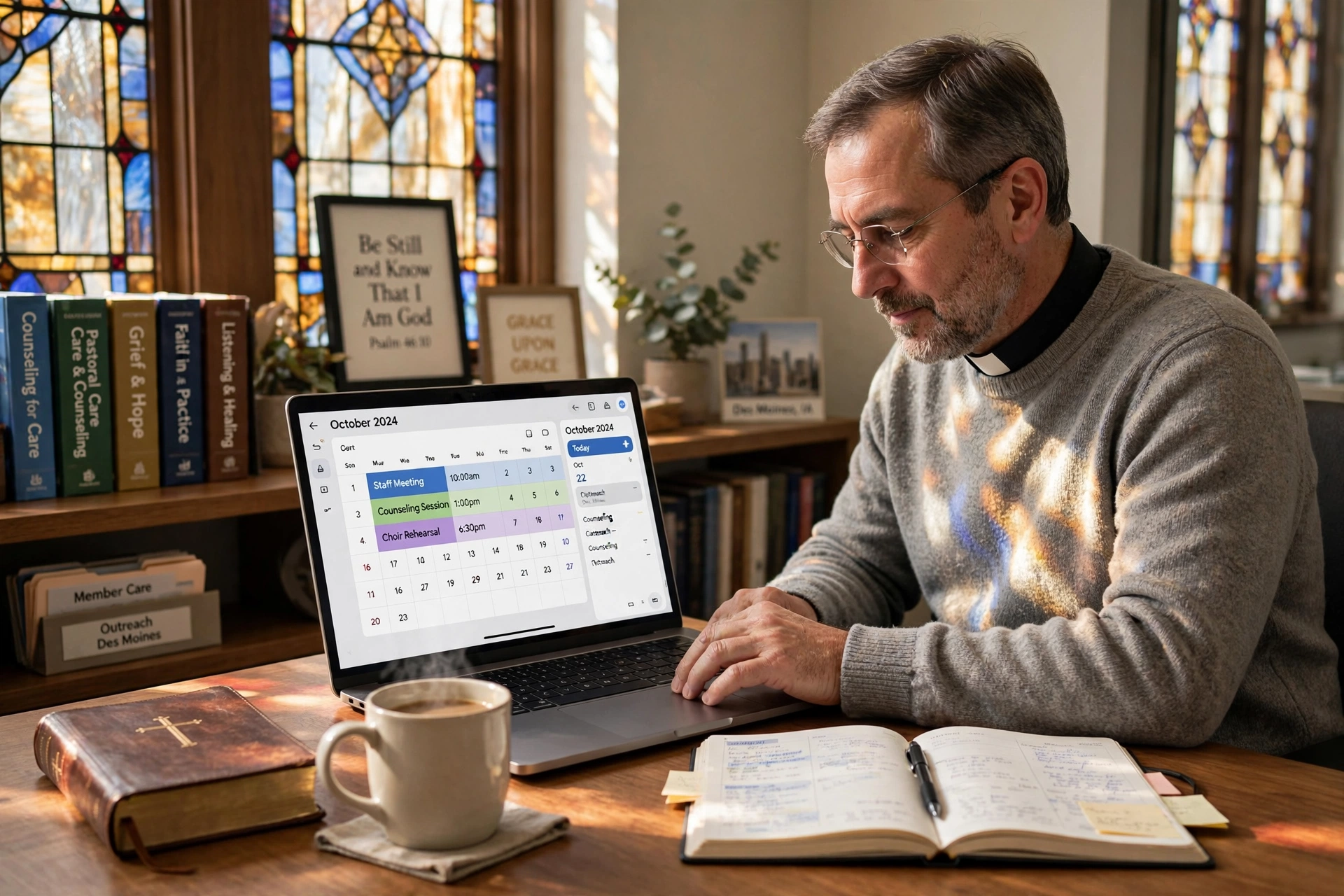
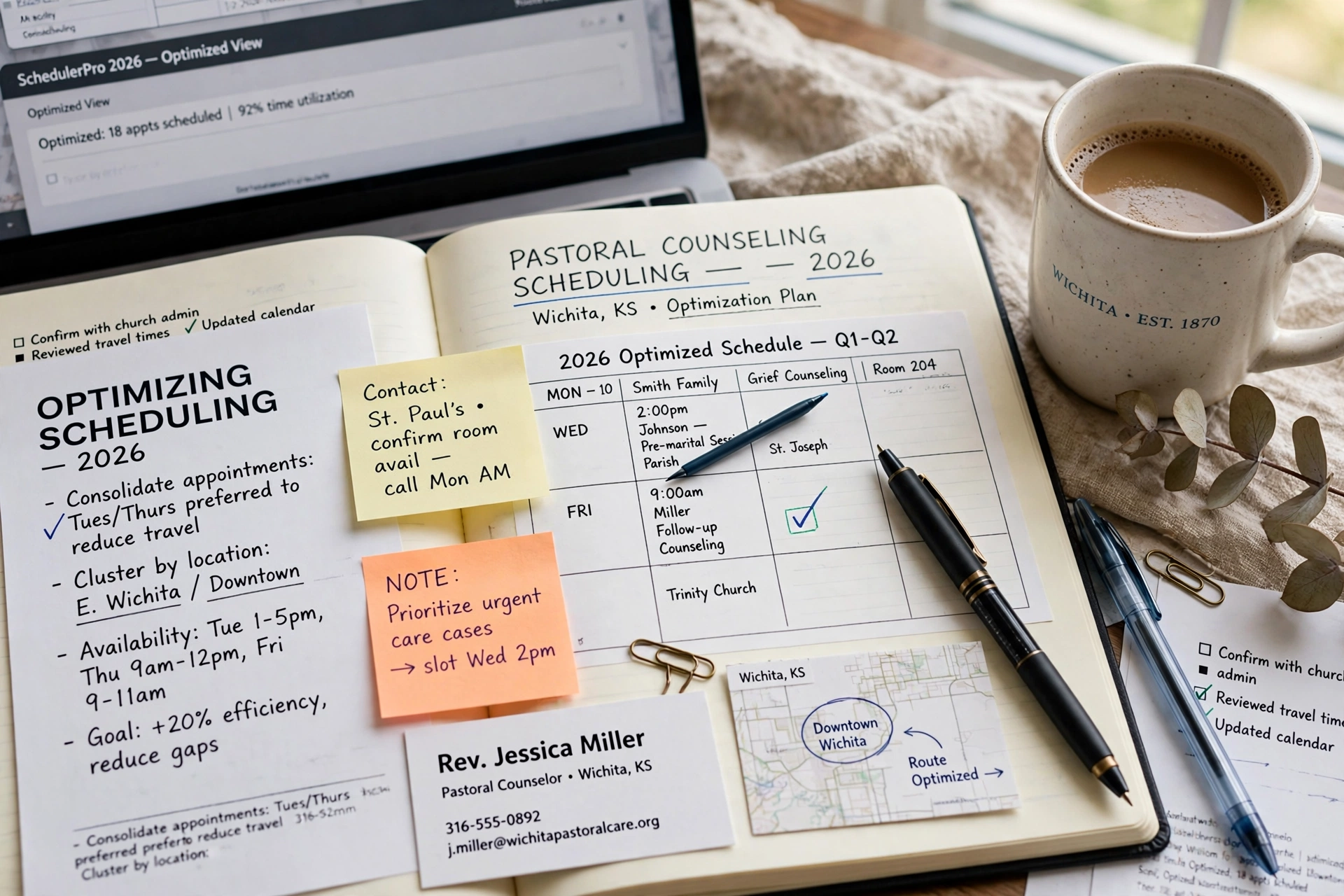
The most effective way to implement a system is through a phased rollout. Start by digitizing your most friction-heavy process—usually scheduling and appointment booking. This is where Pastor Agenda excels. Instead of the back-and-forth of "Are you free Tuesday at 4 PM?", you provide a professional, branded link where members can see your available slots and book their own time.
Here is the professional implementation path:
- Audit Your Current Friction Points: Identify where the most "lost time" occurs. Is it in scheduling counseling sessions? Coordinating the worship team?
- Define Your Availability Boundaries: This is a step many pastors skip. Decide your "Sacred Hours" (study, family, prayer) and "Ministry Hours" (office, counseling).
- Configure Your Digital Portal: In Pastor Agenda, you set your working hours and buffer times. This ensures you aren't booked for a 60-minute counseling session immediately followed by a board meeting with no time to breathe.
- Communicate the Change to the Congregation: Do not simply drop a link. Explain that this new system is being implemented to increase the quality of your care by reducing administrative errors.
- Monitor and Adjust: Review your booking patterns. If you find you are overbooked on Mondays, adjust your availability in the software.
💡
Key Takeaway
Successful implementation is 20% software and 80% boundary setting. The tool only works if the pastor defines when they are—and are not—available for booking.

Comparing Your Sourcing Options: Manual, Generic, and Specialized
When deciding where to look for your solution, you will encounter three distinct paths. Many leaders are tempted by the "free" or "already owned" options, but these often carry hidden costs in the form of wasted time and mental fatigue.
| Approach | Source/Location | Pros | Cons | Best For |
|---|---|---|---|---|
| Traditional/Manual | Paper Planners, Spreadsheets | No monthly cost, total control | High error rate, no automation, zero scalability | Very small house churches (< 30 members) |
| Generic AI/SaaS | General App Stores (e.g., Calendly) | Fast setup, widely known | No ministry context, lacks pastoral care features | Individual consultants or non-religious business |
| Specialized ChMS | Faith-based Platforms (e.g., Pastor Agenda) | Built for clergy, understands ministry rhythms | Requires a shift in mindset and digital adoption | Growing churches and professional ministries |
Now, here's where it gets interesting: many pastors try to use a generic tool like Calendly and find that while the scheduling works, the context is missing. A generic tool treats a "meeting" as a transaction. A specialized tool treats an "appointment" as a pastoral encounter. This distinction is why sourcing your software from a dedicated faith-based environment is the only way to ensure the technology serves the mission, rather than the mission serving the technology.
Common Questions and Misconceptions About Church Software
Most guides on this topic get it wrong by suggesting that "any software is better than no software." That is a dangerous oversimplification. If you implement a tool that is too complex, your staff will simply revert to using pen and paper, and you will have wasted your budget.
Myth 1: "Cloud software is a security risk for confidential pastoral records."
Actually, the opposite is true. A notebook left on a desk or a spreadsheet on an unencrypted laptop is a much larger security risk. Modern specialized platforms use bank-grade encryption (AES-256) and secure cloud environments that far exceed the security of a local office file.
Myth 2: "My congregation is too traditional for digital scheduling."
In my experience, "traditional" members are often the most grateful for digital systems because it removes the guesswork. They don't have to wonder if they are bothering the pastor by calling; they can see exactly when the pastor has set aside time for them. The key is to provide a "digital concierge" approach where you help them through the first booking.
Myth 3: "All-in-one software is always better than a single-purpose tool."
This is a common misconception. All-in-one systems are often bloated "bloatware" where you pay for 50 features but only use five. For many ministries, a "modular" approach—using a dedicated tool for scheduling like Pastor Agenda alongside a separate tool for accounting—is far more efficient and cost-effective.
Frequently Asked Questions
Where is the best place to start looking for church management software?
The best place to start is not a Google search, but a "peer audit." Reach out to pastors in your denomination or network who are slightly ahead of you in growth. Ask them specifically about the "friction points" of their software. Once you have a list of requirements, look toward specialized faith-based SaaS platforms. Avoid general business software directories, as they lack the nuance of ministry requirements, such as the need for pastoral counseling confidentiality and the specific rhythms of the liturgical or evangelical calendar.
Is it better to find a free open-source tool or a paid subscription?
While free tools are tempting for churches with tight budgets, they almost always carry a "hidden tax" in the form of time. Open-source tools often require manual installation, server management, and constant updates. According to industry standards for SaaS, the Total Cost of Ownership (TCO) for "free" software is often higher than paid subscriptions because of the man-hours required for maintenance. A paid service like Pastor Agenda provides a turnkey solution, meaning you spend your time on ministry, not on troubleshooting a database.
How do I know if a software "location" is secure enough for member data?
You should look for three specific markers: SOC 2 compliance, end-to-end encryption, and a clear GDPR or local data privacy policy. If a company cannot clearly state where their servers are located (e.g., AWS or Azure regions) and how they handle data backups, they are not suitable for church use. Pastoral records are among the most sensitive documents a leader handles; sourcing your software from a reputable, specialized provider ensures that these records are protected by professional-grade security protocols rather than amateur setups.
Can I find church management software that integrates with my existing website?
Yes, but the "where" matters here. You want a tool that offers "embeddable" widgets or API integrations. The most efficient setup is one where the scheduling portal lives directly on your church website. This prevents the user from feeling like they are being "sent away" to a third-party site. Look for platforms that provide a seamless transition from your "Contact Us" page to a live booking calendar. This reduces the drop-off rate and increases the number of members seeking pastoral care.
Should I look for software that handles only one thing or a full suite?
This depends on your current stage of growth. If you are a planting church, a full suite can be overwhelming and an unnecessary expense. In these cases, find a "point solution"—a tool that solves your biggest pain point (like scheduling) perfectly. As your congregation grows, you can add other modules. The danger of the "full suite" is that it often forces you into a rigid administrative workflow that may not fit your specific church's culture. Starting with a focused, high-quality tool allows you to build your digital culture organically.
Final Thoughts on Church Management Software
Finding the right church management software is not about finding the most "powerful" tool, but the most "appropriate" one. The location of your search should always be guided by the needs of your congregation and the boundaries of your own leadership. When you shift your perspective from "buying a product" to "investing in a ministry environment," the choice becomes clear.
Whether you are managing a small prayer group or a multi-campus congregation, the goal remains the same: to remove the administrative noise so that the voice of the Gospel can be heard more clearly. By choosing a specialized tool like Pastor Agenda, you ensure that your scheduling is not just "organized," but that it is a bridge to deeper pastoral connection.
Stop fighting with spreadsheets and fragmented email chains. It is time to move your administration into an environment designed for the unique demands of ministry.
Experience the difference of a tool built for leaders. Visit pastoragenda.com today and reclaim your time for what truly matters: your people.
Recommended Readings
To deepen your understanding of these topics, we recommend reading the following articles:
- Church appointment booking
- Online Appointment Booking for Modern Churches
- Pastor scheduling
- Pastoral counseling scheduling
Free Guide: The 7 Church Growth Hacks for 2026
Learn how modern ministries are using automated scheduling and AI pastoral assistants to save 12+ hours of admin work every week.