
When Should You Replace Your Church Management Software?
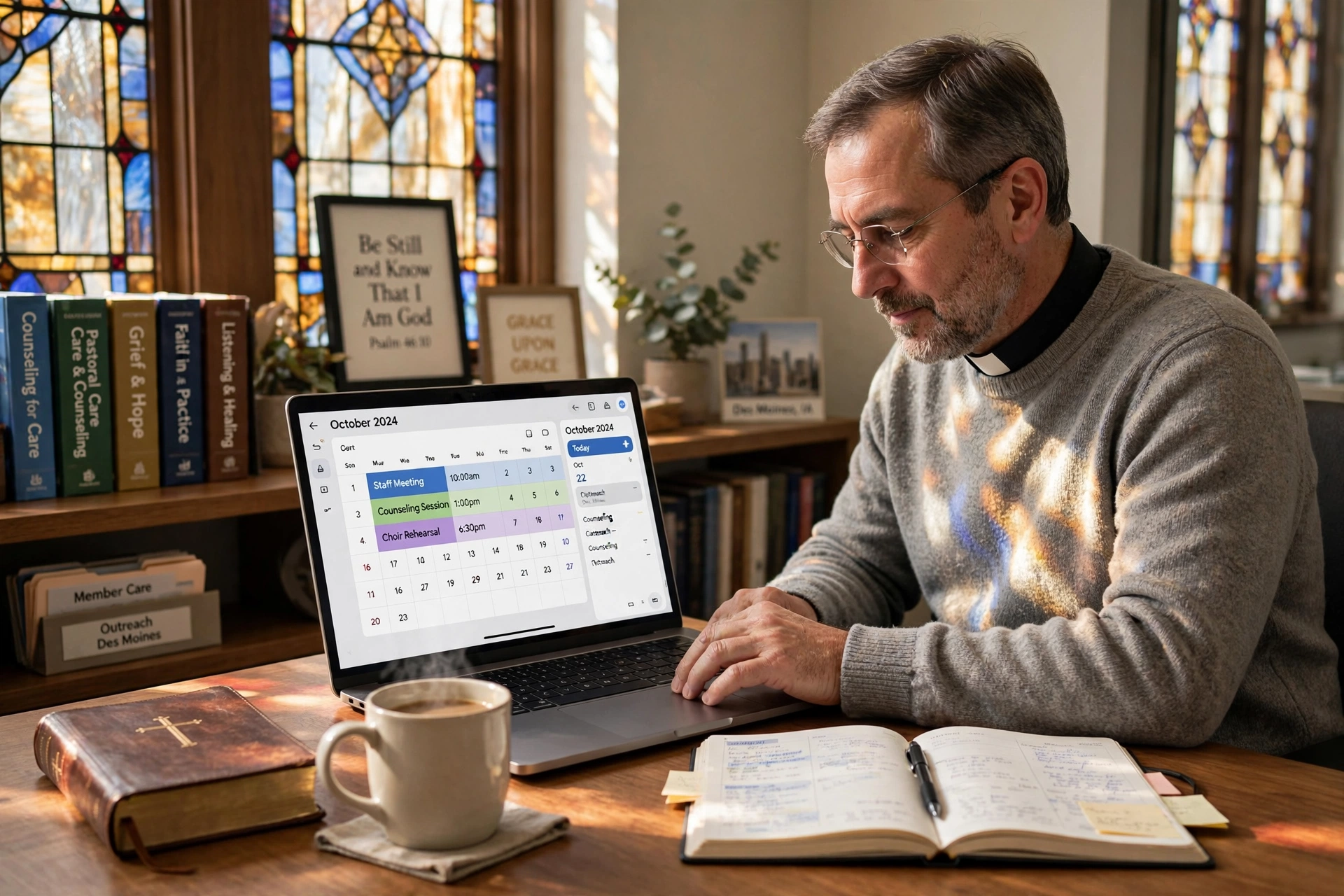
The most dangerous moment for a growing ministry is when the leadership decides to "just make it work" with a system that no longer fits. In my experience working with dozens of church leaders, the red flag isn't usually a total system crash; it's the slow creep of administrative friction. You know it's time to replace your church management software when your staff spends more time fighting the tool than they do caring for the congregation. If your current system requires manual workarounds for basic scheduling or if your data is scattered across three different spreadsheets and a legacy database, you have already passed the optimal window for migration.

What Defines an Obsolete Church Management System?
To understand when to switch, we first have to define what we are actually measuring. Many leaders mistake a "lack of features" for obsolescence, but the real issue is usually technical debt.
📚
Definition
Technical debt in church management refers to the implied cost of future reworking that arises when an easy, quick-fix solution is used instead of a better approach that would take longer to implement.
When a system becomes obsolete, it doesn't necessarily stop working; it simply stops enabling growth. You might find that your database is "frozen"—meaning you can add names, but you cannot easily segment them for targeted pastoral care or track attendance trends without hours of manual exporting. This is often where the friction begins.
According to the Barna Group, the health of a church is deeply tied to the ability of leadership to maintain personal connections with members. When the software creates a barrier between the pastor and the person—through clunky interfaces or failing notification systems—the tool is no longer serving the ministry. If your software was designed for a "brick-and-mortar only" era and lacks integrated online scheduling or mobile accessibility, it is functionally obsolete for the needs of a 2026 congregation.
The mistake I made early on—and that I see constantly—is trying to "patch" a dying system with third-party plugins. I once saw a ministry add four different Zapier integrations and two separate Google Sheets to make their old software "work." They weren't managing a church anymore; they were managing a fragile web of digital duct tape. When the cost of maintaining the "patches" exceeds the cost of a new subscription, the timing for replacement is immediate.
Why Timing Your Software Migration Matters for Ministry Health
Waiting too long to replace your church management software creates a phenomenon known as "administrative burnout." This isn't just about the staff being tired; it's about the cognitive load required to perform simple tasks. When a pastor has to spend two hours on a Sunday evening manually reconciling a scheduling conflict that a modern system would solve in seconds, that is two hours taken away from sermon preparation or family time.
The implications are quantifiable. Research from Lifeway Research indicates that pastoral longevity is heavily influenced by the level of administrative stress and the quality of support systems within the church. A system that fails to automate scheduling or member tracking doesn't just slow down the office; it accelerates burnout in the pulpit.
Consider the risk of data decay. In an outdated system, the "source of truth" becomes corrupted. You have three different phone numbers for the same deacon, and the software doesn't have a way to merge duplicates. This leads to "communication gaps" where critical members are missed during outreach. From a governance perspective, this is a liability. Church Law & Tax emphasizes the importance of accurate record-keeping for compliance and organizational transparency. If your software cannot produce a clean, accurate report on membership or financial contributions with a single click, you are operating at a high risk of administrative failure.
Now here's where it gets interesting: there is a "sweet spot" for migration. If you wait until the system completely crashes, you are migrating under duress, which often leads to choosing the fastest solution rather than the best one. The optimal time to switch is when you are experiencing "growth pain"—where the system is still working, but it's starting to feel tight. This allows you to move your data thoughtfully, train your staff without panic, and implement a tool like Pastor Agenda that aligns with your specific vision for 2026.
How to Transition to a Modern System Without Disrupting Ministry
Replacing your core infrastructure is a high-stakes operation. You cannot simply flip a switch and hope for the best. The process requires a strategic approach to ensure that no member falls through the cracks.
Step 1: The Friction Audit
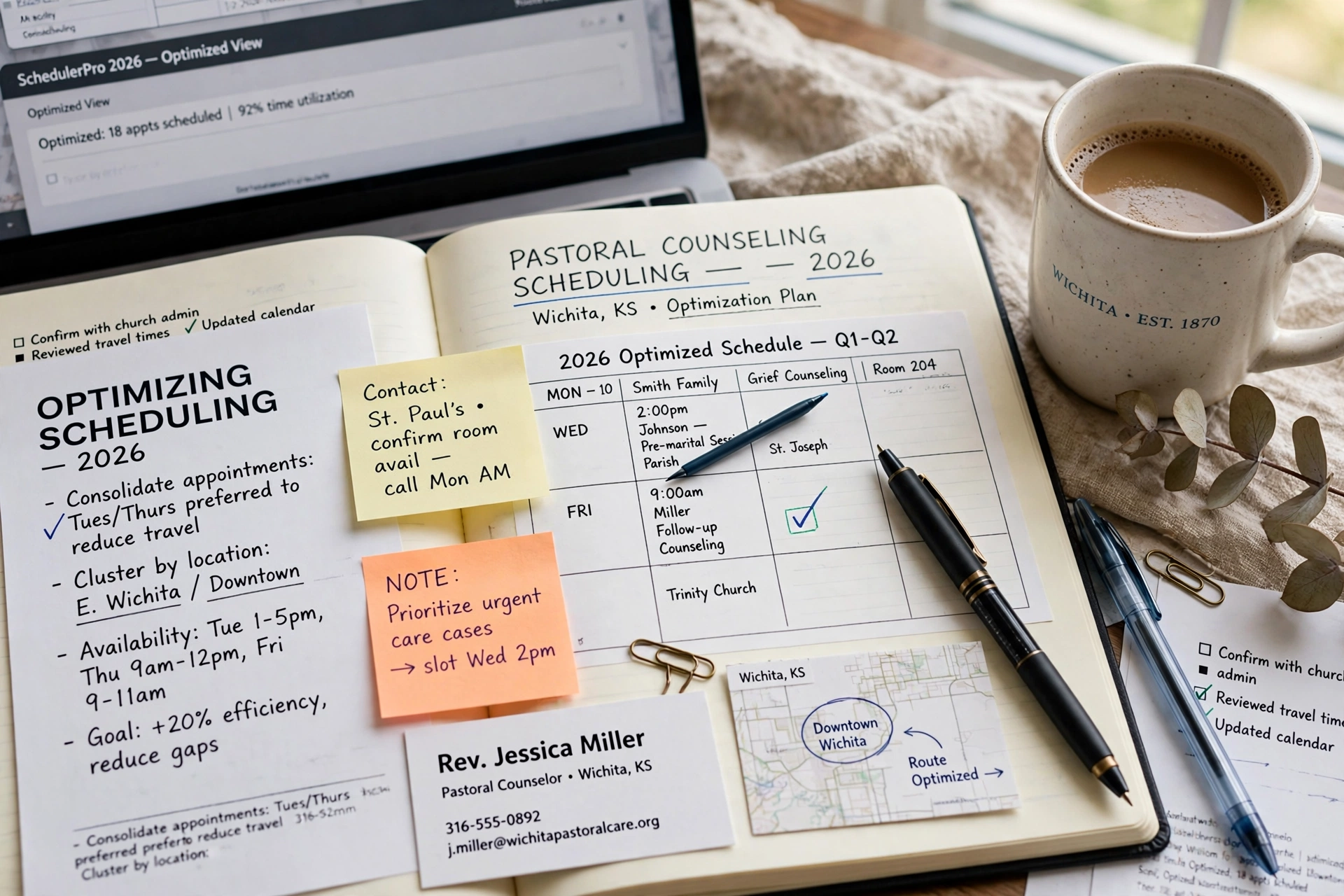
Before looking at new software, document every "workaround." Ask your staff: "What is the one task you dread doing because the software makes it hard?" If the answer is "scheduling counseling sessions" or "tracking small group attendance," you have identified your primary pain points.
Step 2: Data Hygiene and Scrubbing
Never migrate "dirty" data. If you have 500 duplicate entries in your old church management software, moving them to a new system just gives you 500 duplicates in a prettier interface. Use this transition as an opportunity to scrub your lists, verify current addresses, and archive inactive members.
Step 3: Selecting the Right Tool (The Pastor Agenda Approach)
This is where most churches fail. They buy "enterprise" software that is designed for corporations and then spend thousands of dollars trying to make it "feel" like a church tool. Instead, look for solutions built specifically for the clergy. Pastor Agenda is designed to remove the administrative burden from the pastor, focusing on intuitive scheduling and engagement rather than complex corporate KPIs.
Step 4: Parallel Running
For 30 to 60 days, run your old system and your new system side-by-side. This "safety net" period allows you to verify that data was migrated correctly and gives your staff a low-pressure environment to learn the new interface.

💡
Key Takeaway
The goal of a software migration is not to "get new features," but to reclaim time. If a tool doesn't give you back at least 5 hours of staff time per week, it's just another digital distraction.
Comparing Your Options: Legacy vs. Generic vs. Specialized
When you decide to move, you will likely face three different paths. Most leaders assume there are only two (the old way or the new way), but the reality is more nuanced.
| Approach | Pros | Cons | Best For |
|---|---|---|---|
| Legacy/Manual (Spreadsheets & Paper) | Zero monthly cost; complete control. | Extremely slow; high error rate; no scalability. | Very small home churches (<30 members). |
| Generic SaaS (Calendly, Generic CRM) | Familiar interface; polished UI. | No ministry-specific logic; lacks pastoral care tracking. | Individual consultants or non-religious orgs. |
| Specialized Ministry Tools (Pastor Agenda) | Built for clergy; intuitive scheduling; ministry-focused. | Requires a shift in mindset from "corporate" to "pastoral." | Growing churches seeking to reduce burnout. |
Here's the thing: generic tools like Calendly are great for a one-on-one business meeting, but they fail when you need to manage a complex ministry calendar involving multiple staff members, sanctuary availability, and pastoral counseling boundaries. Specialized church management software understands that a "meeting" in a church context is often a sensitive pastoral encounter, not just a slot on a calendar.
Common Misconceptions About Software Replacement
Many guides on this topic suggest that you should only upgrade when you hit a specific membership number (e.g., "Wait until you have 200 members"). Most of these guides get this wrong. Scaling is not about the number of people; it's about the complexity of the interactions.
Myth 1: "Our current system is free, so it's the best value."
This is a fallacy. The "cost" of free software is paid in labor. If your staff spends 10 hours a month fixing errors caused by a free tool, you are paying for that software through your payroll. Calculate the hourly wage of your administrator; you'll find the "free" software is actually the most expensive option you have.
Myth 2: "Changing systems will confuse our older members."
This is a common fear, but it's usually unfounded. Most members never actually see the "back end" of your church management software. They see the result: a confirmation email, a timely reminder, or a pastor who actually remembers their anniversary because the system prompted him. Improving the back end actually improves the member experience by making the church more responsive.
Myth 3: "We can just wait another year until we have more budget."
Waiting is an active decision to accept inefficiency. If you are already feeling the friction, waiting twelve months means 52 weeks of wasted effort. In a ministry environment, time is the most precious resource. Delaying the switch is essentially deciding that administrative frustration is an acceptable trade-off for a few hundred dollars in subscription fees.
Frequently Asked Questions
How do I know if my software is truly "outdated" or if my staff just needs more training?
This is a critical distinction. If the problem is "how to do something," it's a training issue. If the problem is "the system won't let me do this," it's a software issue. Ask your staff to perform a specific, common task. If they know how to do it but it takes 15 clicks and three different screens to complete, the software is the bottleneck. When the workflow contradicts the natural logic of ministry—such as requiring a member to create a full account just to book a 15-minute prayer call—the tool is outdated regardless of how well the staff is trained.
Will migrating to a new church management software cause us to lose member data?
Data loss is a risk with any migration, but it is almost always caused by poor planning rather than the software itself. Modern systems like Pastor Agenda are designed to import CSV and Excel files seamlessly. The "danger zone" occurs when leaders try to migrate data that hasn't been cleaned in years. If you perform a thorough data scrub first, the migration is typically a straightforward process. The key is to maintain a backup of your legacy data in a read-only format for at least one year after the switch to ensure no historical records are permanently lost.
Is it better to use a generic scheduling tool or a dedicated church management system?
Generic tools are designed for commerce; church systems are designed for community. A generic tool treats a booking as a transaction. A dedicated system treats a booking as a touchpoint in a larger pastoral relationship. For example, a church-specific tool allows you to categorize appointments by "Counseling," "Hospital Visit," or "Administrative," giving you a bird's-eye view of where your energy is going. Generic tools cannot provide this ministerial insight. If your goal is simply to "book a time," a generic tool works. If your goal is to "manage a ministry," you need specialized software.
How long does a typical software replacement process take?
Depending on the size of your congregation, a thoughtful transition usually takes between four and eight weeks. This includes the audit phase, the data scrubbing phase, and the parallel running period. Trying to rush a migration into a single weekend is a recipe for disaster and usually leads to "migration regret," where the church switches back to the old system because the new one feels "too hard." When you use a streamlined platform like Pastor Agenda, the setup is significantly faster because the interface is intuitive and requires less complex configuration than corporate CRMs.
What is the "hidden cost" of sticking with an old system for too long?
The hidden cost is the loss of institutional memory. When administrative processes are too difficult, staff members start keeping their own "side lists" on private notebooks or personal phones. When that staff member eventually leaves the church, those relationships and notes leave with them. A modern church management software ensures that the "memory" of the church stays with the church. By centralizing interaction logs and scheduling, you ensure that the next person in that role has the full context of the member's history, preventing the congregant from having to repeat their story three times to three different leaders.
Final Thoughts on Church Management Software
Deciding when to replace your church management software is not a technical decision; it is a leadership decision. It is about deciding whether you value the current comfort of "how we've always done it" over the future health of your staff and congregation. If your current system feels like a hurdle you have to jump over just to reach your people, the timing is right.
The goal of any tool in the ministry is to vanish into the background so that the relationship between the pastor and the member can take center stage. When the software becomes the conversation—when you spend more time talking about "the system" than the "souls"—it is time to move on.
Investing in a dedicated platform like Pastor Agenda is about reclaiming your time and reducing the noise of administration. By moving toward a system designed for the unique rhythms of church life, you move from merely managing a database to actively leading a community.
To see how a modern, ministry-first approach can eliminate your administrative friction, visit pastoragenda.com and discover a better way to organize your calling.
Recommended Readings
To deepen your understanding of these topics, we recommend reading the following articles:
- Church appointment booking
- Online Appointment Booking for Modern Churches
- Pastor scheduling
- Pastoral counseling scheduling
Reference Sources
For deeper context on this topic, these sources provide additional authoritative perspectives:
- Wikipedia — general knowledge reference
These references help establish a complete view of the subject matter.
Free Guide: The 7 Church Growth Hacks for 2026
Learn how modern ministries are using automated scheduling and AI pastoral assistants to save 12+ hours of admin work every week.