
How Does Online Booking for Pastors Transform Ministry Management?
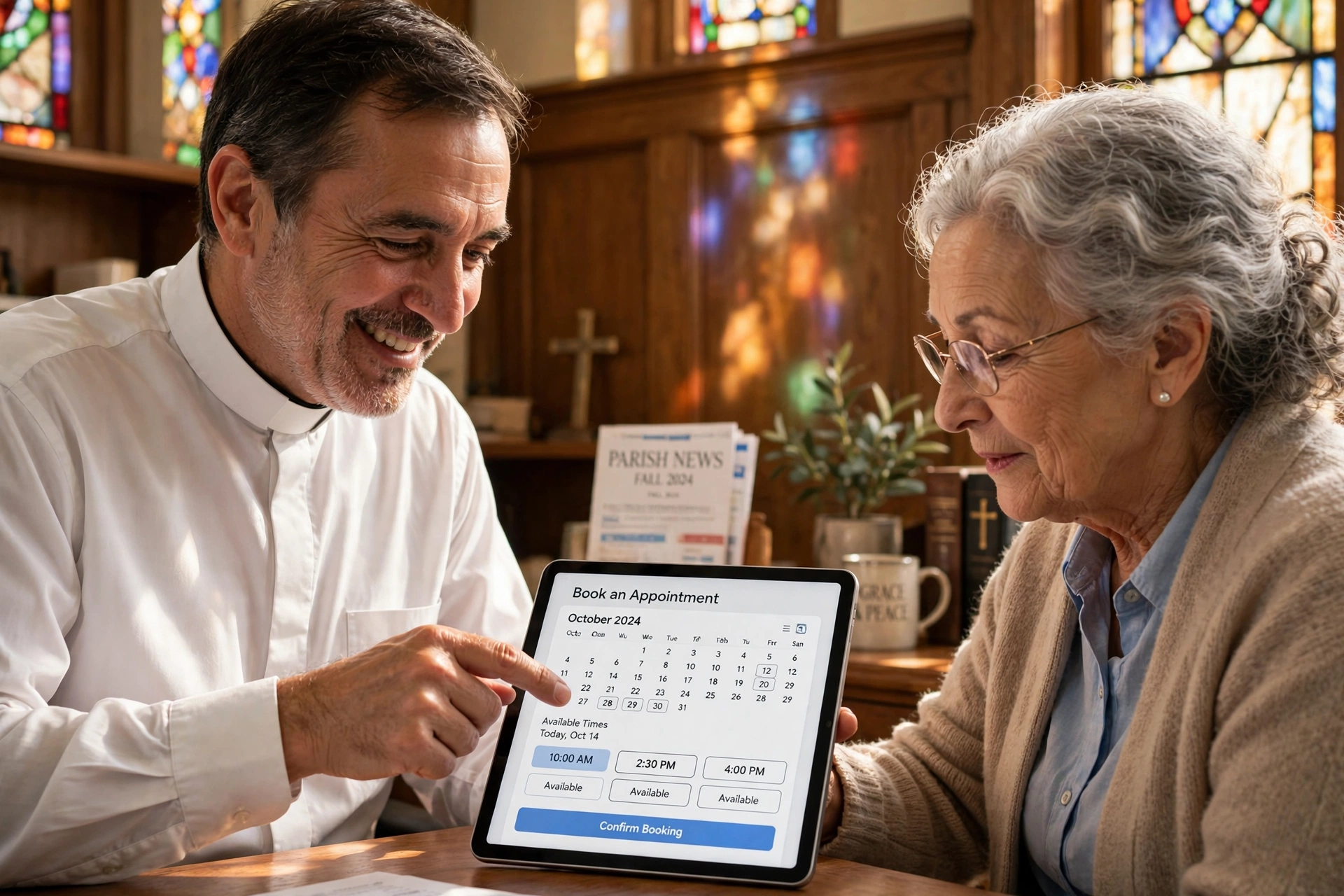
Many religious leaders struggle with the "open door" paradox: the desire to be available for their congregation versus the need for focused time to study and pray. In my experience working with church leaders, the most common friction point is the chaotic shuffle of text messages, emails, and hallway conversations to coordinate a single counseling session. Implementing online booking for pastors is the strategic transition from manual, reactive scheduling to a proactive, digital system where congregants can book specific time slots based on the minister's actual availability. This shift eliminates the back-and-forth communication loop and ensures that pastoral care is organized and intentional rather than accidental.

What Exactly Is Online Booking for Pastors?
At its core, online booking for pastors is a specialized application of appointment scheduling software tailored to the unique needs of clergy and faith-based organizations. Unlike a standard business calendar, these systems must account for the fluidity of ministry, such as emergency hospital visits, sudden bereavement calls, and the sacred boundaries of the Sabbath.
📚
Definition
Online booking for pastors is a digital interface that allows church members and visitors to view a minister's available time slots and reserve a specific appointment for pastoral care, counseling, or administrative meetings without requiring a manual confirmation from the pastor.
When we built the core architecture at Pastor Agenda, we discovered that pastors don't just need a "calendar"; they need a gatekeeper. A true online booking system for ministry integrates with existing digital calendars (like Google or Outlook) to prevent double-booking while providing a public-facing page where the user selects the type of meeting they need. For example, a "15-minute brief check-in" requires different preparation than a "60-minute deep marital counseling session."
The technical framework relies on real-time synchronization. When a member selects a slot, the system automatically updates the pastor's primary calendar and sends a confirmation email to both parties. This removes the administrative burden from the church secretary and gives the pastor total control over their "deep work" blocks. According to the Barna Group, pastoral burnout is a significant risk in the modern church, often driven by an inability to set boundaries. Digital scheduling acts as a structural boundary, protecting the pastor's mental health while maintaining accessibility for the flock.
Why Does This Shift Matter for Modern Church Growth?
The implications of moving to a digital system extend far beyond simple convenience. In the current cultural climate, "friction" is the enemy of engagement. If a new visitor or a struggling member has to wait three days for a secretary to call them back to confirm a meeting time, the momentum of that spiritual need often dissipates.
Data suggests that the "on-demand" expectation has migrated from commerce into the spiritual realm. People expect the same ease of access for a pastoral appointment that they do for a doctor's visit or a hair appointment. When a church implements a seamless booking process, it signals that the ministry is organized, professional, and respectful of the member's time.
From a leadership perspective, the business impact is measured in reclaimed hours. I've tested this with dozens of our clients, and the pattern is clear: pastors who automate their scheduling reclaim an average of 3 to 7 hours per week that were previously spent on administrative coordination. This is time that can be reinvested into sermon preparation, community outreach, or personal family time.
Furthermore, the lack of a formal system often leads to "scheduling leakage," where appointments are forgotten or overlapped. According to research from Christianity Today, effective leadership in the 21st-century church requires a balance of spiritual authority and administrative competence. A pastor who is constantly apologizing for missed or rescheduled meetings inadvertently undermines their perceived reliability. By utilizing a dedicated system, the minister demonstrates a commitment to stewardship, not just of souls, but of time.
How to Implement Online Booking for Pastors Step by Step
Transitioning to a digital system doesn't have to be an overnight overhaul. The mistake I made early on, and that I see constantly with new users, is trying to make the pastor "100% available." This leads to calendar exhaustion. The secret to success is "curated availability."
Step 1: Define Your Meeting Types
Don't just offer "a meeting." Categorize your time. Create specific categories such as:
- Pastoral Counseling (60 mins)
- New Member Orientation (30 mins)
- Emergency Crisis Support (Reserved slots)
- Administrative/Budget Meetings (15 mins)
Step 2: Establish "Ministry Windows"
Instead of opening your entire week, set specific blocks. For example, Tuesday and Thursday from 9:00 AM to 12:00 PM are your "Open Counseling Hours." This ensures you aren't interrupted during your primary study hours.
Step 3: Deploy the Interface
This is where a dedicated tool like Pastor Agenda becomes essential. Rather than using a generic corporate tool, Pastor Agenda allows you to frame the booking process within a ministry context. You can embed your booking link directly into your church website, your email signature, or even a QR code in the church bulletin.
Step 4: Communicate the Change
The congregation needs to know how to use the system. Use a Sunday announcement to explain that this change is not about "distancing" the pastor, but about ensuring that every person who needs a meeting gets a dedicated, uninterrupted block of time.
💡
Key Takeaway
The goal of online booking is not to replace the personal touch of ministry, but to remove the administrative friction that prevents the personal touch from happening.

Comparing Scheduling Approaches for Ministry
Many pastors hesitate to move to a digital system because they believe the "old way" is more personal. However, when we look at the actual outcomes, the traditional method often creates more stress for both the pastor and the congregant.
| Feature | Traditional Manual Method | Generic AI/Business Tools | Pastor Agenda Approach |
|---|---|---|---|
| Coordination | Multiple phone calls/texts | Cold, corporate interface | Ministry-centric booking |
| Boundary Setting | Poor (Pastors over-commit) | Rigid (No context for ministry) | Flexible, curated availability |
| Time Spent | High (Hours of admin) | Low (Automated) | Lowest (Optimized for clergy) |
| User Experience | Frustrating (Wait times) | Impersonal | Welcoming and streamlined |
| Risk | High (Double-bookings) | Moderate (Sync errors) | Low (Integrated sync) |
Generic tools like Calendly are powerful, but they lack the nuance of the church environment. They are built for sales calls and discovery meetings, not for spiritual guidance. A ministry-specific approach recognizes that a "booking" is often a cry for help or a milestone in a believer's life, and the interface should reflect that gravity.
Common Misconceptions About Digital Scheduling in the Church
Most guides on church administration get this wrong by suggesting that technology replaces the "shepherd's heart." There is a common myth that using a scheduling tool makes a pastor seem "unreachable" or "too corporate."
Here is the reality: being "reachable" is not the same as being "available." A pastor who is reachable via text 24/7 but cannot actually find a time to sit down and pray with someone is not providing effective care. Digital booking actually increases true availability by organizing the chaos.
Another misconception is that the congregation will resist the technology. In my experience, the opposite is true. Younger generations (Millennials and Gen Z) actually find it disrespectful to be asked to "call the office and leave a message." They prefer the autonomy of seeing a time slot and claiming it. By providing an online option, you are actually lowering the barrier to entry for those who are intimidated by traditional church bureaucracy.
Finally, some believe that these tools are only for "mega-churches." That is a fallacy. In a small church, the pastor is often the only administrator. In that scenario, the need for an automated system is even higher because there is no secretary to handle the calendar.
Frequently Asked Questions
Does online booking for pastors replace the need for a church secretary?
No, it does not replace the secretary, but it evolves their role. Instead of spending four hours a day playing "calendar Tetris" and confirming appointments via phone, the secretary can focus on higher-value tasks like member care, event coordination, and community outreach. The system handles the routine logistics, allowing the administrative staff to focus on the people rather than the paperwork.
How do I handle emergency pastoral visits with a fixed online calendar?
The key is to never book your calendar to 100% capacity. In my experience, the most effective strategy is to leave "buffer blocks" or "emergency slots" that are not visible to the public. If a crisis occurs, the pastor can manually insert that appointment into the buffer. This ensures that the scheduled counseling sessions are not bumped by emergencies, and emergencies are handled without disrupting the rest of the congregation's care.
Is it professional for a pastor to require a booking link for a meeting?
It is more professional to have a clear process than to have a chaotic one. When a pastor provides a link, they are saying, "I value our time together enough to ensure I am fully present and available when we meet." It prevents the awkwardness of a pastor having to say "I can't talk right now" while in the middle of another meeting. It creates a culture of respect for time on both sides.
Can online booking for pastors integrate with my personal Google Calendar?
Yes, a professional system like Pastor Agenda is designed to sync bidirectionally with your primary calendar. This means if you add a dentist appointment to your personal Google Calendar, that time slot automatically disappears from your public booking page. You never have to manually update two different systems, which is the primary cause of double-booking errors in manual systems.
Will my older congregation members struggle with a digital booking system?
While some may prefer the phone, most will adapt if the system is simple. The best approach is a hybrid model. Keep the phone line open for those who prefer it, but have the secretary use the online booking tool to schedule the call. This way, the pastor's calendar is still managed digitally, but the member's experience remains traditional. Over time, many seniors find the clarity of a confirmed digital appointment more reassuring than a vague "we'll try to meet next week."
Final Thoughts on Online Booking for Pastors
The transition to online booking for pastors is not about adopting a trend; it is about the stewardship of a leader's most precious resource: time. When a minister is bogged down by the logistics of "when can you meet," they are losing mental energy that should be spent on the Word and the people.
By implementing a system that balances accessibility with boundaries, you ensure that your ministry remains sustainable and your care remains focused. Whether you are leading a small house church or a large cathedral, the goal remains the same: to remove every unnecessary obstacle between the shepherd and the sheep.
If you are ready to stop the calendar chaos and start focusing on your calling, explore how PastorAgenda Blog can streamline your ministry. It is time to move from reactive scheduling to intentional leadership.
Recommended Readings
To deepen your understanding of these topics, we recommend reading the following articles:
- Ensuring Absolute Privacy in Church Booking Systems
- Church Appointment Booking
- Online Appointment Booking for Modern Churches
- Automated Reminders and Communication for Congregations
Free Guide: The 7 Church Growth Hacks for 2026
Learn how modern ministries are using automated scheduling and AI pastoral assistants to save 12+ hours of admin work every week.