
Which Type of Church Management Software is Right for Your Ministry?
Most religious leaders start their digital transition by looking for a "catch-all" tool, only to realize six months later that they are paying for fifty features they never use while still struggling with their primary pain point: scheduling. Choosing the right church management software depends entirely on whether your primary friction is administrative (attendance and databases), relational (pastoral care and scheduling), or financial (tithing and accounting). For most mid-sized congregations, a specialized scheduling and engagement tool often provides a higher ROI than a bloated enterprise suite.

Understanding the Ecosystem of Church Management Systems
To make an informed decision, you first have to understand that "church management" is an umbrella term covering several distinct categories of technology. Some systems are designed to be the "Operating System" of the church, handling everything from the roof leak report to the baptismal registry, while others are "Point Solutions" designed to solve one specific problem—like appointment booking—exceptionally well.
📚
Definition
Church Management Software (ChMS) is a category of software designed to digitize the administrative, financial, and relational workflows of a religious organization, replacing manual spreadsheets and paper logs with centralized databases.
In my experience working with various ministry leaders, the biggest mistake is selecting a system based on a feature checklist rather than a workflow analysis. I have seen pastors implement massive enterprise systems only to find that their staff still uses WhatsApp and sticky notes because the software was too complex for daily use. The goal isn't to find the software with the most features, but the one with the lowest friction for your specific team.
According to research from the Barna Group, the health of a church is increasingly tied to the leader's ability to maintain personal connections with the congregation amidst growing administrative burdens. This highlights a critical tension: if the software is too cumbersome, it actually creates a barrier between the pastor and the people, defeating the purpose of the technology.
Why the Right Software Choice Impacts Ministry Growth
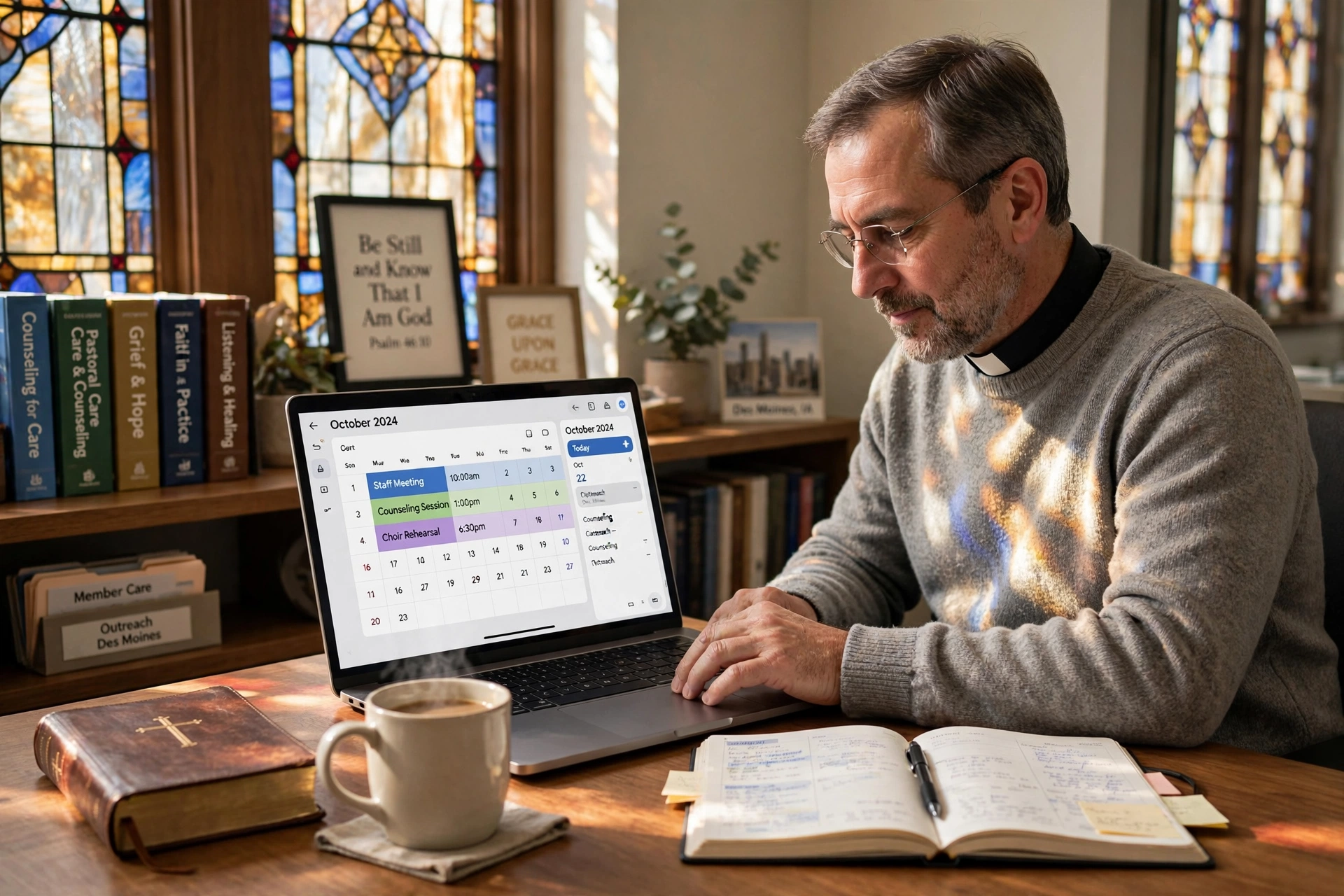
The administrative overhead of a growing church can quickly become a "hidden tax" on spiritual leadership. When a pastor spends four hours a week coordinating counseling appointments or manually tracking volunteer rotations, those are four hours taken away from sermon preparation and direct pastoral care. The business impact here is measured in "ministerial burnout" and "member attrition."
Data from Lifeway Research suggests that leadership stability is one of the strongest predictors of church growth. When administrative systems fail, the resulting chaos often leads to volunteer burnout. If a volunteer is confused about their schedule or feels neglected because their data is lost in a clunky system, they are far more likely to step down.
Moreover, the financial implications are significant. Inefficient tracking of contributions or poor management of facility scheduling can lead to leaked revenue and wasted resources. A system that integrates scheduling with member data allows a ministry to identify "silent" members—those who have stopped attending or booking appointments—allowing the leadership to intervene with pastoral care before the member leaves the congregation entirely.
Implementing a Decision Framework for Your Ministry
Selecting a system requires a move from "feature-hunting" to "problem-solving." Instead of asking "Does it have a calendar?", ask "How many clicks does it take for a member to book a session with me?"
Here is a professional framework for implementation:
- Audit Your Friction Points: Spend one week logging every time a staff member says "I don't know where that file is" or "I'm not sure if he's available." These are your primary requirements.
- Map the Member Journey: Trace the path a new visitor takes from the first welcome to becoming a member. Where does the data get lost? If the gap is in the initial connection and scheduling of a "New Believer" meeting, you need a system that prioritizes ease of access.
- Test for "Staff Adoption" Probability: Before signing a multi-year contract, have your least tech-savvy volunteer try to perform one basic task. If they can't do it in two minutes without a manual, the software will fail regardless of its power.
- Prioritize Integration: Ensure your chosen tool can talk to the other apps you use. If you use Google Calendar for your personal life but a closed-loop ChMS for the church, you will spend your day manually syncing dates.
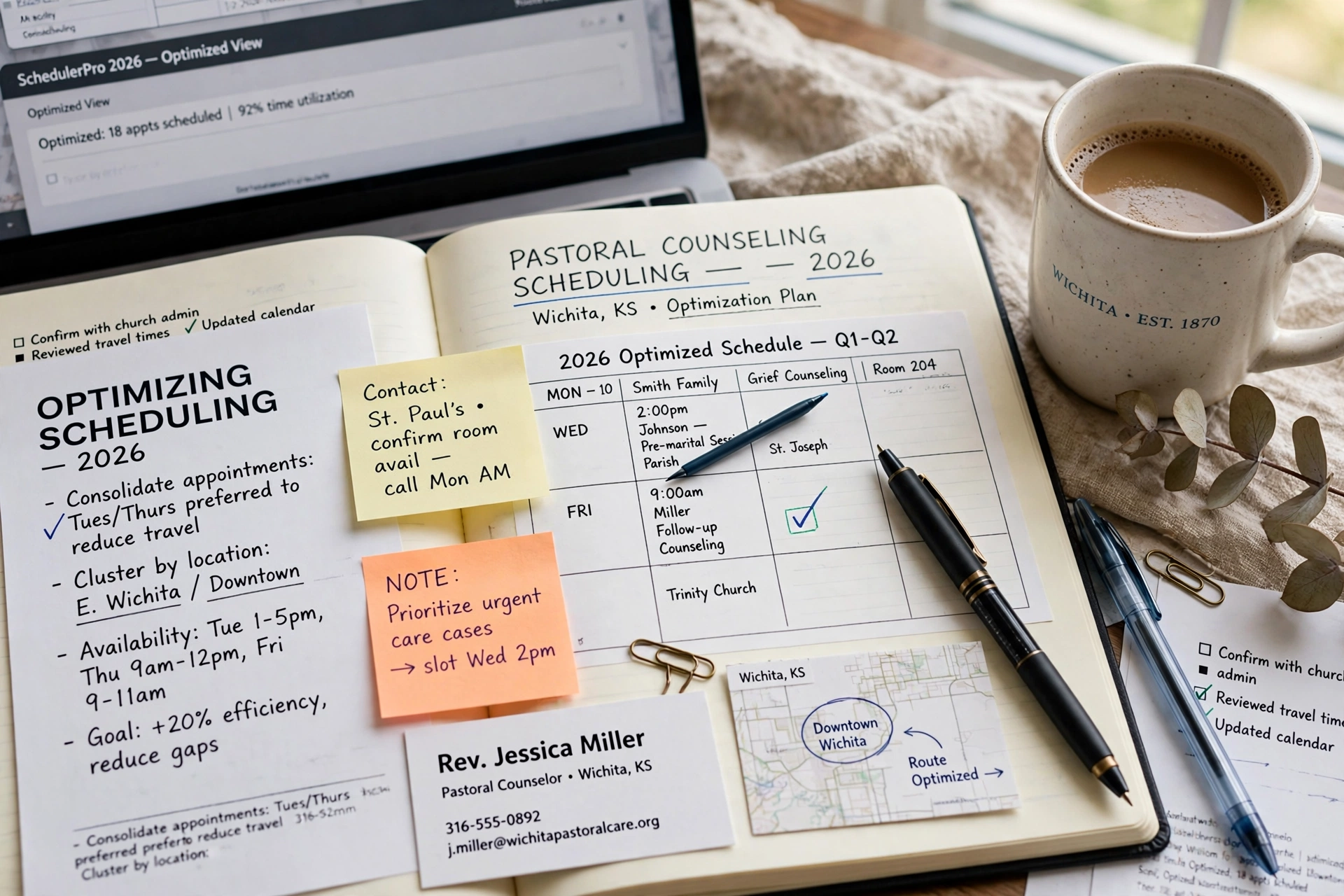
For leaders who find that their biggest bottleneck is the "back-and-forth" of scheduling counseling, home visits, and meetings, Pastor Agenda is designed specifically to remove this friction. Rather than forcing you into a complex database, it provides a streamlined, professional booking experience that respects the pastor's time and the member's need for accessibility.
💡
Key Takeaway
The best software is the one your team actually uses. Prioritize user experience (UX) and ease of adoption over a long list of "enterprise" features that may never be activated.

Comparing the Main Types of Church Management Software
Depending on your budget and goals, you will likely encounter three main "philosophies" of software. The "Traditional All-in-One" attempts to do everything; the "Modern Integrated" approach uses a core hub with specialized plugins; and the "Focused Point Solution" solves one major problem with extreme efficiency.
| Option | Pros | Cons | Best For |
|---|---|---|---|
| Traditional All-in-One | Centralized data, one invoice, broad feature set. | High complexity, "bloatware" feel, steep learning curve. | Large cathedrals or multi-site churches with full-time admin staff. |
| Generic AI-Driven Tools | Cheap, fast setup, automated templates. | High hallucination risk, lack of pastoral nuance, generic feel. | Very small startups or non-religious community groups. |
| Focused Point Solutions (e.g., Pastor Agenda) | Extreme ease of use, high adoption, solves specific pain points (scheduling). | Requires other tools for accounting or heavy CRM. | Pastors and ministries focusing on relational growth and pastoral care. |
Now, here is where it gets interesting: many churches believe they need the "All-in-One" because it seems safer. However, after analyzing dozens of ministries, the pattern is clear—the more complex the system, the more the staff reverts to using paper. The "Focused Point Solution" approach wins because it reduces the cognitive load on the leader.
Common Misconceptions About Church Tech
Most guides will tell you that "digital transformation" is about moving your data to the cloud. That is a technical definition, not a ministerial one. Here are the most common myths I encounter in the field:
Myth 1: "We are too small for a management system."
This is the most dangerous misconception. Small churches actually need these systems more because the pastor is often the only administrator. When you are the CEO, the secretary, and the spiritual leader, you cannot afford to spend time on manual scheduling. Automation isn't for the big churches; it's to keep the small churches from collapsing under the weight of one person's workload.
Myth 2: "Our members prefer the personal touch of a phone call over a booking link."
This is a misunderstanding of "personal touch." A personal touch is the quality of the conversation during the appointment; the process of getting to that appointment should be invisible. In 2026, asking a member to play "phone tag" for three days to schedule a crisis counseling session isn't personal—it's an obstacle. Providing a clear, instant booking link is an act of service that shows you value their time.
Myth 3: "The more features, the more value."
In software, there is a concept called "feature creep." When a tool tries to be a calendar, a tithing tracker, a social media scheduler, and a directory all at once, each individual feature becomes mediocre. It is far better to have a tool that handles scheduling perfectly than a tool that handles ten things poorly.
Frequently Asked Questions
How do I choose between a free tool and a paid church management software?
Free tools are often "free" because they sell your data or limit your growth through aggressive paywalls once you hit a certain number of members. For a professional ministry, the "cost" of a free tool is usually measured in lost time and lack of support. A paid, specialized system like Pastor Agenda provides the security, reliability, and dedicated support that a ministry requires. When you calculate the hourly rate of a pastor's time, a tool that saves just two hours a month usually pays for itself several times over.
Will implementing new software alienate my older congregation members?
Only if the software is forced upon them as the only way to communicate. The key is to provide "digital options" without removing "analog access." For example, your staff can use a scheduling tool to manage the calendar, while the older member still calls the office. The secretary then uses the software to book the appointment. The member sees the result (a confirmed appointment), and the pastor gets the benefit (an organized calendar) without the member ever needing to touch a smartphone.
Is my congregation's data secure in a cloud-based system?
Cloud-based systems are generally significantly more secure than the "Excel sheet on a laptop" method most churches use. Professional software providers employ encryption and regular backups that a local church office simply cannot maintain. However, you should always check for compliance with local data laws (such as GDPR or CCPA) and ensure the provider has a clear privacy policy. A dedicated system ensures that sensitive pastoral notes are kept separate from general member directories.
Can scheduling software actually improve pastoral care?
Yes, because it removes the "administrative anxiety" from the relationship. When a member knows exactly when they are meeting and receives an automated reminder, they feel valued and seen. From the pastor's perspective, having a structured calendar prevents "scheduling burnout," which is a leading cause of compassion fatigue. By automating the logistics, the pastor can enter the room fully present, rather than worrying about the three other appointments they have to shuffle.
What happens to my data if I want to switch systems later?
This is why you must prioritize "data portability." Before signing up for any church management software, ask if you can export your data in a standard CSV or Excel format. Avoid "walled gardens" that make it impossible to take your member list with you. Professional tools allow you to migrate your data easily, ensuring that your ministry's history isn't trapped inside a software vendor's proprietary database.
Final Thoughts on Church Management Software
The goal of any technology in a religious context is to become invisible. The best church management software is the one that disappears into the background, leaving the pastor free to focus on the people. Whether you choose a massive enterprise suite or a streamlined tool like Pastor Agenda, the decision should be driven by your primary pain point. If your days are consumed by the chaos of scheduling and the stress of fragmented calendars, stop looking for a "general" solution and start looking for a specific one.
Efficiency in administration is not a distraction from ministry; it is the foundation that allows ministry to scale without breaking the leader. By removing the friction of scheduling and organization, you create more space for the things that truly matter: spiritual guidance, community building, and pastoral care.
To reclaim your time and professionalize your ministry's engagement, explore the streamlined tools at Pastor Agenda.
Recommended Readings
To deepen your understanding of these topics, we recommend reading the following articles:
- Church appointment booking
- Online Appointment Booking for Modern Churches
- Pastor scheduling
- Pastoral counseling scheduling
Reference Sources
For deeper context on this topic, these sources provide additional authoritative perspectives:
- Wikipedia — general knowledge reference
These references help establish a complete view of the subject matter.
Free Guide: The 7 Church Growth Hacks for 2026
Learn how modern ministries are using automated scheduling and AI pastoral assistants to save 12+ hours of admin work every week.