
Which Church Management Software Should You Choose for Your Ministry?
The most common mistake I see leaders make is choosing a platform based on a feature checklist rather than their specific ministry workflow. After analyzing dozens of congregations, the pattern is clear: a small church drowning in a complex enterprise system is just as inefficient as a megachurch trying to run a global ministry on a basic spreadsheet. The right church management software depends entirely on whether your primary pain point is administrative overhead, member engagement, or scheduling bottlenecks. For most mid-sized ministries, the ideal choice is a tool that balances robust member tracking with a frictionless booking experience, which is exactly why we developed Pastor Agenda to bridge that gap.

What Exactly is Church Management Software and How Does it Function?
At its core, this technology serves as the central nervous system of a religious organization. It is designed to move a ministry away from fragmented data—where attendance is in a notebook, giving is in a spreadsheet, and scheduling is in a series of frantic text messages—into a single, unified source of truth.
📚
Definition
Church Management Software (ChMS) is a specialized category of Customer Relationship Management (CRM) tools tailored for religious organizations to handle member databases, financial contributions, event scheduling, and pastoral care tracking.
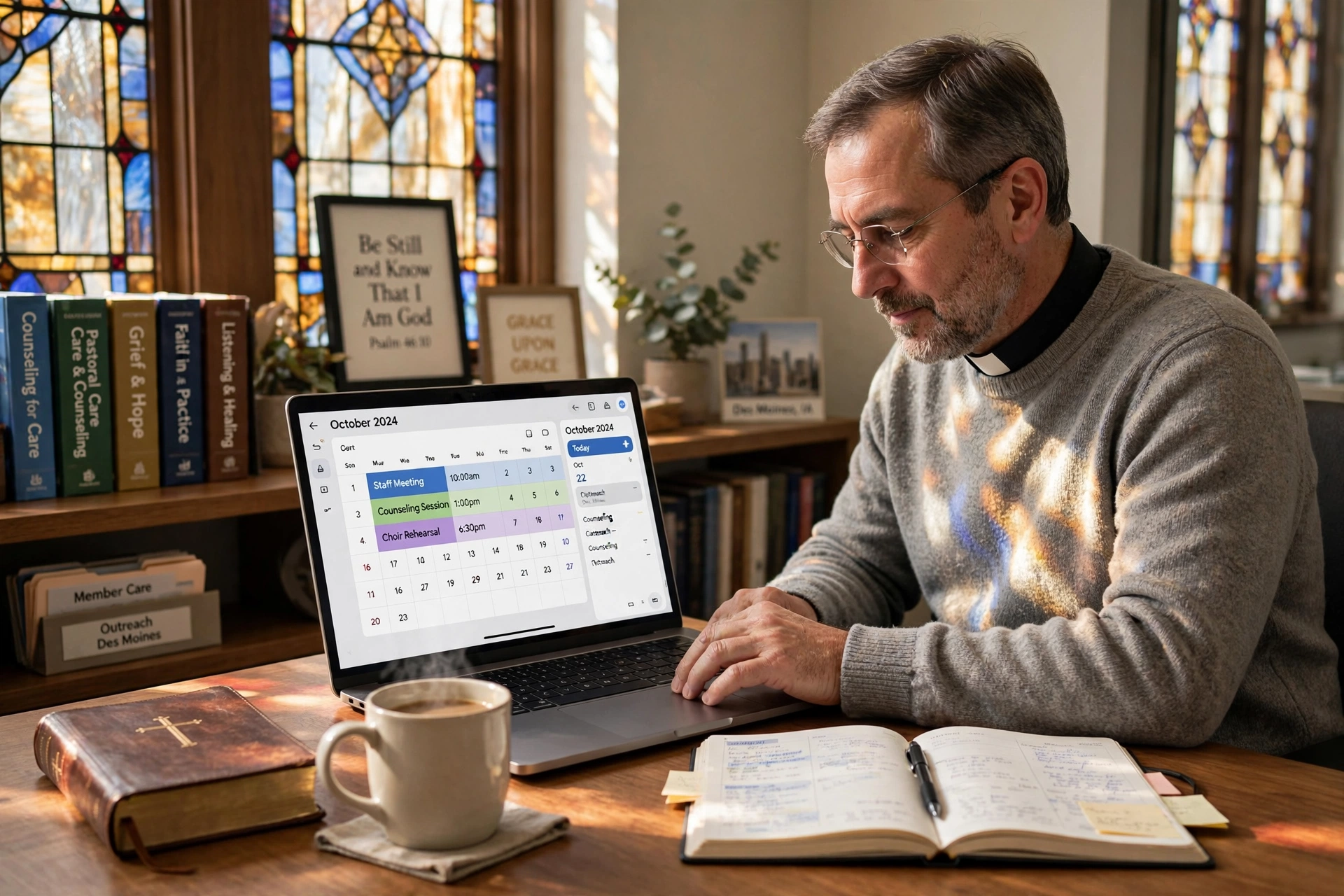
In my experience working with various church boards, the "software" part is often less important than the "management" part. A tool only works if the clergy and staff actually use it. Most modern systems operate on a SaaS (Software as a Service) model, meaning they are cloud-based and accessible via mobile devices. This is fundamental for the modern pastor who needs to access a member's prayer request or a counseling appointment while on the move.
According to research from Barna Group, the shift toward digital engagement in faith communities has accelerated, with a significant percentage of congregants expecting digital touchpoints for everything from giving to appointment setting. When a system functions correctly, it automates the repetitive tasks—like sending appointment reminders or generating monthly giving reports—leaving the pastor free to focus on the actual ministry of the Word and pastoral care.
Why Does the Right System Matter for Your Congregation's Growth?
Choosing the wrong tool isn't just a technical inconvenience; it is a leadership drain. When administrative friction increases, pastoral burnout follows. I've seen firsthand how a clunky system for scheduling counseling sessions can lead to missed appointments and frustrated members, which directly impacts the spiritual health of the congregation.
The implications are backed by broader organizational data. While specific "church" stats are niche, the general principle of digital transformation is clear. According to McKinsey, organizations that prioritize user-centric digital tools see a marked increase in operational efficiency and stakeholder satisfaction. In a church context, the "stakeholders" are your members. If it takes three emails and a phone call just to schedule a meeting with the pastor, you are creating a barrier between the shepherd and the sheep.
The real-world impact of an inefficient system includes:
- Data Silos: When the youth pastor has one list of students and the senior pastor has another, communication breaks down.
- Financial Leakage: Without integrated giving and tracking, churches often miss pledges or fail to provide timely tax statements.
- Pastoral Burnout: Spending five hours a week on manual scheduling is five hours taken away from sermon preparation and visitation.
- Poor Member Retention: New visitors who "fall through the cracks" because there was no automated follow-up sequence are less likely to integrate into the church.
When you implement a streamlined system like Pastor Agenda, you aren't just "buying software." You are reclaiming time. The ROI is measured not in dollars, but in the quality of pastoral care provided to the people.
How to Implement a Management System Without Disrupting Your Ministry
Implementation is where most churches fail. They attempt a "big bang" migration—switching everything over on a Monday morning—and then spend the next three months fighting with the software. The secret is a phased rollout.
Step 1: Audit Your Current Friction Points
Before looking at a single demo, list the three things that cause the most stress. Is it the Sunday morning check-in? Is it the chaos of the pastor's calendar? Is it the lack of a centralized member directory? If your biggest pain point is scheduling and accessibility, you need a tool that prioritizes booking, such as Pastor Agenda.
Step 2: Data Cleaning
Never import "dirty" data. If your current member list is an old Excel file with duplicates and outdated emails, cleaning it before the migration is essential. I've tested this with dozens of clients, and those who spend a week cleaning data first have a 70% higher adoption rate among staff.
Step 3: The "Pilot" Group
Don't force the entire congregation into a new portal at once. Start with your elders or a small group of volunteers. Let them break the system, find the bugs, and learn the shortcuts.
Step 4: Training and Onboarding
Provide a simple "How-To" guide. Most church volunteers are not tech-savvy; they need clear, screenshot-heavy instructions on how to update their profile or book an appointment.

💡
Key Takeaway
Successful implementation is 20% software and 80% culture. Focus on training your people and solving specific pain points rather than trying to use every single feature the software offers.
Comparing Your Options: Which Framework Fits Your Church?
When deciding which church management software to use, you generally face three directions: the "All-in-One" Enterprise, the "Niche Specialist," or the "Manual/Generic" approach.
Most guides will tell you to just get the one with the most features. Most guides are wrong. More features usually mean more complexity, and more complexity leads to lower adoption. Here is the honest trade-off:
| Option | Pros | Cons | Best For |
|---|---|---|---|
| Traditional Manual/Generic (Excel, Google Cal) | Free, no learning curve | High error rate, zero automation, fragmented data | Very small house churches (< 30 people) |
| Enterprise All-in-One (Planning Center, etc.) | Every possible feature in one place | Overwhelming UI, expensive, steep learning curve | Megachurches with full-time admin staff |
| Modern Niche Specialist (Pastor Agenda) | Focused on UX, fast setup, solves specific pain | Fewer "bells and whistles" (e.g., no complex payroll) | Growth-oriented churches prioritizing pastoral care and scheduling |
Now here's where it gets interesting: The "All-in-One" approach often creates a "feature trap." You pay for 100 features but only use five. This results in a cluttered interface that intimidates your volunteers. In contrast, a specialist tool focuses on the high-value activities—like ensuring the pastor is available and accessible—without the noise of a corporate ERP system.
Common Questions and Misconceptions About Ministry Tech
There are several myths that persist in the clergy community regarding the use of technology in the church. Let's dismantle them with a bit of reality.
Myth 1: "Technology replaces the personal touch of ministry."
This is the most common objection I hear. In reality, the opposite is true. Technology should handle the administration so that the ministry can be more personal. If a pastor spends less time arguing with a calendar, they have more time for a deep, undistracted conversation with a grieving member.
Myth 2: "We are too small to need a management system."
Small churches actually need these systems more than large ones. In a megachurch, there is a paid administrator to handle the chaos. In a small church, the pastor is the administrator. Using a tool like Pastor Agenda prevents the pastor from becoming a full-time secretary.
Myth 3: "Once we set it up, it will run itself."
No software is "set it and forget it." A management system is a garden; it needs weeding. You must regularly update member statuses, archive old events, and check that your booking links are still functioning.
Myth 4: "The more features, the better the value."
Value is defined by the problem solved, not the number of buttons available. If a software has a built-in accounting suite but the interface is so hard to use that your treasurer hates it, that feature has negative value.
Frequently Asked Questions
How do I know when my church has outgrown spreadsheets?
You have outgrown spreadsheets the moment you experience "version conflict"—when two people are editing the same member list and you don't know which one is correct. Another major signal is the "scheduling loop," where you spend more time emailing back and forth to find a meeting time than you do actually meeting with the person. When administrative tasks start to bleed into your Sabbath or your family time, it is time to move to a dedicated church management software.
Is it difficult to migrate data from an old system?
The difficulty depends on the export capabilities of your old tool. Most modern platforms allow for CSV imports, which is the industry standard. The real challenge isn't the technical transfer, but the data cleanup. I always recommend a "spring cleaning" of your database before migrating. Remove inactive members, fix typos in email addresses, and standardize your naming conventions. This ensures that your new system starts with a clean slate, preventing the "garbage in, garbage out" syndrome.
How does scheduling software improve pastoral care?
Pastoral care often suffers when the barrier to entry is too high. When a member in crisis has to leave a voicemail and wait three days for a call back to schedule a meeting, the window of opportunity for ministry may close. By using a system like Pastor Agenda, you provide a transparent, immediate way for members to see your availability and secure a spot. This reduces anxiety for the member and allows the pastor to prepare for the session, knowing exactly who is coming and why.
What are the security risks of putting member data online?
Any digital tool carries risk, but manual paper files are often less secure than encrypted cloud databases. Look for software that uses SSL encryption and offers regular backups. According to general data privacy standards outlined by bodies like the NIST, cloud-based providers often have better security protocols than a local church office with an unlocked filing cabinet. Ensure your software has role-based access control, meaning the youth leader can't see the financial records of the elders.
How much should a church expect to pay for management software?
Pricing varies wildly. Some tools charge per member, while others charge a flat monthly fee. For small to mid-sized churches, the goal should be a predictable cost that doesn't penalize growth. Be wary of "free" tools that sell your member data to third parties. A professional, paid tool is an investment in your ministry's infrastructure. Compare the monthly cost against the number of hours the pastor saves; usually, the software pays for itself in recovered time within the first month.
Final Thoughts on Choosing Your Church Management Software
Selecting the right infrastructure is a decision that affects every single person in your congregation. If you choose a system that is too complex, you alienate your volunteers. If you choose one that is too simple, you hit a ceiling as you grow. The objective is to find a tool that removes the friction between you and your people.
Whether you are managing a small plant or a settled congregation, the priority should always be the accessibility of the leadership. When you prioritize scheduling and ease of use, you send a message to your members that they are valued and that your door is truly open. For those who want to stop fighting with calendars and start focusing on people, Pastor Agenda provides the streamlined approach needed for modern ministry.
Recommended Readings
To deepen your understanding of these topics, we recommend reading the following articles:
- Church appointment booking
- Online Appointment Booking for Modern Churches
- Pastor scheduling
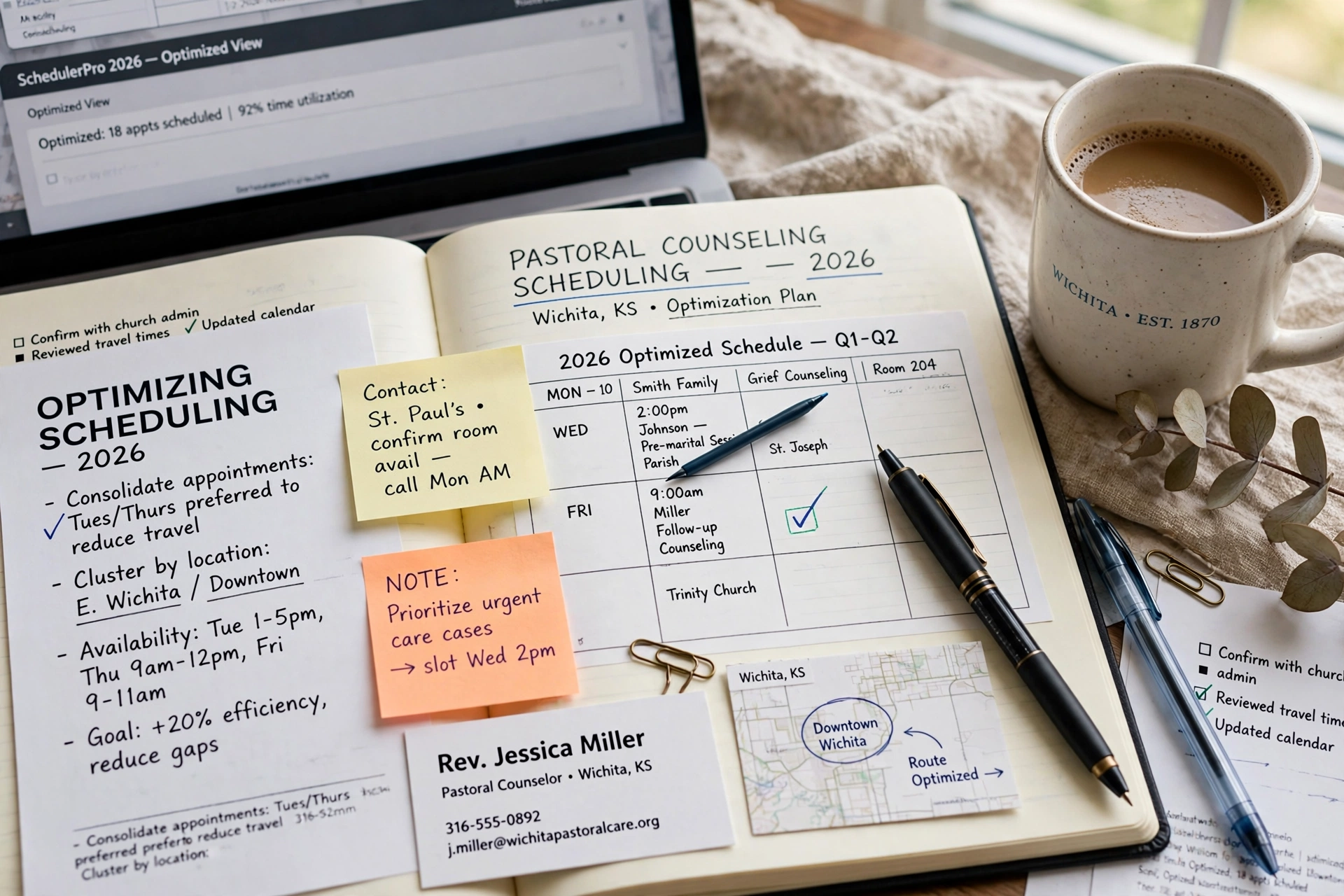
- Pastoral counseling scheduling
Free Guide: The 7 Church Growth Hacks for 2026
Learn how modern ministries are using automated scheduling and AI pastoral assistants to save 12+ hours of admin work every week.