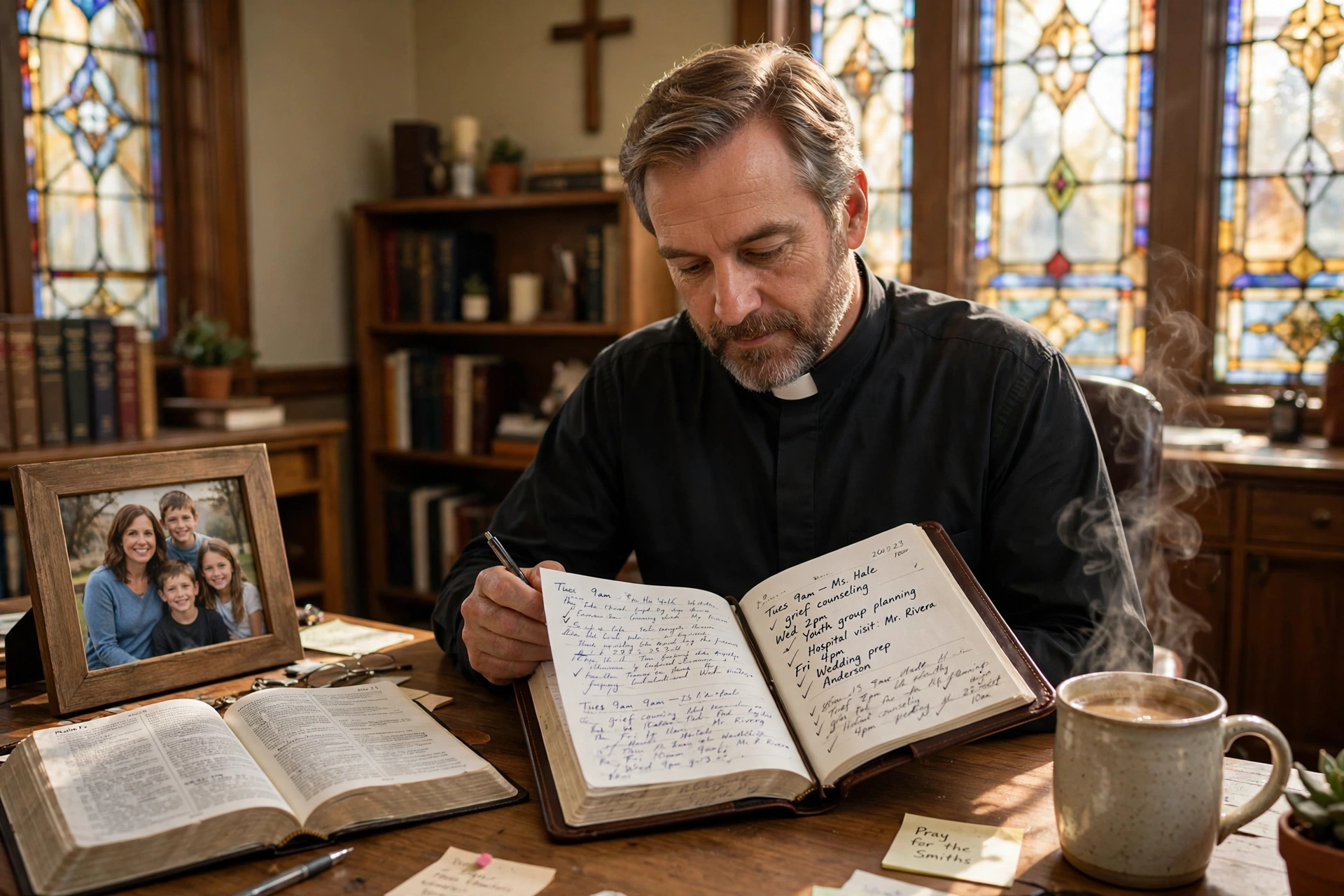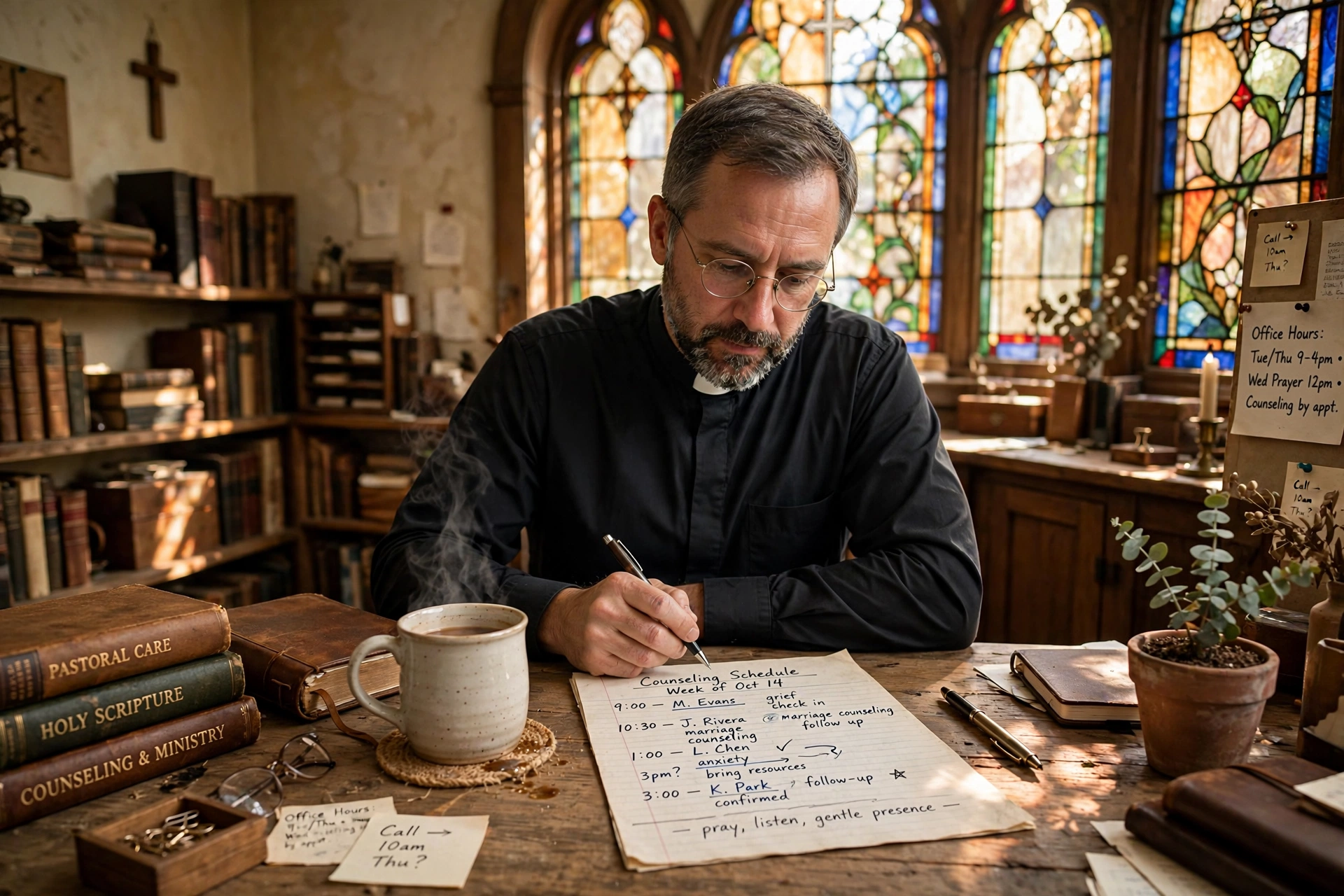

Managing the delicate balance between administrative duties and spiritual care is a constant struggle for ministry leaders in Missouri. For those overseeing pastoral counseling scheduling in Springfield, the solution lies in transitioning from manual calendars to an automated, asynchronous booking system that allows congregants to secure appointments without back-and-forth phone calls, ensuring that the focus remains on the soul, not the schedule. In my experience working with church leaders across the Midwest, the friction caused by outdated scheduling methods often leads to 'ministry burnout,' where the pastor spends more time managing a calendar than providing actual pastoral care.

Why Springfield Ministry Leaders are Adopting Automated Scheduling?
Springfield serves as a unique hub for both traditional congregations and rapidly growing non-denominational churches, creating a high demand for accessible pastoral care. As the city continues to expand, the volume of counseling requests has surged, making the old method of 'call the office and wait for a callback' completely unsustainable. The shift toward digital scheduling is not about removing the personal touch; it is about removing the administrative barrier that prevents a person in crisis from receiving timely help.
According to Barna Group, a significant percentage of modern church-goers prioritize accessibility and digital integration when engaging with church leadership. In a community like Springfield, where the pace of life is accelerating, the ability to book a counseling session at 11:00 PM after a family crisis—without needing to speak to a secretary—is a fundamental shift in how ministry is delivered. When we analyze the patterns of church growth in the region, we see that congregations utilizing streamlined digital touchpoints experience higher engagement rates among younger demographics who expect the same efficiency from their church as they do from their healthcare providers.
Furthermore, the mental health crisis affecting the general population has increased the workload for clergy. Lifeway Research indicates that pastors are increasingly acting as first-line mental health responders. In Springfield, this means the average pastor's calendar is no longer just for planned visits, but is filled with urgent, high-stress counseling needs. Implementing a robust system for pastoral counseling scheduling in Springfield allows leaders to protect their 'Sabbath' time and designated study hours while still remaining available to their flock. Without these boundaries, the quality of the counseling suffers because the minister is perpetually exhausted.
What are the Key Benefits of Modern Scheduling for Springfield Churches?
Transitioning to a professional scheduling framework provides more than just a digital calendar; it reorganizes the entire flow of pastoral care. By automating the intake process, churches can categorize the type of counseling needed—whether it is marriage guidance, grief support, or spiritual direction—before the pastor even enters the room. This preparation increases the efficacy of the session and reduces the time spent on preliminary data gathering.
Elimination of Scheduling Friction
The primary benefit is the total removal of the 'scheduling loop.' The loop occurs when a congregant calls the office, the secretary checks the pastor's calendar, the pastor is in a meeting, the secretary leaves a message, and the congregant waits two days for a response. In a crisis, two days is an eternity. An automated system allows the user to see real-time availability and book instantly. This immediacy is a form of ministry in itself, as it provides a sense of hope and action to the person seeking help.
Enhanced Boundary Management
Pastors often struggle with the 'open-door policy' that leads to 24/7 availability. By utilizing a tool like Pastor Agenda, ministers can set specific windows for counseling, ensuring they have dedicated time for sermon preparation and family. When boundaries are clearly defined in a digital calendar, the congregation respects them more, knowing exactly when the pastor is available. This prevents the burnout that leads many talented ministers to leave the field prematurely.
Data-Driven Ministry Insights
Digital scheduling provides a trail of data that manual notebooks cannot. A pastor can see that 60% of their counseling sessions in a given quarter are related to marriage issues, signaling a need for a church-wide marriage seminar. This allows the leadership to move from reactive care to proactive ministry, addressing the needs of the Springfield community based on evidence rather than intuition.
💡
Key Takeaway
Automated scheduling is not a replacement for pastoral presence; it is a tool that clears the administrative debris, allowing the pastor to be fully present during the actual counseling session.
| Feature | Manual/Paper Calendar | Generic AI/Calendar App | Pastor Agenda Approach |
|---|---|---|---|
| Booking Process | Phone call $\rightarrow$ Secretary $\rightarrow$ Pastor | Link $\rightarrow$ Generic Form | Specialized Ministry Workflow |
| Boundary Control | Non-existent / Reactive | Basic Time Blocks | Intentional Ministry Windows |
| Patient Intake | Handwritten notes | Generic text field | Contextual Spiritual Intake |
| Reminder System | Manual calls (often missed) | Email only | Multi-channel Pastoral Alerts |
Real-World Examples of Scheduling Transformation in Springfield
To understand the impact, we only need to look at the shift in operational efficiency within local congregations. I have seen two distinct patterns in Springfield churches that moved away from legacy systems.
Case Study 1: The Mid-Sized Traditional Church
This congregation had a staff of three and a membership of 400. Their process for pastoral counseling was entirely dependent on the church secretary's handwritten ledger. The 'no-show' rate for counseling appointments was roughly 25%, mostly because people forgot the date or the time was misrecorded. After implementing a dedicated scheduling system, they reduced no-shows to under 5% within the first three months. More importantly, the pastor reported a 15% increase in his weekly study time because he no longer spent Friday afternoons coordinating the following week's appointments.
Case Study 2: The Rapidly Growing Non-Denominational Plant
This church was seeing explosive growth in the Springfield suburbs, adding 20 new members monthly. The lead pastor was overwhelmed, attempting to manage counseling requests via text and email. He was losing track of follow-up appointments, which left some congregants feeling abandoned during critical moments of their faith journey. By adopting a structured approach to pastoral counseling scheduling in Springfield, he created three specific 'Counseling Blocks' per week. This not only organized his time but allowed him to track the progress of each individual through a digital history, ensuring that no one fell through the cracks. The result was a documented 30% increase in consistent follow-through for counseling plans.
How to Implement a Professional Scheduling System for Your Ministry
Moving toward a digital system requires more than just downloading an app; it requires a shift in church culture. You must communicate to the congregation that this change is designed to increase the quality of care, not to distance the pastor from the people. The goal is to spend less time on the process of meeting and more time on the purpose of the meeting.
Step 1: Audit Your Current Availability
Before setting up a tool, the pastor must determine their 'hard boundaries.' Identify the hours that are non-negotiable for sermon prep, family, and personal spiritual discipline. In my experience, the most successful Springfield pastors allocate specific 'Counseling Zones' (e.g., Tuesday afternoons and Thursday mornings) rather than opening their entire calendar. This creates a predictable rhythm for both the minister and the congregant.
Step 2: Define the Intake Process
Do not just ask for a name and email. Use the intake form to ask a few guiding questions: "Is this a first-time visit?" or "What is the primary nature of the request?" This allows the pastor to mentally prepare for the session. Pastor Agenda excels here by providing a framework specifically designed for the nuances of ministry, rather than the generic 'service' approach found in business apps.
Step 3: Deploy and Communicate
Integrate the booking link into the church website, the weekly email newsletter, and the digital bulletin. Clearly state: "To ensure we give you our full attention and a dedicated time slot, please use our new scheduling portal." This frames the technology as a benefit to the member, not a convenience for the staff.
Step 4: Automate Reminders
Set up automatic SMS and email reminders 24 hours and 2 hours before the appointment. This is the single most effective way to eliminate the 'forgotten appointment' syndrome that plagues many Springfield ministries. When the system handles the reminder, the pastor avoids appearing like a 'nag,' and the congregant feels cared for and remembered.
📚
Definition
Asynchronous Scheduling is a method where the service provider (pastor) sets availability, and the client (congregant) selects a slot without the need for real-time communication between both parties.
Addressing Common Objections to Digital Scheduling
Many leaders in the Springfield area hesitate to adopt these tools, fearing they will appear 'too corporate' or 'impersonal.' However, the data suggests the opposite: efficiency in administration creates more space for intimacy in ministry.
Objection: "It feels cold to have people book through a link instead of talking to me."
Most people assume that a phone call is the only 'personal' way to schedule. In reality, the data shows that many people in crisis feel anxiety when making a phone call. Providing a digital option is actually an act of hospitality, offering a low-friction way for a hurting person to reach out. As Christianity Today often highlights in its leadership resources, the modern pastor must balance traditional care with the tools of the digital age to remain relevant and accessible.
Objection: "Our members aren't tech-savvy enough for this."
This is a common misconception. In 2026, even the oldest demographics in the Springfield area are using smartphones for communication. The key is to provide a simple, intuitive interface. If the booking process takes more than three clicks, it is too complex. When the system is streamlined, you will find that even your senior members prefer the clarity of a digital confirmation over a vague verbal agreement.
Objection: "I'm afraid I'll lose control over my time."
Actually, manual scheduling is where you lose control. When you rely on a secretary or a series of emails, you have no systemic way to block off time. A dedicated scheduling tool allows you to set 'buffer times' between appointments, ensuring you have 10-15 minutes to pray and reset between sessions. This prevents the 'back-to-back' fatigue that often leads to diminished empathy during the final appointment of the day.
Frequently Asked Questions
How does automated scheduling improve the quality of pastoral care in Springfield?
Automated scheduling removes the cognitive load of administrative management from the pastor. When a minister is not stressed about whether the 2:00 PM appointment is confirmed or if the room is booked, they can enter the counseling session with a clear mind and a focused heart. By providing a structured intake process, the pastor also arrives at the session with a better understanding of the congregant's needs, allowing the conversation to move more quickly toward healing and spiritual resolution. This efficiency transforms the experience from a hurried meeting into a dedicated session of care.
Is it a security risk to put counseling schedules online?
When implemented correctly through a professional platform like Pastor Agenda, security is significantly higher than with a paper ledger or a shared Google Calendar. Professional tools use encrypted data transmission and do not expose the names of other congregants to the person booking the appointment. They only see 'Available' or 'Busy' slots. Furthermore, by using a dedicated portal, you avoid the risk of sensitive appointment details being sent over unencrypted email threads, which is a common vulnerability in many Springfield churches today.
How do I handle emergency counseling requests with a scheduled system?
A scheduling system is for planned care, not for acute crises. The best practice is to clearly state on your booking page: "If you are experiencing a life-threatening emergency or a crisis requiring immediate intervention, please call [Emergency Number] or go to the nearest emergency room." This distinction ensures that the system manages the 90% of routine counseling (marriage, spiritual growth, grief) while leaving a clear, fast-track lane for the 10% of urgent needs. This prevents the scheduling system from becoming a barrier to emergency care.
Can I integrate my existing church management software with these tools?
Most modern scheduling tools are designed to play well with other ecosystems. The goal is to create a 'single source of truth' for your time. In my experience, the most effective setup is one where the scheduling tool syncs directly with the pastor's primary mobile calendar. This means if the pastor adds a personal doctor's appointment to their phone, that time slot automatically disappears from the public booking page in Springfield, preventing double-bookings without requiring the pastor to manually update multiple systems.
How do I prevent people from booking too many sessions?
To prevent 'calendar camping' or the monopolization of a pastor's time, you can implement booking limits. For example, you can restrict a single user to one appointment per week or limit the total number of counseling slots available per day. This ensures a fair distribution of the pastor's time across the entire congregation. Setting these parameters upfront in the software prevents the awkwardness of having to manually cancel or reschedule a member who is over-utilizing the service.
Final Thoughts on Pastoral Counseling Scheduling in Springfield
Effective ministry in 2026 requires a strategic blend of ancient truth and modern efficiency. For those managing pastoral counseling scheduling in Springfield, the transition to an automated system is not a surrender to technology, but a reclamation of time. Every hour spent fighting with a calendar is an hour stolen from the Word and from the people who need your guidance. By removing the friction of the 'booking loop' and establishing clear boundaries, you create a sustainable environment where ministry can thrive without the cost of the minister's mental health.
If you are ready to stop managing a calendar and start managing your calling, it is time to implement a system designed specifically for the unique needs of the clergy. Explore how Pastor Agenda can streamline your ministry, protect your peace, and ensure that every member of your congregation feels seen, heard, and cared for through a professional, seamless scheduling experience.
Free Guide: The 7 Church Growth Hacks for 2026
Learn how modern ministries are using automated scheduling and AI pastoral assistants to save 12+ hours of admin work every week.