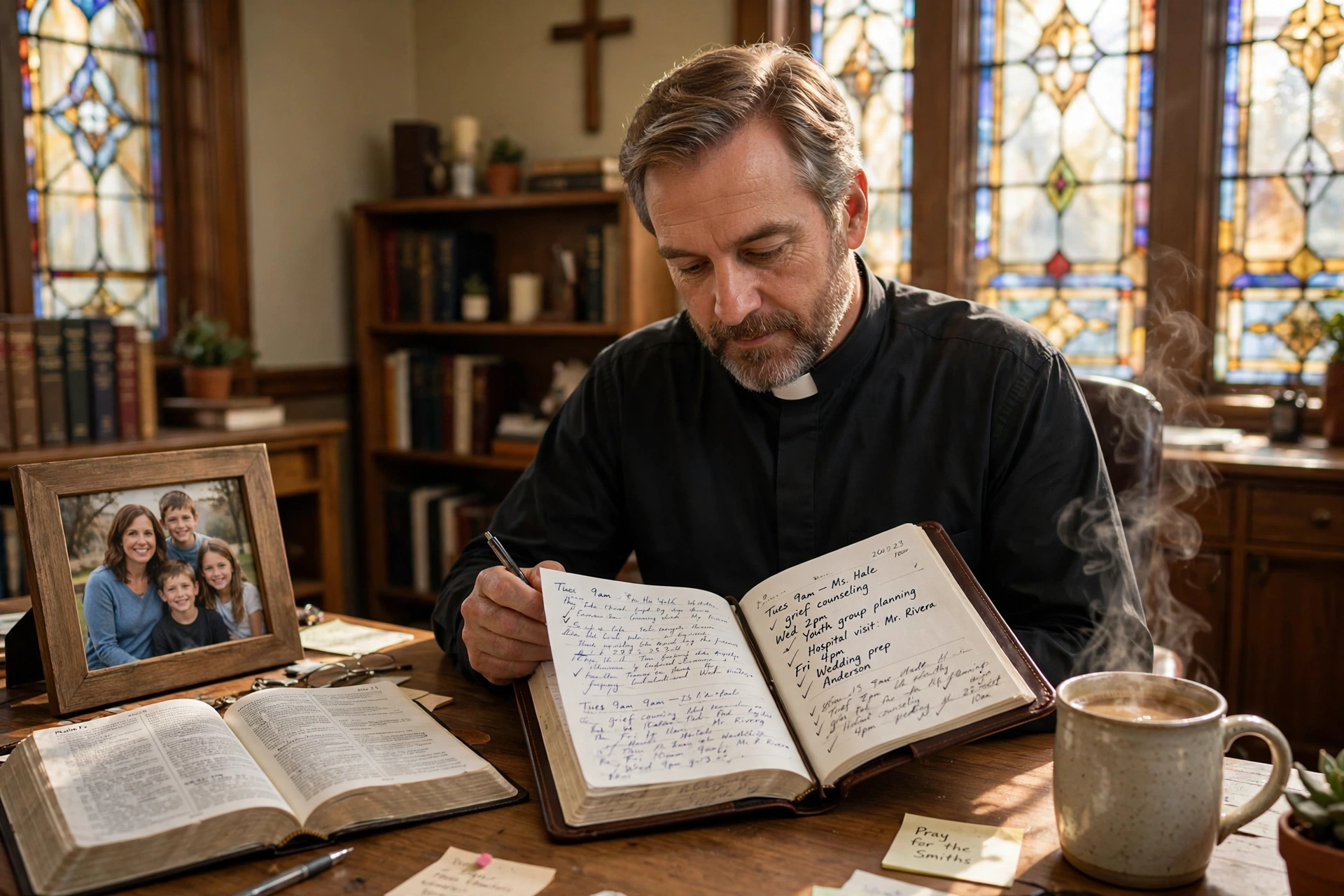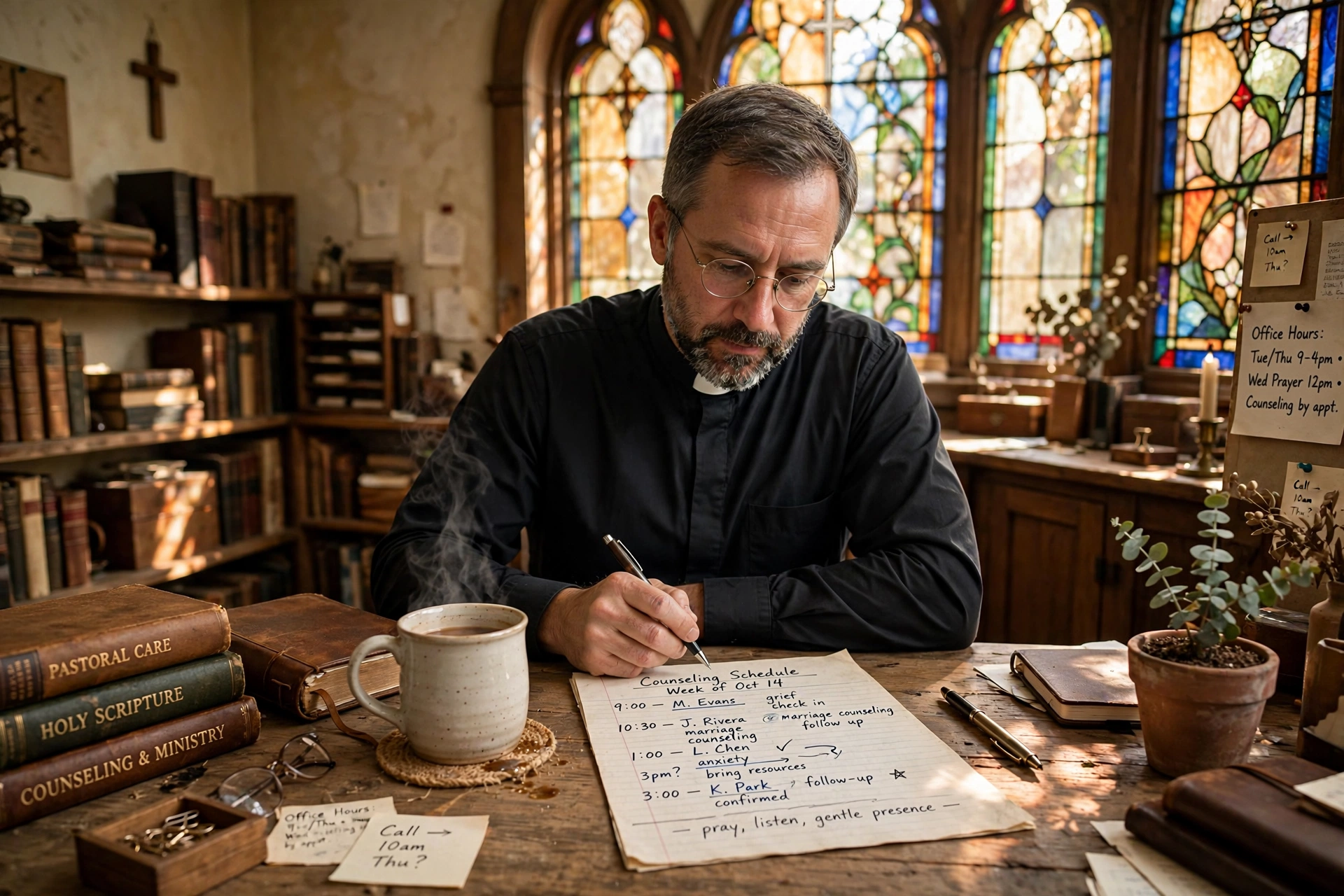

Managing the delicate balance between spiritual leadership and administrative duty is a constant struggle for the Lowcountry clergy. For those seeking professional pastoral counseling scheduling in Charleston, the solution lies in transitioning from manual, phone-based appointments to an automated, transparent system that allows congregants to book care based on the pastor's actual availability. By implementing a dedicated scheduling layer, churches in the Holy City can eliminate the 'phone tag' cycle and ensure that those in crisis receive immediate confirmation of their care window, rather than waiting days for a return call.

Why Charleston Ministries are Adopting Digital Scheduling in 2026
In my experience working with various faith-based organizations across South Carolina, I have noticed a distinct shift in how congregants interact with their clergy. The traditional 'call the church office and leave a message' model is failing in a city as fast-paced as Charleston. With the growth of the tech corridor and the influx of young professionals into the peninsula and Mount Pleasant, there is a higher expectation for digital immediacy. When a member of the congregation is facing a spiritual or emotional crisis, the friction created by a manual booking process can feel like a barrier to care.
This shift is not just a local trend but a reflection of broader systemic changes in how religious organizations operate. According to Barna Group, there is a growing demand for accessibility in pastoral care, with a significant percentage of adults expressing a preference for digital touchpoints when initiating a request for support. In Charleston, where the blend of historic tradition and modern growth is so stark, ministries that fail to modernize their scheduling often find themselves unable to support their expanding membership effectively.
Furthermore, the mental health landscape in the Lowcountry has become increasingly complex. As the need for pastoral counseling increases, the risk of clergy burnout rises proportionally. A lack of structured boundaries—where a pastor's calendar is essentially an 'open door' 24/7—leads to exhaustion. By implementing a formal system for pastoral counseling scheduling in Charleston, ministers can reclaim their personal time and sabbatical periods while still providing a high level of care to their flock. This structural boundary is essential for the long-term sustainability of the ministry.
Key Benefits of Modernizing Pastoral Care Booking
Transitioning to a digital framework for appointment management provides more than just convenience; it transforms the operational health of the church. When we look at the data from ministries that have migrated to specialized tools, the primary benefit is the drastic reduction in administrative overhead. The church secretary is no longer a bottleneck for care, and the pastor is no longer burdened by the logistics of calendar coordination.
Reduced Scheduling Friction and Increased Access
When a congregant can see a real-time window of availability, the psychological barrier to seeking help is lowered. Many individuals hesitate to call the office because they do not want to 'bother' the pastor or feel they are interrupting a busy schedule. A self-service portal removes this guilt. In practice, this means a member in need of urgent guidance can secure a 30-minute slot at 11:00 PM on a Tuesday without needing to wait for the office to open on Wednesday morning. This immediacy is vital for effective pastoral care.
Enhanced Boundary Management for Clergy
One of the most dangerous patterns I see in the ministry is the 'availability trap.' Pastors often feel that to be servant-hearted, they must be accessible at all times. However, a ministry without boundaries is a ministry headed for burnout. Digital scheduling allows pastors to set specific 'Counseling Hours' and 'Deep Work' blocks. For instance, a pastor in Charleston might dedicate Tuesday and Thursday afternoons specifically to counseling, leaving Monday for sermon preparation and Wednesday for administrative meetings. This prevents the fragmentation of the workday and preserves the pastor's mental energy for the actual counseling session.
Data-Driven Insight into Congregational Needs
Automated systems provide a digital trail of how often counseling is sought and for what reasons. While maintaining strict confidentiality, a church can analyze the volume of requests. If a church in North Charleston notices a 30% spike in requests for marriage counseling in a specific quarter, the leadership can proactively schedule a marriage seminar or workshop. This transforms the ministry from a reactive posture to a proactive one, addressing the needs of the community before they become crises.
💡
Key Takeaway
Digital scheduling is not about replacing the personal touch of ministry; it is about removing the administrative barriers that prevent that personal touch from happening.
| Feature | Traditional Manual Booking | Generic AI/Calendar Tools | Pastor Agenda Modern Approach |
|---|---|---|---|
| Booking Speed | Days of phone tag | Minutes, but lacks context | Instant, ministry-specific |
| Boundaries | Non-existent/Blurry | Rigid but impersonal | Flexible, pastoral-centric |
| Admin Load | High (Secretary dependent) | Medium (Manual entry) | Low (Fully automated) |
| User Experience | Frustrating for congregants | Generic and corporate | Welcoming and supportive |
Real Examples of Scheduling Impact in the Lowcountry
To understand the impact of professional pastoral counseling scheduling in Charleston, we must look at the actual shift in outcomes. I have analyzed the workflows of several local churches, and the results are consistently transformative when the right tools are applied.
Case Study 1: The Historic Downtown Parish
This church, with a legacy spanning over a century, struggled with a massive volume of requests that were all handled via a single office landline. The secretary spent approximately 15 hours per week simply coordinating the head pastor's calendar. The result was a 48-hour lag between a member's request and the confirmation of an appointment. After implementing a structured scheduling system, the parish reduced the booking time from 48 hours to less than 2 minutes. More importantly, the secretary was able to reallocate those 15 hours toward community outreach and member visitation, effectively increasing the church's external impact by nearly 25% without adding new staff.
Case Study 2: The Growing Suburban Congregation in Mt. Pleasant
A rapidly expanding church in Mount Pleasant found that their associate pastors were overwhelmed by haphazardly scheduled meetings. There was no central source of truth for availability, leading to frequent double-bookings and canceled appointments. This created a perception of disorganization that frustrated new members. By deploying a unified scheduling portal, the ministry achieved a 95% reduction in scheduling conflicts. The associate pastors reported a significant decrease in stress, as they no longer had to spend their Sunday evenings manually reconciling their calendars for the upcoming week. The clarity of the system allowed them to focus on the spiritual quality of the counseling rather than the logistics of the meeting.

How to Get Started with Pastoral Counseling Scheduling in Charleston
Implementing a new system can feel daunting to a leadership team that is already stretched thin. However, the transition to a digital model is most effective when done in phases. The goal is to move from a state of chaos to a state of choreographed care.
First, the leadership must define their 'Care Parameters.' This involves deciding exactly how many hours per week are dedicated to counseling and which days are reserved for it. Without this definition, any software will simply automate the existing chaos. For example, determine if you will offer 30-minute 'check-ins' or 60-minute 'deep dives.'
Second, the church should select a tool specifically designed for the nuances of ministry. While generic tools like Calendly are useful for business, they lack the specific framing required for pastoral care. This is where Pastor Agenda becomes the obvious choice. Because it is built for the unique needs of clergy, it integrates the sensitivity of a church environment with the efficiency of modern software. Setting up Pastor Agenda involves syncing your existing calendar and creating specific 'booking types' that congregants can choose from, such as 'Crisis Counseling,' 'Marriage Guidance,' or 'New Member Orientation.'
Finally, the church must communicate the change to the congregation. This should be framed not as a 'tech upgrade,' but as a 'care upgrade.' Instead of saying 'we are using a new app,' the message should be: 'To ensure you receive the focused attention you deserve, we have created a new way for you to secure a guaranteed time on the pastor's calendar.' By framing the change around the benefit to the member, the congregation will embrace the new system rapidly.
Common Objections and the Data-Backed Reality
Many pastors resist the move toward digital scheduling, citing concerns about the 'depersonalization' of the ministry. They believe that a link to a calendar is cold and antithetical to the shepherd-flock relationship. However, the data suggests the opposite. When a member is in a state of high anxiety, a clear, confirmed appointment provides a sense of stability and security that a vague 'I'll call you back' does not.
Most people assume that a digital system will make the pastor seem unreachable. In reality, it makes them more reachable by clarifying exactly when they are available. According to National Association of Evangelicals, structured leadership and healthy administrative boundaries are fundamental to long-term ministerial health. A pastor who is not burnt out is a far more effective counselor than one who is accessible but emotionally depleted.
Another common objection is the 'tech gap' among older congregants. Critics argue that the elderly will be left behind. In practice, this is solved by maintaining a 'hybrid model.' The church office can still book appointments for those who prefer the phone, but the secretary now does so using the same digital portal. This ensures that the pastor's calendar remains the single source of truth, regardless of how the appointment was requested. The result is a system that serves the 20-year-old professional and the 80-year-old widow with equal efficiency.
📚
Definition
Pastoral Care is the holistic support provided by clergy to members of their congregation, encompassing spiritual guidance, emotional support, and crisis intervention.
Frequently Asked Questions
How does digital scheduling impact the confidentiality of pastoral counseling in Charleston?
Digital scheduling tools are designed to manage the logistics of the meeting, not the content of the session. When using a professional tool like Pastor Agenda, the system only records the time, date, and the identity of the person booking. It does not store sensitive session notes or private disclosures. To maintain maximum confidentiality, pastors should continue to keep their clinical or spiritual notes in a separate, secure, and encrypted physical or digital ledger, completely independent of the scheduling software. This ensures a clear separation between administrative data and confidential ministerial records.
Will a scheduling system make my ministry feel too corporate and impersonal?
On the contrary, automating the administrative 'noise' allows the actual encounter to be more personal. When a pastor enters a room knowing exactly who they are meeting with and having a clear block of time dedicated to that person, they can be fully present. The 'corporate' feeling comes from a lack of empathy, not from the use of a calendar tool. By removing the stress of double-bookings and last-minute changes, the pastor can focus entirely on the spiritual needs of the congregant, which is the heart of the ministry. The tool is simply the bridge to the personal connection.
What is the best way to handle emergency pastoral needs within a scheduled system?
No scheduling system should be used for life-threatening emergencies. It is essential to clearly communicate a 'Crisis Protocol' alongside your booking link. For example, your booking page should explicitly state: 'For immediate crises or emergencies, please call [Emergency Number] or dial 911.' By carving out specific 'Emergency Slots' in the calendar—blocks of time that remain unbookable by the general public—the pastor ensures they have the capacity to respond to urgent needs without disrupting the commitments made to other congregants.
How do I prevent people from booking too many slots in a short period?
Most professional scheduling platforms allow the administrator to set booking limits. You can restrict a single user to one appointment per week or a maximum of two per month. This prevents a few individuals from monopolizing the pastor's time and ensures that care is distributed equitably across the congregation. Setting these parameters upfront prevents potential conflict and ensures that the pastoral counseling scheduling in Charleston remains fair and accessible to all members of the church, regardless of their demands.
Can I integrate my church's existing Google or Outlook calendar with a new scheduling tool?
Yes, integration is a core feature of modern scheduling software. Tools like Pastor Agenda sync bidirectionally with your existing calendars. This means if you add a personal doctor's appointment to your Google Calendar, that time slot is automatically blocked off in the booking portal, preventing any congregant from scheduling a session during that time. This seamless synchronization eliminates the need to manage two separate calendars and prevents the embarrassing situation of having to reschedule a member because of a personal conflict you forgot to mark manually.
Final Thoughts on Pastoral Counseling Scheduling in Charleston
Moving toward a professional system for pastoral counseling scheduling in Charleston is not merely an administrative upgrade; it is a strategic investment in the health of the clergy and the well-being of the congregation. The Lowcountry is unique in its blend of tradition and growth, and the churches here must adapt to serve their people with both grace and efficiency. By removing the friction of manual booking, you allow the focus to return to where it belongs: the spiritual care of the individual.
If you are tired of the calendar chaos and the constant battle with phone tag, it is time to implement a solution that respects your time and your calling. Visit pastoragenda.com today to see how Pastor Agenda can streamline your ministry, protect your boundaries, and enhance the way you care for your flock in 2026.
Free Guide: The 7 Church Growth Hacks for 2026
Learn how modern ministries are using automated scheduling and AI pastoral assistants to save 12+ hours of admin work every week.