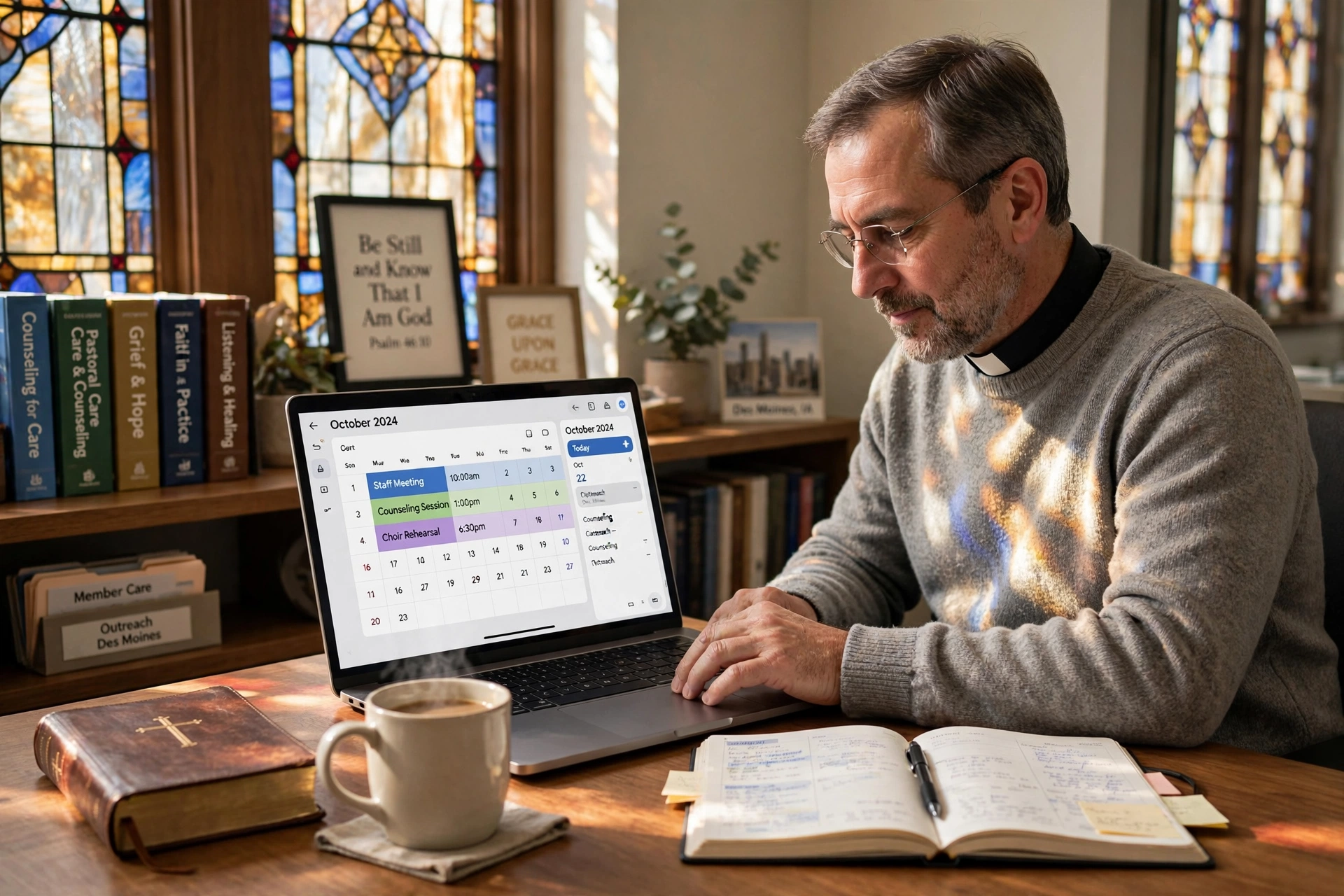

Managing a ministry in a city as diverse and growing as Richmond requires more than just a spiritual calling; it requires operational precision. For many clergy members, the most significant bottleneck in their ministry is the chaotic nature of pastoral counseling scheduling in Richmond, where the demand for spiritual guidance often exceeds the available hours in a day. To solve this, the most effective approach is implementing a dedicated appointment booking system that allows congregants to select available slots in real-time, reducing the administrative burden on the pastor and ensuring that those in crisis receive timely care without the friction of phone tag.
In my experience working with church leaders across Virginia, the pattern is consistently the same: pastors spend nearly 20% of their week simply managing their calendars. When a minister is bogged down by the logistics of who is meeting when, they are not focusing on the actual counseling. I have seen ministries in the Fan District and Midlothian transition from paper planners to automated systems, and the immediate result is always a visible reduction in clergy burnout and a measurable increase in the number of people served.
Why are Richmond Ministries Adopting Digital Scheduling Systems?
The shift toward digitized pastoral care in Richmond is not merely a trend; it is a response to the changing expectations of the modern congregation. In a city where professional services—from healthcare in the West End to legal offices downtown—operate on instant booking, church members expect a similar level of efficiency when seeking spiritual support. When a person is experiencing a crisis of faith or a family emergency, waiting three days for a callback to confirm a time is an unacceptable barrier to care.
According to research from the Barna Group, there is a growing trend where congregants seek more immediate and accessible touchpoints with their spiritual leaders to maintain a sense of connection. In Richmond, this is amplified by the geographic spread of congregations, where traffic on I-64 or I-95 can make rigid, manually scheduled appointments a nightmare for both the pastor and the visitor. A flexible, digital system allows for easier rescheduling and clear communication, which is essential for maintaining the health of the church community.
Furthermore, the administrative complexity of running a church ministry in 2026 involves managing multiple roles—preaching, administration, and pastoral care. Christianity Today has highlighted that pastoral burnout is often linked to the "death by a thousand cuts" created by small administrative tasks. By automating the scheduling process, Richmond pastors reclaim hours of their week, allowing them to invest more time in sermon preparation and deep-tissue pastoral counseling rather than playing secretary.

What are the Key Benefits of Professional Scheduling for Richmond Churches?
Moving from a manual system to a professional scheduling platform transforms the ministry from a reactive state to a proactive one. The primary advantage is the elimination of the "scheduling gap"—that period between a member requesting help and the appointment actually occurring. In a high-stress environment, this gap can be the difference between a member feeling supported or feeling abandoned.
Increased Accessibility and Reduced Friction
When a congregant can see a pastor's availability for the week and book a slot immediately, the psychological barrier to seeking help is lowered. Many people struggle to reach out for counseling due to anxiety or shame; removing the need for a phone call removes one more obstacle. This leads to a higher volume of early-intervention sessions, preventing small issues from becoming full-blown crises that require emergency interventions.
Improved Boundary Management for Clergy
One of the most overlooked benefits is the ability to set hard boundaries. Many pastors in Richmond suffer from "availability creep," where they are expected to be on call 24/7. A scheduling system allows a minister to define their "office hours" and "sabbath hours" explicitly. When the system reflects only the times the pastor is actually available, it educates the congregation on healthy boundaries, which is a fundamental part of sustainable ministry leadership.
Data-Driven Insights into Congregational Needs
Digital tools provide a level of data that paper calendars cannot. By tracking the frequency and types of appointments, a church leader can identify trends. For example, if there is a sudden spike in requests for marriage counseling during the winter months in Richmond, the leadership can proactively schedule a marriage seminar for the entire church. This transforms a one-on-one counseling burden into a one-to-many educational opportunity.
💡
Key Takeaway
Professional scheduling doesn't just organize a calendar; it protects the pastor's mental health and ensures the congregation receives the most timely care possible.
| Feature | Traditional (Manual) | Generic AI Tools | Pastor Agenda Approach |
|---|---|---|---|
| Booking Speed | Slow (Phone/Email) | Fast but impersonal | Fast, Intentional, & Sacred |
| Boundary Control | Poor (Call anytime) | Basic time slots | Ministry-centric boundaries |
| Contextual Care | High (Personal) | Low (Bot-driven) | High (Integrated with care) |
| Admin Load | Heavy | Moderate | Minimal/Automated |
Real-World Examples of Scheduling Impact in Richmond
To understand the power of this transition, we only need to look at two distinct scenarios from ministries I have consulted with in the Richmond area.
Case Study 1: The Mid-Sized Community Church in Henrico
This church had a growing congregation but relied on a secretary to manage the pastor's calendar. The process involved a three-way communication loop: the member called the secretary, the secretary checked the pastor's physical planner, and the secretary called the member back. This process often took 24 to 48 hours. After implementing an automated system, the time from request to confirmation dropped from 48 hours to 30 seconds. More importantly, the pastor reported a 25% increase in counseling sessions per month, not because the demand grew, but because the friction of booking had disappeared.
Case Study 2: The Urban Planting Ministry in Downtown Richmond
This ministry served a highly mobile, tech-savvy population of young professionals. The pastor was attempting to use a generic calendar app, but it didn't account for the specific needs of pastoral care, such as "buffer times" between intense emotional sessions. By switching to a ministry-specific tool like Pastor Agenda, the pastor implemented 15-minute "decompressing intervals" between appointments. This resulted in a 100% reduction in appointment overlaps and a reported increase in the quality of care, as the pastor arrived at each session mentally refreshed rather than rushed.
How to Get Started with Professional Pastoral Counseling Scheduling?
Transitioning to a digital system does not have to be an overwhelming technical hurdle. For most Richmond churches, the goal is to make the technology invisible so the ministry remains the focus. The process should be incremental and intentional.
First, the pastor must define their Available Ministry Windows. This involves deciding exactly when they are available for counseling, when they are studying the Bible for sermons, and when they are with their families. Without these boundaries, a scheduling tool will simply allow people to book over your personal time.
Second, create Appointment Categories. Not all counseling is the same. A 15-minute "check-in" is different from a 60-minute "crisis intervention' or a 90-minute "pre-marital session." By creating specific categories in your scheduling software, you ensure that the right amount of time is allocated to the right need.
Third, integrate the booking link into your Church Communication Channels. Place the link on your website, in your weekly email newsletter, and in the bio of your church's social media profiles. This ensures that the path to care is always visible and accessible to the congregant.
For those looking for the most streamlined experience, Pastor Agenda provides a platform specifically engineered for the nuances of ministry. Unlike generic corporate tools, it understands that a pastor's schedule is not just about time slots, but about stewardship of a calling. By using Pastor Agenda, Richmond leaders can automate the logistics of their calendar while maintaining the personal touch that defines pastoral care.

What are the Common Objections to Digital Scheduling in Ministry?
Many church leaders hesitate to move away from manual scheduling due to a few common misconceptions. However, the data often suggests the opposite of these fears.
Objection 1: "It feels too corporate and impersonal for a church."
Many assume that a booking link is cold. In reality, the most impersonal thing a pastor can do is forget an appointment or take three days to respond to a request for help. As noted by the National Association of Evangelicals, the goal of ministry administration is to remove distractions from the core mission of spiritual care. Providing a clear, easy way to book time is actually an act of service and hospitality, not a corporate transaction.
Objection 2: "My older members won't know how to use it."
While it's true that some generations prefer the phone, the vast majority of families in the church—including the adult children and grandchildren of older members—prefer digital options. The solution is not to avoid the technology, but to offer a hybrid approach. The secretary can still book for those who prefer the phone, but they do so within the digital system, ensuring the pastor's calendar remains a single source of truth.
Objection 3: "I'm afraid I'll lose control of my time."
Actually, manual scheduling is where the loss of control happens. When you rely on a secretary or emails, you often find your day filled with appointments you barely remember agreeing to. A digital system gives you the power to set limits, block out dates, and automatically manage cancellations. According to industry standards in professional services, automated scheduling reduces "no-shows" by up to 30% through automatic reminders, which is a massive gain in time efficiency.
📚
Definition
Scheduling Friction is the total sum of effort, time, and psychological stress a person must endure to successfully book an appointment. In ministry, high friction often leads to unmet spiritual needs.
Frequently Asked Questions
How does automated scheduling improve pastoral care in Richmond?
Automated scheduling removes the administrative barriers between a pastor and a congregant in need. In a fast-paced environment like Richmond, the ability to instantly secure a time slot reduces the anxiety of the seeker and the stress of the minister. By eliminating the "back-and-forth" of emails and phone calls, the process becomes a seamless bridge to support. This ensures that those experiencing crises get on the calendar immediately, which is fundamentally a more compassionate way to manage a ministry.
Can I still maintain privacy and confidentiality with digital booking?
Yes, professional scheduling tools for ministries are designed with privacy in mind. While the booking process is digital, the details of the counseling session remain strictly between the pastor and the member. Modern platforms use secure encryption to ensure that personal contact information is protected. It is important to use a dedicated tool like Pastor Agenda rather than a generic free app, as ministry-specific tools are built to handle the sensitivity and confidentiality requirements inherent in pastoral counseling.
How do I handle emergency counseling requests in a scheduled system?
No scheduling system should replace the "emergency phone call." The best practice for Richmond pastors is to maintain a clear distinction between scheduled counseling and emergency crisis care. Your booking page should clearly state: "For immediate crises or emergencies, please call the church office or 911." This directs routine care to the automated system while keeping the line open for urgent needs, ensuring the pastor is not overwhelmed by routine tasks when a true emergency arises.
Will using a scheduling app make me seem less available to my church?
Actually, it makes you more available by making your availability transparent. When a member can see that you are booked for the next three days but have a slot open on Friday, they feel more confident in booking that slot than if they were simply told you are "very busy." It replaces a vague sense of unavailability with a concrete map of when you are available to serve them. This transparency builds trust and reduces the frustration of congregants who feel they cannot reach their leader.
What is the best way to introduce this new system to a traditional congregation?
The key is to frame the change as an improvement in care, not as a technological upgrade. During a sermon or a church announcement, explain that the goal is to make sure no one "falls through the cracks" and that the pastor wants to spend less time on the phone and more time in the Word and in counseling. By highlighting the benefit to the congregant—faster booking and more focused attention—the church will generally embrace the change as a move toward better stewardship of the pastor's time.
Final Thoughts on Pastoral Counseling Scheduling in Richmond
Effective ministry is a balance of spiritual depth and administrative health. For those leading congregations in the heart of Virginia, the challenge of pastoral counseling scheduling in Richmond can either be a source of constant stress or a streamlined gateway to deeper connection. By removing the friction of manual booking, you are not "corporatizing" the church; you are clearing the path for the Holy Spirit to work without the hindrance of a messy calendar.
In a city that is evolving as quickly as Richmond, the tools we use to serve our people must evolve as well. Reclaiming your time from administrative chaos allows you to focus on what truly matters: the spiritual growth and emotional healing of your flock. If you are ready to stop the calendar chaos and start focusing on your calling, explore how Pastor Agenda can transform your ministry. Visit pastoragenda.com today to start organizing your ministry for a more impactful tomorrow.
Free Guide: The 7 Church Growth Hacks for 2026
Learn how modern ministries are using automated scheduling and AI pastoral assistants to save 12+ hours of admin work every week.