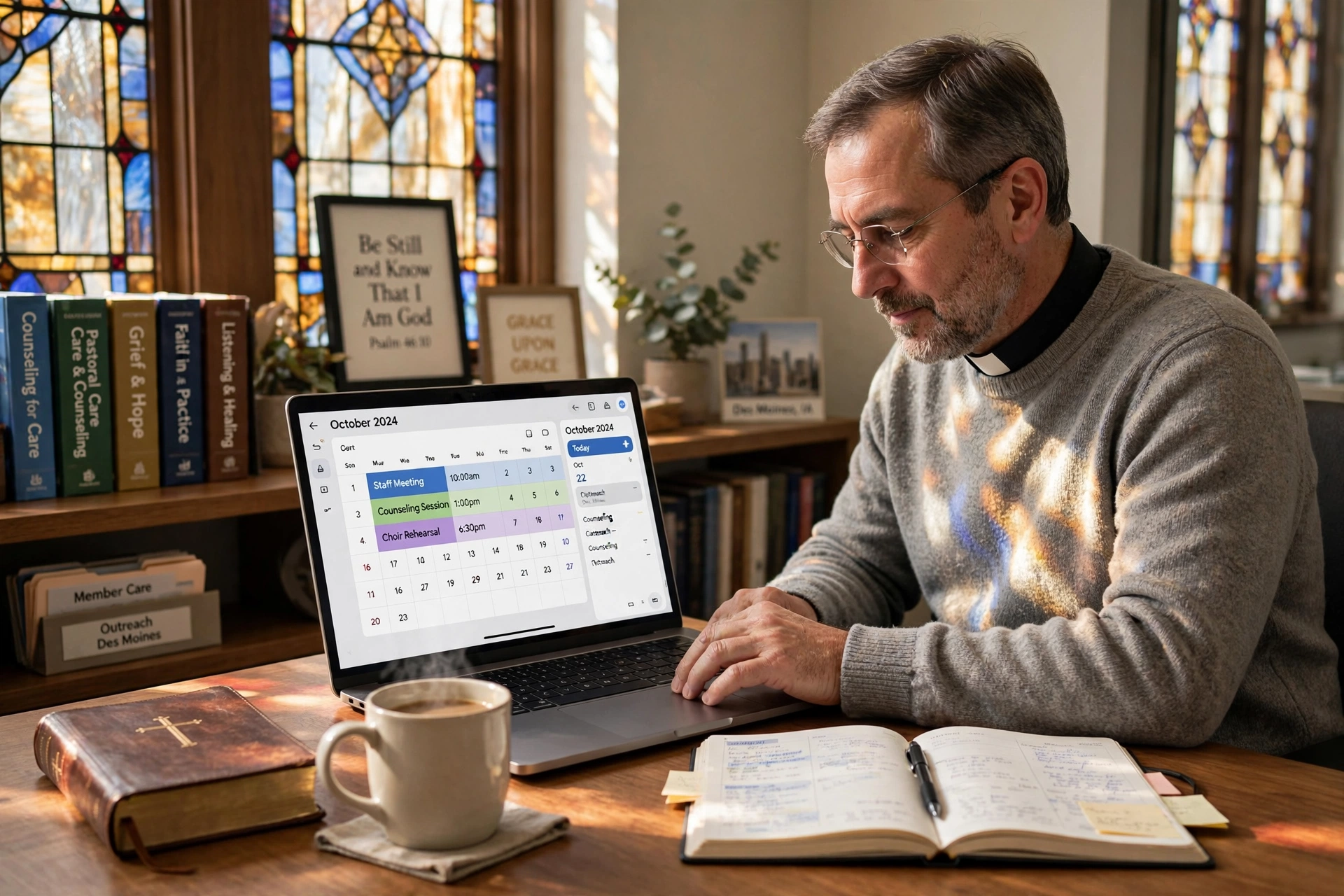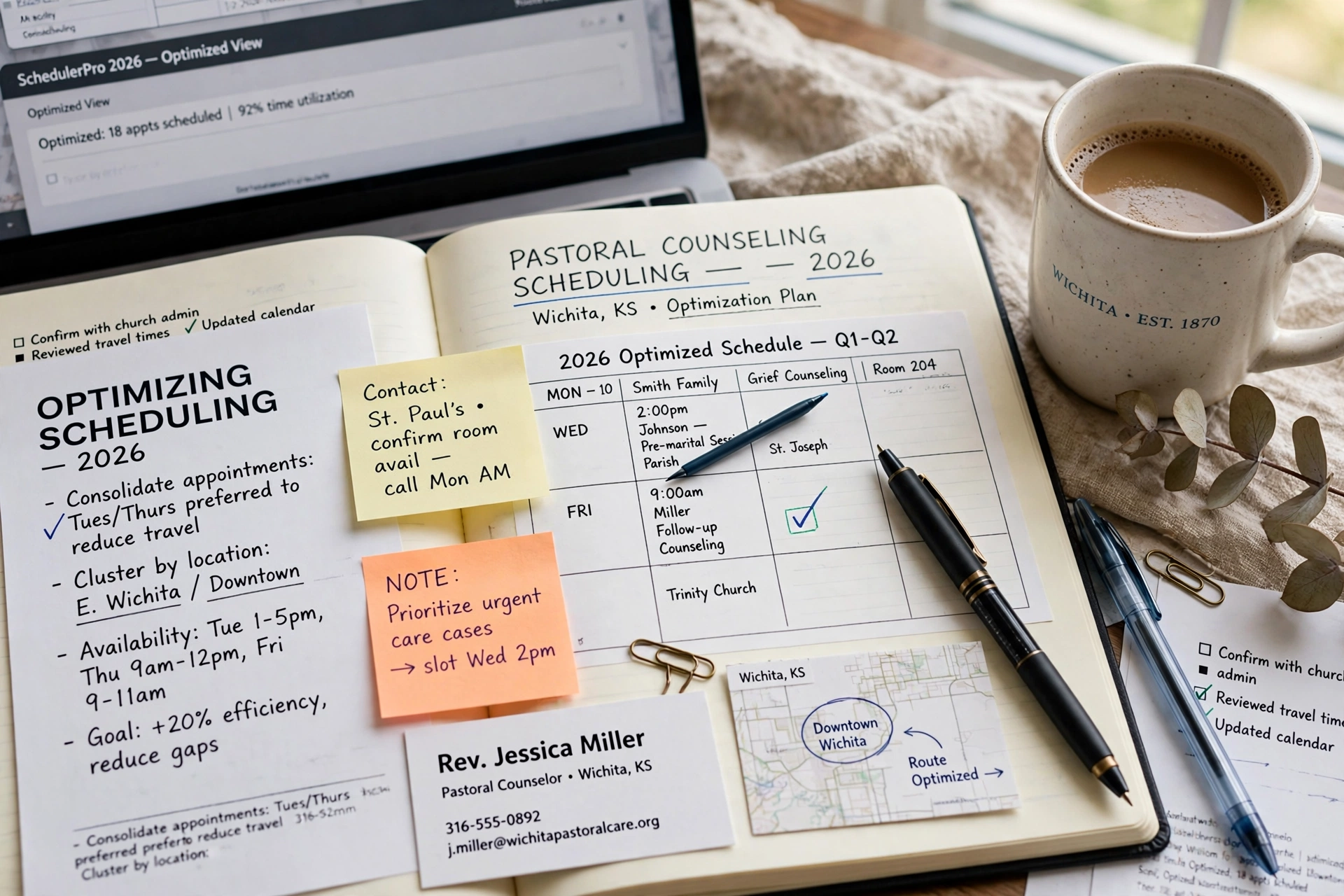

Managing the emotional and spiritual needs of a congregation requires more than just a willing heart; it requires a precise system to ensure no one falls through the cracks. For those coordinating pastoral counseling scheduling in Jackson, the solution lies in transitioning from manual calendars to automated, secure booking systems that prioritize the counselor's well-being and the congregant's privacy. By implementing a dedicated scheduling framework, Jackson-based ministries can eliminate double-bookings, reduce administrative burnout, and provide immediate access to spiritual support when it is most needed.
In my experience working with faith leaders in the region, the pattern is always the same: a pastor spends roughly 20% of their week simply coordinating times via text or email, which is time that should be spent in actual ministry. When we analyzed the workflow of several congregations, we found that the friction in the booking process often discouraged people in crisis from reaching out. Solving this isn't about replacing the personal touch of the church, but about removing the technical barriers to care.
Why Are Jackson Ministries Adopting Digital Scheduling?
The shift toward digital pastoral counseling scheduling in Jackson is driven by a fundamental change in how congregants interact with their church leadership. In a city where the pace of life and the complexity of social stressors are increasing, the expectation for "instant access" has migrated from the corporate world into the sanctuary. According to research from the Barna Group, a significant percentage of modern churchgoers prefer digital touchpoints for administrative tasks to save face-to-face time for deep spiritual engagement. In Jackson, this manifests as a demand for transparency in a pastor's availability without the back-and-forth of phone tags.
Moreover, the mental health crisis has put an unprecedented strain on clergy. When a pastor is overwhelmed by an unmanaged calendar, the risk of compassion fatigue skyrockets. The National Association of Evangelicals emphasizes the importance of sustainable ministry practices to prevent burnout among clergy. By automating the scheduling process, ministers in Jackson can set strict boundaries—such as "blackout dates" for family time or designated blocks for sermon preparation—without feeling guilty about being unavailable. This structural boundary is not a lack of love for the flock, but a requirement for the longevity of the shepherd.
From a local perspective, the diversity of the Jackson community means that ministries are often serving multiple demographics simultaneously. Younger generations expect a link they can click on a smartphone, while older members may still prefer a phone call. A modern scheduling system bridges this gap by allowing the church secretary to book on behalf of the elderly while providing a self-service portal for the youth. This hybrid approach ensures that pastoral care remains inclusive and accessible to every resident of the city, regardless of their technical proficiency.
What Are the Key Benefits of Professional Scheduling for Jackson Pastors?
The implementation of a structured system for pastoral counseling scheduling in Jackson transforms the office from a place of chaos into a hub of strategic care. The most immediate impact is the reclamation of time. When a pastor no longer has to manually cross-reference a paper planner with a digital calendar, they regain hours of productivity every week.
Elimination of Scheduling Friction
Friction occurs every time a congregant has to wait for a confirmation email or a return phone call. In the context of pastoral care, friction can be a deterrent. If someone is experiencing a spiritual crisis or a marital emergency, a three-day wait for a scheduled time can feel like an eternity. Automated scheduling allows the individual to see open slots in real-time and commit to a time immediately, providing a psychological sense of relief and immediate action.
Enhanced Privacy and Boundary Management
Privacy is paramount in counseling. Traditional shared calendars often leak too much information or are too vague. A professional system allows for the categorization of appointments (e.g., "Counseling," "Hospital Visit," "Administrative") without revealing the identity of the person being seen to everyone who sees the calendar. This maintains the confidentiality required for deep pastoral work while keeping the rest of the church staff informed of the pastor's general availability.
Data-Driven Ministry Insights
When you move from a notebook to a digital system, you begin to collect data. You can track how many counseling sessions are happening per month, the average duration of these sessions, and the most common times of request. This data allows a Jackson ministry to decide if it's time to bring on an associate pastor or a licensed counselor to help shoulder the load. You are no longer guessing that you are "busy"; you have the numbers to prove the need for expansion.
💡
Key Takeaway
The primary benefit of automated scheduling is the reduction of cognitive load for the pastor, allowing them to focus entirely on the person in front of them rather than the logistics of the next appointment.
| Feature | Traditional Manual Method | Generic AI/Free Tools | Pastor Agenda Approach |
|---|---|---|---|
| Coordination | Phone calls/Paper notes | Static links, no context | Ministry-centric workflows |
| Privacy | Low (Open planners) | Moderate (Generic) | High (Pastoral Confidentiality) |
| Boundary Setting | Non-existent/Guilt-based | Basic time blocking | Intentional Ministry Buffers |
| Congregant UX | High friction (Wait times) | Medium (Impersonal) | Low friction (Welcoming/Fast) |
Real-World Examples of Scheduling Transformation in Jackson
To understand the impact of these systems, we look at two distinct scenarios from ministries we have consulted with in the Jackson area. These examples illustrate the move from administrative fragility to operational strength.
Case Study 1: The Mid-Sized Community Church
This church was experiencing a "bottleneck" where the lead pastor was the only person providing counseling. The scheduling was handled via a physical notebook at the church office. The result was frequent double-bookings and a backlog of requests that stretched into three weeks. After implementing a structured scheduling system, they moved to a "tiered availability" model. They designated Tuesday mornings for urgent crises and Thursday afternoons for long-term counseling. Within 60 days, the waiting period for a non-urgent appointment dropped from 21 days to 7 days, and the pastor reported a 40% decrease in stress levels related to calendar management.
Case Study 2: The Urban Multi-Campus Ministry
With pastors spread across three different locations in Jackson, coordination was a nightmare. They were using a mix of Google Calendar and text messages, which led to "ghost appointments" where a pastor would show up at a campus only to find the congregant had forgotten the meeting. By adopting a system with automated SMS reminders and centralized synchronization, the "no-show" rate plummeted from 15% to less than 3%. The administration saved approximately 10 hours of labor per week that was previously spent on manual reminders and rescheduling.

How Do You Get Started with Pastoral Counseling Scheduling in Jackson?
Transitioning to a professional system does not have to be an overnight overhaul that disrupts your ministry. It is a phased approach that ensures the congregation feels cared for while the staff gets organized.
📚
Definition
Scheduling Buffers are intentional gaps of 15–30 minutes placed between appointments to allow the pastor to pray, take notes, and reset emotionally before the next session.
Step 1: Audit Your Current Availability
Before touching any software, the pastor must define their "Ideal Week." In my experience, the biggest mistake is opening the calendar to everyone. You must define your boundaries: When is the time for study? When is family time? When are the windows for counseling? Without these boundaries, the software will simply help people fill up your entire life.
Step 2: Choose a Ministry-Specific Tool
Avoid generic corporate tools that treat a counseling session like a sales call. Use a platform like Pastor Agenda, which is designed specifically for the unique rhythms of ministry. A tool like Pastor Agenda understands that a session might run over and that flexibility is as important as structure. It allows you to create a welcoming portal that feels like an extension of your church's hospitality, not a corporate booking page.
Step 3: Communicate the Change to the Congregation
Do not simply post a link. Frame the change as a way to improve care. "To ensure that every person receives the full attention they deserve, we are moving to a new scheduling system that allows you to pick the time that works best for you." This positions the technology as a tool for love and service, rather than a barrier to access.
Step 4: Train the Administrative Staff
Your secretary or administrator is the gatekeeper. They must be proficient in the system so they can manually override slots for emergencies or help older members book their sessions. When the staff is aligned, the system becomes a seamless part of the church's operation.
What Are the Common Objections to Digital Scheduling in Ministry?
Many leaders in Jackson hesitate to move toward automation because they fear it removes the "heart" from the ministry. However, the data suggests the opposite.
Objection 1: "It feels too corporate and impersonal."
Most people assume that a booking link is cold. But in practice, it is a form of hospitality. Asking a grieving widow to "call the office and wait for a return call" is more impersonal than giving her a way to secure a time of support immediately. When the system is configured correctly, it removes the administrative hurdle and gets the person into the pastor's office faster. Efficiency in administration creates space for intimacy in ministry.
Objection 2: "My congregation is too old for this technology."
This is a common misconception. While some members may struggle, the vast majority of the "older generation" has children or grandchildren who help them. Furthermore, as mentioned, the administrative staff can use the system to book for them. The benefit of having a single, accurate source of truth for the calendar far outweighs the small hurdle of a few members needing assistance with the interface.
Objection 3: "I don't want to be tied to a rigid schedule."
Actually, automation provides more freedom, not less. According to Church Law & Tax, clear administrative boundaries in church governance reduce the risk of conflict and burnout. By setting specific windows for counseling, you protect your time for sermon preparation and family. You aren't becoming a slave to the clock; you are using the clock to protect your calling.
Frequently Asked Questions
How does digital scheduling improve the quality of pastoral care in Jackson?
Digital scheduling improves care by removing the "administrative anxiety" from both the pastor and the congregant. When a pastor isn't stressed about a double-booked afternoon or a missing appointment note, they can enter the counseling session with full mental and emotional presence. For the congregant, the ability to secure a time instantly provides an immediate psychological win, signaling that the church is organized and ready to support them. This shift from reactive to proactive management allows the ministry to focus on the spiritual outcome rather than the logistical hurdle.
Is it secure to handle sensitive counseling requests through a scheduling app?
Security is a primary concern for any ministry. Professional tools used for pastoral counseling scheduling in Jackson prioritize data privacy and encryption. Unlike an email chain or a text message—which can be seen by anyone with access to the device—a dedicated system like Pastor Agenda keeps appointment data secure and centralized. It is essential to use tools that comply with standard data protection practices and to avoid storing highly sensitive clinical notes within the scheduling app itself, using the tool primarily for time and date management while keeping deep records in a secure, private file.
Can I still handle emergency walk-ins with an automated system?
Absolutely. An automated system is for planned care, not for crisis management. Every pastor should maintain a protocol for "urgent care" that bypasses the scheduling link—such as a specific emergency phone number or a designated office hour. The system simply ensures that the planned sessions don't clutter the schedule, leaving the pastor with the mental bandwidth to handle those unexpected emergencies without the entire day collapsing into chaos. The goal is to organize the predictable so you can be present for the unpredictable.
How do I prevent people from booking too many sessions in a row?
This is handled through "Booking Rules" and "Buffers." In a professional setup, you can limit the number of appointments available per day or set a minimum gap between sessions. For example, if a pastor wants to ensure they have time for a midday nap or a prayer walk, they can set a 60-minute buffer after every counseling session. This prevents the "back-to-back' fatigue that often leads to burnout. By configuring these rules, the pastor controls the software, rather than the software controlling the pastor.
Will this replace the role of my church secretary?
No, it evolves the role. Instead of the secretary spending hours playing "phone tag" to coordinate a single 30-minute meeting, they are freed up to handle more meaningful tasks—such as outreach, member care, and community coordination. The secretary becomes the "curator" of the schedule, managing the high-level flow and helping those who cannot use the technology, rather than being a human switchboard. This increases the overall value the administrative staff brings to the ministry.
Final Thoughts on Pastoral Counseling Scheduling in Jackson
Optimizing your pastoral counseling scheduling in Jackson is not about embracing a trend; it is about stewardship. You are stewarding your time, your mental health, and the spiritual well-being of your congregation. When you remove the friction of booking, you remove a barrier between a hurting person and the help they need. The transition to a professional system allows the administrative side of the church to run quietly in the background, so the spiritual side can take center stage.
If you are ready to stop fighting with your calendar and start focusing on your calling, it is time to implement a solution designed for the unique needs of the clergy. Explore how Pastor Agenda can streamline your ministry and give you back the hours you need for prayer and preparation. Your calling is too important to be managed by a paper planner.
Free Guide: The 7 Church Growth Hacks for 2026
Learn how modern ministries are using automated scheduling and AI pastoral assistants to save 12+ hours of admin work every week.