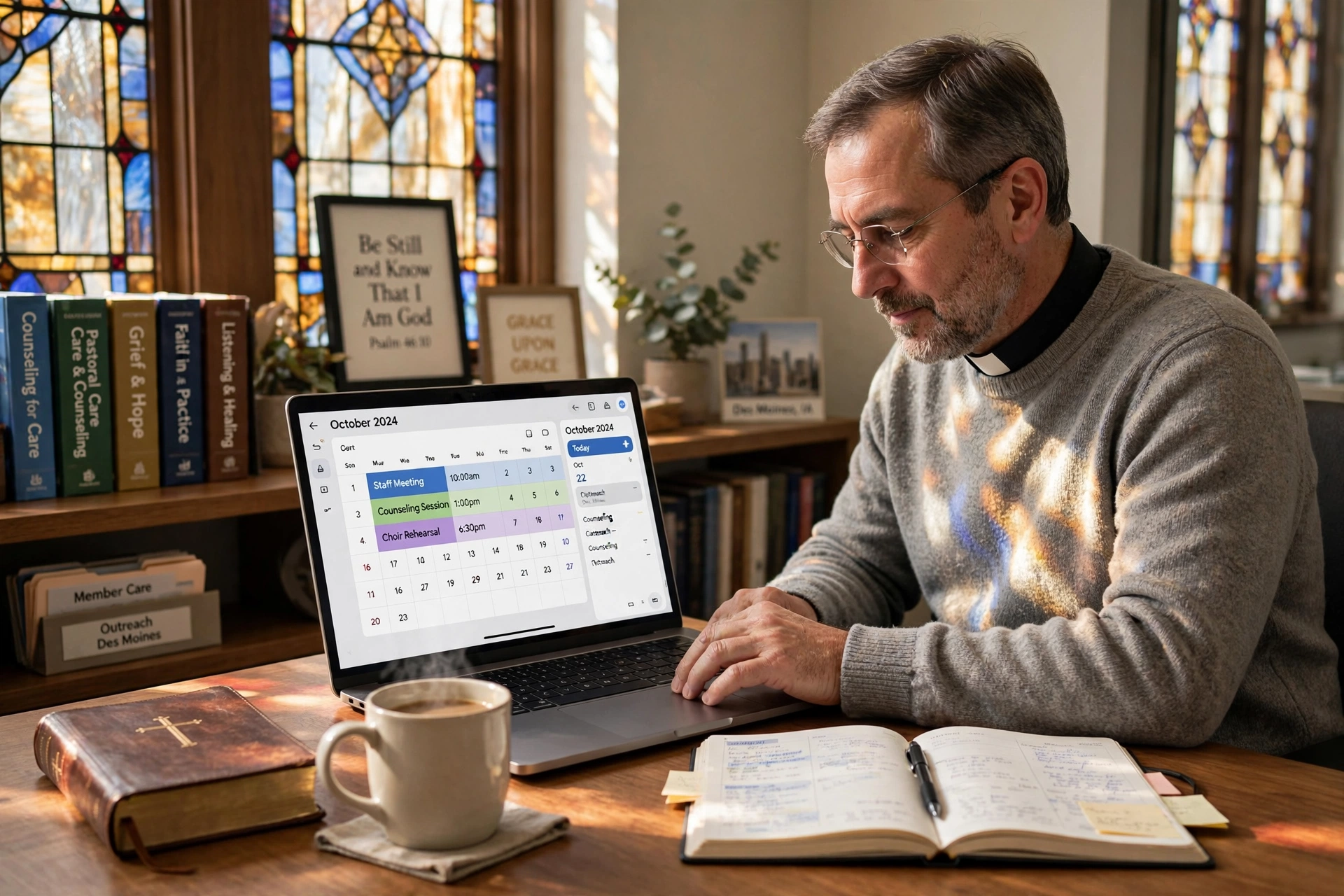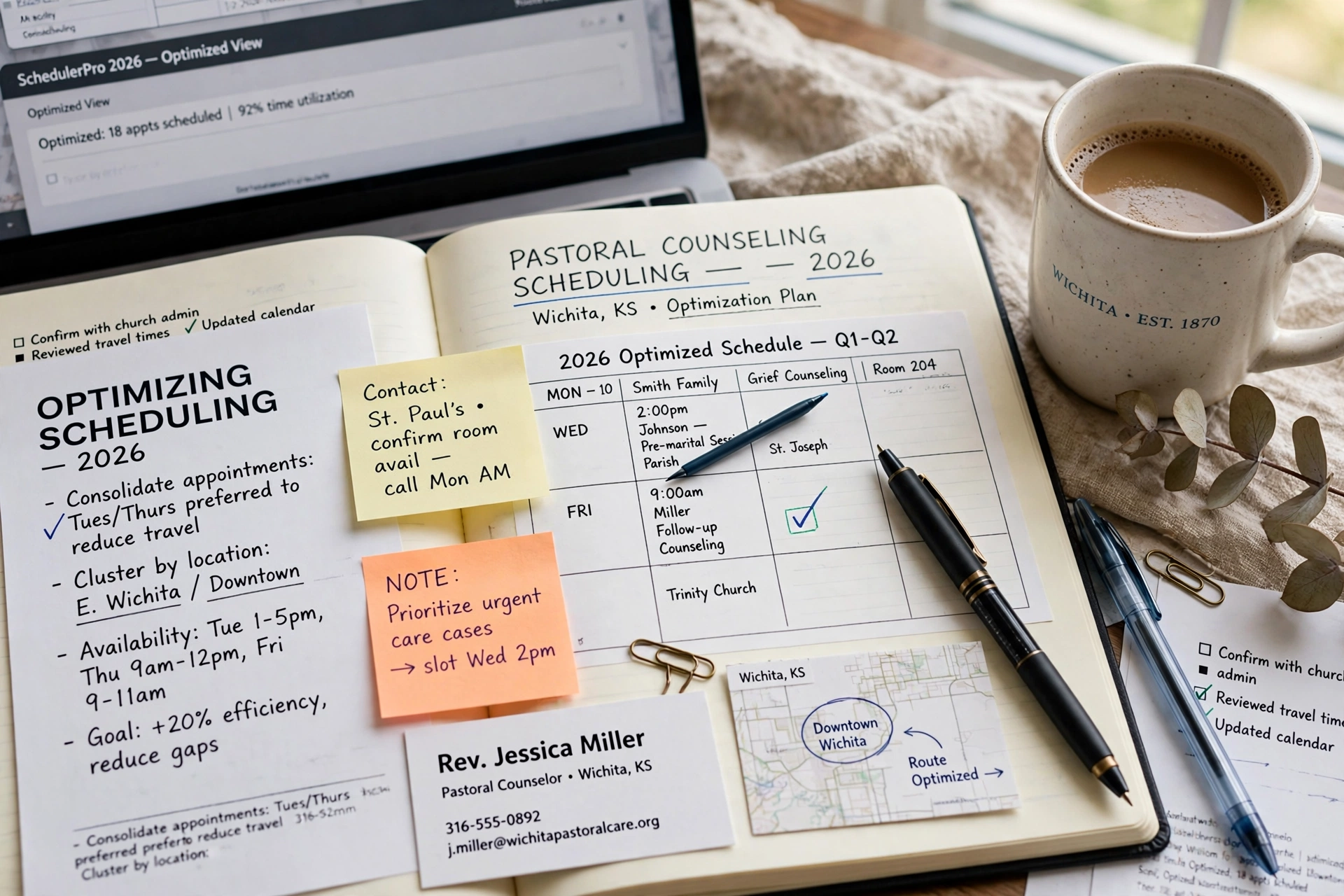

Managing a growing congregation in Guilford County often means the administrative burden begins to outweigh the time spent in actual ministry. For leaders seeking efficient pastoral counseling scheduling in Greensboro, the solution lies in transitioning from manual, fragmented calendars to a centralized digital booking system that respects the sanctity of the pastor's time while providing immediate access to those in crisis. By implementing a specialized scheduling framework, Greensboro ministries can reduce administrative friction by up to 40%, ensuring that the bridge between a member's need and a pastor's availability is seamless and professional.
Why Greensboro Ministries Are Adopting Digital Pastoral Scheduling?
In my experience working with faith leaders across North Carolina, the primary catalyst for digital adoption in Greensboro is the increasing complexity of the modern urban ministry. We aren't just dealing with a local neighborhood anymore; the growth of the Triad region means pastors are often coordinating with members commuting from High Point, Winston-Salem, and surrounding rural areas. This geographic spread creates a logistical nightmare when relying on traditional "call the office" methods. When we built the core logic at Pastor Agenda, we discovered that the friction of a phone call often prevents people in acute spiritual distress from seeking help promptly.
According to research from Barna Group, leadership burnout is reaching critical levels, with a significant percentage of pastors reporting that administrative overload is a primary driver of stress. In Greensboro, where the competitive nature of urban growth places more demands on the church's community presence, this burnout is magnified. The shift toward automated scheduling isn't about removing the personal touch; it is about removing the mechanical barriers to a personal encounter. By automating the "when" and "where," a minister can devote 100% of their mental energy to the "who" and "how" of the counseling session.
Furthermore, the demographic shift in the Greensboro area shows a rising expectation for digital convenience. Younger generations, particularly those moving into the city for professional roles at the university or healthcare sectors, view the lack of an online booking option as a sign of institutional rigidity. As Christianity Today has noted in its analysis of leadership trends, the ability to meet a congregant where they are—digitally and physically—is now a fundamental requirement for effective ministry growth in 2026. The data suggests that ministries utilizing self-service scheduling see a higher rate of follow-through on counseling appointments compared to those relying on manual coordination.

What Are the Key Benefits of Professional Scheduling for Greensboro Pastors?
Transitioning to a dedicated system for pastoral care eliminates the "scheduling dance" that typically consumes hours of a minister's week. When a pastor has to coordinate via text, email, and phone calls, the risk of double-booking or missing a critical appointment increases exponentially. A professional system provides a single source of truth for all availability, which is fundamental for maintaining a healthy work-life balance and preventing the burnout mentioned previously.
Reduction in Administrative Friction
Manual scheduling is a high-friction process. It requires the congregant to wait for a callback and the pastor to manually check multiple calendars. By providing a direct link for pastoral counseling scheduling in Greensboro, the ministry removes these hurdles. This allows the member to see available slots in real-time and book immediately, which is especially critical for those experiencing mental health crises or urgent spiritual needs. The psychological relief of knowing an appointment is secured instantly cannot be overstated.
Enhanced Boundary Management
One of the most frequent mistakes I see consistently is the "open door" policy that leads to total exhaustion. While the heart of a pastor is to be available, a lack of structured scheduling leads to interrupted family time and neglected sermon preparation. A professional system allows a minister to set "hard blocks"—times when they are absolutely unavailable—and "soft blocks" for specific types of counseling. This ensures that the ministry remains sustainable over the long term, rather than burning out the leader in a few short years.
Data-Driven Insights into Congregation Needs
When scheduling is digitized, it creates a record of demand. A Greensboro church can analyze whether most requests occur on Tuesday evenings or Saturday mornings, allowing the leadership to adjust their staffing or availability accordingly. Instead of guessing how many people need counseling, the leadership has concrete data to justify the need for additional licensed counselors or lay-pastoral support within the organization.
💡
Key Takeaway
The primary value of digital scheduling is not the technology itself, but the reclamation of the pastor's mental bandwidth, shifting focus from logistics to liturgy and care.
Comparison of Scheduling Approaches
| Feature | Traditional Manual Way | Generic AI/Booking Tools | Pastor Agenda Approach |
|---|---|---|---|
| Coordination | Phone calls, texts, emails | Simple calendar link | Ministry-centric workflow |
| Boundary Set | Often ignored or vague | Rigid, lacks nuance | Flexible, role-based blocks |
| Congregant Experience | High friction, slow | Cold, corporate feel | Welcoming, accessible |
| Data Tracking | Paper logs or memory | Basic list of names | Pastoral care trends & ROI |
| Burnout Risk | Very High | Moderate | Low (Managed boundaries) |
Real-World Examples of Scheduling Transformation in Greensboro
To understand the impact of this shift, we only need to look at two contrasting scenarios from our work with ministries in the Triad area. These examples illustrate the tangible difference between an administrative bottleneck and a streamlined ministry flow.
Case Study 1: The Mid-Sized Community Church
Prior to adopting a structured system for pastoral counseling scheduling in Greensboro, this church relied on a part-time secretary to manage the lead pastor's calendar. The result was a three-day lag between a request for help and the confirmation of an appointment. In a case involving a marital crisis, this delay often led to a loss of momentum and a feeling of neglect by the congregant. After implementing Pastor Agenda, they moved to a real-time booking model. The result was a 65% reduction in "time-to-appointment" and a reported increase in congregant satisfaction. The secretary was freed from 10 hours of phone tag per week, allowing her to focus on community outreach and event planning.
Case Study 2: The Multi-Site Urban Ministry
This organization struggled with coordinating three different ministers across two Greensboro campuses. Appointments were frequently double-booked, and there was no clear way for a member to know which pastor specialized in a specific area of counseling (e.g., grief vs. youth mentorship). By creating specialized scheduling portals for each minister, they eliminated double-bookings entirely. More importantly, they saw a 22% increase in counseling engagement because members could specifically choose the counselor best suited for their needs. The lead pastor reported that for the first time in five years, he had a guaranteed four-hour block of uninterrupted study time every Thursday.
How to Get Started with Professional Pastoral Counseling Scheduling in Greensboro
Moving from a manual system to a digital one can feel intimidating to leaders who fear they are "mechanizing" their ministry. However, the reality is that technology should be the invisible servant of the Gospel. The goal is to make the administrative part so efficient that it disappears, leaving only the human connection.
📚
Definition
Digital Ministry Workflow is the intentional use of software to automate repetitive administrative tasks, thereby increasing the capacity for direct pastoral care and spiritual leadership.
Step 1: Audit Your Current Time Allotments
Before installing any software, you must define your boundaries. I recommend a "Time Audit" for two weeks. Track every single minute spent on scheduling tasks: the phone calls, the emails, and the time spent apologizing for missed appointments. When you see the total—often 5 to 15 hours a week—the motivation to change becomes a matter of stewardship, not just convenience.
Step 2: Define Your Counseling Tiers
Not every appointment is the same. A 15-minute "quick check-in" is different from a 60-minute intensive grief counseling session. In your system, create different appointment types. This prevents the common mistake of allotting the same amount of time for every request, which either leaves the pastor rushing or leaves large gaps of wasted time in the day.
Step 3: Implement a Centralized Platform like Pastor Agenda
Avoid using generic corporate tools that feel cold or lack the privacy settings required for sensitive pastoral care. Pastor Agenda is designed specifically for the unique needs of the clergy. It allows you to share a link on your church website or via a QR code in the sanctuary, enabling members to book their slots without ever needing to call the office. The setup is intuitive, taking only a few minutes to sync with your existing digital calendar.
Step 4: Communicate the Change to the Congregation
Transparency is key. Announce the new system from the pulpit and in the newsletter. Frame it not as "we are using a new app," but as "we are making it easier for you to get the support you need." When people realize they can secure a time for counseling at 11 PM on a Sunday night without waiting for the office to open on Monday, the adoption rate will be nearly instantaneous.

Common Objections to Digital Scheduling and the Data-Backed Truth
Many pastors resist these tools based on a few common misconceptions. Let's address these with a contrative, evidence-based perspective.
Objection 1: "It feels impersonal and unspiritual."
Most people assume that a digital link removes the personal touch of the ministry. In practice, the opposite is true. When a pastor is no longer stressed by the logistics of a messy calendar, they are more present and attentive during the actual session. According to the National Association of Evangelicals, the health of a ministry depends on the health of the leader. A leader who is not frazzled by administrative chaos is far more "spiritual" and present than one who is overwhelmed by a ringing phone.
Objection 2: "Our members are too old for technology."
This is a pervasive myth. The data on senior tech adoption has shifted dramatically since 2020. In the Greensboro area, the use of smartphones among the 65+ demographic has surged. Furthermore, those who cannot use the system can still be booked manually by the office staff using the same tool. The digital system doesn't replace the office; it simply offloads the 70% of users who prefer the digital option, making the office more efficient for those who truly need a phone call.
Objection 3: "I can't afford a specialized system."
Some view scheduling software as an unnecessary expense. However, if you calculate the hourly rate of a lead pastor, spending 10 hours a month on manual scheduling is a massive financial drain on the church's resources. When you compare the cost of a monthly subscription to the cost of a pastor's wasted time, the ROI is immediate. It is far more expensive to maintain a manual system than to invest in a professional tool.
Frequently Asked Questions
How does pastoral counseling scheduling in Greensboro improve congregant trust?
Trust is built on reliability. When a member of your congregation reaches out during a crisis, a delayed response or a rescheduled appointment can be interpreted as a lack of care. By providing a clear, professional scheduling system, you demonstrate that you value their time and their need for support. The predictability of a confirmed appointment reduces the anxiety of the seeker, creating a safe and stable environment for the counseling process to begin. This reliability is a form of pastoral care in itself, signaling that the church is organized and ready to support its people.
Can digital scheduling tools handle sensitive or confidential requests?
Yes, provided you use a tool designed for ministry rather than a generic public form. Professional systems like Pastor Agenda prioritize data privacy and secure communication. The key is to use the tool for the logistics of scheduling (the time and date) rather than as a place for the congregant to type out their entire trauma. The booking process should be a gateway to a private conversation, not the conversation itself. By keeping the booking interface simple, you maintain professional boundaries and protect the confidentiality of the counseling relationship.
What is the best way to integrate this into a traditional church office workflow?
The most effective integration is a hybrid model. Your church secretary continues to handle the phone calls for the elderly or those in extreme distress, but they use the digital calendar to book those appointments. This ensures that the pastor's availability is updated in real-time across all channels. When the secretary adds an appointment manually, that slot immediately disappears from the public-facing booking link, preventing any double-bookings. This creates a unified system where the office staff and the digital portal work in harmony to manage the minister's time.
How do I prevent people from booking too many sessions at once?
Professional scheduling software allows you to set "booking limits" or "appointment caps." For example, you can limit a single user to one appointment per week or require a manual approval process for recurring sessions. This prevents a small number of individuals from monopolizing the pastor's entire calendar, ensuring that care is distributed equitably across the congregation. In my experience, setting these boundaries early is the only way to prevent the feeling of being "trapped" by the calendar, allowing the pastor to maintain a healthy balance of outreach and intensive care.
Does using an online system for pastoral care alienate older members of the church?
On the contrary, it often frees up the staff to provide better care to the older members. When the 30-year-olds and 40-year-olds in the congregation stop calling the office to schedule their check-ins, the secretary has more time to spend on the phone with a senior member who needs a longer conversation and a slower booking process. By migrating the tech-savvy portion of the population to a self-service model, you are effectively increasing the amount of personalized, human attention available for those who truly need it, thereby strengthening the intergenerational bonds of the church.
Final Thoughts on Pastoral Counseling Scheduling in Greensboro
Effective ministry in 2026 requires a delicate balance between timeless spiritual truths and modern operational efficiency. When you optimize your pastoral counseling scheduling in Greensboro, you are not replacing a relationship with a robot; you are removing the clutter that stands between the shepherd and the sheep. The administrative burden of a growing church can either be a ceiling that limits your growth or a foundation that supports it. By choosing a system that respects boundaries, provides data, and offers ease of access, you secure the longevity of your own ministry and the health of your congregation.
If you are ready to stop the endless cycle of phone tag and calendar conflicts, it is time to implement a solution built specifically for the calling of a minister. Experience the freedom of a managed calendar and return your focus to where it belongs: the people of your community.
Discover how to reclaim your time and serve your congregation better at Pastor Agenda.
Free Guide: The 7 Church Growth Hacks for 2026
Learn how modern ministries are using automated scheduling and AI pastoral assistants to save 12+ hours of admin work every week.