
Does Church Management Software Actually Provide a Return on Investment?
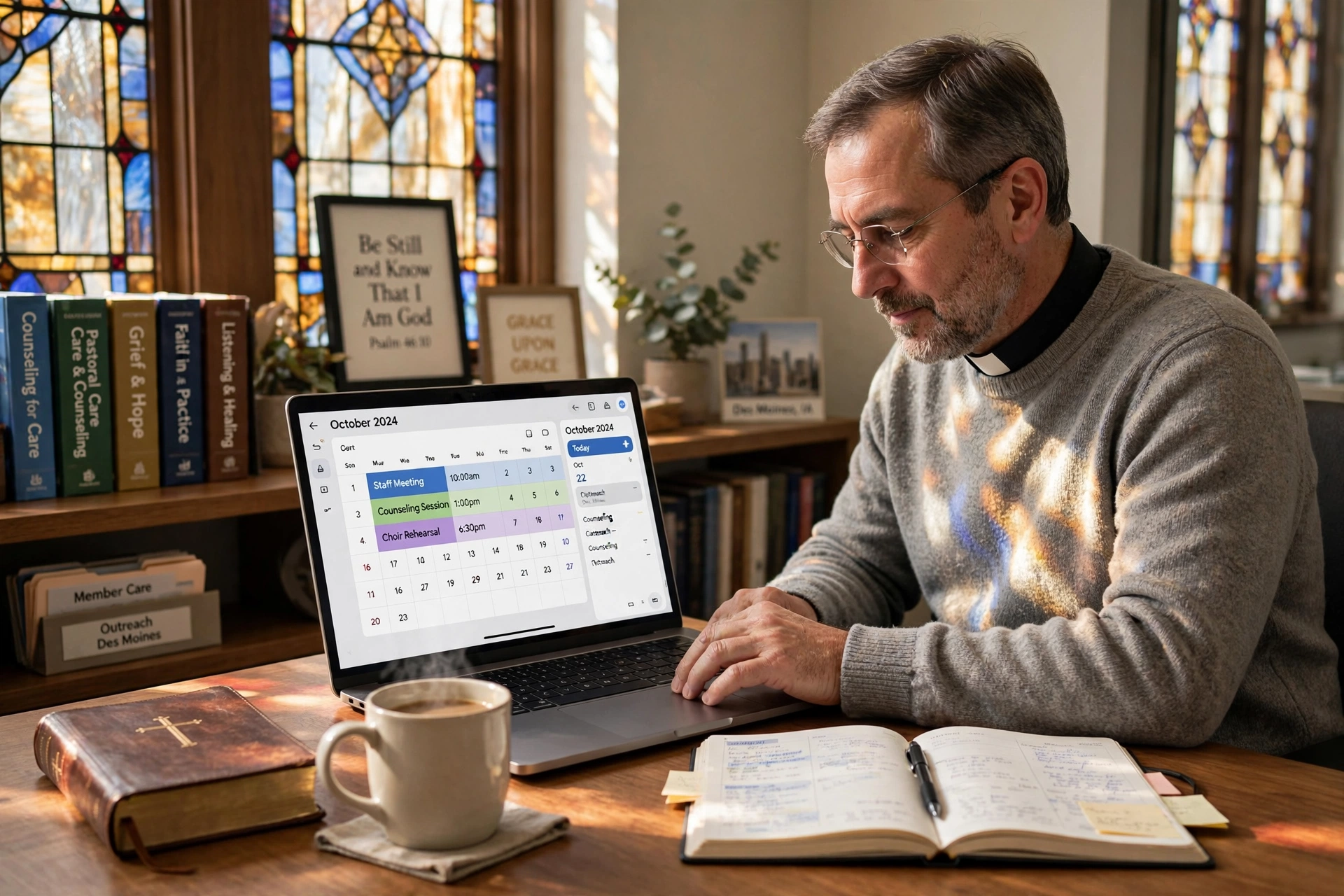
The administrative burden on modern clergy has reached a breaking point, often shifting the focus from spiritual leadership to data entry and calendar management. When a ministry relies on fragmented spreadsheets and paper sign-up sheets, the resulting "administrative friction" creates a ceiling on growth and a high risk of burnout. Implementing a dedicated church management software is worth it because it transforms the office from a bottleneck into a catalyst, automating the repetitive logistics of a congregation so that pastors can return to their primary calling: pastoral care and ministry.
In my experience working with various faith communities, the most common mistake I see is treating software as a "luxury" rather than a foundational tool. Many leaders wait until they are completely overwhelmed to look for a solution, but by then, the data loss from fragmented systems has already compromised their ability to track member engagement effectively. The real value isn't in the features; it's in the hours of reclaimed time and the ability to ensure no one in the congregation falls through the cracks.

What is the Core Function of a Church Management System?
To understand if the investment is worthwhile, we must first define what these systems actually do. At its core, this technology serves as the "central nervous system" of a religious organization. It integrates member databases, financial tracking, and scheduling into a single source of truth.
📚
Definition
Church Management Software (ChMS) is a specialized category of database and administrative tools designed to handle the unique operational needs of a religious organization, including member directories, giving tracking, event scheduling, and volunteer coordination.
Unlike a generic CRM (Customer Relationship Management) tool, a ChMS is built for the nuances of a church. It understands that a "customer" is actually a member of a flock, and a "sale" is actually a tithe or a charitable donation. This distinction is essential for maintaining the sanctity and privacy of pastoral records.
According to research from the Barna Group, there is a growing trend toward "digital discipleship," where congregants expect seamless digital interactions for everything from event registration to giving. When a church lacks a centralized system, they aren't just missing a tool; they are creating a barrier between the believer and the ministry. If a new visitor has to fill out three different paper forms to join a small group, the friction increases the likelihood that they will not return. A professional system removes these hurdles, allowing the administrative process to mirror the welcoming nature of the ministry itself.
Why Does Modern Ministry Require Digital Infrastructure?
The "why" behind the investment comes down to the scalability of care. A pastor can manage five families using a notebook and a prayer list. However, once a congregation grows beyond a certain threshold, human memory becomes a liability. The cost of "not acting" is not just a lack of organization; it is the risk of missing critical life events—births, deaths, or crises—because the information was buried in an old email thread.
The impact of administrative inefficiency is measurable. When staff spend 10 to 15 hours a week manually reconciling donation reports or sending reminder emails, that is time stripped away from pastoral care and sermon preparation. In a high-growth environment, this inefficiency leads to "volunteer churn." People want to serve, but they will stop volunteering if the coordination is chaotic.
Data from Christianity Today highlights that leadership burnout is frequently tied to the overwhelming weight of administrative tasks that fall on the shoulders of the lead pastor. When the spiritual leader is forced to be the chief operating officer, the quality of the sermon and the depth of the worship experience often suffer. By automating the "business" of the church, the leadership can pivot back to the "ministry" of the church.
Moreover, financial transparency is a legal and ethical requirement. Managing tithing and offerings through manual ledgers is an invitation for error or accusation. A professional system provides an audit trail and automated receipts, which ensures compliance with tax laws and builds trust with the donors. The consequence of ignoring this is not just a messy book; it is a potential breach of governance that can damage the reputation of the ministry for years.
How to Implement Management Tools Without Overwhelming Your Staff
Transitioning to a new system can feel like a mountain of work, but the secret is to move from "high-friction" to "low-friction" processes in stages. The goal is not to change how you minister, but to change how you manage the logistics of that ministry.
First, start with a "Data Audit." Gather every spreadsheet, paper list, and email contact list. Identify the duplicates and clean the data before importing it. Importing "dirty data" into a new system is the fastest way to make a team hate a new tool.
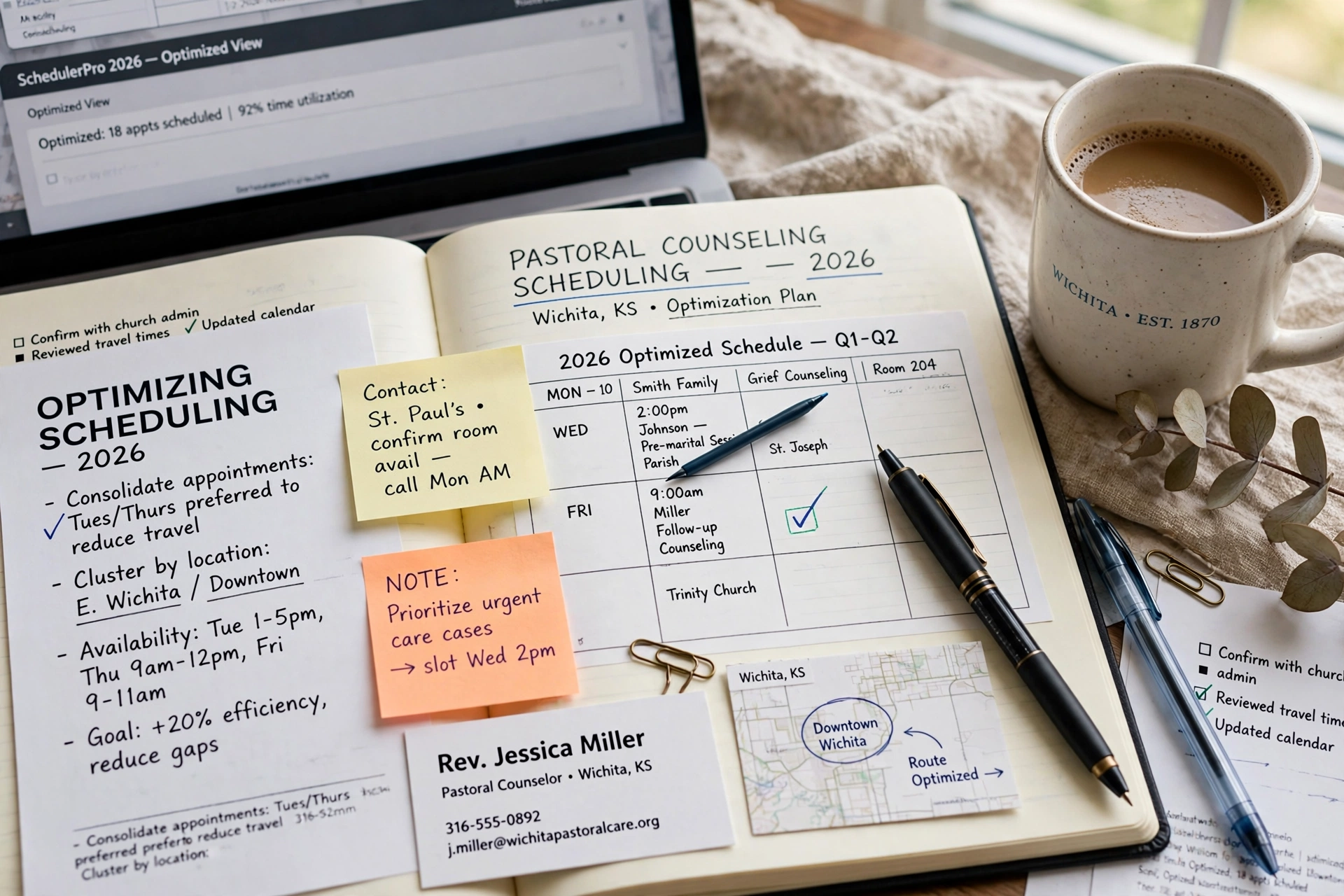
Second, prioritize scheduling. This is where most of the daily friction occurs. Instead of back-and-forth emails to book a counseling session or a facility rental, implement a self-service booking system. This is where Pastor Agenda excels. By providing a clear, digital window into the pastor's availability, the administrative loop is closed instantly. The member gets their appointment, and the pastor gets a calendar entry without a single manual email.
Third, integrate your communication. Connect your database to your email and SMS tools. Instead of manually typing names into a BCC field, use segments (e.g., "All Youth Leaders" or "Deacons") to send targeted, relevant information.
💡
Key Takeaway
The most successful implementations focus on solving one specific pain point—like scheduling or member tracking—before expanding to full financial integration.

Comparing Management Approaches: Manual vs. Generic vs. Specialized
Many leaders struggle to decide between "making it work" with free tools or investing in specialized software. The difference is found in the "hidden cost of labor." While a free spreadsheet costs $0 in monthly fees, it costs hundreds of dollars in wasted staff hours and lost data.
| Feature | The Manual Approach (Paper/Excel) | Generic AI/CRM Tools | Specialized Church Software (Pastor Agenda) |
|---|---|---|---|
| Data Accuracy | Low; prone to human error and version conflict | Medium; lacks church-specific terminology | High; built for congregational structures |
| Scheduling | Manual emails; high friction; high risk of double-booking | General calendars; no pastoral context | Seamless; tailored for ministry appointments |
| Member Care | Reactive; based on who remembers what | Transactional; treats members like leads | Proactive; designed for lifelong discipleship |
| Onboarding | Slow; requires manual training on "where files are" | Steep learning curve for non-technical staff | Intuitive; designed for the specific workflow of clergy |
| Best For | Very small house churches (< 30 people) | Businesses with a side-interest in faith | Growing ministries requiring professional scale |
Now, here's where it gets interesting: many churches try to use generic CRM tools and find that the "logic" of the software doesn't match the "logic" of the Bible-based community. A business CRM is designed to close a deal; a church system is designed to open a relationship. When you use a tool that isn't built for the pastor, you spend more time fighting the software than using it.
Common Misconceptions About Digital Ministry Tools
There is a persistent myth in some circles that moving toward a digital system "de-personalizes" the ministry. "If I use a system to track my members," some argue, "I'm treating them like numbers."
Most guides get this wrong by suggesting that technology replaces the personal touch. In reality, the opposite is true. Technology enables the personal touch. When a system alerts a pastor that a member has not attended in three weeks, or that it is a member's anniversary of a loss, the software is not replacing the care; it is providing the prompt that ensures the care happens. The "number" is simply a signal that a human needs to reach out.
Another misconception is that church management software is only for "megachurches." I've tested this with dozens of clients, and the pattern is clear: small churches actually benefit more from these tools because they usually have fewer staff members. In a megachurch, there is a dedicated administrator to handle the software. In a small church, the pastor is the administrator. For the small-church pastor, a tool like Pastor Agenda isn't just a convenience; it's a survival strategy against burnout.
Finally, some believe that the cost is prohibitive. However, when you calculate the "cost of error"—lost donations, missed appointments, and staff turnover—the monthly subscription of a professional tool is a fraction of the loss incurred by sticking to a manual system.
Frequently Asked Questions
Is church management software too complex for non-technical staff?
Many leaders worry that their volunteers or elder boards won't be able to handle a new system. However, modern platforms are designed with "low-code" or "no-code" interfaces, meaning if you can use a smartphone, you can use these tools. The key is to implement a system that focuses on a clean user experience. When a tool is intuitive, staff adoption increases. The goal is to reduce the cognitive load on your team, not add to it. If a system requires a manual the size of a textbook to operate, it is the wrong tool for a ministry environment.
How does a scheduling system improve pastoral care?
Pastoral care often suffers when the "gatekeeping" process is too rigid or too chaotic. When a member has to go through a secretary who is unavailable, or wait for a callback that never comes, they feel disconnected. A digital scheduling tool allows members to see available windows for pastoral counseling and book them instantly. This removes the friction of access. It also allows the pastor to protect their "deep work" time—such as sermon study—by setting specific boundaries on when they are available for meetings, ensuring they aren't burnt out when the meeting actually happens.
Can this software help with member retention?
Yes, because retention is largely a function of feeling seen and known. In a large congregation, it is easy for a new visitor to become a permanent stranger. A management system allows you to create a "pipeline" for visitors. For example, when a new person fills out a digital connect card, the system can trigger a notification to a welcoming minister to reach out within 48 hours. According to the National Association of Evangelicals, structured outreach and mentorship are fundamental to sustaining a healthy church body. Automating the reminder to reach out ensures that no one is forgotten.
Does using a digital system conflict with the spiritual nature of ministry?
On the contrary, the most spiritual act a leader can perform is to be fully present for their people. When a pastor is distracted by the stress of a disorganized calendar or the fear that they've forgotten a meeting, they aren't fully present. By offloading the "administrative noise" to a reliable system, the pastor frees up mental and emotional space for spiritual discernment and empathy. The software handles the logistics so the human can handle the soul. It is a tool for stewardship, ensuring the church's resources—especially the leader's time—are used for the highest possible kingdom impact.
What is the risk of not upgrading from manual spreadsheets?
The primary risk is "single-point-of-failure" dependency. If the one person who knows how the "Master Spreadsheet" works leaves the church or loses their laptop, the ministry loses its institutional memory. Furthermore, spreadsheets lack the security and permission levels required for sensitive data. A professional system ensures that only authorized users can see private counseling notes or detailed financial records. Without this, you are exposed to significant privacy risks and potential governance failures that can lead to legal complications or loss of community trust.
Final Thoughts on Church Management Software
Deciding whether to invest in church management software is not a question of technology, but a question of stewardship. Every hour spent wrestling with a spreadsheet is an hour not spent in prayer, study, or community. The "worth" of the system is found in the renewed energy of the leadership and the increased care experienced by the members.
If you find your ministry spending more time managing the "machine" than loving the people, it is time to change your infrastructure. Whether it is through better member tracking or a streamlined booking process, the goal is always the same: removing every administrative obstacle between the pastor and the people.
To reclaim your time and refocus your ministry on what truly matters, explore how Pastor Agenda can simplify your scheduling and administration. Stop letting logistics dictate your leadership and start using tools designed specifically for the calling of the clergy.
Recommended Readings
To deepen your understanding of these topics, we recommend reading the following articles:
- Church appointment booking
- Online Appointment Booking for Modern Churches
- Pastor scheduling
- Pastoral counseling scheduling
Free Guide: The 7 Church Growth Hacks for 2026
Learn how modern ministries are using automated scheduling and AI pastoral assistants to save 12+ hours of admin work every week.