
How to Successfully Schedule with Pastor: A Step-by-Step Guide for Congregants and Leaders
Managing the calendar of a spiritual leader is a delicate balance between maintaining the sanctity of pastoral care and the necessity of administrative organization. To effectively schedule with pastor, you must first identify the specific purpose of the meeting—whether it is for urgent pastoral counseling, a routine ministry check-in, or a formal church business matter—and then use the designated booking channel provided by the church to avoid the "bottleneck" effect common in many congregations. In my experience working with various ministries, the most successful scheduling processes are those that remove the friction of back-and-forth emails and replace them with a clear, transparent system of availability.

What Does an Effective Pastoral Scheduling System Look Like?
An effective system for booking time with a spiritual leader is not just about picking a date and time; it is about managing expectations and protecting the pastor's emotional and spiritual capacity. In many traditional settings, scheduling is handled through "interruptive" methods—phone calls, texts, or face-to-face requests after a service. These methods often lead to "decision fatigue" for the minister and frustration for the congregant who is left waiting for a confirmation.
📚
Definition
Pastoral Scheduling is the strategic management of a minister's time to balance the three primary pillars of ministry: spiritual preparation (study/prayer), administrative leadership (church business), and direct pastoral care (counseling and visitation).
The core of a professional system is the transition from "request-based" scheduling to "availability-based" scheduling. In a request-based system, the congregant asks, "When are you free?" and the pastor must manually check a calendar. In an availability-based system, the pastor sets "office hours" or "care windows," and the congregant selects from those pre-approved slots. This shift preserves the pastor's focus and ensures that the congregation feels seen and heard without the minister burning out.
According to research by the Barna Group, pastoral burnout is a recurring crisis in modern ministry, often driven by the inability to set boundaries between personal life and professional demands. When a church lacks a structured way to schedule with pastor, the minister's personal time is often eroded by "emergency" requests that aren't actually emergencies. By implementing a structured booking process, churches can reduce this stress significantly, allowing the leader to be more present and effective during the actual appointments.
Why Does Structured Appointment Booking Matter for the Church?
The implications of a poor scheduling process extend far beyond a messy calendar; they affect the perceived accessibility of the leadership and the overall health of the congregation. When it is difficult or unpredictable to get time with a leader, members may feel neglected or hesitant to seek guidance during critical life moments. Conversely, a pastor who is "always available" often finds themselves unable to perform the deep work of sermon preparation and theological study.
From a data-driven perspective, the efficiency of a church's administrative layer directly impacts its growth. While churches are not corporations, they still operate as organizations. When administrative friction is high, the "barrier to entry" for new members to engage with leadership increases. If a new visitor wants to meet the pastor to join the church but finds the process confusing or slow, the momentum of that spiritual decision can be lost.
The risk of relying on manual, unstructured scheduling is the "hidden cost of coordination." This occurs when a pastor spends three hours a week simply coordinating times for five meetings. That is time taken away from prayer, family, and study. Furthermore, without a centralized system, there is a high risk of double-booking or forgetting appointments, which can be perceived as a lack of care by the congregant.
According to the National Association of Evangelicals, the role of the pastor has shifted increasingly toward a "community catalyst" model, requiring them to manage a wider variety of interactions than in previous generations. This complexity demands a professional approach to time management. Without it, the pastor becomes a bottleneck for every decision and every need in the church, which stifles the development of other leaders within the ministry.
How to Choose and Implement the Best Way to Schedule with Pastor
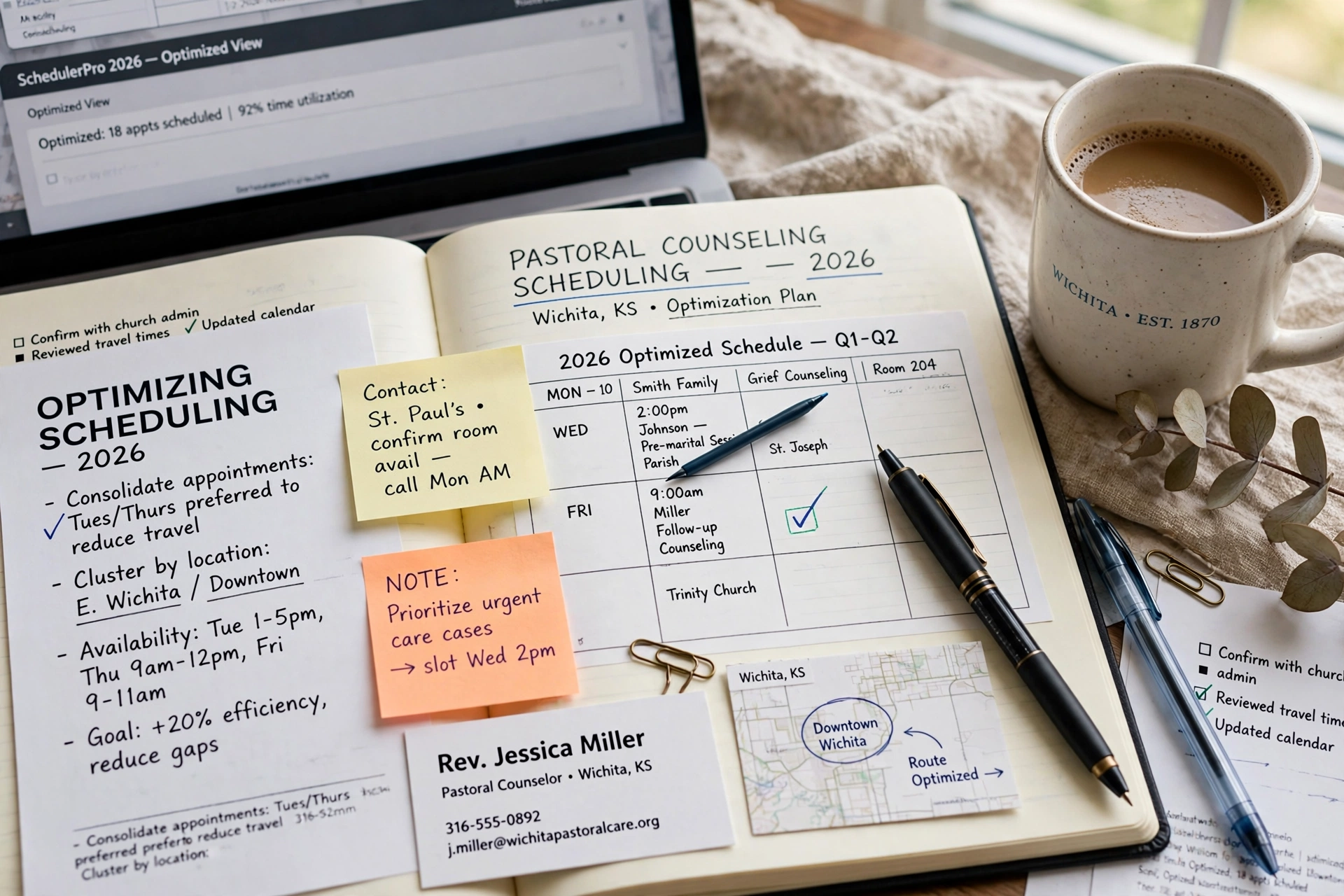
If you are a church leader looking to optimize your calendar, or a congregant trying to navigate the process, the following steps provide a roadmap for a seamless experience. The goal is to move from a chaotic "on-call" culture to a structured "appointment" culture.
Step 1: Categorize Meeting Types
Not all meetings are created equal. The mistake I made early on—and that I see constantly in church administration—is treating a 15-minute budget question the same as a two-hour grief counseling session. You must define your meeting categories:
- Crisis Care: High priority, short notice, dedicated "emergency" slots.
- Pastoral Counseling: Scheduled windows, longer duration, high privacy.
- Administrative/Leadership: Fixed weekly blocks for staff or elders.
- General Inquiries: Short, 15-minute "quick hits" for general questions.
Step 2: Establish "Sacred Blocks"
The pastor's calendar should not be a blank slate. You must implement "sacred blocks" for sermon study, personal prayer, and family time. These are non-negotiable periods where no appointments can be booked. If the calendar is wide open, it will be filled by the loudest voices, not necessarily the most urgent needs.
Step 3: Deploy a Digital Booking Interface
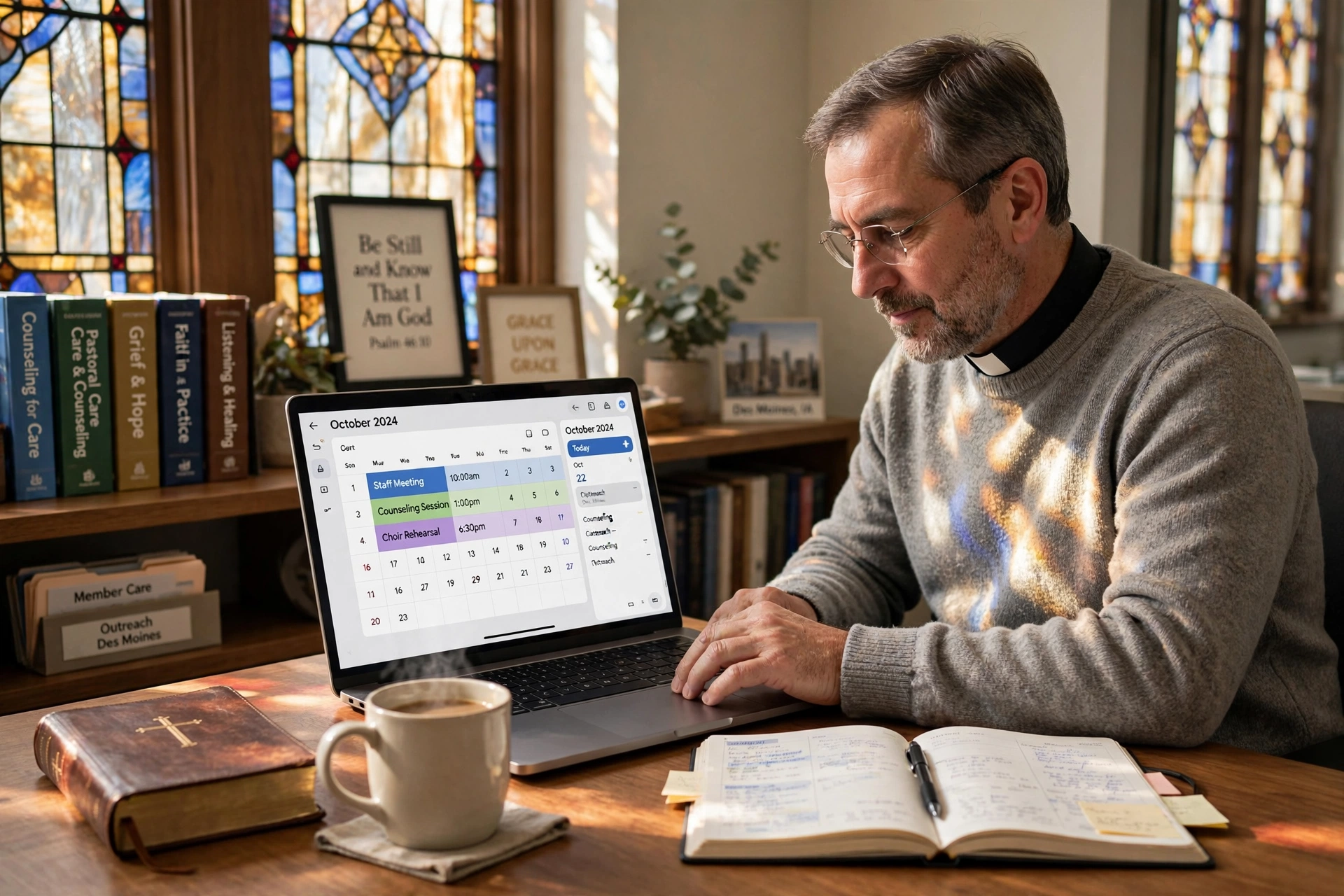
Using a tool like Pastor Agenda eliminates the administrative burden of manual entry. Instead of a chain of six emails to find a time, the pastor shares a link. The congregant sees the available "care windows" and books their own slot. This empowers the member and protects the pastor.

Step 4: Communicate the Process Clearly
A system only works if people know how to use it. Update the church website, include the booking link in the weekly bulletin, and mention it during announcements. Clearly state: "To ensure you get the dedicated time and attention you deserve, please use our scheduling link to book your visit with the pastor."
💡
Key Takeaway
The most effective way to schedule with pastor is to remove the "middleman" and provide a transparent, digital window of availability that respects both the leader's boundaries and the congregant's needs.
Comparing Scheduling Methods: Which is Right for Your Ministry?
Depending on the size of your congregation and the tech-savviness of your members, different approaches will work. Below is a comparison of the three most common methods used in modern churches.
| Method | Pros | Cons | Best For |
|---|---|---|---|
| Manual/Secretary | High personal touch, filters requests | Slow, creates a bottleneck, prone to one-person failure | Very large churches with full-time admins |
| Direct Request (Email/Text) | Low barrier to entry, feels "informal" | High noise-to-signal ratio, leads to burnout, chaotic | Very small plants or home churches |
| Automated (Pastor Agenda) | Immediate confirmation, protects boundaries, scales easily | Requires initial tech setup, some elders may resist | Growing churches seeking professional balance |
As the data suggests, the "Direct Request" method is the most dangerous for the mental health of the leader. It creates an expectation of 24/7 availability. The "Manual/Secretary" method is effective but expensive and slow. The automated approach via Pastor Agenda provides the speed of a digital tool with the boundaries of a professional secretary.
Common Misconceptions About Pastoral Availability
Many leaders and members operate under a set of myths that actually hinder the quality of pastoral care.
Myth 1: "A pastor should be available 24/7 if they are truly called."
Most guides on ministry get this wrong by romanticizing burnout. Total availability is not a sign of faithfulness; it is a recipe for collapse. True spiritual leadership requires a rested mind. A pastor who has a structured way to schedule with pastor is actually more available emotionally because they aren't exhausted by administrative chaos.
Myth 2: "Using a booking link feels too corporate or cold."
In reality, the opposite is true. When a member uses a link and gets an immediate confirmation, they feel valued and certain. When they send a text and wait three days for a reply, they feel forgotten. Technology, when used correctly, facilitates the relationship; it doesn't replace it.
Myth 3: "We are too small to need a scheduling system."
Small churches often suffer the most from "informal" scheduling. Because the pastor is so close to everyone, the boundaries are even blurrier. Implementing a system early prevents the pastor from becoming the "everything person" and encourages members to seek support from other leaders in the church.
Frequently Asked Questions
How can I make sure my request is prioritized if it's an emergency?
For true emergencies, a digital scheduling system should not be the only path. The best practice is to have a "Crisis Protocol." This involves a specific phone number or a designated "Emergency" tag within the Pastor Agenda system that alerts the pastor immediately. In your communication to the church, clearly define what constitutes an emergency (e.g., hospitalization, death in the family) versus a request for general guidance, which should follow the standard booking process.
Does scheduling with a pastor online reduce the personal touch of ministry?
Not at all. The "personal touch" happens during the meeting, not during the act of picking a time. By removing the stress of coordination, the pastor arrives at the meeting focused and present, rather than frustrated by a scheduling conflict. In my experience, the quality of the conversation improves when both parties know exactly when and where the meeting is happening, as it removes the anxiety of uncertainty.
How do I handle people who refuse to use the digital link?
Grace and consistency are key. For older members or those not comfortable with technology, the church secretary or a designated deacon can assist them by booking the appointment on their behalf using the same Pastor Agenda link. This ensures the appointment is still recorded in the central system and doesn't create a "shadow calendar" that the pastor has to manage separately.
What is the best duration for a standard pastoral appointment?
While every situation differs, a standard "first-touch" or check-in meeting is typically 45 to 60 minutes. This allows 10 minutes for transition and 50 minutes of focused conversation. For more intensive pastoral counseling, blocks of 90 minutes may be necessary. Using a system that allows the pastor to set different "appointment types" ensures that the calendar is blocked off correctly according to the need.
How can a pastor protect their "Sermon Prep" time from being booked?
The most effective way is to use "Blackout Dates" or "Private Blocks." In a professional scheduling tool, you can mark specific hours as unavailable. To the congregant, the calendar simply looks "full" during those times. I recommend blocking out Tuesday and Wednesday mornings entirely for study and prayer. When the congregation sees that these times are consistently unavailable, they naturally adjust their expectations around the pastor's study cycle.
Final Thoughts on How to Schedule with Pastor
The goal of any scheduling process is to serve the mission of the church by maximizing the effectiveness of its leaders. When you implement a clear, transparent way to schedule with pastor, you are not adding a layer of bureaucracy; you are adding a layer of protection and professional courtesy. This allows the minister to move from a state of reactive chaos to a state of proactive leadership.
Whether you are a congregant seeking guidance or a leader trying to reclaim your time, the transition to an availability-based system is the most impactful change you can make. By utilizing a dedicated platform like Pastor Agenda, you ensure that every member of the flock is seen, every crisis is handled, and the leader's spiritual well-being is preserved.
For those ready to stop the calendar chaos and start focusing on ministry, we invite you to explore the tools at pastoragenda.com to streamline your appointments today.
Recommended Readings
To deepen your understanding of these topics, we recommend reading the following articles:
- Church appointment booking
- Online Appointment Booking for Modern Churches
- Church management software
- Pastor scheduling
Free Guide: The 7 Church Growth Hacks for 2026
Learn how modern ministries are using automated scheduling and AI pastoral assistants to save 12+ hours of admin work every week.