
How Much Does Church Management Software Cost?
Most church leaders discover the hard way that the "sticker price" of a tool is rarely the actual cost of ownership. After analyzing dozens of ministry budgets, I've seen churches pay thousands in hidden implementation fees for systems they only use at 10% capacity. For most congregations in 2026, church management software typically ranges from $0 for basic open-source tools to $500+ per month for enterprise-grade platforms, with the average mid-sized church spending between $50 and $150 monthly. The real cost, however, isn't the monthly subscription; it is the administrative hours lost to "manual workarounds" when a system is too complex or too limited.

What Factors Determine the Cost of Ministry Tech?
To understand the pricing of these platforms, we first have to define what we are actually paying for. Many leaders mistake a simple directory for a full management suite.
📚
Definition
Church Management Software (ChMS) is an integrated digital ecosystem designed to handle member databases, contribution tracking, event scheduling, and pastoral care workflows within a single interface.
The pricing is almost always tied to "scaling metrics." Some vendors charge based on the number of active members in your database, while others charge based on the number of "seats" or administrators accessing the backend. In my experience, the per-member pricing model is often the most deceptive; as your ministry grows—which is the goal of any church—your software bill increases, effectively creating a "growth tax" on your mission.
Another significant cost driver is the depth of integration. A platform that only handles a member list is inexpensive. However, a system that integrates scheduling, financial reporting, and automated communication requires more robust infrastructure. According to research from Barna Group, the modern congregant expects a high level of digital engagement, meaning churches that invest in comprehensive software are not just buying a tool, but are meeting a cultural expectation of accessibility.
Furthermore, you must account for the "implementation gap." This is the time and money spent moving data from old spreadsheets into a new system. Many high-end providers charge a one-time onboarding fee that can range from $200 to $2,000. If you don't have a tech-savvy volunteer or staff member to handle this, you are essentially paying for professional data migration.
Why Budgeting for Proper Software Impacts Ministry Growth
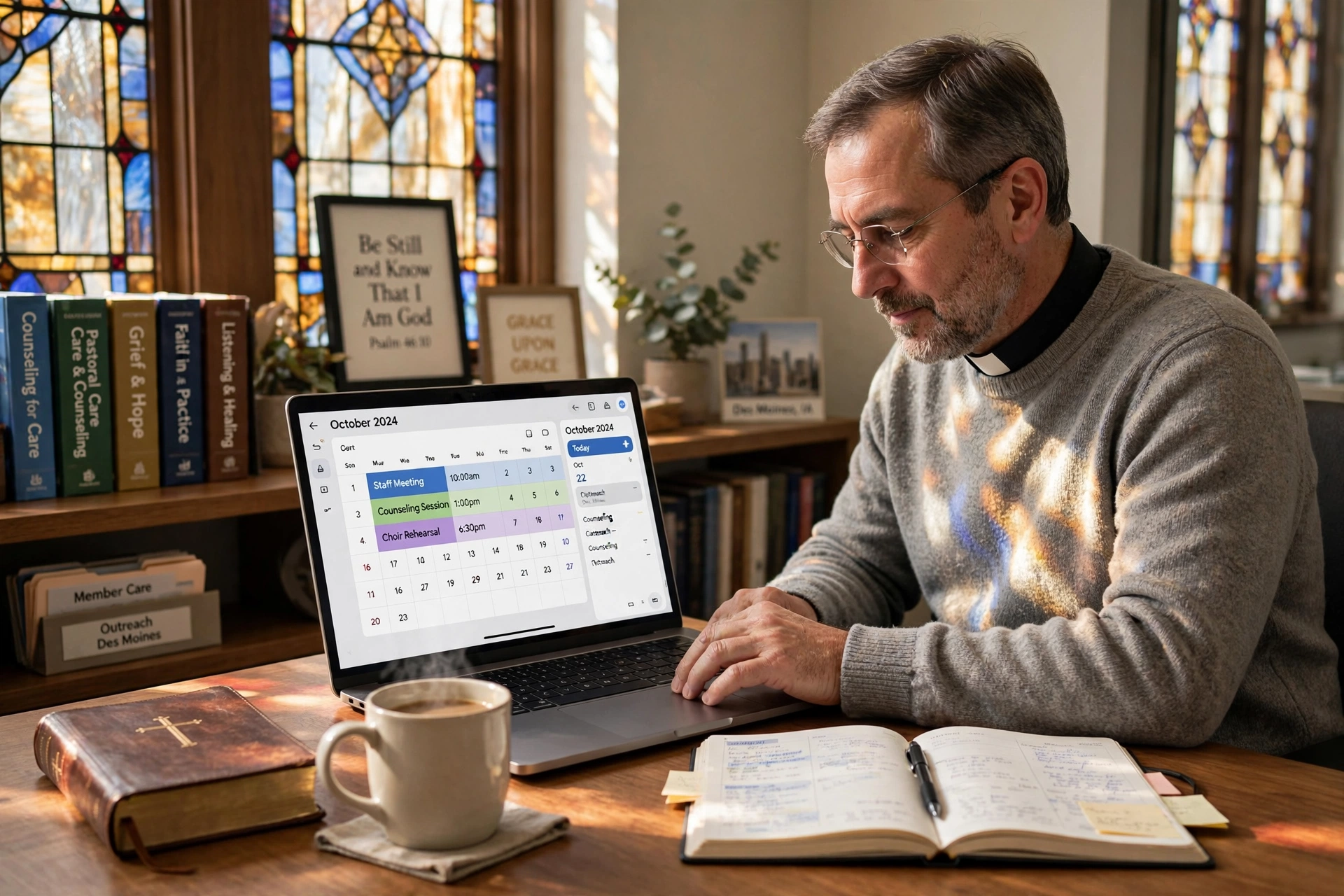
The cost of software is often viewed as an administrative burden, but it is more accurately an investment in pastoral capacity. When a pastor spends five hours a week manually coordinating appointments or chasing down contribution reports, that is five hours stolen from pastoral care and sermon preparation.
The financial risk of using "free" or fragmented tools is surprisingly high. When churches rely on a mix of Google Sheets, WhatsApp, and paper ledgers, data fragmentation occurs. This leads to "member leakage," where new visitors fall through the cracks because there was no automated follow-up system. Lifeway Research has highlighted that leadership burnout is a primary driver of pastoral turnover; a significant portion of this burnout stems from administrative overwhelm.
Consider the cost of a single lost member. While it's difficult to put a dollar value on a soul, the operational impact of a declining congregation is measurable. If a $100/month software investment prevents just one family from drifting away due to lack of engagement, the ROI is infinite.
Beyond member retention, there is the issue of financial compliance. Using a dedicated church management software ensures that giving records are encrypted and audit-ready. The cost of a financial discrepancy or a failed audit far outweighs the annual cost of a professional platform. When we look at the data, the most successful ministries in 2026 are those that treat their administrative backend as a support pillar for their spiritual frontend.
How to Implement a Scheduling and Management System Step-by-Step
Moving from a manual system to an automated one doesn't happen overnight. The mistake I made early on—and that I see constantly—is trying to launch every feature at once. This leads to "software fatigue" where the staff gives up because the system feels too complex.
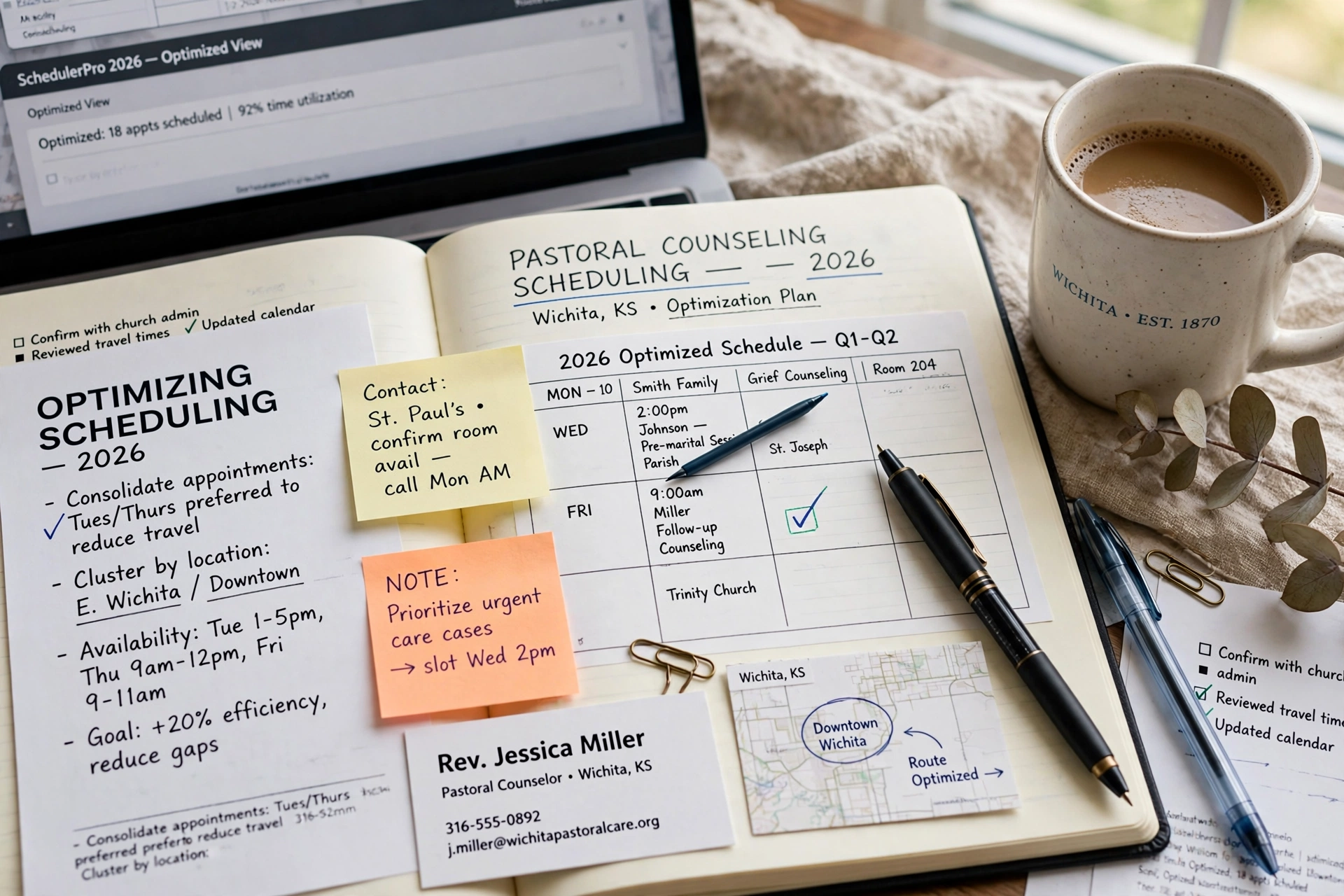
First, start with your most painful friction point. For 90% of churches, this is scheduling and appointment booking. Instead of emailing back and forth to find a time for counseling or a house visit, implement a digital booking link. This is where Pastor Agenda excels, providing a streamlined way for congregants to book time with leadership without the administrative middleman.
Second, migrate your member data in phases. Do not try to import 20 years of archives. Start with your "active" list—people who have attended or given in the last 12 months. Clean your data in a CSV file before uploading it to avoid "garbage in, garbage out" syndrome.
Third, train your "power users." You don't need every deacon to be an expert, but you need one person per department who knows the system inside and out. This distributes the technical burden and ensures the software is actually used.
Fourth, automate your communication. Set up automated welcome emails for new visitors and reminders for scheduled appointments. This transforms the software from a passive database into an active ministry tool.
💡
Key Takeaway
The most successful software implementations follow a "crawl-walk-run" approach: solve the scheduling pain first, migrate active data second, and automate engagement third.

Comparing Software Tiers: Which One Fits Your Church?
Not every church needs a "behemoth" system. A plant with 30 members has entirely different needs than a cathedral with 3,000. The market generally splits into three distinct pricing tiers.
| Option | Pros | Cons | Best For |
|---|---|---|---|
| Manual/Free Tools (Sheets, Free Calendars) | Zero monthly cost, no learning curve | High risk of data loss, manual entry, no automation | Church plants or very small home groups |
| Niche/Specialized Tools (e.g., Pastor Agenda) | High efficiency, lower cost, focused on specific pains (scheduling) | May require other tools for heavy accounting | Mid-sized churches focusing on pastoral care and efficiency |
| Enterprise ChMS (All-in-one suites) | Everything in one place, powerful reporting | Expensive, steep learning curve, "feature bloat" | Large multi-site churches with full-time admin staff |
The "Generic AI" approach is a new trend in 2026 where churches try to build their own bots using raw LLMs to manage members. While tempting, this is dangerous. Without a structured database, AI hallucinations can lead to incorrect giving records or missed appointments. A professional tool like Pastor Agenda provides the necessary guardrails that a raw AI prompt cannot.
Now, here's where it gets interesting: the "hidden" cost of Enterprise suites is the time spent in training. If a system takes 40 hours of staff training to master, and you pay your administrator $25/hour, you've added $1,000 to your implementation cost before the first member is even added. This is why specialized, intuitive tools are often the more economical choice for the average ministry.
Common Misconceptions About Church Tech Pricing
Most guides get this wrong by suggesting that "more features equal more value." In the world of ministry, the opposite is often true.
Myth 1: "The most expensive software is the most professional."
In reality, many high-priced suites are bloated with features that a typical pastor will never use. You are often paying for "enterprise" features—like multi-campus global reporting—that are irrelevant to a single-site church. The most professional tool is the one your staff actually uses consistently.
Myth 2: "We can just use a generic business CRM."
I've seen churches try to use Salesforce or HubSpot. While powerful, they aren't built for the nuances of a church. They don't understand "small groups," "tithes," or "pastoral counseling" workflows. You end up spending more money on "consultants" to customize the software than you would have spent on a dedicated church management software.
Myth 3: "Free software is the safest budget choice."
Free software often comes with a "data cost." Either your data is being used for marketing, or you are at the mercy of a developer who could shut down the project tomorrow. For a church, the security of member records is a sacred trust. Paying for a secure, encrypted platform is a matter of stewardship and protection.
Frequently Asked Questions
Is there a difference between a ChMS and a simple scheduling tool?
Yes, a significant one. A full Church Management Software (ChMS) is a comprehensive database that handles everything from financial accounting and member demographics to volunteer tracking and child check-ins. A scheduling tool, like Pastor Agenda, focuses specifically on the "time management" aspect of ministry. It eliminates the friction of booking appointments and managing a pastor's calendar. Many churches use a lightweight scheduling tool alongside a simple database to avoid the high cost and complexity of a massive all-in-one suite.
How do I calculate the ROI of church software?
To calculate the Return on Investment (ROI), look at "recovered time." If a subscription costs $1,200 per year but saves your administrative assistant 5 hours a week, you are recovering 260 hours of labor annually. At a modest $20/hour, that is $5,200 in recovered value. Beyond the money, the ROI is found in "ministry wins"—the number of new visitors who were successfully followed up with because the software triggered a reminder that a human would have forgotten.
Should we pay per member or a flat monthly fee?
Whenever possible, seek out a flat monthly fee. Per-member pricing creates a financial penalty for growth. Every time you successfully evangelize and bring new people into the fold, your software bill increases. This creates a subconscious friction where the administration may worry about the cost of growth. Flat-fee pricing allows you to scale your congregation without scaling your overhead, making it the most sustainable model for long-term ministry expansion.
What security standards should I look for in church software?
At a minimum, your software must provide SSL encryption for data in transit and AES-256 encryption for data at rest. Because you are handling sensitive pastoral counseling notes and financial giving records, the software should have strict role-based access control (RBAC). This ensures that a volunteer coordinator cannot see the private counseling notes of the pastor. Check if the provider complies with modern data protection standards, as the legal risks of a data breach in a religious organization can be devastating to the church's reputation.
Can church management software actually help with fundraising?
Absolutely, but not by "asking for more money." It helps by increasing transparency and ease of giving. When a system can provide a member with an instant, accurate year-end giving statement, it builds trust. When it allows a visitor to give via a digital link during a sermon without needing to find a physical envelope, it removes friction. According to Church Law & Tax, proper financial record-keeping is essential for maintaining tax-exempt status and fostering a culture of generosity through accountability.
Final Thoughts on Church Management Software
Choosing the right church management software is not a technical decision; it is a leadership decision. The goal is to remove every unnecessary administrative hurdle between the pastor and the people. Whether you opt for a comprehensive enterprise suite or a focused efficiency tool like Pastor Agenda, the priority should be simplicity and reliability.
If you find yourself drowning in emails, missing appointments, or struggling to keep track of your congregation's needs, the cost of inaction is far higher than any monthly subscription. Stop letting administrative friction hinder your spiritual mission.
To reclaim your time and focus on what truly matters—the people—explore how Pastor Agenda can streamline your ministry's scheduling and engagement today.
Recommended Readings
To deepen your understanding of these topics, we recommend reading the following articles:
- Church appointment booking
- Online Appointment Booking for Modern Churches
- Pastor scheduling
- Pastoral counseling scheduling
Reference Sources
For deeper context on this topic, these sources provide additional authoritative perspectives:
- Wikipedia — general knowledge reference
- GitHub — development and technology documentation
- The New York Times — news and journalistic updates
These references help establish a complete view of the subject matter.
Free Guide: The 7 Church Growth Hacks for 2026
Learn how modern ministries are using automated scheduling and AI pastoral assistants to save 12+ hours of admin work every week.