
Which Church Management Software Should Your Ministry Choose?
Choosing the right system for your congregation often feels like a gamble because most platforms market themselves as "all-in-one" while only solving a fraction of the actual administrative pain. In my experience working with dozens of ministries, the biggest mistake leaders make is choosing a tool based on a feature list rather than their specific operational bottlenecks. To answer which church management software is right for you, the decision depends on whether you prioritize deep database granularity, seamless scheduling, or simple member engagement. For most mid-sized churches, a specialized tool like Pastor Agenda that focuses on the high-friction area of appointment booking and pastoral care outweighs the complexity of a bloated enterprise system.

What Exactly Is Church Management Software and How Does It Function?
At its core, this category of tools is designed to migrate the "administrative brain" of a church from physical folders and disparate spreadsheets into a centralized digital ecosystem.
📚
Definition
Church Management Software (ChMS) is a specialized category of CRM (Customer Relationship Management) tools designed specifically for religious organizations to track membership, manage financial contributions, coordinate volunteer schedules, and facilitate pastoral care.
The functionality of these systems usually breaks down into three primary tiers: member directories, financial tracking, and communication hubs. However, the real value lies in the integration of these tiers. For example, when a member signs up for a small group via a portal, the system should automatically update their profile and notify the lead pastor.
The mistake I made early on—and that I see constantly—is assuming that more features equal more efficiency. In reality, "feature bloat" often leads to low adoption rates among staff. If a tool takes ten clicks to schedule a single counseling session, the pastor will simply go back to using a paper planner. According to Barna Group, the health of a church is deeply tied to the ability of leaders to maintain personal connections with their congregants; therefore, the software must remove barriers to connection, not add them.
When evaluating a system, you must look at the "data flow." Does the information move fluidly from a Sunday morning check-in to a Monday morning report? If the software requires manual data entry for every interaction, it isn't a management tool; it's a digital filing cabinet. A professional system should automate the mundane so that the clergy can focus on the spiritual.
Why Does the Choice of Management Tools Directly Impact Ministry Growth?
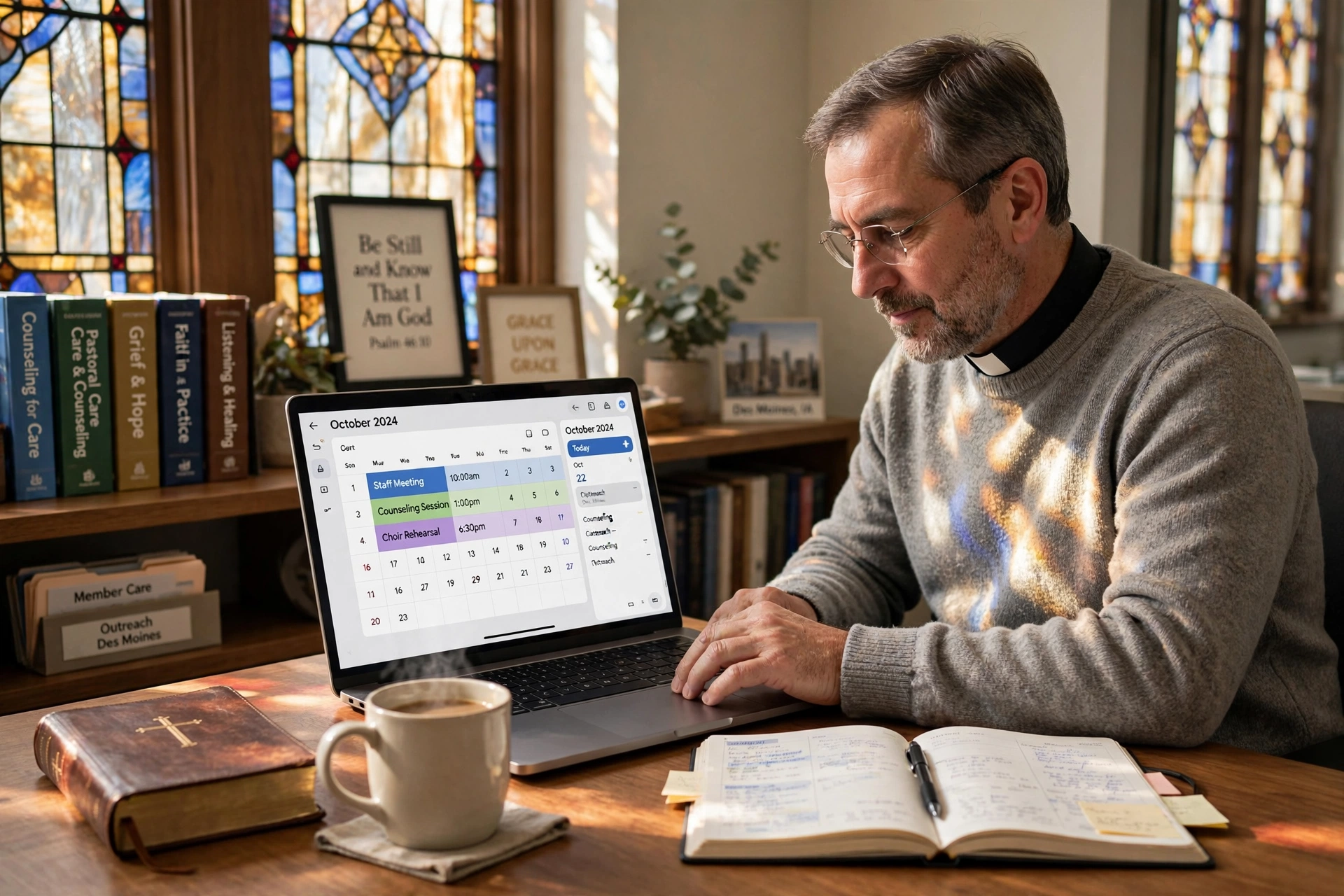
The administrative burden on a pastor is often the invisible ceiling that prevents a church from growing. When a minister spends four hours a week manually coordinating calendars or chasing down membership updates, that is time taken away from sermon preparation and pastoral care.
The business impact of poor software choice is measurable in "lost" members. Research from Lifeway Research indicates that congregants increasingly expect the same level of digital convenience from their church that they receive from their bank or favorite retail app. If a new visitor cannot easily find information or if a member finds it impossible to schedule a meeting with their pastor, the perceived professionalism of the ministry drops.
Data-backed implications of outdated systems include:
- Communication Gaps: Churches using fragmented tools (email, text, and paper) experience a higher rate of "information leakage," where volunteers miss shifts or members miss events.
- Financial Leakage: Manual tracking of tithes and offerings often leads to reconciliation errors. A centralized system ensures compliance and transparency.
- Pastoral Burnout: The cognitive load of managing a calendar manually is a leading contributor to burnout. By automating the "who, when, and where," leaders regain mental bandwidth.
Furthermore, the legal and tax implications of poor record-keeping are significant. Church Law & Tax emphasizes the importance of maintaining accurate financial and membership records to ensure the organization remains in good standing with regulatory bodies. A robust management system doesn't just help with growth; it provides a layer of institutional protection.
How to Implement a New System Without Disrupting Your Congregation
Implementing new software is often a cultural challenge rather than a technical one. If you force a legacy staff member to change how they've tracked attendance for twenty years overnight, they will resist.
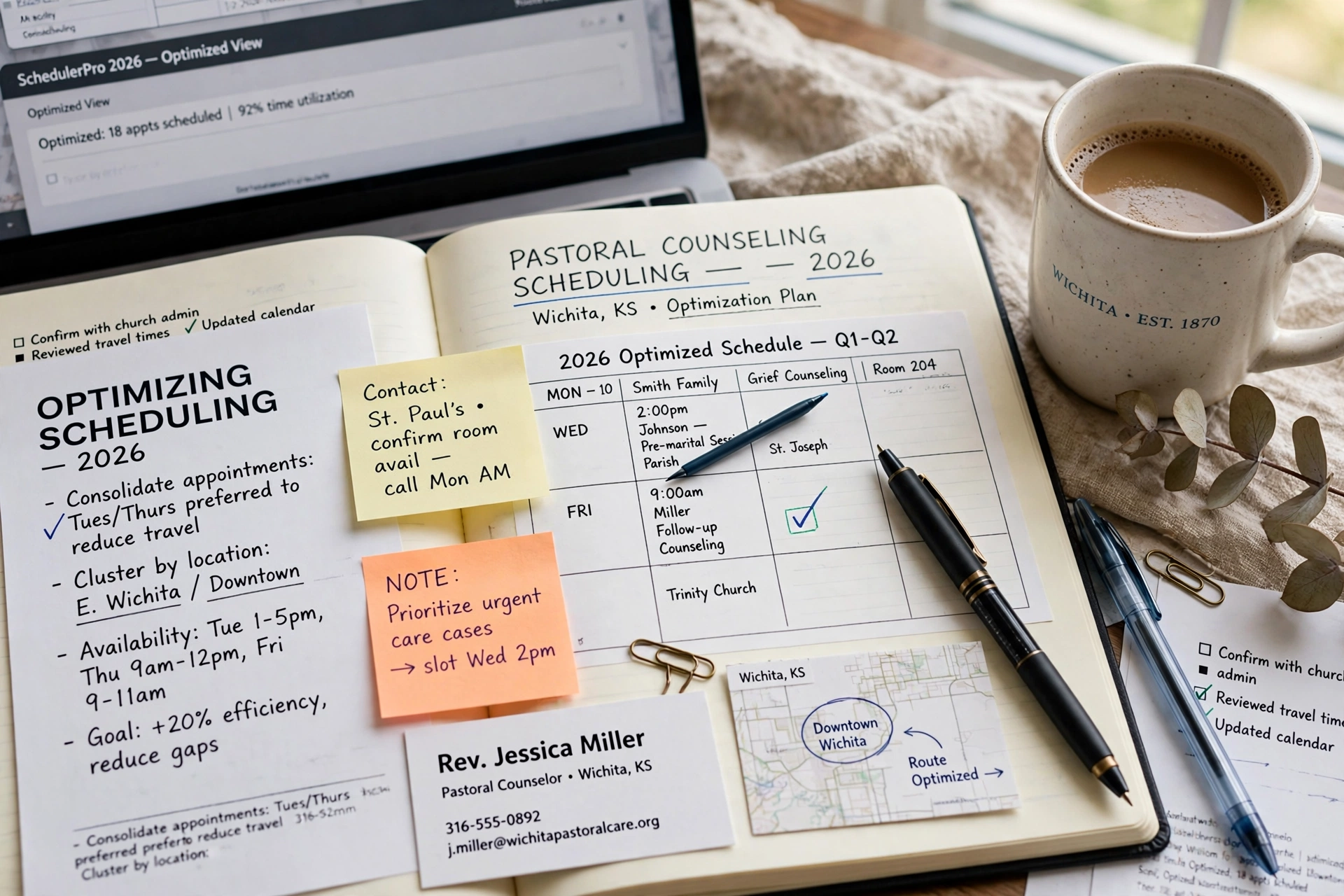
The most effective implementation follows a phased rollout. Start with the "High-Pain, Low-Risk" areas. For most churches, this is scheduling. Transitioning to an online booking system like Pastor Agenda allows you to immediately solve the "calendar chaos" without needing to migrate twenty years of financial data on day one.
Step-by-Step Implementation Framework:
- The Audit Phase: Spend two weeks documenting every manual task your staff performs. Identify where the most time is wasted (e.g., "confirming appointment times via phone").
- The Pilot Phase: Choose one department—such as the youth ministry or the counseling team—to use the software first. Gather feedback and refine the workflow.
- The Data Migration: Clean your data before importing it. There is no point in importing a 10-year-old list of inactive members into a new, clean system.
- The Training Loop: Conduct a "hands-on" workshop. Do not just send a PDF manual. Show the staff exactly how to perform their specific daily tasks.
- The Feedback Cycle: After 30 days, ask: "Which feature is actually being used, and which is just noise?"
💡
Key Takeaway
Success in software adoption isn't measured by the installation of the tool, but by the percentage of the staff who actually use it daily. Prioritize a clean, intuitive user interface over a massive list of niche features.
By focusing on scheduling first, you solve the most immediate friction point: the accessibility of the pastor. When a congregant can book a slot in thirty seconds via a link, the entire perception of the ministry's accessibility changes.

Comparing the Options: Which Path Should Your Church Take?
Not all church management software is created equal. Depending on your budget and the size of your congregation, you will likely fall into one of three categories.
The "Traditional approach" is often just a combination of Excel and a physical calendar. While free, the hidden cost is the hundreds of hours of wasted labor and the high risk of human error. The "Generic AI/SaaS approach" involves using tools like Calendly or generic CRM software. While powerful, these lack the specific context of ministry—they don't understand "pastoral care" or "tithe tracking."
Then there is the "Specialized Ministry approach," which combines professional-grade automation with an understanding of the ecclesiastical environment. This is where tools like Pastor Agenda thrive, offering the precision of a booking system without the overhead of a full ERP.
| Option | Pros | Cons | Best For |
|---|---|---|---|
| Manual/Spreadsheets | Zero cost, total control | High error rate, slow, no automation | Very small house churches (< 50 people) |
| Generic SaaS Tools | Fast setup, polished UI | No ministry context, disjointed data | Solo practitioners or tiny ministries |
| Full-Suite ChMS | All-in-one, deep reporting | Steep learning curve, expensive, bloated | Large multi-site churches (1,000+ people) |
| Specialized Tools (Pastor Agenda) | High adoption, solves scheduling pain | Focuses on specific areas rather than all | Growing churches needing efficiency |
Now here's where it gets interesting: the most successful churches often use a "Modular Stack" rather than one single giant piece of software. They might use one tool for their accounting and another, more agile tool like Pastor Agenda, for their appointment management and congregation engagement. This prevents a single point of failure and allows each department to use the best tool for their specific job.
Common Questions and Misconceptions About Ministry Tech
Most guides get this wrong by suggesting that the "best" software is the one with the most features. In the world of ministry, the "best" software is the one your staff actually opens every morning.
Myth 1: "We are too small to need a management system."
Small churches actually need automation more than large ones because they lack a dedicated administrative staff. When the pastor is also the secretary and the janitor, every single minute saved by an automated booking system is a victory for the ministry.
Myth 2: "Moving to digital will make us feel less personal."
This is a fundamental misunderstanding. Technology should not replace the personal touch; it should clear the administrative clutter so that the personal touch can happen more often. A pastor who isn't stressed about a double-booked calendar is a pastor who is more present during a counseling session.
Myth 3: "One 'All-in-One' platform is always better than three separate tools."
Not necessarily. "All-in-one" often means "average at everything and great at nothing." Using a specialized tool for scheduling and another for accounting often results in a better user experience for the staff and better data quality for the organization.
Myth 4: "Our congregation is older; they won't use a digital system."
I have seen 80-year-olds adopt digital scheduling once they realized it meant they didn't have to play "phone tag" for three days to get a meeting. The key is providing a simple, clean interface that requires zero technical expertise.
Frequently Asked Questions
Which features are most essential for a growing church?
For a growing congregation, the most essential features are centralized member directories, automated appointment scheduling, and integrated communication tools. You need a system that allows you to track a person's journey from a first-time visitor to a committed member without losing their data in an email chain. Automated scheduling is particularly vital because it prevents the "bottleneck effect" where the pastor becomes the only point of contact, slowing down the entire ministry's momentum.
How does the cost of church management software typically scale?
Most systems scale based on the number of active members or "profiles" in your database. Some offer a flat monthly fee, while others use a tiered structure (e.g., 0-500 members, 500-2,000 members). It is important to look for "hidden" costs, such as implementation fees or charges for additional administrative users. A specialized tool like Pastor Agenda often provides a more predictable cost structure by focusing on the specific utility of scheduling and engagement rather than charging for every single data point.
Can we integrate scheduling software with our existing church calendar?
Yes, professional-grade tools are designed to sync with the calendars your staff already use, such as Google Calendar or Outlook. The goal is to create a "single source of truth" so that when a member books an appointment, it immediately appears on the pastor's phone. This eliminates the need for manual entry and prevents the catastrophic error of double-booking a funeral or a wedding. Without this synchronization, any new software will simply create more work rather than reducing it.
Is my congregation's data secure in these cloud-based systems?
Security is a paramount concern, especially when dealing with sensitive pastoral counseling records. You should look for software that uses industry-standard encryption (SSL/TLS) and offers multi-factor authentication (MFA). According to National Association of Evangelicals, maintaining the confidentiality of the ministerial relationship is a core ethical requirement. Ensure the tool you choose has strict permission levels, meaning only the pastor—not the rest of the staff—can see sensitive counseling notes.
How long does it take to see a return on investment (ROI) from a new system?
The ROI for ministry software isn't usually measured in dollars, but in "recovered time." In most cases, a church sees a return within the first 60 days. This manifests as a reduction in missed appointments, fewer administrative errors in the directory, and a noticeable decrease in the time the pastor spends on "calendar tetris." When you calculate the hourly value of a pastor's time, saving just five hours a month on administration provides a massive institutional return.
Final Thoughts on Selecting the Right Church Management Software
Choosing which church management software to implement is not about finding the "perfect" tool, but about finding the one that aligns with your current capacity and your future vision. If your primary friction point is the chaos of coordinating appointments and pastoral care, a streamlined, focused solution is far superior to a complex enterprise system that your staff will eventually abandon.
The goal of any tool in the ministry is to serve the people, not to make the people serve the tool. By prioritizing a clean user experience and automating the most tedious parts of your administration, you move from a state of "survival mode" to a state of strategic growth.
If you are ready to stop the calendar chaos and start focusing on your congregation, explore how Pastor Agenda can simplify your ministry's scheduling and engagement today.
Recommended Readings
To deepen your understanding of these topics, we recommend reading the following articles:
- Church appointment booking
- Online Appointment Booking for Modern Churches
- Pastor scheduling
- Pastoral counseling scheduling
Free Guide: The 7 Church Growth Hacks for 2026
Learn how modern ministries are using automated scheduling and AI pastoral assistants to save 12+ hours of admin work every week.