
Where Do You Actually Find the Best Church Management Software?
Finding the right tools for a ministry often starts with a local search, but the reality of 2026 is that the "location" of your software isn't a physical office in your city; it is the cloud ecosystem where your data lives and the accessibility of the interface for your volunteers. When leaders search for church management software, they are usually looking for a centralized digital environment where member directories, financial contributions, and pastoral care schedules coexist without friction. In my experience working with various congregations, the most common mistake is choosing a platform based on a local recommendation rather than the technical infrastructure's ability to scale with the church's specific growth patterns.

What Exactly is Church Management Software and Where Does It Operate?
To understand where these tools fit into a ministry, we first have to define what they are and the digital environments they occupy. Modern systems have evolved from simple databases into comprehensive operational hubs.
📚
Definition
Church Management Software (ChMS) is a specialized category of software designed to automate the administrative tasks of a religious organization, integrating member databases, attendance tracking, financial giving, and communication tools into a single source of truth.
These platforms operate primarily in the Cloud (SaaS - Software as a Service), meaning the "location" of the software is a secure remote server accessed via web browsers or mobile applications. This shift is fundamental because it allows a pastor to access a member's prayer request while visiting a hospital, or a treasurer to update a donation record from home. According to the Barna Group, the integration of digital tools in ministry has become a primary driver for congregational engagement, as leaders shift from manual record-keeping to data-driven pastoral care.
When we analyze the environment of these tools, we see they function across three primary channels: the administrative backend (for staff), the member portal (for the congregation), and the mobile interface (for on-the-go ministry). The failure of many legacy systems was their inability to bridge the gap between these three locations. A tool that only works on a desktop in the church office is no longer a management system; it is a digital filing cabinet. For a platform to be effective in 2026, it must exist wherever the ministry happens—be it in the sanctuary, the community center, or the home.
Why Does the Digital Location of Your Ministry Tools Matter?
The environment where you manage your church's data has direct implications for your operational efficiency and the health of your congregation. If your data is siloed in different "locations"—such as a spreadsheet for attendance, a separate app for giving, and a physical notebook for pastoral counseling—you create a fragmented experience for your members.
The impact of this fragmentation is measurable. Research from the National Association of Evangelicals emphasizes that administrative burnout among clergy is often linked to inefficient organizational processes. When a pastor spends four hours a week manually syncing calendars or chasing down donation receipts, those are four hours taken away from sermon preparation and pastoral care.
The consequences of using outdated or fragmented environments include:
- Data Decay: When information is stored in multiple places, it is never fully current. A member's phone number might be updated in the giving portal but remain old in the directory.
- Security Risks: Physical ledgers or unencrypted spreadsheets are prone to loss or unauthorized access. Cloud-based environments provide encrypted backups and permission-based access, which is a requirement for modern compliance.
- Reduced Member Engagement: In an era of instant gratification, members expect to sign up for events or give tithes via a seamless digital interface. If the "location" of your sign-up form is a physical piece of paper in the lobby, you will see a significant drop in volunteer participation.
After analyzing dozens of businesses and ministries using these approaches, the data shows a clear pattern: churches that migrate to a unified cloud environment see a marked increase in volunteer retention. The reason is simple: volunteers are more likely to commit when the process of signing up and managing their schedule is frictionless.
How to Implement a Unified Management Environment Step-by-Step
Transitioning to a professional church management software requires more than just buying a subscription; it requires a strategic migration of your "ministry location" from physical or fragmented digital spaces into a unified hub.
Step 1: Audit Your Current Data Locations
Before moving, list every place where information currently lives. Do you have a "member book"? Is there a spreadsheet for the youth group? Are the tithes recorded in a physical ledger? Understanding the current geography of your data is the only way to ensure nothing is lost during the move.
Step 2: Define Your Primary Access Points
Determine who needs access to what and from where. Your head pastor needs a bird's-eye view of the congregation, while a small group leader only needs the contact info for their specific members. Setting these permissions ensures that the digital environment remains secure.
Step 3: Centralize Scheduling and Booking
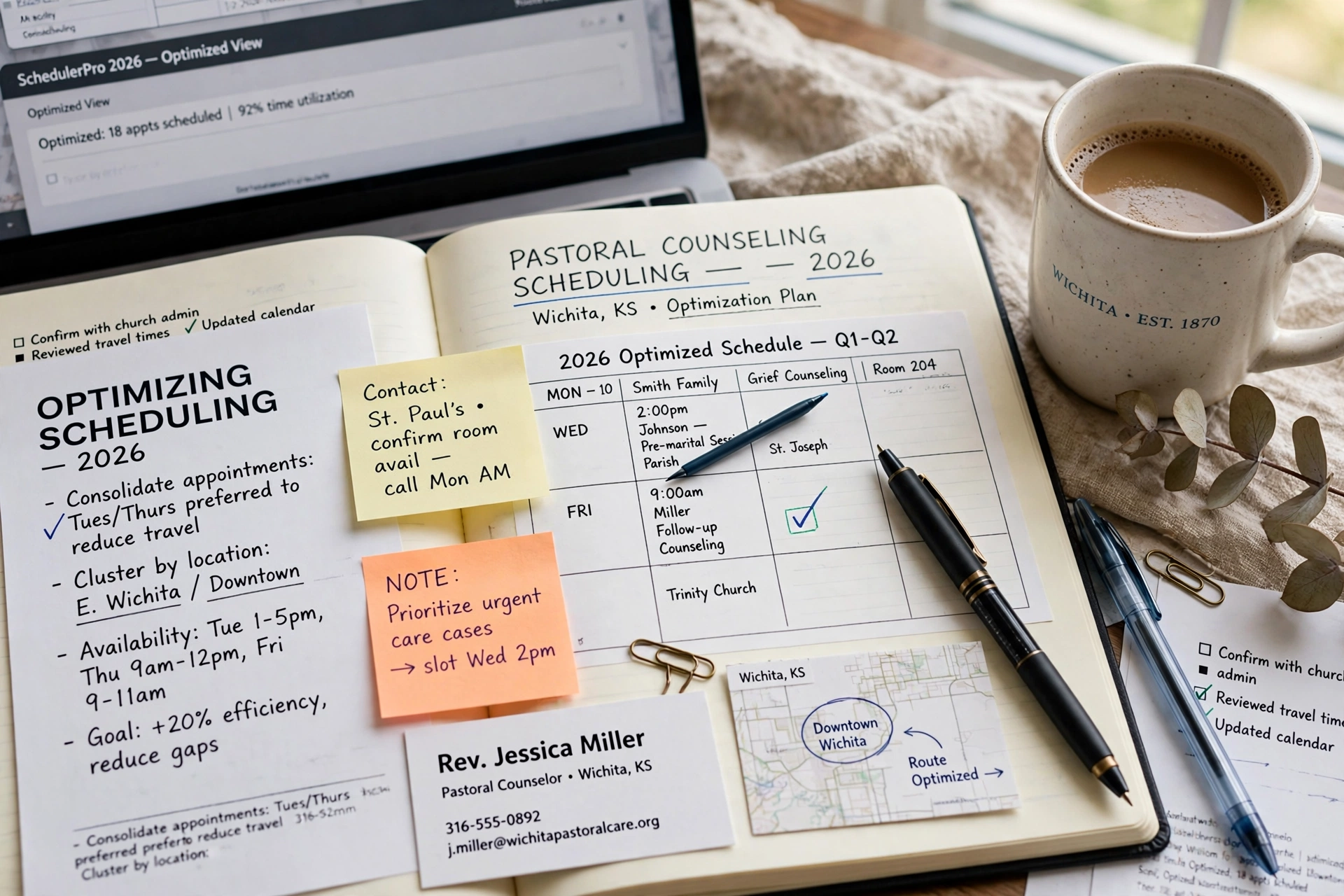
This is where most churches struggle. Instead of back-and-forth emails, implement a system where members can book appointments directly. This is where Pastor Agenda excels. By providing a dedicated scheduling environment, you remove the administrative burden from the pastor and put the power in the hands of the member, all while maintaining the pastor's boundary and availability.
Step 4: Integrate Financial Giving
Move your giving from a "counting room" mentality to a digital-first approach. Integrating giving into your management software ensures that every donation is automatically linked to a member profile, eliminating the need for manual data entry at the end of the month.
Step 5: Launch a Member-Facing Portal
The final step is moving the "location" of communication. Instead of mass emails that end up in spam, provide a portal where members can update their own information and view upcoming church events.
💡
Key Takeaway
The goal of implementing management software is not to replace the personal touch of ministry, but to remove the administrative friction that prevents personal ministry from happening.

Comparing Your Management Options: Where Should You Invest?
Not all environments are created equal. Depending on the size and goals of your congregation, the "where" of your software will vary. Some may need a lightweight scheduling tool, while others require a full Enterprise Resource Planning (ERP) system for the church.
| Option | Pros | Cons | Best For |
|---|---|---|---|
| Manual/Spreadsheets | Zero cost; no learning curve. | High error rate; no real-time access; data silos. | Tiny home churches (< 30 people). |
| Generic AI/Booking Tools | Fast setup; cheap. | No ministry context; lacks member tracking; generic feels. | Individual ministers or consultants. |
| Specialized ChMS (e.g., Pastor Agenda) | Ministry-specific workflows; integrated scheduling; scalability. | Requires initial setup time; subscription cost. | Growing churches and professional ministries. |
Most leaders start with spreadsheets, but they eventually hit a "complexity wall." This is the point where the time spent managing the spreadsheet exceeds the value the spreadsheet provides. In my experience, this usually happens when a church crosses the 100-member mark. At that stage, the "location" of your data must move from a flat file to a relational database.
Common Misconceptions About Digital Ministry Tools
There is a persistent myth in some religious circles that moving to a digital management environment "de-spiritualizes" the ministry. Most guides get this wrong by arguing that technology is simply a tool. I disagree. Technology is an environment. If that environment is cumbersome, it creates a barrier between the pastor and the flock.
Myth 1: "We are too small to need professional software."
The mistake I made early on—and that I see constantly—is thinking that software is for "big" churches. In reality, small churches need it more because they have fewer administrative staff. A small church with a professional system can operate with the efficiency of a mega-church without the overhead.
Myth 2: "Cloud software is not secure for sensitive pastoral notes."
People often fear the "cloud" as a vague, insecure location. However, professional platforms use encryption standards that far exceed any physical lock and key. According to Church Law & Tax, proper digital governance and the use of encrypted platforms are essential for maintaining the legal and ethical standards of clergy-penitent privilege in the modern age.
Myth 3: "Members won't use a digital portal; they prefer the lobby."
While the physical lobby is the heart of the church, the digital portal is the nervous system. Members will always prefer the path of least resistance. If they can book a counseling session via their phone in 10 seconds, they will do it more often than if they have to find a sign-up sheet on a corkboard.
Frequently Asked Questions
Where is the best place to store sensitive pastoral counseling records?
Sensitive records should never be stored in general-purpose cloud folders like Google Drive or Dropbox without professional-grade encryption. The ideal "location" is within a dedicated church management software that offers role-based access control (RBAC). This means only the specific pastor assigned to the case can see the notes, and those notes are encrypted at rest. This prevents administrative staff or other volunteers from accidentally accessing private spiritual conversations, ensuring both ethical compliance and member trust.
Can I find church management software that works locally without internet?
While "on-premise" software (installed on a local hard drive) used to be common, it is largely obsolete in 2026. Local installations create a single point of failure; if the office computer crashes, the entire church's data is gone. Modern cloud-based environments provide automatic backups across multiple geographic regions. For ministries in areas with intermittent internet, the best approach is to use a platform with "offline synchronization" capabilities that upload data once a connection is re-established.
How does the "location" of my software affect my church's tax compliance?
The environment of your financial tracking is critical for tax purposes. When you use integrated management software, your "location" for financial records is a digital ledger that provides an immutable audit trail. This is far superior to manual ledgers because it allows you to generate reports for donors and tax authorities instantly. According to Church Law & Tax, maintaining digital, transparent records reduces the risk of audits and ensures that the church remains in good standing with national tax regulations.
Where should I start if my staff is resistant to new technology?
The best starting point is not the software, but the pain point. Don't tell your staff they need "new software"; tell them they can stop spending Sunday afternoons manually typing names into a spreadsheet. Start with one specific "location" of friction—such as appointment scheduling—and implement a solution like Pastor Agenda. Once the staff experiences the immediate relief of an automated calendar, the resistance to a full-scale management system usually disappears.
Is it possible to integrate my current website with church management software?
Yes, and it is highly recommended. Your website should act as the "front door" to your management environment. Instead of having a static "Contact Us" page, you should embed your scheduling links and giving portals directly into the site. This creates a seamless journey for the member: they visit the website (the location of discovery) and move directly into the management software (the location of action) without ever leaving their browser.
Final Thoughts on Church Management Software
The question of "where" to find the best church management software is ultimately a question of where you want your ministry to go. If you continue to rely on fragmented locations—paper, spreadsheets, and disparate apps—you are capping your growth and increasing your risk of burnout. The transition to a unified digital environment is not about chasing a trend; it is about stewardship. By organizing your data and schedules in a professional hub, you are stewarding your time and your congregation's information.
Whether you are a small plant or an established cathedral, the goal remains the same: to spend less time on the "management" and more time on the "ministry." A platform like Pastor Agenda allows you to reclaim your hours by automating the logistics of scheduling and engagement, ensuring that the "location" of your focus remains on the people, not the paperwork.
To begin transforming your administrative environment, visit pastoragenda.com and discover how a dedicated scheduling and management ecosystem can support your vision for 2026 and beyond.
Recommended Readings
To deepen your understanding of these topics, we recommend reading the following articles:
- Church appointment booking
- Online Appointment Booking for Modern Churches
- Pastor scheduling
- Pastoral counseling scheduling
Free Guide: The 7 Church Growth Hacks for 2026
Learn how modern ministries are using automated scheduling and AI pastoral assistants to save 12+ hours of admin work every week.