
How Much Should a Church Invest in Management Software?
The financial cost of implementing church management software typically ranges from $0 for basic open-source tools to $500+ per month for enterprise-grade platforms, depending on the size of the congregation and the complexity of the required features. However, focusing solely on the monthly subscription is a mistake. The true investment includes the "hidden" costs of data migration, staff training, and the opportunity cost of continuing to use fragmented spreadsheets. In my experience working with religious leaders, the churches that see the highest ROI are those that stop viewing software as an expense and start viewing it as a digital infrastructure investment that frees up hours of pastoral time for actual ministry.

What Exactly Is Church Management Software and How Does It Scale?
To understand the investment, we first have to define what we are actually buying. Most leaders think of it as a digital Rolodex, but modern systems are comprehensive ecosystems.
📚
Definition
Church Management Software (ChMS) is an integrated platform designed to handle the administrative, financial, and relational needs of a faith community, combining member databases, contribution tracking, event scheduling, and communication tools into a single source of truth.
When you invest in these tools, you aren't just buying a piece of software; you are buying a workflow. For a small plant or a home church, the investment is often about basic organization—tracking who is attending and managing a simple calendar. For a mid-sized congregation, the focus shifts toward stewardship and volunteer coordination. For large multi-site churches, the investment is about data synchronization and reporting across different campuses.
The scaling factor is usually based on "member count" or "active profiles." This means your investment will grow as your ministry grows. According to research from the Barna Group, the health of a church is increasingly tied to how well leadership can maintain personal connections in an era of digital distraction. A professional ChMS allows a pastor to know that a member hasn't attended in three weeks without having to manually scan a physical sign-in sheet, effectively scaling "pastoral care" through data.
Now, here is where it gets interesting: the difference between "free" and "paid" is rarely about the features and almost always about the support and security. Free tools often lack the encryption standards required for handling sensitive donation data or the dedicated support teams needed when a system crashes right before a major holiday service.
Why Does the Investment in Digital Administration Actually Matter?
Many boards are hesitant to allocate budget to software, arguing that "the church is about people, not computers." While true, the administrative friction created by manual processes actually subtracts from the time spent with people.
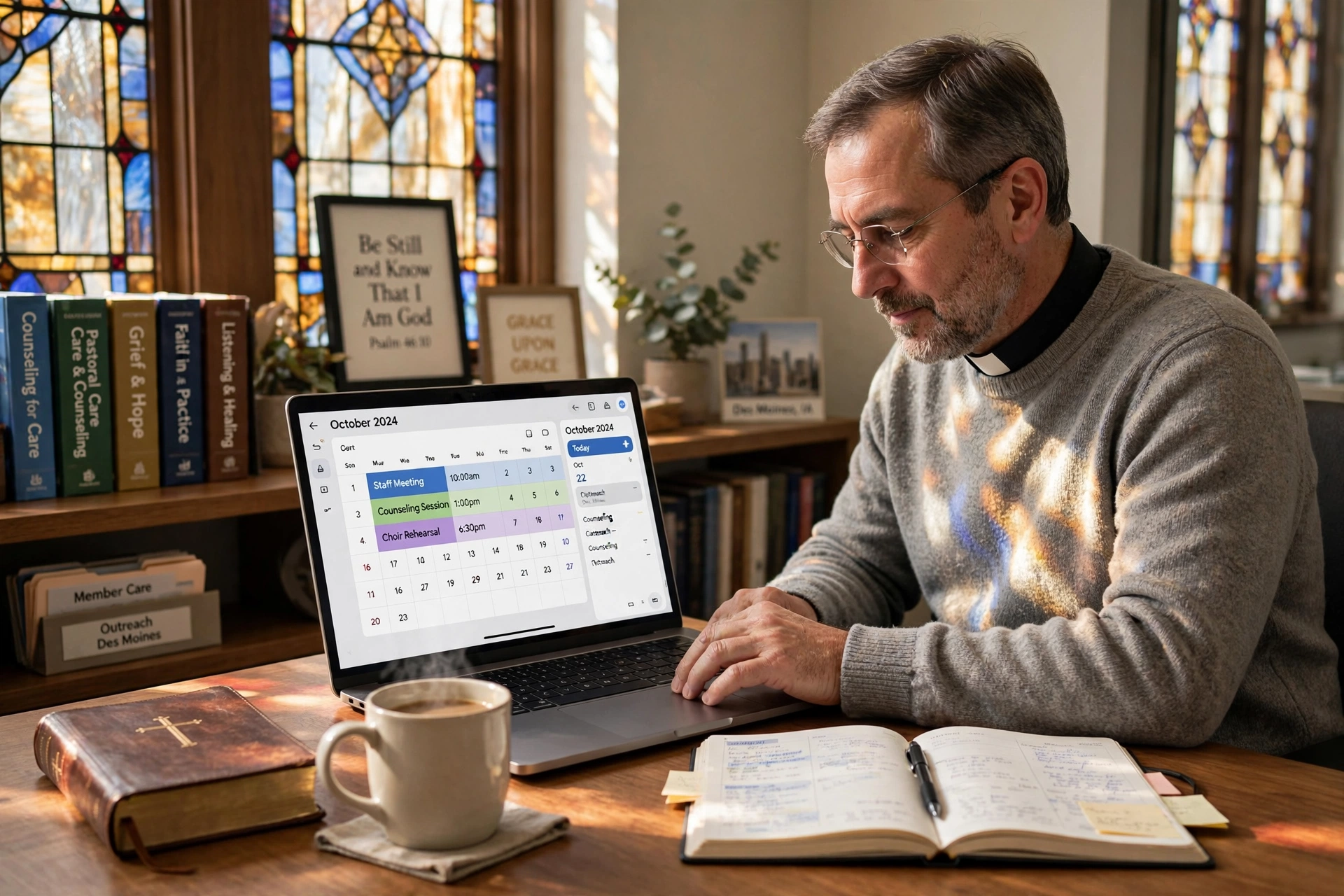
When a ministry relies on manual scheduling or fragmented spreadsheets, they encounter what I call the "Administrative Tax." This is the cumulative time lost to double-entry, lost emails, and scheduling conflicts. For a church with 200 members, losing just five hours a week to administrative chaos equals 260 hours a year—roughly 6.5 full work weeks of a pastor's time.
The implications of not investing in a centralized system are significant. Data silos lead to "ministry gaps," where members fall through the cracks because no one noticed they stopped engaging. According to Lifeway Research, pastoral burnout is often linked to the overwhelming weight of administrative burdens that detract from their primary calling of preaching and counseling. By automating the "business" side of the church, you are directly investing in the mental health and longevity of your clergy.
Furthermore, the financial risk of poor management is real. Using non-specialized tools for contribution tracking increases the likelihood of errors in year-end giving statements, which can lead to trust issues within the congregation. A dedicated investment in a system that handles automated giving and tax-compliant reporting isn't just a convenience; it is a safeguard for the church's reputation and legal standing.
How to Implement a Management System Without Wasting Budget
The mistake I made early on—and that I see constantly with new clients—is trying to implement every single feature on day one. This leads to "software fatigue," where the staff becomes overwhelmed and the church reverts to using paper. The professional way to invest is through a staged rollout.
Step 1: The Data Audit
Before spending a dime, clean your data. If you move a "messy" spreadsheet into a high-end system, you just have a "digital mess." Identify your core needs: Is it scheduling? Member tracking? Giving?
Step 2: Selecting the Right Tier
Avoid the temptation to buy the "Enterprise" plan if you only have 100 members. Start with a plan that covers your current needs plus 20% growth. Pastor Agenda is designed specifically to bridge this gap, providing professional-grade scheduling and management without the bloated cost of corporate-style software.
Step 3: The "Champion" Model
Don't make the Pastor the primary administrator. Identify a "Software Champion"—a tech-savvy volunteer or staff member—who owns the system. The investment fails if the leader is the only one who knows how to use it.
Step 4: Integration and Automation
Once the database is live, automate the repetitive tasks. Set up automatic reminders for appointments and automated welcome emails for new visitors. This is where you begin to see the "time return" on your investment.
💡
Key Takeaway
The ROI of church management software is measured not in dollars saved, but in hours returned to the ministry. If a tool saves a pastor 10 hours a month, the software has paid for itself regardless of the monthly fee.

Comparing Investment Paths: Manual vs. Generic vs. Professional
When deciding how much to spend, you generally have three paths. Most churches start with the first, realize it is failing, and jump to the second before eventually landing on the third.
| Approach | Pros | Cons | Best For |
|---|---|---|---|
| Manual / Spreadsheets | Zero direct cost; no learning curve | High error rate; data silos; massive time waste | Very small home groups (<30 people) |
| Generic Tools (Calendly/Google) | Familiar interface; low cost | No member history; disconnected data; no giving tools | Simple appointment booking only |
| Professional ChMS (Pastor Agenda) | Integrated data; ministry-specific; scalable | Monthly subscription; requires setup time | Growing churches focused on pastoral care |
Here's the thing: generic tools like Google Calendar are great for a business, but they don't understand the nuances of a ministry. A business appointment is a transaction; a pastoral appointment is a care event. When you use a professional system, you can link an appointment to a member's history, noting their previous struggles or family needs before the meeting even begins. This transforms the interaction from a scheduled slot into a meaningful ministry moment.
Common Misconceptions About Software Costs
Most guides get this wrong by suggesting that "more features equal more value." In the world of church administration, the opposite is often true. "Feature Bloat" is a real problem where churches pay for complex modules—like advanced child-check-in systems or complex facility rentals—that they never actually use.
Myth 1: "Free software is the most budget-friendly option."
This is a fallacy. Free software often costs you more in "labor hours" because it lacks automation. If a free tool requires you to manually send 50 emails that a paid tool could send in one click, you are paying for that software with your time.
Myth 2: "We are too small to need a management system."
Actually, small churches need these tools more than large ones. In a large church, there is a paid secretary to handle the chaos. In a small church, the Pastor is the secretary. Investing in software early prevents the "founder's burnout" that happens when a growing ministry becomes an administrative nightmare.
Myth 3: "Moving our data will be too expensive or difficult."
While data migration has a cost (mostly in time), the cost of not moving is higher. Continuing to use a legacy system that doesn't sync with mobile devices means you are losing the ability to engage with a generation that does everything via smartphone.
Frequently Asked Questions
How do I justify the monthly cost to my church board?
To justify the investment, move the conversation from "cost" to "capacity." Present the board with a tally of how many hours are currently spent on manual administration. Use a "Time-Value" calculation: if the pastor spends 20 hours a month on scheduling and data entry, and the software reduces that to 2 hours, the church has gained 18 hours of pastoral availability. Frame the software as a tool for "member retention" and "care efficiency" rather than an IT expense.
Will a management system replace the need for a church secretary?
No, it transforms the role of the secretary from a "data entry clerk" to a "ministry coordinator." Instead of spending their day typing names into a spreadsheet, the secretary can use the data from the software to identify members who are slipping away or to coordinate more effective outreach programs. The software handles the "what" and "when," allowing the human staff to focus on the "who" and "how."
Is it safe to store member donations and personal data in the cloud?
When using professional tools like Pastor Agenda, the data is typically more secure than it would be on a local office computer. Professional providers use SSL encryption, regular backups, and strict access controls. According to general industry standards for data protection, cloud-based systems with dedicated security protocols are significantly less prone to catastrophic data loss (like a hard drive crash) than local storage. Always ensure your provider is compliant with local privacy laws.
What is the average learning curve for staff and volunteers?
The learning curve depends on the intuitiveness of the UI. Most modern systems take about 2 to 4 weeks of active use before the staff feels proficient. The key is to avoid "feature overload." Start by using only the member directory and the scheduling tool. Once those are habitual, introduce the reporting and communication modules. Providing a simple "cheat sheet" for volunteers can reduce the training time significantly.
Can we integrate our existing website with church management software?
Yes, most professional systems offer integration via widgets or APIs. This allows members to book appointments, sign up for events, or give tithes directly from your website, with the data flowing automatically into your database. This eliminates the need for manual data entry and provides a seamless experience for the congregant, which is essential for attracting younger demographics who expect digital fluency.
Final Thoughts on Investing in Church Management Software
Investing in church management software is not about embracing technology for technology's sake; it is about removing the administrative barriers that stand between a pastor and their congregation. When you eliminate the friction of scheduling, the confusion of fragmented data, and the stress of manual tracking, you create space for actual ministry to happen.
Whether you are a small plant or a large cathedral, the goal is the same: to steward your time and your people with excellence. The cost of a subscription is a small price to pay for the recovery of dozens of hours of ministry time every month.
If you are ready to stop fighting with spreadsheets and start focusing on your calling, explore how Pastor Agenda can streamline your ministry. It is time to move your administration into 2026 and give your congregation the professional care they deserve.
Recommended Readings
To deepen your understanding of these topics, we recommend reading the following articles:
- Church appointment booking
- Online Appointment Booking for Modern Churches
- Pastor scheduling
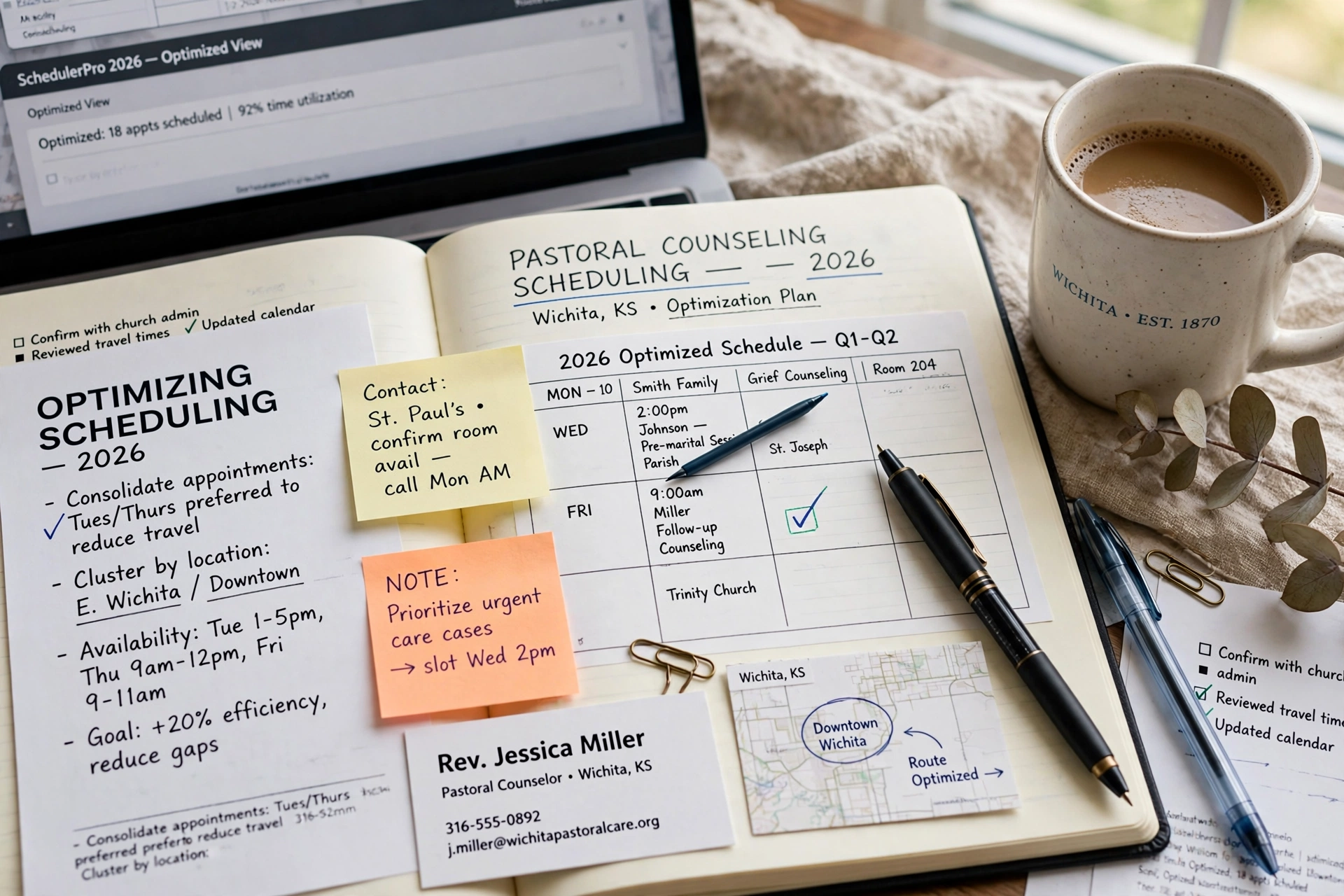
- Pastoral counseling scheduling
Free Guide: The 7 Church Growth Hacks for 2026
Learn how modern ministries are using automated scheduling and AI pastoral assistants to save 12+ hours of admin work every week.