
How Much Does Church Management Software Actually Cost in 2026?
Budgeting for ministry often feels like a balancing act between spiritual outreach and administrative survival. Most churches can expect to pay anywhere from $0 (for basic open-source tools) to over $500 per month for comprehensive church management software, depending primarily on congregation size and the complexity of the feature set. In my experience working with various ministry leaders, the most expensive part of these systems isn't the monthly subscription fee, but the "hidden" cost of poor implementation and underutilized features that lead to wasted resources.

What Determines the Price of Church Management Systems?
When we talk about the cost of these platforms, we aren't just talking about a price tag on a landing page. The pricing models for these tools vary wildly because the needs of a small house church differ fundamentally from those of a multi-site mega-church.
📚
Definition
Church Management Software (ChMS) is an integrated digital ecosystem designed to handle the administrative side of a ministry, including member databases, giving tracking, volunteer scheduling, and communication tools.
Most providers utilize a "per-member" or "tiered" pricing model. In a tiered model, you pay a flat fee for up to 100 members, then a higher fee for up to 500, and so on. This is designed to scale as the congregation grows, but it can create a "growth tax" where the church is penalized financially for succeeding in its mission. Another common model is the a la carte approach, where you pay a base fee and add modules for specific needs, such as child check-in systems or advanced financial reporting.
According to research from the Barna Group, the digital transformation of churches has accelerated, with more leaders prioritizing data-driven decision-making to improve member retention. This shift has forced software providers to move toward SaaS (Software as a Service) models, which trade a large upfront license fee for a recurring monthly cost. While this lowers the barrier to entry for smaller churches, it adds a permanent line item to the annual budget.
The mistake I made early on — and that I see constantly — is choosing a software based on the lowest monthly cost without calculating the "onboarding tax." If a system costs $20 a month but takes 100 hours of a paid administrator's time to set up, the actual cost of that software in the first year is thousands of dollars higher than the sticker price.
Why Does Investing in Proper Scheduling and Management Matter?
It is easy to view administrative software as a "luxury" or a secondary concern compared to the pulpit and the pew. However, the administrative friction caused by outdated systems creates a direct ceiling on a church's ability to grow and care for its people.
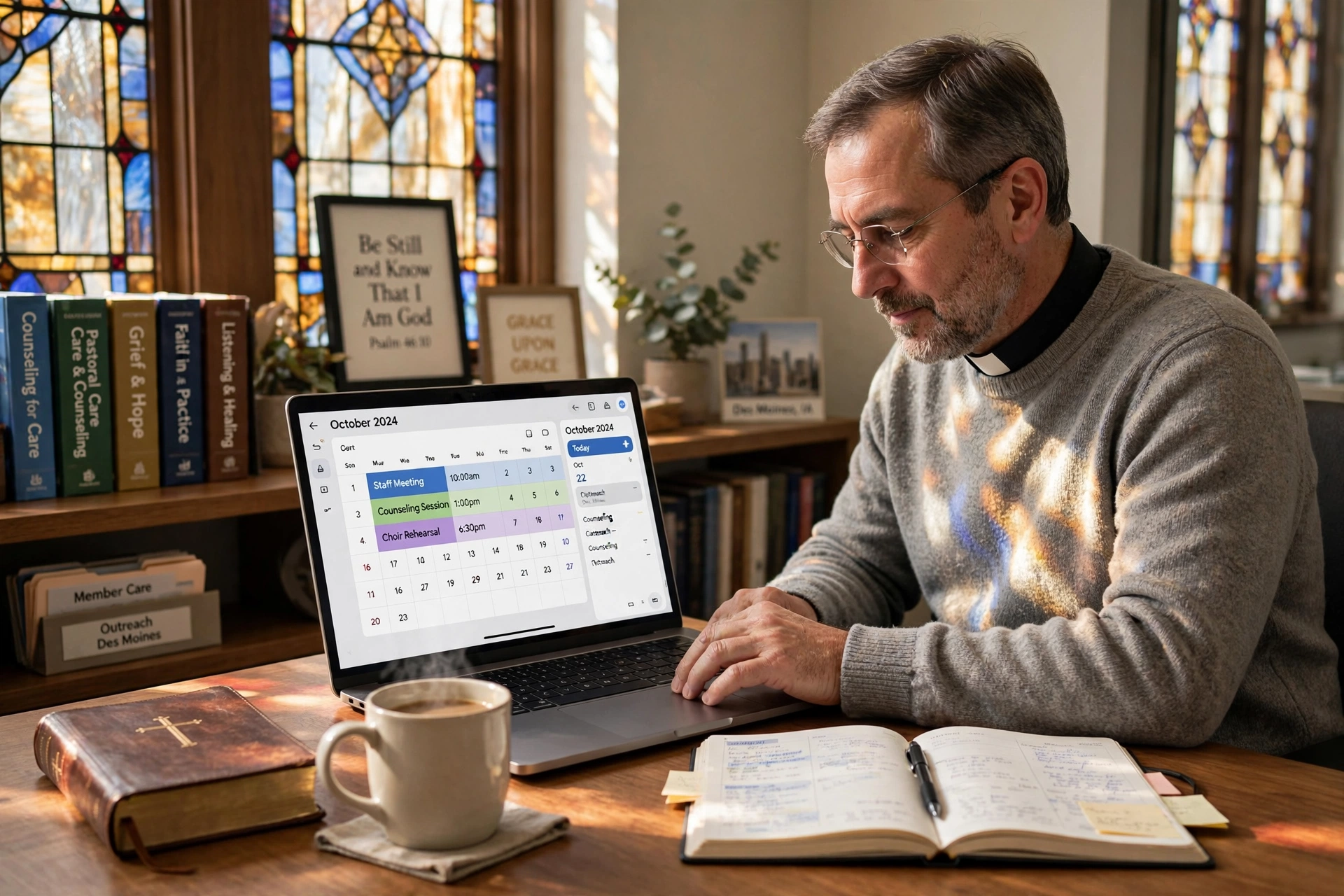
When a pastor spends five hours a week manually coordinating calendars or chasing down volunteer confirmations via text message, that is time stolen from pastoral care and sermon preparation. The impact is measurable. Research from Christianity Today suggests that pastoral burnout is often linked not just to the emotional weight of the ministry, but to the overwhelming burden of administrative inefficiency. When the "business" side of the church is broken, the spiritual side suffers.
From a financial perspective, the cost of not having a professional system is often higher than the subscription fee. Manual tracking of tithes and offerings leads to errors, and fragmented communication leads to missed volunteer shifts. If a worship leader fails to show up because of a scheduling mishap, the entire Sunday experience is compromised.
Moreover, data security has become a non-negotiable requirement in 2026. Storing member contact information, giving records, and counseling notes in unprotected spreadsheets is a liability. Professional church management software provides encrypted backups and permission-based access, ensuring that sensitive information remains confidential. The potential cost of a data breach—both financially and in terms of trust within the congregation—far outweighs a monthly software fee.
How to Implement a Budget-Friendly Management Strategy
Implementing a new system doesn't have to be a financial shock. The goal is to align your software capabilities with your actual ministry needs rather than buying every feature "just in case" you need it in five years.
First, conduct a "friction audit." Identify exactly where your current system is failing. Is it the scheduling of the choir? The tracking of new visitors? The management of pastoral appointments? Once you have a list of pain points, you can search for a solution that solves those specific problems without paying for bloated enterprise features you will never use.
For those focusing heavily on the intersection of leadership and accessibility, Pastor Agenda provides a streamlined approach. Instead of overwhelming the user with hundreds of irrelevant modules, it focuses on the core necessity: scheduling and appointment management. This allows pastors to reclaim their time without the steep learning curve or the exorbitant costs associated with "all-in-one" enterprise platforms.
Here is a professional step-by-step for rollout:
- Data Cleanup: Before importing members into a new system, scrub your current lists. Remove duplicates and outdated emails. Importing "dirty data" is the fastest way to make a new system feel clunky and useless.
- Pilot Group: Choose three trusted volunteers or staff members to test the software for two weeks. Let them try to "break" the system before you roll it out to the entire leadership team.
- Phased Migration: Don't switch every function at once. Start with scheduling, then move to member directories, and finally to financial tracking.
- Training Loop: Schedule a 30-minute training session once a month for the first quarter. Software only provides value if the people using it actually know how it works.
💡
Key Takeaway
The ROI of church management software is found in "time reclaimed." If a $50/month tool saves a pastor 10 hours of admin work, the cost per hour of freedom is only $5.

Comparing Management Software Options
Not all software is created equal. Depending on your budget and goals, you will likely fall into one of three categories. The choice depends on whether you prioritize cost, customization, or ease of use.
| Option | Pros | Cons | Best For |
|---|---|---|---|
| Manual/Free Tools (Sheets, Paper) | Zero direct cost, no learning curve | High error rate, no security, non-scalable | Tiny plants (< 50 members) |
| Generic AI/Booking Tools (Basic Calendars) | Fast setup, low cost, familiar interface | No ministry context, fragmented data | Independent ministers |
| Dedicated ChMS (Pastor Agenda, etc.) | Ministry-specific, secure, integrated | Monthly cost, requires setup time | Growing congregations |
Now, here is where it gets interesting: many churches fall into the trap of the "Generic AI" approach. They use a combination of a free calendar app, a separate email marketing tool, and a spreadsheet for giving. While this seems cheaper, it creates "data silos." When the information is fragmented, you spend more time moving data between apps than you do actually using the data to help people.
A dedicated approach, such as that found with Pastor Agenda, integrates the specific needs of a minister into the workflow. By focusing on the scheduling aspect—the most friction-heavy part of pastoral work—you eliminate the need for three different "free" tools that don't talk to each other.
Common Misconceptions About Software Costs
Most guides on church software get the pricing conversation wrong because they focus only on the monthly fee. To get a real picture of the cost, you have to look at the total cost of ownership (TCO).
Myth 1: "Free software is the most cost-effective option."
This is rarely true. "Free" software usually costs you in time. If your staff spends five hours a week manually syncing calendars because the free tool doesn't automate notifications, you are paying for that software with your most valuable resource: labor.
Myth 2: "We are too small to need a management system."
I see this constantly. Small churches often think they can "just remember" who needs a visit or when the next event is. However, the transition from a "family-style" church to a "growth-style" church happens quickly. If you don't have the infrastructure in place before you hit 100 members, the administrative chaos that follows can actually stifle growth.
Myth 3: "The more features, the better the value."
Actually, the opposite is often true. Feature bloat is a major productivity killer. When a software includes everything from accounting to library management, the interface becomes cluttered. This leads to "software fatigue," where the staff stops using the tool because it's too complicated. The best value is found in a tool that does three things perfectly rather than twenty things mediocrely.
Frequently Asked Questions
How do I calculate the ROI of church management software?
To calculate the return on investment, you must quantify the time saved. Track how many hours per week are spent on manual scheduling, data entry, and communication. Multiply those hours by the hourly value of the staff member's time (or the value of the pastor's focused ministry time). If the software costs $60 per month but saves 20 hours of administrative labor, the ROI is immediate and substantial. Beyond the numbers, consider the "intangible ROI," such as the reduction in missed appointments and the increase in member engagement.
Is cloud-based software safer than on-premise servers for a church?
In 2026, cloud-based systems are almost always safer. Maintaining an on-premise server requires a level of technical expertise that most churches do not have. This often leads to outdated security patches and vulnerable hardware. Cloud providers invest millions in security infrastructure, encryption, and redundant backups that a local church simply cannot replicate. As long as you use strong passwords and multi-factor authentication, the cloud is the professional standard for protecting congregation data.
Will a management system replace the need for a church secretary?
No, but it changes the role of the secretary from a "data entry clerk" to a "ministry coordinator." Instead of spending the day typing names into a list or calling people to confirm times, the secretary can focus on high-value tasks like member care, event planning, and community outreach. The software handles the repetitive, robotic tasks, allowing the human staff to focus on the relational aspects of the ministry, which is where the real impact happens.
Do most church management tools offer discounts for non-profits?
Yes, the majority of reputable providers offer non-profit pricing. However, it is important to read the fine print. Some "discounts" are only available for the first year, after which the price jumps to a standard commercial rate. Others may require proof of 501(c)(3) status or equivalent religious registration. When evaluating costs, always ask for the "long-term pricing roadmap" to ensure you won't be hit with a massive price increase once your data is locked into their system.
How do I handle member privacy when moving to a digital system?
Privacy should be the first priority during implementation. Use a system that allows for "Role-Based Access Control" (RBAC). This means the worship leader can see the volunteer schedule, but they cannot see the giving records or private counseling notes. Only the senior pastor and the financial treasurer should have access to sensitive financial data. Additionally, clearly communicate to your congregation how their data is being used and stored, ensuring transparency and trust.
Final Thoughts on Church Management Software
The real cost of church management software isn't found in the monthly subscription, but in the decision of how you value your time. Every hour spent wrestling with a spreadsheet is an hour not spent in a hospital room, in a counseling session, or in deep study of the Word.
Whether you are a small planting church or an established congregation, the goal is to remove administrative friction so that the spiritual mission can take center stage. By focusing on your specific pain points—particularly the chaos of scheduling—you can find a solution that fits your budget without sacrificing your sanity.
If you are tired of the administrative grind and want a system that respects both your time and your budget, explore how Pastor Agenda can simplify your ministry's workflow.
Recommended Readings
To deepen your understanding of these topics, we recommend reading the following articles:
- Church appointment booking
- Online Appointment Booking for Modern Churches
- Pastor scheduling
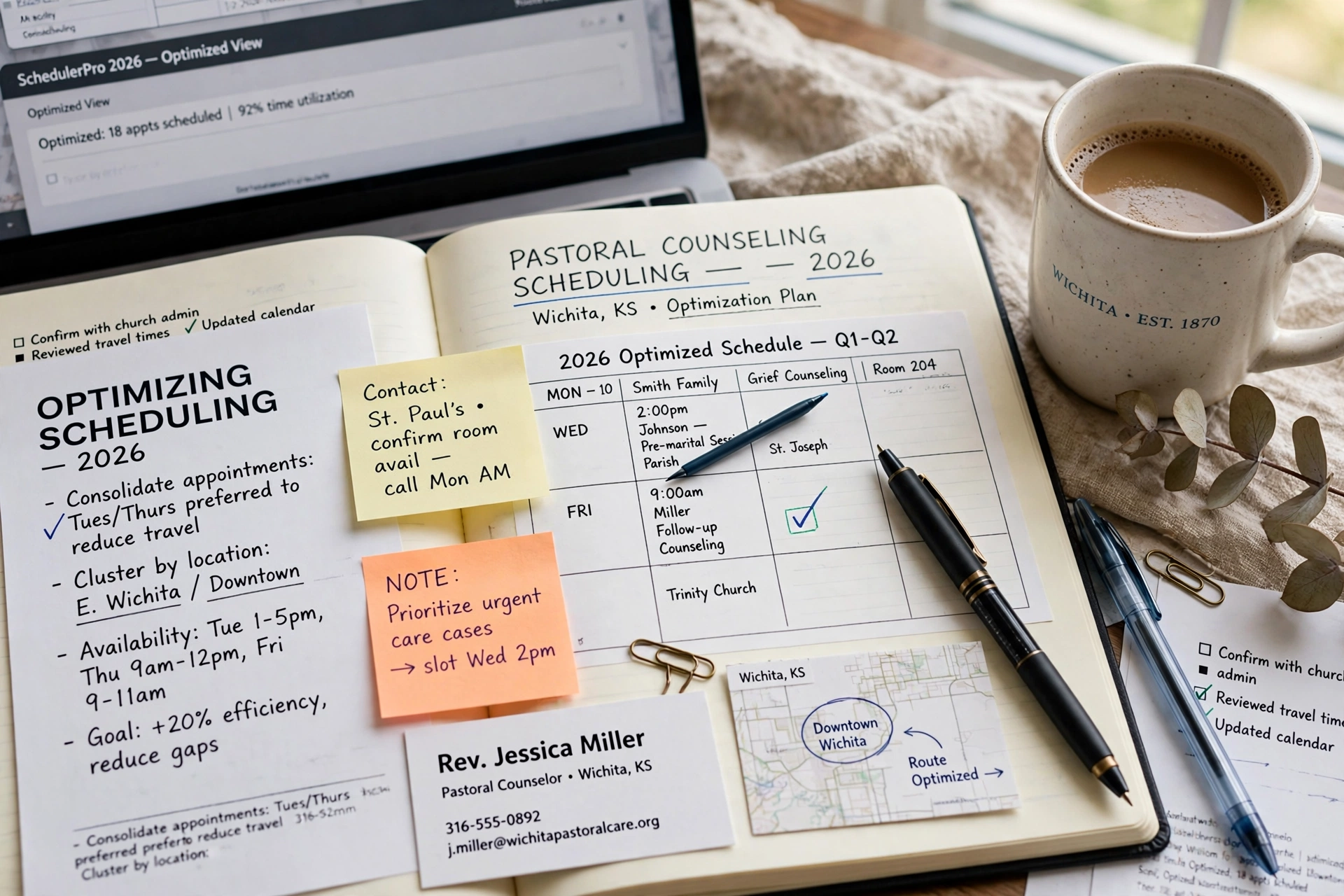
- Pastoral counseling scheduling
Free Guide: The 7 Church Growth Hacks for 2026
Learn how modern ministries are using automated scheduling and AI pastoral assistants to save 12+ hours of admin work every week.