
Which Church Management Software Should You Choose in 2026?
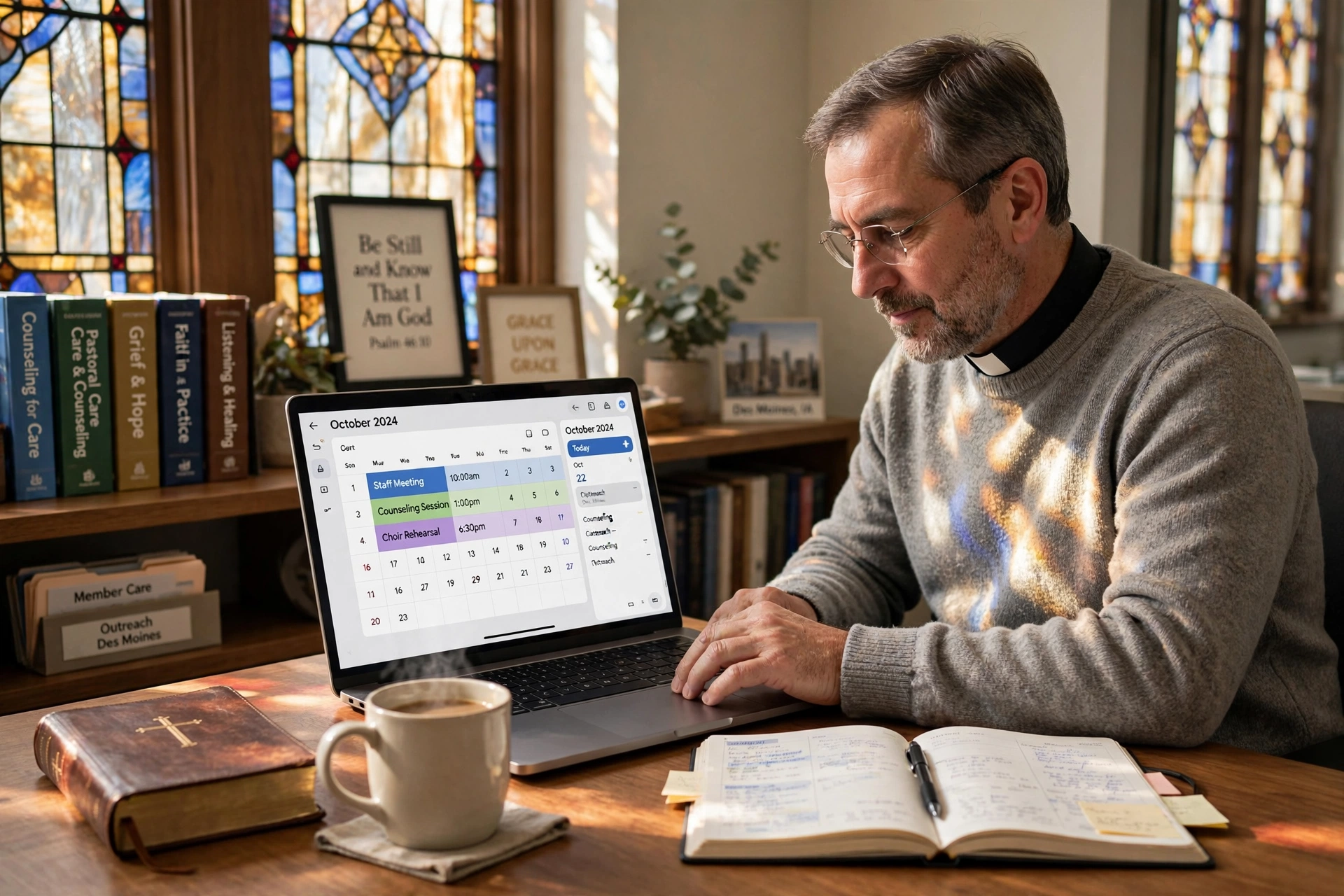
Many ministry leaders spend months orbiting various software demos only to realize they bought a tool designed for a corporate sales team rather than a sanctuary. In my experience working with various congregations, the biggest mistake is choosing a platform based on a feature checklist rather than the specific operational flow of the ministry. When selecting church management software, the "best" option is not the one with the most buttons, but the one that reduces the friction between the pastor's calendar and the member's need for care.
For most ministries, the choice comes down to three paths: a lightweight scheduling-first tool for focused pastoral care, a comprehensive "all-in-one" Enterprise Resource Planning (ERP) system for mega-churches, or a fragmented stack of generic apps. If your primary goal is increasing the quality of pastoral counseling and member engagement, a specialized tool like Pastor Agenda is the most efficient route. If you are managing a multi-site campus with thousands of employees and complex payroll, a full-scale ChMS is necessary.

What Exactly Is Church Management Software and How Does It Function?
At its core, this category of technology is designed to centralize the administrative burden of a religious organization. Whether it is tracking tithing, managing volunteer rotations, or organizing small groups, the goal is to move data out of disparate spreadsheets and into a single source of truth.
📚
Definition
Church Management Software (ChMS) is a specialized category of database and productivity software designed to handle the unique administrative needs of religious organizations, including member directories, contribution tracking, event scheduling, and pastoral care workflows.
However, the industry has shifted. We are no longer in the era of simple "digital rolodexes." Modern platforms now integrate artificial intelligence to help leaders spot trends in attendance or automate follow-ups with new visitors. The functionality generally splits into three primary modules: the Member Database (CRM), the Financial Module (Tithing/Giving), and the Scheduling Module (Calendar/Booking).
The friction point occurs when these modules are bloated. I've seen dozens of clients struggle with systems that require a ten-hour training course just to book a counseling session. This is where the distinction between a "management system" and a "ministry tool" becomes clear. A management system focuses on the organization's needs; a ministry tool focuses on the member's experience. According to research from the Barna Group, pastoral burnout is frequently linked to administrative overload, suggesting that the software should act as a shield for the pastor's time, not another chore to manage.
Why Does Choosing the Right Tool Matter for Ministry Growth?
The administrative health of a church is directly proportional to its ability to provide pastoral care. When a leader is bogged down by manual scheduling or chasing down volunteer availability via text messages, the spiritual mission of the church suffers. The impact is not just operational; it is relational.
Consider the data on member retention. A lack of consistent follow-up with first-time visitors is one of the leading causes of "back-door" leakage in congregations. When a ministry uses an integrated church management software system, the transition from "visitor" to "member" is automated. A notification hits the pastor's phone, a welcome email is sent, and a follow-up appointment is booked without a single manual entry.
Furthermore, the financial implications are significant. Inaccurate contribution tracking doesn't just lead to accounting errors; it can create legal risks. Church Law & Tax emphasizes that maintaining rigorous, transparent financial records is essential for maintaining tax-exempt status and ensuring governance compliance. Software that automates these reports removes the human error associated with manual ledger entry.
From a productivity standpoint, the "cost of switching" is high. Implementing a new system mid-year can disrupt an entire ministry's rhythm. Therefore, the decision framework must be based on long-term scalability. If you choose a tool that is too simple, you will outgrow it in 18 months. If you choose one that is too complex, your staff will simply stop using it, leaving you with an expensive piece of "shelf-ware."
How to Implement a New System Without Disrupting Your Ministry
The transition to a new digital ecosystem is often where most leaders fail. The mistake I made early on—and that I see constantly—is the "Big Bang" approach: trying to migrate every single member, every financial record, and every calendar event over a single weekend. This leads to data corruption and staff resentment.
Instead, follow this phased implementation framework:
- The Audit Phase: Before looking at software, map your actual workflows. How does a member currently request a meeting with the pastor? How are sermon notes distributed? If your current process is broken, automating it only makes it "broken faster."
- The Data Cleanse: Never migrate "dirty" data. Delete duplicate profiles, update old email addresses, and archive inactive members. Moving 5,000 outdated contacts into a new system is a waste of resources.
- The Pilot Program: Select a small group of "tech-forward" volunteers or a specific ministry (e.g., the youth group) to use the software for 30 days. Gather their feedback on the user interface before rolling it out to the entire congregation.
- The Integration Layer: Ensure the tool connects with your existing ecosystem. For example, if you use Google Calendar for personal tasks, your appointment booking tool must sync bi-directionally to prevent double-booking.
- The Training Loop: Provide short, video-based tutorials rather than one long manual. Most volunteers will not read a 40-page PDF; they will watch a 2-minute clip on how to check their schedule.
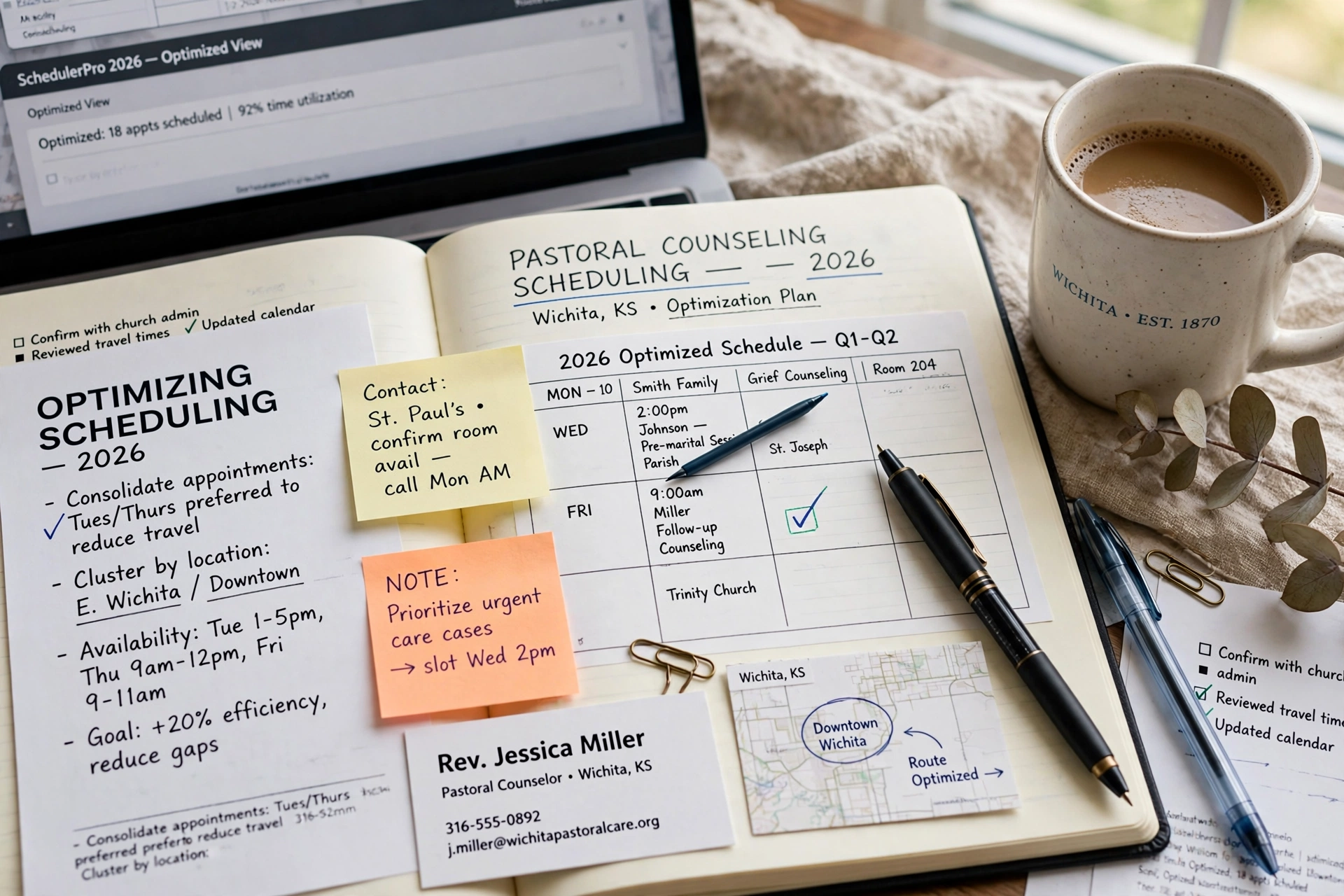
When we developed the workflows at Pastor Agenda, we focused specifically on this friction. By prioritizing the booking experience, we discovered that pastors regain an average of 5 to 10 hours per week previously spent on "calendar tennis"—the endless back-and-forth of "Does Tuesday at 4 PM work for you?"
💡
Key Takeaway
Successful software adoption is 20% about the technology and 80% about the change management and data cleanliness.

Comparing Your Options: Which Path is Right for You?
Not all church management software is created equal. Depending on your size and primary pain point, you will fall into one of three categories. The following table breaks down the trade-offs based on operational needs.
| Option | Pros | Cons | Best For |
|---|---|---|---|
| Lightweight/Focused (e.g., Pastor Agenda) | Rapid setup, intuitive UX, high adoption rate, solves the "scheduling" pain immediately. | Lacks complex accounting/payroll modules. | Small to mid-sized churches focusing on pastoral care and efficiency. |
| All-in-One Enterprise (ChMS) | Total centralization, deep financial reporting, massive feature set. | Steep learning curve, expensive, often "bloated" with unused features. | Mega-churches or multi-site campuses with dedicated admin staff. |
| Fragmented App Stack (Generic Tools) | Low initial cost, familiarity (using tools like Excel or WhatsApp). | Data silos, high risk of manual error, no cohesive member journey. | Very small home-church plants with fewer than 30 members. |
Here is the reality: most churches buy the "All-in-One" because they fear they will need the features later. This is a classic case of over-engineering. If 90% of your daily frustration is managing the pastor's time and the scheduling of counseling sessions, buying a system that also manages a commercial kitchen for the church cafe is a waste of capital.
Now, here's where it gets interesting: the "Fragmented Stack" is the most dangerous option. When your member list is in Excel, your giving is in a separate app, and your calendar is on a physical wall, you have no "member journey." You cannot tell if a member has stopped attending worship services until they have been gone for three months. Centralization is not about control; it is about visibility.
Common Misconceptions About Church Tech
Many guides on this topic suggest that the more features a platform has, the more "professional" the church appears. Most guides get this wrong. In the context of a ministry, professionalism is defined by the reliability of the care provided, not the complexity of the software used.
Myth 1: "We are too small for a management system."
The opposite is true. Small churches have the least amount of administrative overhead. A single tool that automates scheduling and member tracking allows a bi-vocational pastor to focus on the Bible and the people, rather than the paperwork. Waiting until you are "big enough" means you are building your foundation on manual processes that will eventually collapse under scale.
Myth 2: "The congregation will find it impersonal to use an app."
This is a common fear among traditional protestantism circles. However, the perception is shifting. Members actually find it more caring when a pastor is organized. There is nothing more impersonal than a pastor forgetting a scheduled meeting or losing a member's prayer request because it was buried in an email thread. Technology, when used correctly, clears the administrative clutter so the human connection can be more present.
Myth 3: "All ChMS platforms are basically the same."
This is a dangerous assumption. Some are built as accounting software first (focused on the money), some as CRM software first (focused on the data), and some as scheduling software first (focused on the time). If you buy an accounting-first tool but your biggest problem is pastoral counseling slots, you will find the software frustratingly rigid.
Frequently Asked Questions
How do I know if I need a full ChMS or just a scheduling tool?
The answer depends on where your primary "bottleneck" exists. If your biggest struggle is financial reporting, tax compliance, and payroll for a large staff, you need a full Church Management Software. However, if your bottleneck is the "administrative chaos" of managing the pastor's calendar, coordinating worship team rehearsals, and booking counseling appointments, a focused tool like Pastor Agenda is superior. A full ChMS often introduces more complexity than it solves for mid-sized ministries, leading to a "software fatigue" where the staff reverts to using paper and pencils.
Will switching to a digital system alienate my older members?
Digital transformation in the church does not mean removing human touchpoints; it means optimizing them. Your older members do not need to log into a portal to feel cared for. The software is for the administrator and the pastor. When the pastor is more organized and less stressed, the quality of the face-to-face interaction with the senior congregation improves. The technology happens in the background. You can still take a phone call to book an appointment, but the pastor then enters it into the system to ensure it isn't forgotten.
How does church management software improve pastoral care?
It transforms pastoral care from a reactive process to a proactive one. Instead of waiting for a crisis to hit, a system allows a leader to see who hasn't been visited in three months or which new members haven't had an introductory meeting. By automating the scheduling and reminders, the pastor can spend less time on the "logistics of the meeting" and more time on the "content of the meeting." It ensures that no one falls through the cracks, which is the ultimate goal of any ministry.
Is my member data secure in these platforms?
Security is a paramount concern, especially when dealing with sensitive counseling notes or financial giving. When evaluating a provider, look for SOC 2 compliance and end-to-end encryption. According to general industry standards for data privacy, any platform handling PII (Personally Identifiable Information) should have a clear data processing agreement. Always ensure that access levels are restricted; for example, a youth volunteer should not have access to the tithing reports of the entire congregation.
What is the typical ROI for investing in church software?
The Return on Investment (ROI) in a religious context is measured in "time reclaimed." If a subscription costs $50 per month but saves a pastor 10 hours of administrative work, the "hourly rate" of that recovery is incredibly low. More importantly, the ROI is seen in member retention. A professional onboarding process for new visitors—enabled by a CRM—can increase the percentage of people who return for a second and third visit. When you quantify the spiritual impact of a well-cared-for member, the financial cost of the software becomes negligible.
Final Thoughts on Choosing Church Management Software
The goal of any church management software should be to disappear into the background. The technology is not the mission; it is the scaffolding that supports the mission. Whether you choose a comprehensive enterprise system or a streamlined tool for scheduling and care, the decision should be driven by your current bottleneck, not a hypothetical future need.
If you find yourself spending more time managing your calendar than you do studying the Bible or visiting the sick, it is time to move away from manual processes. The transition to a digital workflow is an investment in the health of your leadership and the growth of your congregation.
To stop the calendar chaos and start focusing on what truly matters—your people—explore how Pastor Agenda can streamline your ministry today.
Recommended Readings
To deepen your understanding of these topics, we recommend reading the following articles:
- Church appointment booking
- Online Appointment Booking for Modern Churches
- Pastor scheduling
- Pastoral counseling scheduling
Free Guide: The 7 Church Growth Hacks for 2026
Learn how modern ministries are using automated scheduling and AI pastoral assistants to save 12+ hours of admin work every week.