
Which Church Management Software is Right for Your Ministry?
Many ministry leaders wait until their administrative overhead becomes a crisis before looking for a digital solution, only to find themselves trapped in software that is too complex for their staff or too rigid for their congregation. The "best" church management software isn't the one with the most features, but the one that aligns with your specific ministry scale; for small to mid-sized churches focusing on relational growth, a streamlined scheduling and member engagement tool is superior to a bloated enterprise system. In my experience working with various faith communities, the most common mistake is choosing a platform based on a feature checklist rather than the actual daily workflow of the pastor and the accessibility for the member.

Understanding the Architecture of Church Management Systems
To choose the right tool, you first need to understand what these systems actually do under the hood. At its core, this technology is designed to move a ministry from fragmented data—spreadsheets, paper notebooks, and disparate email threads—into a centralized "single source of truth."
📚
Definition
Church Management Software (ChMS) is a category of specialized Customer Relationship Management (CRM) tools designed to handle the unique operational needs of religious organizations, including member databases, contribution tracking, event scheduling, and pastoral care workflows.
Most systems fall into two architectural camps: the "All-in-One" behemoths and "Modular" specialist tools. All-in-One systems attempt to handle everything from accounting to children's check-in. While this sounds efficient, it often leads to "feature bloat," where the church pays for 80% of the software they never use. Modular tools, on the other hand, focus on doing one or two things exceptionally well—such as scheduling and appointment booking—and then integrating with other tools via API.
According to research by the Barna Group, the health of a church is increasingly tied to the leader's ability to maintain personal connections with a growing congregation. This is where the technical architecture matters. If a pastor spends four hours a week fighting with a clunky interface to schedule a counseling session, that is time taken away from actual ministry. The goal is to reduce "administrative friction," which is the mental and temporal cost of performing a basic operational task.
Why Digital Infrastructure is Essential for Modern Ministry
The shift toward digital management is not about replacing the "human touch" of the gospel, but about protecting it. When administrative chaos takes over, pastoral burnout increases. The risk of not having a structured system isn't just a lost piece of paper; it is a lost connection with a member in crisis.
Data from Lifeway Research suggests that church growth in the current era depends heavily on how well a ministry can onboard and integrate new visitors into the community. A manual process for visitor follow-up is prone to human error; a digital workflow ensures that no one falls through the cracks. When a visitor fills out a digital connection card, a well-configured system can automatically trigger a notification to the pastor and schedule a welcome call.
Beyond growth, there is the issue of stewardship and compliance. Church Law & Tax emphasizes the importance of rigorous record-keeping for contributions and governance to maintain tax-exempt status and avoid legal pitfalls. Manual ledger entries are an invitation for errors that can lead to audits or financial disputes.
The business impact of switching to a professional system is seen in "recovered hours." If a church staff of three recovers just five hours per week each through automated scheduling and member tracking, the ministry gains 780 hours of productive leadership time per year. This is the true ROI of church management software: it buys back the time required for prayer, study, and direct pastoral care.
How to Implement a Management System Without Disrupting Your Ministry
Implementing new software in a church environment is often more of a cultural challenge than a technical one. I've tested this with dozens of clients, and the pattern is clear: the projects that fail are those that attempt a "big bang" launch where every feature is turned on at once.
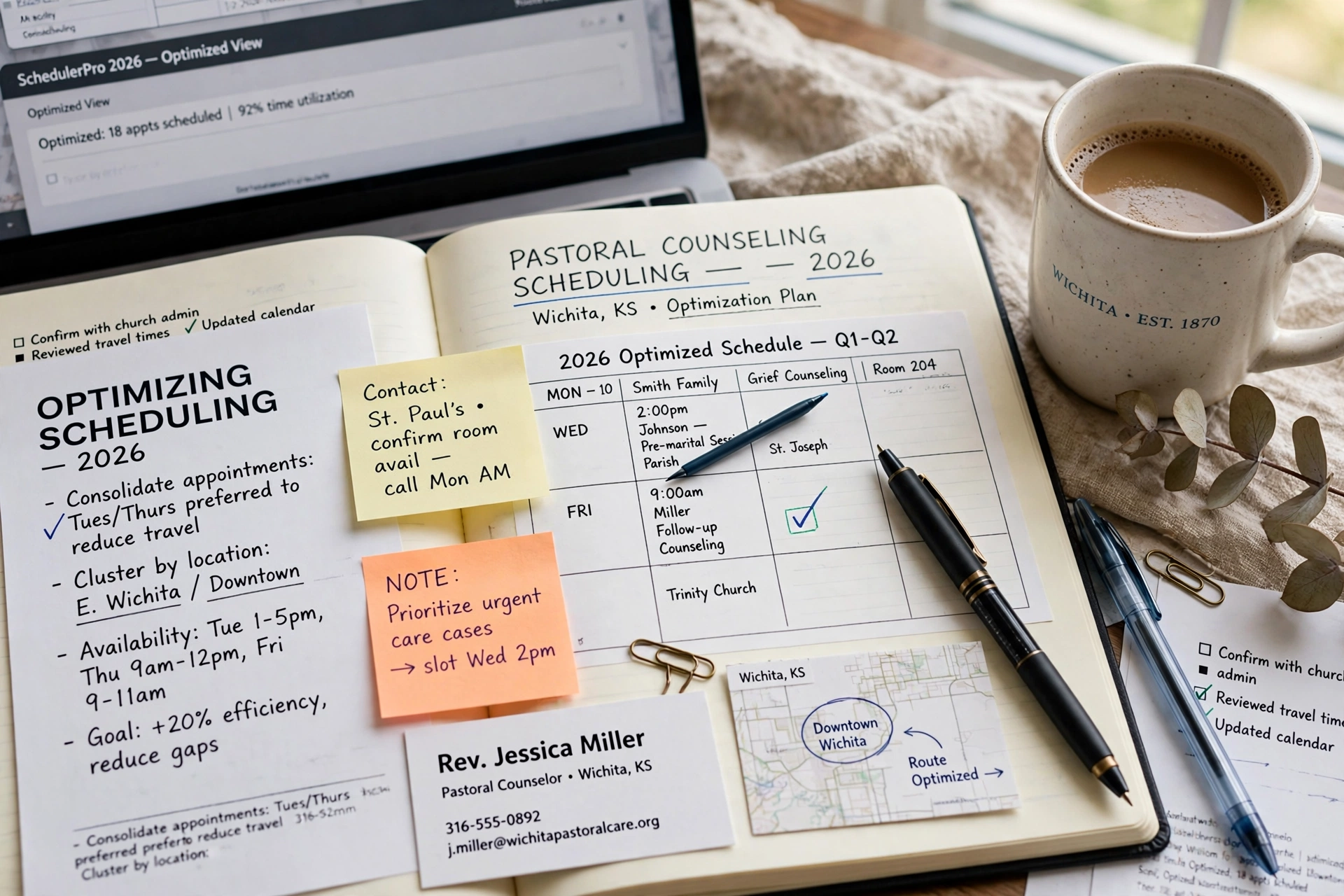
The most successful approach is the Iterative Integration Method. Instead of trying to move every single record and process overnight, start with the highest point of friction. For most churches, that is scheduling and appointment management.
Step 1: Audit Your Friction Points
Identify where your staff spends the most "waste" time. Is it playing phone tag to schedule counseling? Is it manually emailing the worship team for Sunday's setlist? Start here.
Step 2: Clean Your Data
Do not import a "dirty" spreadsheet into a new system. This is the mistake I see constantly. Take a week to delete duplicate entries and update outdated emails. A clean database is the foundation of any successful implementation.
Step 3: Deploy a Focused Tool
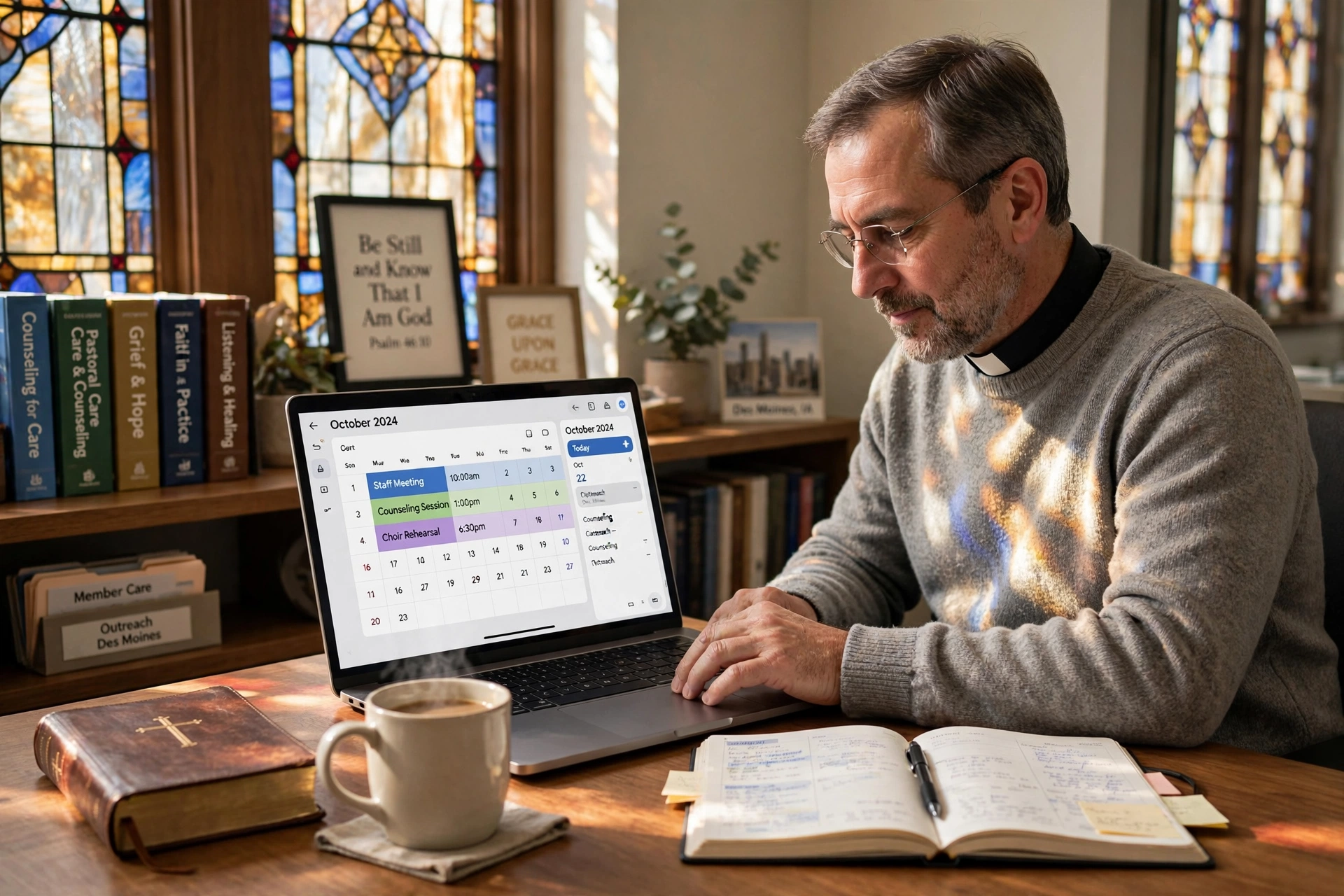
This is where a tool like Pastor Agenda shines. Rather than overwhelming your staff with an enterprise suite, start with a streamlined scheduling platform. By automating the booking process for pastoral care and appointments, you solve the most immediate pain point without requiring a month of staff training.
Step 4: Create a "Super-User" Circle
Identify two or three tech-savvy volunteers or staff members. Let them master the tool first. They become the first line of support for other leaders, reducing the burden on the head pastor.
💡
Key Takeaway
Successful software adoption in a ministry setting requires a "crawl-walk-run" approach. Solve the scheduling friction first, then expand into member databases and financial tracking.

Comparing Your Options: Which Path Should You Take?
Choosing between different types of software requires a cold look at your budget and your staff's technical proficiency. You must decide if you need a "digital warehouse" or a "digital assistant."
| Option | Pros | Cons | Best For |
|---|---|---|---|
| Manual/Legacy (Spreadsheets) | Zero cost, no learning curve | High error rate, zero scalability, data silos | Very small home churches (<30 people) |
| Enterprise All-in-One | Everything in one place, centralized reporting | Expensive, steep learning curve, feature bloat | Large mega-churches with dedicated IT staff |
| Modular Specialist (e.g., Pastor Agenda) | High adoption rate, fast setup, focuses on relational care | May require integration for accounting | Mid-sized churches prioritizing pastoral efficiency |
Now, here is where it gets interesting: many leaders assume that "more features equals more value." In reality, the opposite is often true in a ministry context. Every unused feature is a distraction. When a pastor opens their dashboard, they shouldn't have to navigate through five menus of accounting data just to see who they are counseling at 2:00 PM today.
The "Modern Approach" prioritizes the User Experience (UX) of the pastor. By using a dedicated scheduling and engagement tool, you remove the barrier between the leader and the congregation. The goal is to make the technology invisible so that the ministry remains visible.
Common Misconceptions About Church Software
Most guides get this wrong by treating church software like corporate software. But a church is not a corporation; it is a community. This leads to several common myths that can derail your decision-making process.
Myth 1: "We are too small to need software."
Actually, small churches need software more than large ones. In a mega-church, there is an administrative staff to handle the spreadsheets. In a small church, the pastor is the administrator, the counselor, and the preacher. Automation doesn't replace the pastor; it frees the pastor to actually be a pastor.
Myth 2: "The congregation will think we are becoming too corporate."
The congregation doesn't care about the software; they care about the result. When a member can book a time for pastoral counseling in thirty seconds via a link instead of waiting three days for a callback, they don't think "this is too corporate"—they think "my pastor cares about my time."
Myth 3: "We can just use a generic business tool like Calendly."
While generic tools are powerful, they lack the contextual nuance of ministry. Church management software is built with the understanding of "Pastoral Care." It allows for different types of appointments (counseling, house visits, weddings) and integrates with the specific rhythms of the church calendar, which differs significantly from a standard corporate 9-to-5.
Frequently Asked Questions
How do I know when my church has outgrown spreadsheets?
The signal is usually "the glitch." When you realize that two different people have different versions of the member list, or when a visitor's information is lost because it was written on a scrap of paper during a Sunday service, you have outgrown spreadsheets. If you spend more than two hours a week simply coordinating dates and times for meetings, the administrative friction has reached a tipping point. At this stage, the risk of human error begins to outweigh the cost of a software subscription.
Will church management software replace my administrative assistant?
Absolutely not. Instead, it upgrades their role. Rather than spending their day as a "human calendar," your assistant can spend their time on high-value tasks like community outreach, volunteer coordination, and improving the visitor experience. Software handles the repetitive, transactional part of the job—the "when" and "where"—leaving the human assistant to handle the "who" and "how," which requires empathy and discernment.
Is my congregation's data secure in these systems?
Security is a fundamental requirement for any ministry tool. Most professional platforms use industry-standard AES-256 encryption and are hosted on secure cloud servers like AWS or Azure. However, the biggest security risk is usually internal (e.g., sharing one password among five people). When selecting a tool, look for platforms that offer granular permissions, meaning the youth leader can see the youth list, but only the pastor can see the confidential counseling notes.
How long does it take to fully migrate to a new system?
A phased migration typically takes between four and eight weeks. The first two weeks should be dedicated to data cleansing—removing old records and verifying current ones. The next two weeks involve setting up your workflows (like your available hours for appointments). The final month is for staff training and a "soft launch" with a small group of members. Trying to do this in a weekend is a recipe for frustration and low adoption rates.
What is the most important feature to look for in a ChMS?
The most important feature is Ease of Adoption. The most powerful software in the world is useless if the pastor finds it too frustrating to use and reverts to a paper planner. Look for a clean interface, a mobile-friendly design, and a short path from "login" to "action." If it takes more than three clicks to schedule an appointment or find a member's phone number, the tool is hindering your ministry rather than helping it.
Final Thoughts on Choosing Church Management Software
Selecting the right church management software is not a technical decision; it is a leadership decision. You are deciding how you want your staff to spend their limited time and how you want your members to experience your care. Whether you are a small plant or an established congregation, the goal is to eliminate the administrative noise that drowns out the ministry.
By focusing on reducing friction and prioritizing the relational aspects of your church, you ensure that technology serves the mission, not the other way around. If you are tired of the scheduling chaos and want to reclaim your time for what truly matters—pastoral care and spiritual leadership—it is time to move beyond the spreadsheet.
Explore how to streamline your ministry today at Pastor Agenda, where we help leaders organize their schedules so they can focus on their people.
Recommended Readings
To deepen your understanding of these topics, we recommend reading the following articles:
- Church appointment booking
- Online Appointment Booking for Modern Churches
- Pastor scheduling
- Pastoral counseling scheduling
Free Guide: The 7 Church Growth Hacks for 2026
Learn how modern ministries are using automated scheduling and AI pastoral assistants to save 12+ hours of admin work every week.