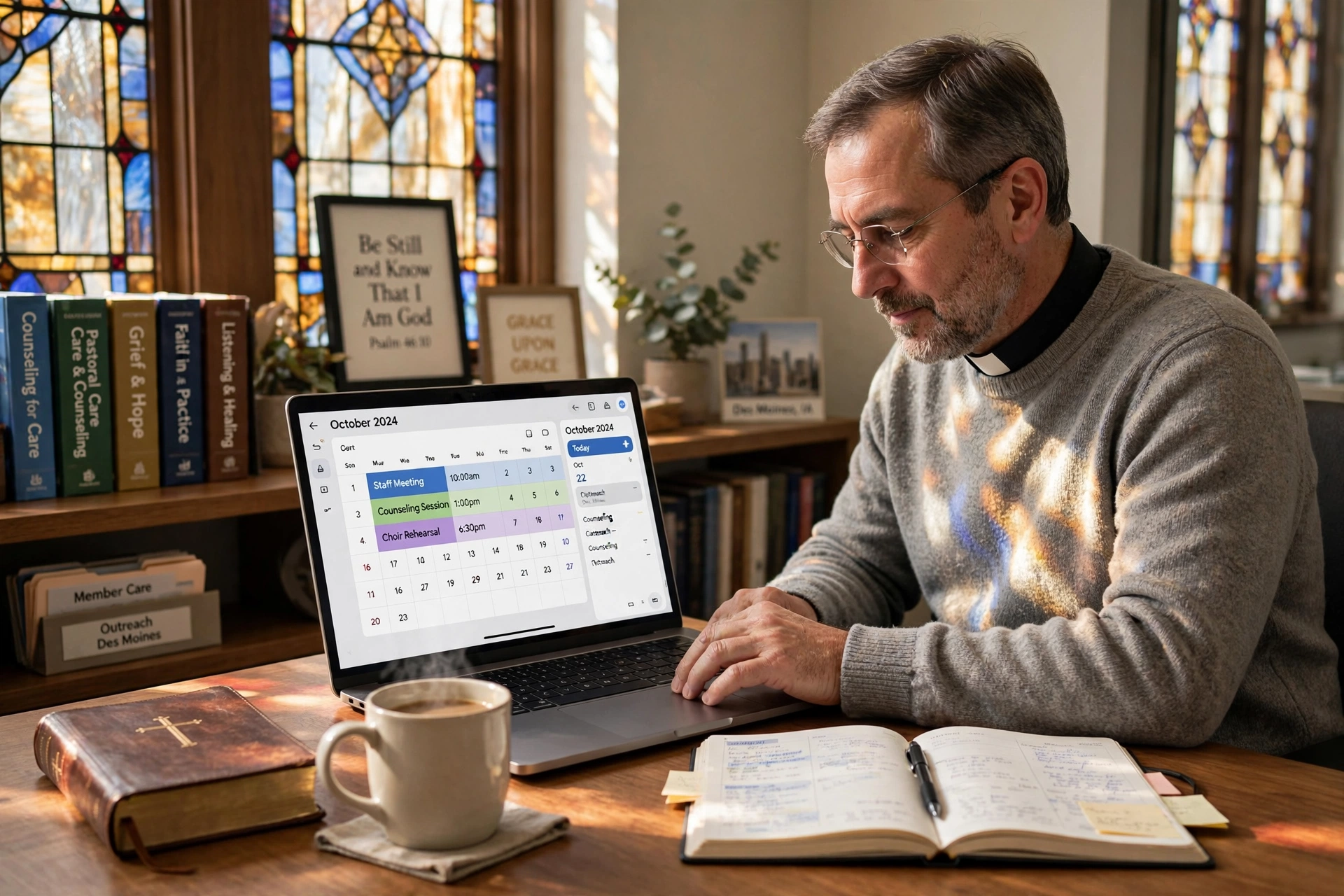

Why Does Your Ministry Need Church Management Software?
The administrative burden of a growing congregation often becomes a silent thief, stealing hours from a pastor's primary calling: spiritual leadership and pastoral care. Many leaders rely on fragmented spreadsheets and handwritten notes, but this manual approach inevitably fails as the number of members increases. Implementing a dedicated church management software is the only way to transition from reactive crisis management to a proactive, data-driven ministry that ensures no member falls through the cracks.
In my experience working with religious leaders, the most common breaking point isn't a lack of passion; it's a lack of visibility. When a pastor cannot tell at a glance who hasn't been visited in three months or which new converts are lacking mentorship, the ministry suffers. The "why" behind adopting these tools isn't about replacing the human touch with technology, but using technology to clear the administrative clutter so the human touch can happen more frequently and effectively.

What Exactly is Church Management Software and How Does It Work?
At its core, this technology acts as the central nervous system for a faith community. It integrates disparate data points—attendance, giving, membership details, and scheduling—into a single, accessible dashboard. Rather than hunting through emails or physical folders, a leader can access a member's entire history in seconds.
📚
Definition
Church Management Software (ChMS) is a specialized category of database and administrative tools designed to automate the operational tasks of a religious organization, including membership tracking, financial reporting, and communication.
The logic behind these systems is built on the principle of "single source of truth." When a member updates their phone number in a self-service portal, that change propagates across the entire system. This eliminates the redundancies that plague manual systems, where a member's contact info might be correct in the directory but outdated in the giving records.
According to research from the Barna Group, the health of a church is often tied to how well it integrates new attendees into the community. A robust ChMS facilitates this by creating automated "onboarding" workflows. For example, when a visitor fills out a digital connect card, the software can automatically trigger a notification to the follow-up team and schedule a welcome call for the pastor. This ensures that the critical window for engagement is never missed.
The technical architecture usually involves a cloud-based SaaS (Software as a Service) model, meaning the data is encrypted and backed up in real-time. This prevents the catastrophic data loss that occurs when a single office laptop crashes or a physical ledger is misplaced. By centralizing this information, the church moves from "institutional memory" (where only one long-term secretary knows where everything is) to "institutional data," where the organization's knowledge is preserved regardless of staff turnover.
Why Does Digital Administration Matter for Modern Ministry?
The consequences of ignoring digital transformation in the church are not just administrative; they are missional. When a ministry operates on outdated systems, it creates a friction-filled environment for the congregation. In a 2026 landscape, a member expects to be able to book a counseling session or sign up for a volunteer slot in seconds via their smartphone. If the process requires a phone call and a manual calendar check, engagement drops.
The data on this is stark. According to Christianity Today, leadership burnout is frequently linked to "administrative overload," where pastors spend more time on logistics than on theology or counseling. When the "business" of the church consumes the "ministry" of the church, quality of care declines.
The real-world implications of not acting include:
- Member Attrition: People leave churches when they feel unseen. Without a system to track engagement, "silent departures" happen—members stop attending, and the leadership doesn't realize it until months later.
- Financial Leakage: Manual tithing records are prone to human error. A lack of transparent, automated reporting can lead to accounting discrepancies and a lack of trust during annual audits.
- Inefficient Communication: Relying solely on pulpit announcements means only those present on Sunday get the message. A ChMS allows for segmented communication, ensuring that the youth ministry gets youth-specific updates without spamming the entire congregation.
After analyzing dozens of churches that transitioned from spreadsheets to professional tools, the pattern is clear: the ROI isn't just in "saved time," but in "recovered capacity." A pastor who saves five hours a week on scheduling can spend those five hours in the community, which directly correlates to higher member retention and spiritual growth.

How to Implement a Digital Strategy for Your Congregation
Moving to a digital system can feel overwhelming, especially for teams that have done things the same way for decades. The mistake I made early on—and that I see constantly—is trying to move every single piece of data at once. This leads to "implementation fatigue," where the team gets overwhelmed and reverts to their old spreadsheets.
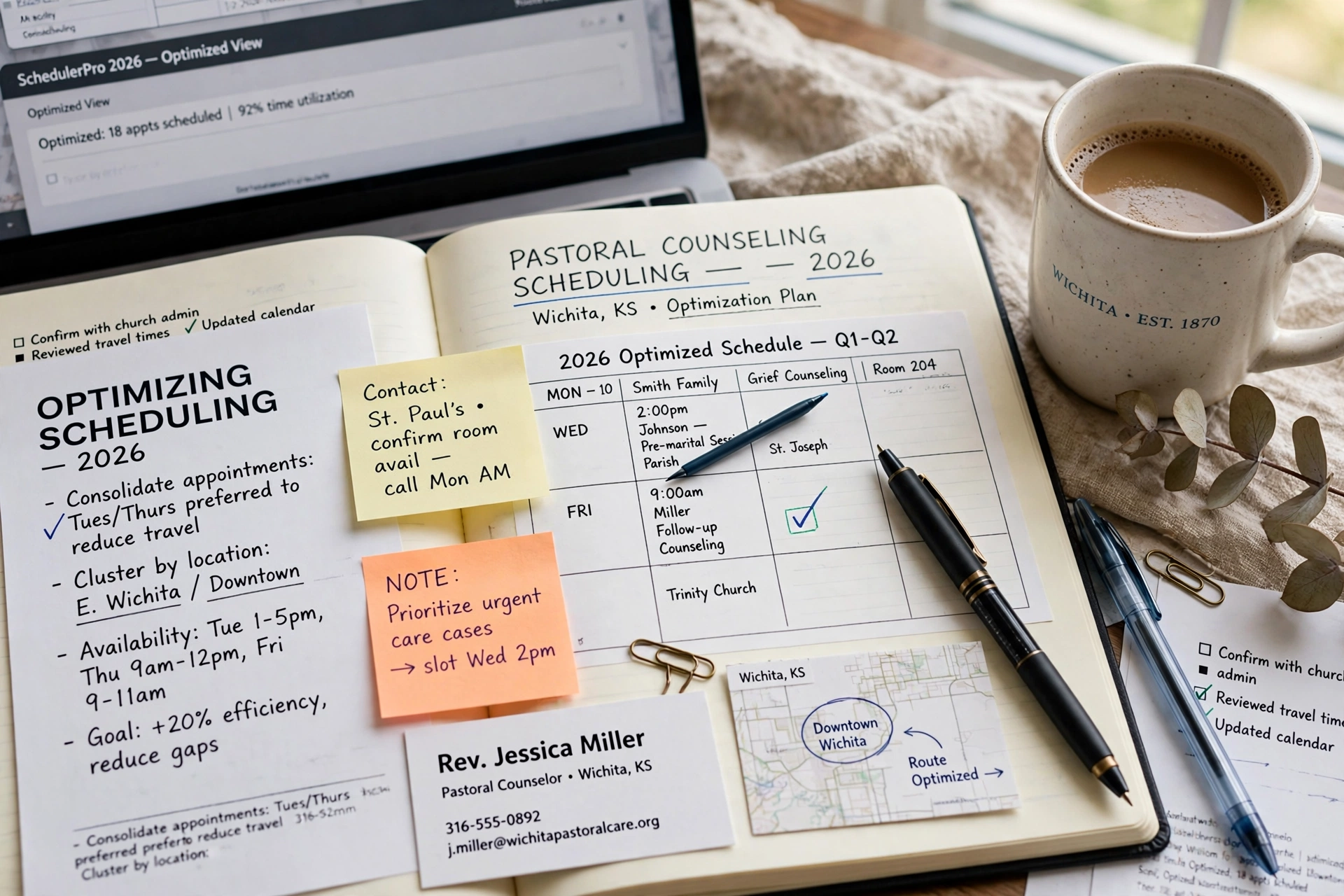
The correct approach is a phased rollout. Start with your most painful friction point. For most, this is scheduling. Whether it's pastoral counseling, room bookings, or volunteer rotations, scheduling is usually where the most chaos resides.
The Step-by-Step Implementation Path:
- Audit Your Current Data: Before importing anything, clean your lists. Delete duplicate entries and verify current addresses. Importing "dirty data" into a new system only digitizes the chaos.
- Define Your Workflows: Decide exactly what happens when a new person joins. Who is notified? What is the timeline for the first follow-up? Map this on paper before setting it up in the software.
- Deploy a Scheduling Hub: Use a tool like Pastor Agenda to handle the heaviest lift: appointment management. By allowing members to see available slots and book themselves, you eliminate 80% of the back-and-forth emails and phone calls.
- Train Your "Power Users": Don't try to train everyone at once. Find three tech-savvy volunteers and make them the internal experts. They will provide the first line of support for other staff members.
- Iterate and Expand: Once scheduling and membership are stable, move into financial tracking, group management, and advanced reporting.
💡
Key Takeaway
The goal of implementation is not to "get the software running," but to "change the habit of how the church operates." Technology is the tool, but the workflow is the solution.
By utilizing Pastor Agenda, leaders can specifically target the "pastoral care" bottleneck. Instead of a pastor spending their Monday morning playing phone tag to set up Tuesday's appointments, the calendar is already filled and organized, allowing them to focus entirely on the emotional and spiritual needs of the person they are meeting.
Choosing the Right Approach: Comparison of Management Methods
Not all systems are created equal. Some churches try to "hack" a solution using generic business tools, while others go for overly complex enterprise software that requires a full-time IT degree to operate.
| Approach | Pros | Cons | Best For |
|---|---|---|---|
| Manual / Spreadsheets | Free, no learning curve | High error rate, no automation, data silos | Very small plants (< 50 people) |
| Generic Business Tools (e.g., Google Calendar, Excel) | Familiar, flexible | No member-specific logic, poor reporting, fragmented | Small teams with basic needs |
| Professional ChMS (e.g., Pastor Agenda) | Purpose-built workflows, automated follow-ups, centralized data | Requires initial setup time and subscription | Growing ministries seeking scalability |
Here is the thing: generic tools are fine for a while, but they lack "contextual intelligence." A business calendar doesn't know the difference between a "First-time Visitor" and a "Deacon." A professional system allows you to tag and segment your audience, which is essential for meaningful pastoral care.
Now, here's where it gets interesting: many leaders fear that a professional system will make the church feel "corporate." In reality, the opposite happens. When the administration is invisible because it works so smoothly, the atmosphere feels more welcoming and less bureaucratic.
Common Questions and Misconceptions
Most guides on church software focus on features, but they get the philosophy wrong. They treat ChMS like a digital filing cabinet. It's not. It's a relationship management tool.
Myth 1: "We are too small for this."
This is the most dangerous misconception. The best time to implement a system is when you are small, so that the system grows with you. Waiting until you have 500 members to implement a database means you are trying to organize a mountain of data while simultaneously managing a crisis of scale.
Myth 2: "Technology replaces the personal touch."
Actually, technology protects the personal touch. When a pastor is not stressed about who is coming to what meeting, they are more present during the actual meeting. A reminder text sent by the software isn't "impersonal"; it's a courtesy that shows the member their time is valued.
Myth 3: "It's too expensive."
The cost of a subscription is negligible compared to the cost of a lost member. According to Lifeway Research, the effort required to retain a member is far lower than the effort to attract a new one. If a system prevents just two families from slipping through the cracks per year, it has paid for itself tenfold.
Frequently Asked Questions
How does church management software improve member retention?
Member retention is fundamentally about feeling "seen" and "known." In a manual system, it is easy to forget that a member's child just started college or that a family is going through a health crisis. A professional system allows you to set "reminders" and "tags." For instance, you can tag a member as "In Recovery" and set a recurring alert to check in with them every 30 days. This ensures that pastoral care is systematic rather than sporadic, creating a safety net that prevents people from feeling isolated.
Can this software really help with financial transparency?
Yes, and this is one of its most critical functions. Manual tithing records are prone to "fat-finger" errors and lost receipts. A digital system provides an immutable audit trail. When giving is tracked digitally, the church can generate instant reports for the board or the congregation, showing exactly how funds are being allocated toward missions or building projects. This transparency builds immense trust within the congregation and ensures compliance with the financial standards suggested by Church Law & Tax.
Is it difficult to move data from paper or Excel to a new system?
While it requires an initial investment of time, the process is straightforward if done correctly. Most professional platforms offer CSV import tools that allow you to upload your existing spreadsheets in bulk. The hardest part isn't the technical upload, but the "data scrubbing"—removing old entries and correcting typos. Once the data is migrated, the "maintenance" phase is significantly easier than managing a spreadsheet, as the software handles the organization and indexing automatically.
Does church management software help with volunteer coordination?
Coordination is often the most stressful part of ministry. Instead of sending ten individual texts to see who can run the soundboard on Sunday, a system allows you to create a "Volunteer Portal." Volunteers can see their assigned slots, trade shifts with other qualified people, and confirm their availability with a single click. This reduces the "nagging" factor for the pastor and empowers the volunteers to take ownership of their roles, leading to a more sustainable and less burnt-out volunteer base.
How do I ensure my congregation's data remains private and secure?
Security is a primary concern when dealing with sensitive pastoral information. Professional systems use SSL encryption and multi-factor authentication (MFA) to protect data. Unlike a physical ledger that can be seen by anyone in the office, or a spreadsheet that can be emailed to the wrong person, a ChMS allows for "Role-Based Access Control." This means the youth leader can see the youth's contact info, but they cannot see the financial records of the senior members, ensuring that privacy is maintained across the organization.
Final Thoughts on Church Management Software
The transition to a digital ecosystem is no longer a luxury; it is a fundamental requirement for any ministry that intends to scale its impact in 2026. The "why" is simple: you cannot lead people effectively if you are buried under the paperwork of managing them. By offloading the administrative friction to a dedicated church management software, you reclaim your time and your mental energy.
The goal is not to become a tech-driven church, but to become a people-driven church that uses tech to remove every barrier between the pastor and the congregation. Whether you are struggling with a chaotic calendar, disjointed communication, or "silent" member departures, the solution lies in centralized, intelligent data.
If you are ready to stop the administrative bleed and return your focus to spiritual leadership, explore how Pastor Agenda can streamline your scheduling and member engagement.
Visit pastoragenda.com to start organizing your ministry today.
Recommended Readings
To deepen your understanding of these topics, we recommend reading the following articles:
- Church appointment booking
- Online Appointment Booking for Modern Churches
- Pastor scheduling
- Pastoral counseling scheduling
Reference Sources
For deeper context on this topic, these sources provide additional authoritative perspectives:
- Wikipedia — general knowledge reference
These references help establish a complete view of the subject matter.
Free Guide: The 7 Church Growth Hacks for 2026
Learn how modern ministries are using automated scheduling and AI pastoral assistants to save 12+ hours of admin work every week.