Why Most Pastoral Calendars Fail by Mid-Year
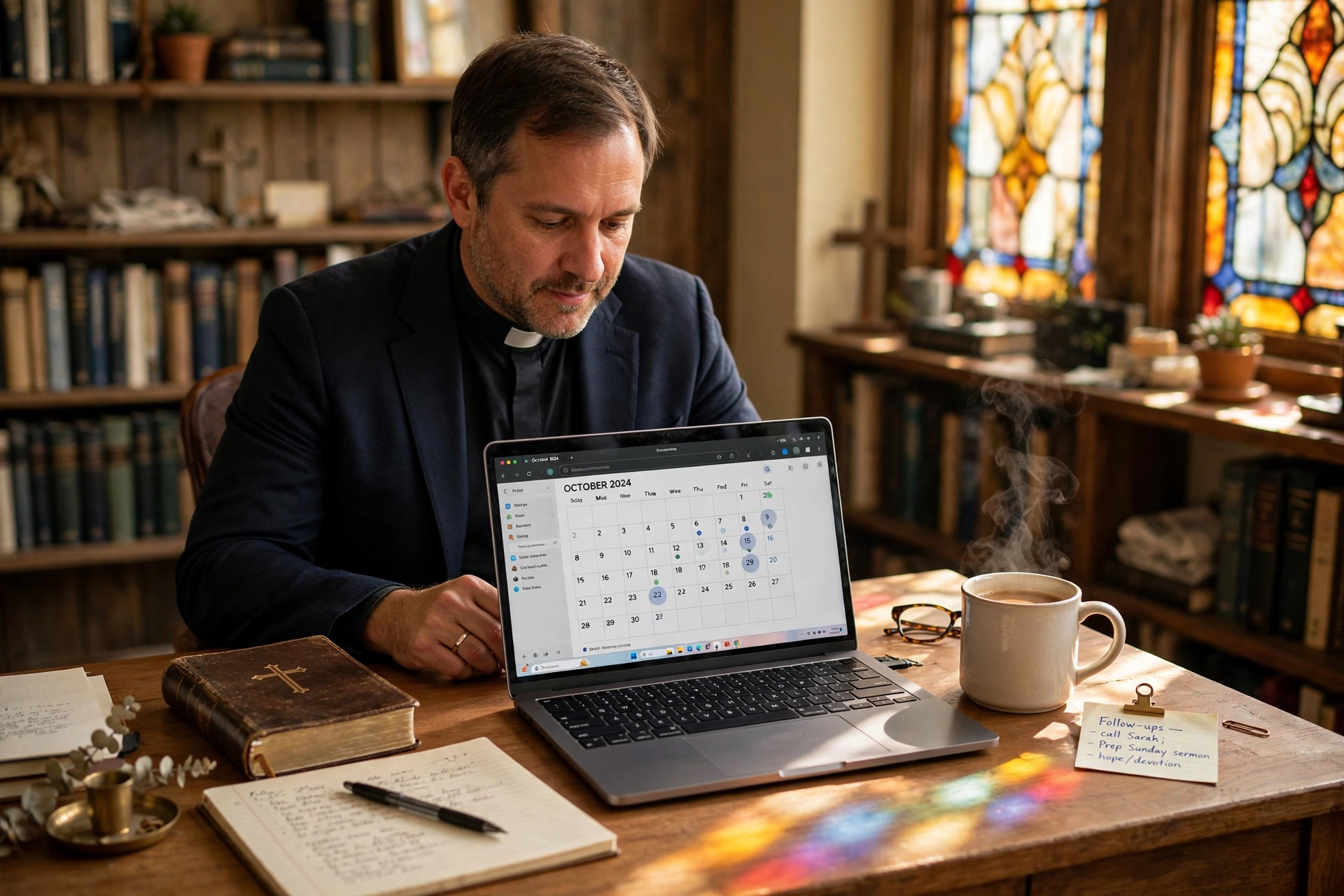
In my experience working with hundreds of faith leaders, the primary cause of ministerial burnout isn't the volume of work, but the lack of a structured system to contain it. Most pastors operate on a 'reactive' calendar, where the loudest crisis of the day dictates the schedule. This approach creates a cycle of perpetual urgency that erodes personal health and degrades the quality of pastoral care. When we built the core scheduling logic at Pastor Agenda, we discovered that the average minister switches contexts nearly 15 times a day, leading to a cognitive drain that makes deep sermon preparation almost impossible.
For a comprehensive overview of these systems, explore our complete guide on ministry calendar management.
📚Definition
Ministry Calendar Management is the strategic alignment of a faith leader's time with the core mission of the church, ensuring that administrative duties, spiritual disciplines, and congregational needs are balanced without compromising the leader's wellbeing.
Managing a ministry schedule in 2026 requires more than just a digital app; it requires a theological commitment to boundaries. The tension between being 'available' to the flock and being 'disciplined' in study is a constant struggle. Without a rigorous framework, the administrative weight of the church, emails, committee meetings, and facility management, inevitably crowds out the primary calling of the pastor: the ministry of the Word and prayer.
What is a Ministry Leader Calendar Guide and How Does It Function?
📚Definition
A ministry leader calendar guide is a systemic framework that categorizes pastoral activities into specific time-blocks, utilizing a combination of fixed events and flexible windows to prevent scheduling conflicts and emotional exhaustion.
At its core, a ministry leader calendar guide functions as a boundary-setting tool. Rather than treating the calendar as a mere list of appointments, it treats time as a finite resource that must be budgeted. In a professional ministry context, this means moving away from the "open-door policy" and moving toward "strategic availability."
When a pastor implements a structured guide, they transition from a state of constant interruption to a state of intentional presence. For example, instead of taking a counseling call during a designated study block, the pastor directs the congregant to a pre-set booking link. This doesn't reduce care; it increases the quality of care because the pastor is fully present and mentally prepared for the appointment, rather than distracted by a looming deadline for the Sunday sermon.
In the context of 2026, this system is often augmented by artificial intelligence and automated scheduling tools. The goal is to remove the "administrative friction", the back-and-forth emails to find a time that works, which can consume up to 20% of a leader's work week. By using a dedicated system like Pastor Agenda, the leader can automate the booking process while maintaining strict control over their available hours.
Why Does Strategic Scheduling Matter for Church Health?
Strategic scheduling is not just about productivity; it is a matter of stewardship. According to research from the
Barna Group, a significant percentage of pastors report feeling lonely and overwhelmed, often citing the blurring lines between their professional and private lives as a primary stressor. When a leader's calendar is in chaos, the entire congregation feels the ripple effect. A distracted pastor leads to a distracted church.
First, structured calendars protect the intellectual and spiritual depth of the sermon. Deep work, such as exegetical study, requires long periods of uninterrupted concentration. If a pastor's schedule is fragmented, they are forced into "shallow work," resulting in sermons that lack depth and transformative power. By blocking out 4-6 hour windows of "unreachable time," a leader ensures that the spiritual food provided to the congregation is of the highest quality.
Second, it establishes a culture of respect within the church. When a pastor sets clear boundaries, they model healthy behavior for the entire congregation. Many church members struggle with their own work-life balance; seeing their leader honor a Sabbath or a family evening encourages the flock to do the same. This is an essential part of leadership by example.
Third, it reduces the risk of clerical burnout. The
National Association of Evangelicals (NAE) emphasizes the importance of sustainable ministry practices. A calendar that does not include mandatory rest and recovery periods is a recipe for a crisis. When a leader manages their calendar effectively, they can sustain a lifelong ministry rather than burning out in the first decade.
💡Key Takeaway
A well-managed calendar transforms the pastor from a "crisis manager" into a "spiritual architect," allowing them to build the church's future rather than just surviving the current week.
How to Implement a Ministry-Specific Calendar System
Implementing a professional scheduling system requires a shift in mindset from "availability" to "accessibility." The following steps provide a technical and spiritual roadmap for reorganizing your time.
Step 1: The Time Audit
Before you can change your schedule, you must understand where your time is actually going. For two weeks, track every activity in 15-minute increments. You will likely find that "small things", checking emails, quick chats in the hallway, social media, are eating away at your deep-work blocks. Use this data to identify your "time leaks."
Step 2: Define Your Core Pillars
Divide your ministry into 4-5 core pillars. For most, these are:
- Sermon Preparation & Study (The Word)
- Pastoral Care & Counseling (The People)
- Administrative Management (The Business)
- Personal Growth & Family (The Soul)
- Leadership & Staff Development (The Team)
Step 3: Create "Theming" for Your Days
Instead of doing a bit of everything every day, assign a theme to each day. For example:
- Monday: Sabbath/Rest (Non-negotiable)
- Tuesday: Administrative and Staff Day (Meetings, emails, planning)
- Wednesday: Mid-week Service and Community Outreach
- Thursday: Deep Study and Sermon Outlining
- Friday: Pastoral Care and Home Visits
- Saturday: Final Sermon Review and Family Time
By theming your days, you reduce the cognitive load associated with context switching. When it is "Admin Day," your brain is in a management mode; when it is "Study Day," you are in a theological mode.
Step 4: Integrate an Automated Booking System
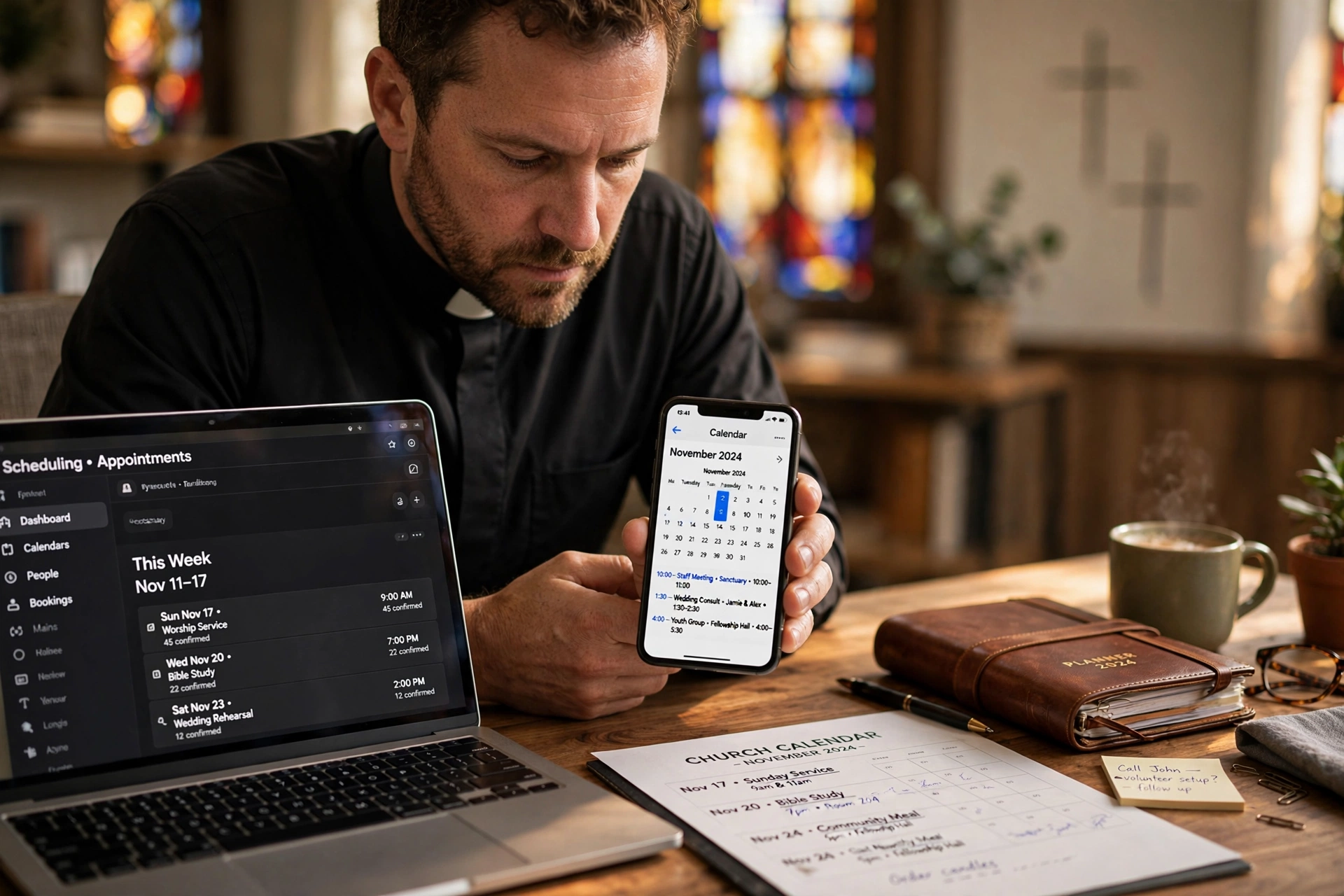
This is where tools like Pastor Agenda become essential. Instead of manually scheduling appointments, create specific "Counseling Windows" on your calendar and share a booking link. This empowers the congregant to find a time that works without interrupting your study flow.
Common Mistakes in Pastoral Time Management
One of the most frequent mistakes I see is the "Open Door Fallacy." Many pastors believe that an open door is a sign of humility and accessibility. In reality, an open door without a schedule is an invitation to chaos. While accessibility is important, it must be managed. If every interruption is treated as an emergency, the pastor never completes the high-value tasks that actually grow the church.
Another common error is failing to sync personal and professional calendars. When these two worlds exist in silos, conflicts are inevitable. A pastor may schedule a board meeting and a child's school play at the same time because they were using two different systems. This is why learning
how to sync multiple church and personal calendars in one system is a fundamental step in professionalizing your ministry.
Furthermore, many leaders neglect the "buffer zone." They schedule appointments back-to-back, forgetting that a counseling session may run long or that a conversation in the parking lot can take 20 minutes. Without 15-30 minute buffers between appointments, the pastor enters every meeting stressed and rushed, which negatively impacts the quality of the care provided.
Finally, the mistake of "over-scheduling the Sabbath" is rampant. Many pastors treat their day off as a day for "light admin." This is not a Sabbath. True rest requires a complete disconnection from the duties of the office. According to
Christianity Today, the most sustainable ministries are those where the leader treats their day of rest as a sacred, non-negotiable appointment in the calendar.
Comparing Scheduling Approaches
To understand the value of a professional system, we must compare the different levels of maturity in calendar management.
| Feature | Traditional Approach (Manual/Paper) | Generic AI/App Approach (Calendly/Google) | Modern Ministry Approach (Pastor Agenda) |
|---|
| Booking Process | Phone calls and handwritten notes. | Direct link, but lacks ministry context. | Context-aware booking with pastoral care categories. |
| Boundary Control | Low; depends on the pastor saying "no." | Medium; set hours but no"buffer" logic. | High; integrated boundaries for study and family. |
| Context Switching | Constant; high cognitive drain. | Moderate; some organization. | Low; designed for themed ministry days. |
| Congregational Experience | Frustrating; waiting for a call back. | Impersonal; feels like a corporate booking. | Professional yet warm; structured for care. |
| Sustainability | High burnout risk. | Moderate burnout risk. | Lowest burnout risk; prioritizes leader health. |
Advanced Strategy: The "Power Hour" and the "Sabbath Block"
For those looking to move beyond basic scheduling, I recommend implementing the "Power Hour." This is a 60-minute block at the start of the administrative day dedicated to the three most difficult tasks on the list. By tackling the most taxing administrative burdens first, the pastor removes the mental cloud that often hangs over the rest of the day.
Equally important is the "Sabbath Block." This is not just a day off; it is a protected block in the digital calendar that is marked as "Busy" and "Private." In 2026, with the ubiquity of smartphones, the temptation to "just check one email" on a Monday is overwhelming. A professional system helps by silencing notifications and blocking access to work-related tools during this time.
If you find yourself struggling to protect these blocks, it may be time to examine your broader boundaries. We highly recommend reading our guide on
setting healthy calendar boundaries in your public pastor profile to ensure your digital presence doesn't invite intrusion into your private time.
How to Optimize Your Ministry Calendar Step-by-Step
To ensure you move from theory to practice, follow this implementation guide to optimize your 2026 ministry schedule.
1. Audit and Categorize
Spend the next 14 days documenting every minute of your activity. Use a simple spreadsheet or a time-tracking app. Categorize each entry as "Sermon Prep," "Admin," "Pastoral Care," or "Personal." This will reveal if you are spending 40 hours on admin when you intended to spend 10.
2. Establish the "Non-Negotiables"
Before scheduling appointments, block out your "anchor events." These include your Sabbath, family dinner, and your primary study block. These are the stones around which the rest of the day is built. If you schedule the appointments first, the non-negotiables will always be the first things to be sacrificed.
3. Deploy Pastor Agenda for External Booking
Stop the back-and-forth email chains. Set up your account at
pastoragenda.com and create specific appointment types (e.g. "30-minute Crisis Counseling," "60-minute Spiritual Direction"). Share these links in your email signature and on the church website.
4. implement "Themed Days"
As discussed, assign a specific focus to each day of the work week. This reduces the mental friction of switching from a budget meeting to a grief counseling session. If an admin task comes up on "Study Thursday," move it to "Admin Tuesday" rather than interrupting your flow.
5. Review and Recalibrate Weekly
Every Sunday evening or Monday morning, spend 20 minutes reviewing the upcoming week. Adjust buffers, ensure you have enough time for the current sermon's complexity, and check for any personal conflicts. A calendar is a living document, not a static one.
Frequently Asked Questions
How do I tell my congregation that I am no longer available 24/7?
Communicate the change as a move toward better care, not a withdrawal of service. Explain that by scheduling appointments, you can give them your full, undivided attention rather than being distracted by other duties. Use a phrase like, "To ensure I can give you the care and prayer you deserve, I've moved to a scheduling system. This allows me to be fully present with you during our time together." When people see that the quality of the interaction improves, they will support the boundary.
Can I still handle emergencies with a structured calendar?
Absolutely. A structured calendar is for planned care, not for crisis care. In your booking system and communication, always include an "Emergency Protocol." For example, "For urgent crises that cannot wait for the next available appointment, please call the church office or the emergency line at [Number]." This separates the routine from the urgent and prevents every request from being treated as a high-priority emergency.
What happens if my sermon prep takes longer than the blocked time?
This is where "buffer blocks" and "flex time" are essential. Never schedule your study block to end exactly when your next meeting begins. Always leave a 30-60 minute gap. If the study is flowing and you need more time, you have the buffer. If you finish early, you have a moment of rest before the next task. If a sermon is particularly complex, utilize your "flex day", a day with minimal appointments, to catch up.
Is it biblical to set boundaries on my time as a pastor?
Yes. Even Jesus modeled the balance of ministry and withdrawal. Throughout the Gospels, we see Jesus withdrawing to "lonely places" to pray and recover from the crowds (Luke 5:16). If the Son of God required scheduled time away from the people to sustain His ministry, it is not only permissible but necessary for a human pastor to do the same. Stewardship of time is stewardship of the soul.
How do I handle meetings that always run over time?
Set a firm end time at the beginning of the meeting. Say, "I have another commitment at 2:00 PM, so let's make sure we cover the most important points before then." This creates a psychological boundary for both parties. Additionally, incorporate 15-minute "recovery buffers" between appointments in your Pastor Agenda settings so that a 10-minute overrun doesn't derail your entire afternoon.
Should I use a separate calendar for my family and my church?
While the views can be separate for privacy, the data must be synced. You should never have a professional commitment and a family commitment overlapping. We recommend using a single integrated system where you can toggle between "Work" and "Personal" views. This prevents the double-booking errors that lead to family tension and professional embarrassment. See our guide on [syncing multiple church andP
How do I transition my staff to this way of working?
Lead by example. Start by using the system for all your internal staff meetings. Encourage your staff to create their own boundaries and booking links. Hold a brief meeting to explain the "Themed Days" concept and how it will reduce the number of interruptions they face during their own deep-work periods. When the staff sees that the pastor is more focused and less stressed, they will likely adopt the same habits.
On the contrary, it makes the ministry more professional and respectful of everyone's time. There is nothing "corporate" about being organized; in fact, it is a form of hospitality. When a member can easily see when you are available and book a time, it removes the anxiety of wondering if they are "bothering" the pastor. It transforms the process from an uncertain request into a confirmed appointment for care.
Recommended Readings
To deepen your understanding of these topics, we recommend reading the following articles:
Reference Sources
For deeper context on this topic, these sources provide additional authoritative perspectives:
These references help establish a complete view of the subject matter.
Conclusion
Mastering your schedule is the most effective way to protect your calling from the grind of administration. By moving from a reactive to a proactive calendar, you reclaim the mental space necessary for deep spiritual leadership and the emotional space required for healthy family relationships. Remember, the goal is not to fill every minute of your day, but to ensure that the minutes you do fill are aligned with your highest calling.
If you are ready to stop the chaos and start leading with intentionality, it is time to implement a professional system. Whether you are struggling to
balance personal time, ministry duties, and desk work or simply need a better way to manage your appointments, the solution starts with a single structural change. Visit
pastoragenda.com today to streamline your scheduling and return your focus to where it matters most: the people and the Word. For a deeper dive into the overall strategy, return to our
comprehensive guide on ministry calendar management.
Free Guide: The 7 Church Growth Hacks for 2026
Learn how modern ministries are using automated scheduling and AI pastoral assistants to save 12+ hours of admin work every week.