
What Exactly is Online Booking for Pastors?
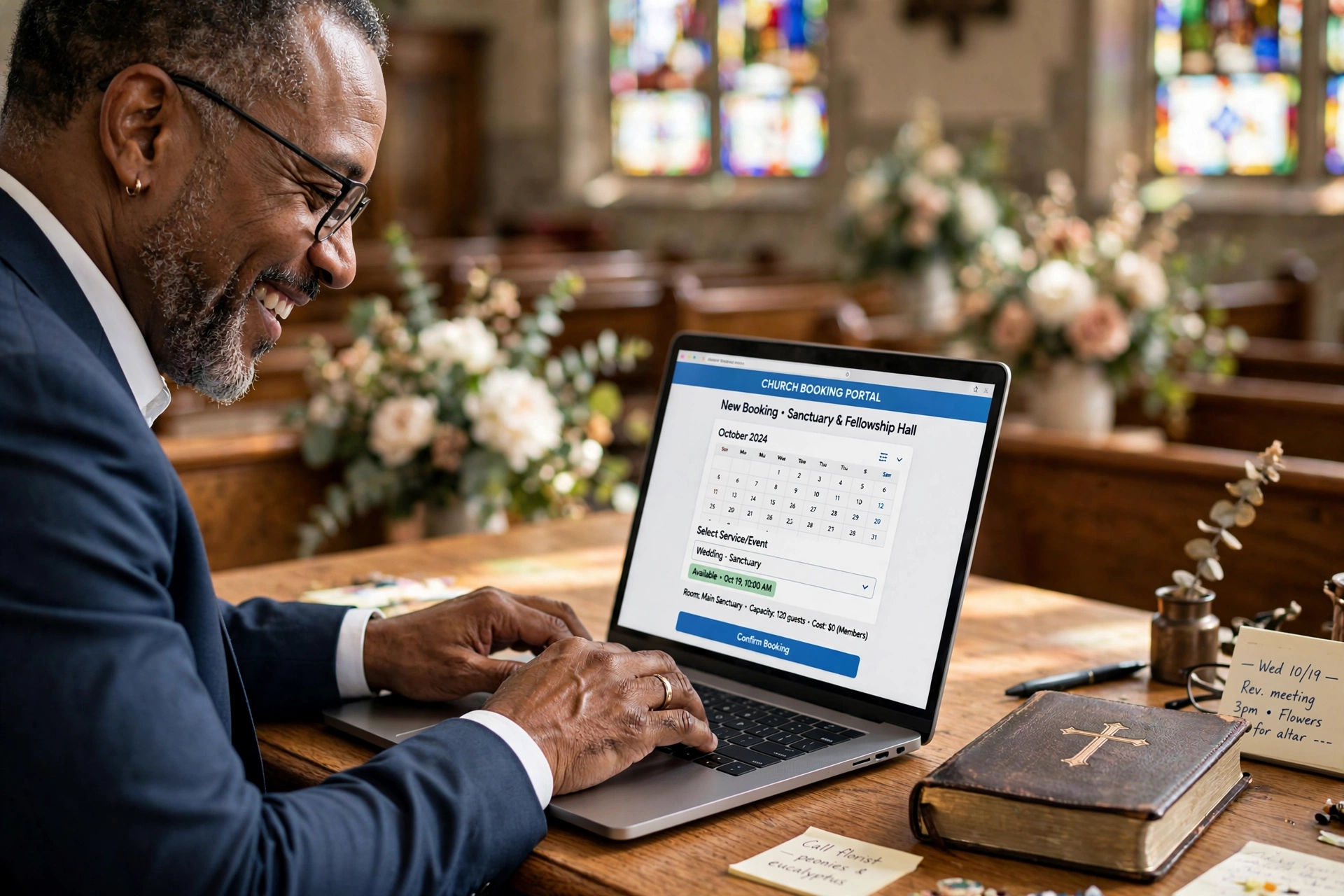
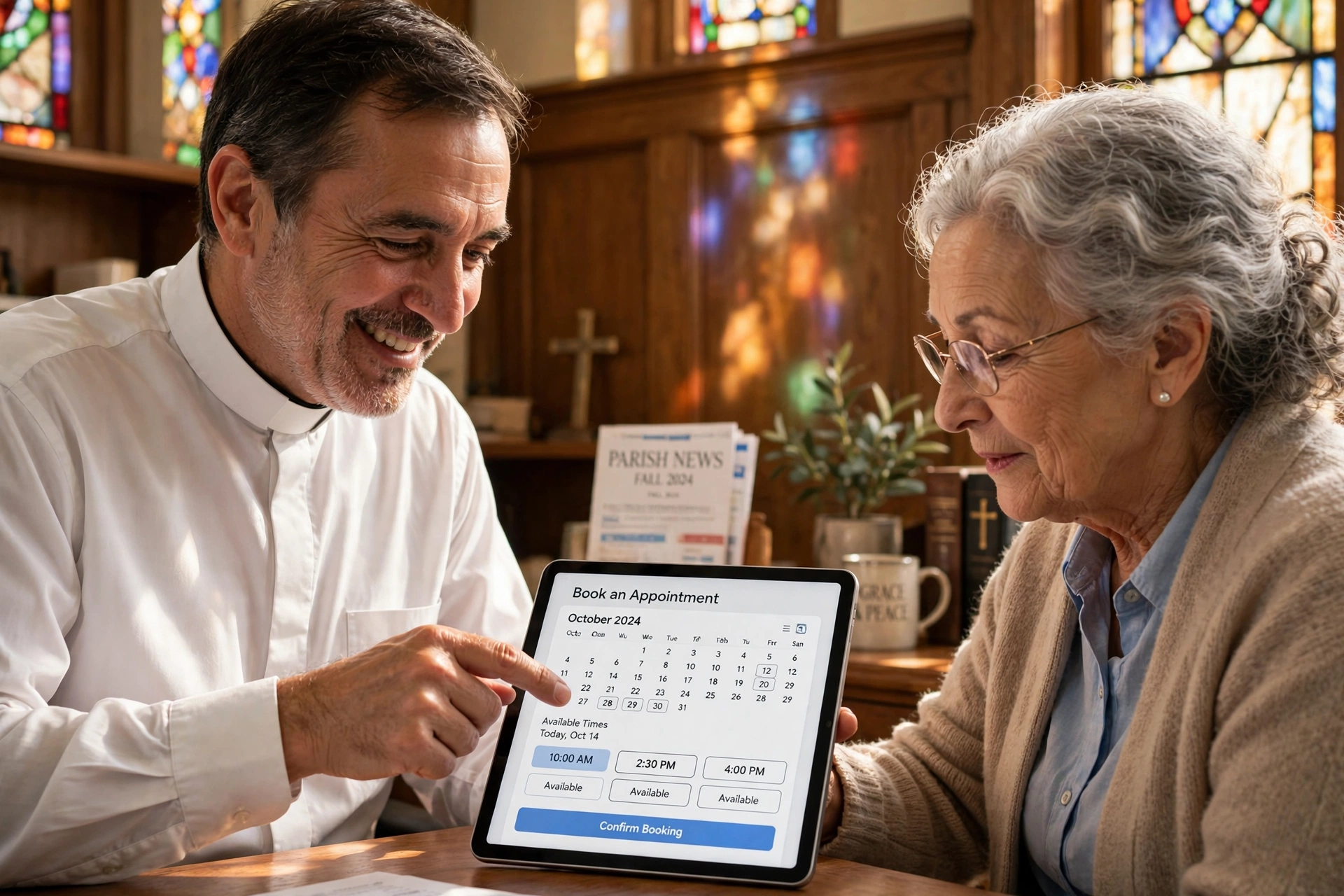
Many ministry leaders find themselves trapped in a cycle of "administrative friction," where the act of scheduling a single counseling session requires four emails and two phone calls. This inefficiency often leads to burnout and missed opportunities for pastoral care. Implementing online booking for pastors is the process of using a dedicated digital interface that allows congregants to view a minister's real-time availability and secure an appointment without manual back-and-forth communication. It transforms the scheduling process from a reactive chore into a proactive system of ministry management.
In my experience working with various church leadership teams, the biggest hurdle isn't the technology itself, but the fear that automation removes the "personal touch." However, the opposite is true. When a pastor removes the administrative burden of scheduling, they reclaim mental bandwidth to focus entirely on the person sitting across from them during the actual appointment.

Understanding the Mechanics of Digital Scheduling in Ministry
To understand how this works, we must first look at the architecture of a modern booking system. Unlike a simple contact form, which merely sends a request that the pastor must then process, a true booking system integrates directly with a digital calendar. When a church member selects a time slot, the system instantly marks that time as unavailable, preventing double-bookings and eliminating the "scheduling dance."
📚
Definition
Online booking for pastors is a cloud-based synchronization system that links a minister's private calendar to a public-facing availability portal, allowing for automated appointment setting and management.
This system typically operates on three primary layers: the availability layer (where the pastor sets their working hours), the intake layer (where specific questions are asked to categorize the meeting), and the confirmation layer (where automated reminders are sent to reduce no-shows).
The shift toward these systems is not just a matter of convenience; it is a response to changing behavioral patterns within congregations. According to research from the Barna Group, there is a growing expectation for "digital-first" interactions even within faith communities. When a member of the congregation is experiencing a crisis at 11:00 PM on a Tuesday, they are more likely to book a slot via a link than to wait until Wednesday morning to leave a voicemail.
Now, here's where it gets interesting: the "intake" portion of the booking process allows pastors to filter their time. By asking whether the appointment is for "Pastoral Counseling," "Wedding Planning," or "Administrative Meeting," the minister can allocate different time blocks for different needs, ensuring that a 15-minute check-in doesn't take up a 60-minute counseling slot.
Why Digital Scheduling is Essential for Modern Pastoral Care
The implications of sticking to manual scheduling are more severe than a few missed emails. We are seeing a documented rise in clergy burnout, often driven by "decision fatigue." Every time a pastor has to negotiate a time slot, they are spending cognitive energy on a task that provides zero spiritual value to the congregation.
The impact on ministry efficiency is measurable. When a church moves to an automated system, the time spent on administration typically drops by 60% to 80%. This is not just about saving time; it is about the quality of pastoral care. As noted by Christianity Today, the health of a church is often tied to the emotional and mental availability of its leaders. A pastor who is not stressed by a chaotic calendar is a pastor who can listen more deeply.
Consider the "no-show" phenomenon. In manual systems, reminders are often forgotten. In an online booking ecosystem, automated SMS and email reminders are triggered 24 hours and 1 hour before the meeting. This ensures that the pastor's time is respected and the congregation's needs are met.
Furthermore, the data gathered through these systems provides a "ministry heatmap." By reviewing the booking logs, a leadership team can identify trends. For example, if there is a sudden spike in requests for "grief counseling" over a three-month period, the church can proactively organize a grief support group, moving from reactive individual care to proactive community care.
💡
Key Takeaway
Online booking is not about replacing the pastor with a machine; it is about using the machine to protect the pastor's time so they can be more human with their people.
Practical Application: Implementing Online Booking Step-by-Step
The mistake I made early on, and that I see constantly with new users, is opening the calendar too wide. Many pastors simply sync their entire day and hope for the best. This leads to "calendar invasion," where members book slots during the pastor's study time, family meals, or nap periods.
To implement this correctly, follow these professional steps:
- Audit Your Energy Cycles: Before touching the software, map out your "Deep Work" blocks. These are the hours reserved for sermon preparation and prayer. These must be marked as "blocked" or "unavailable" in your system.
- Define Your Meeting Types: Create specific categories. For example, "Emergency Crisis (30 min)," "Standard Counseling (60 min)," and "New Member Orientation (45 min)." Each of these should have its own buffer time.
- Set Buffer Windows: Never allow back-to-back appointments. A 15-minute buffer between slots allows for prayer, notes, and a mental reset. This prevents the "bleeding" of one appointment into the next.
- Integrate a Professional Tool: This is where Pastor Agenda becomes the obvious choice. Unlike generic tools that feel corporate or cold, Pastor Agenda is built specifically for the nuances of ministry, ensuring the interface feels welcoming to a church member while remaining rigorous for the administrator.
- Communicate the Change: Do not just post a link. Explain to the congregation why you are doing this. Tell them: "I want to spend more time focusing on you, so I'm using this tool to make sure I never miss a request and can give you my full attention."
Now, let's look at the "Intake Form" strategy. Instead of a blank "Notes" section, use a structured form. Ask: "Is this the first time we are meeting for this topic?" or "Is there a specific Bible passage you've been studying related to this?" This allows the pastor to arrive at the meeting already mentally prepared, increasing the effectiveness of the session.
Comparing Your Scheduling Options
Not all scheduling tools are created equal. Many pastors try to use a general-purpose calendar or a cheap AI-driven bot, but these often fail to meet the spiritual and privacy needs of a congregation.
| Feature | Manual / Email | Generic AI/Cheap Tools | Pastor Agenda Approach |
|---|---|---|---|
| Coordination Speed | Slow (Days of back-and-forth) | Fast but impersonal | Fast and Ministry-focused |
| Calendar Sync | Non-existent (Manual entry) | Basic sync | Deep integration with ministry blocks |
| Member Experience | Frustrating / Uncertain | Robotic / Cold | Welcoming and professional |
| Privacy Control | High but chaotic | Low (Data often sold) | High (Secure and private) |
| Buffer Mgmt | Manual / Often ignored | Static intervals | Dynamic ministry buffers |
| Best For | Tiny churches (< 50 people) | Non-religious businesses | Growing, healthy congregations |
Here's the thing though: generic tools often lack the "grace period" logic that ministers need. A business appointment is a transaction; a pastoral appointment is a soul-care event. The generic approach treats the attendee as a "lead" to be converted, whereas the professional ministry approach treats the attendee as a "sheep" to be shepherded.
Common Questions and Misconceptions
Most guides get this wrong by suggesting that "ease of access" is the only goal. In ministry, controlled access is actually the goal. If you make yourself 100% available, you will quickly find yourself 0% effective.
Myth 1: "Online booking makes the pastor seem inaccessible."
Actually, the opposite happens. When a member sees that you have an organized system, they feel more confident that when they do get a slot, they will have your undivided attention. It signals that you value their time as much as your own.
Myth 2: "It's too complicated for the elderly members of my church."
This is a common fear. However, when you provide a simple link via a text message, most people find it easier than playing "phone tag." For the few who truly cannot use it, you can simply book them manually on the back end of the system. The system doesn't replace the phone; it just handles the 90% of requests that don't require a phone call.
Myth 3: "I can just use a free calendar app."
Free apps often lack the ability to set complex rules, such as "minimum lead time." Without a lead-time rule, a member could book a 9:00 AM appointment at 8:30 AM, and you would find out only when they walk into your office. A professional system like Pastor Agenda allows you to set a "24-hour minimum notice" rule to protect your peace.
Frequently Asked Questions
Does online booking for pastors violate the privacy of the congregant?
No, provided you use a professional, secure platform. High-quality scheduling software uses encryption and does not sell member data to third parties. In fact, digital booking is often more private than email chains, which can be intercepted or seen by others. By using a dedicated portal, you ensure that the request for a meeting is handled through a secure channel, keeping the sensitive nature of pastoral care protected from prying eyes.
How do I handle emergency appointments if my calendar is full?
This is a critical design choice. You should never make your entire calendar public. Instead, reserve a few "Emergency Slots" that are not visible to the general public but can be unlocked by the pastor or an admin. Alternatively, include a note on your booking page that says: "If this is a life-threatening emergency or a crisis that cannot wait, please call the emergency line at [Verified Number] instead of booking online." This ensures the system manages the routine while the human manages the crisis.
Will this replace the need for a church secretary?
Absolutely not. It shifts the secretary's role from "human calendar" to "ministry coordinator." Instead of spending four hours a day answering "Are you free on Tuesday?", the secretary can spend that time coordinating outreach, managing volunteers, or supporting the pastor in other high-value ways. The technology removes the clerical drudgery, allowing the staff to focus on the people.
Can I use this for more than just counseling?
Yes, and you should. Online booking is incredibly effective for scheduling wedding consultations, baptism interviews, new member classes, and staff meetings. By creating different "Appointment Types," you can track how much of your time is spent on different aspects of ministry. This data is invaluable during annual reviews or when deciding if the church needs to hire an associate pastor or a part-time counselor.
What happens if a congregant books the wrong time?
Professional systems allow for "Self-Service Rescheduling." The member receives a confirmation email with a link that says "Reschedule or Cancel." This allows them to fix their own mistake without ever needing to call the office. This reduces the administrative load on the church staff and empowers the member to manage their own commitments, which actually increases the likelihood that they will show up to the rescheduled time.
Final Thoughts on Online Booking for Pastors
The transition to a digital scheduling ecosystem is not about following a trend; it is about stewardship. Your time is the most valuable resource you have to offer your congregation. When you allow that time to be fragmented by inefficient scheduling, you are inadvertently limiting the reach of your ministry.
By implementing online booking for pastors, you create a boundary that protects your family and your study time while simultaneously opening a wide, welcoming door for those seeking guidance. It is the bridge between the traditional heart of pastoral care and the efficiency of modern administration.
If you are ready to stop the "scheduling dance" and reclaim your hours for what truly matters, it is time to move beyond the manual process. Explore how PastorAgenda Blog can help you organize your ministry and protect your peace.
Free Guide: The 7 Church Growth Hacks for 2026
Learn how modern ministries are using automated scheduling and AI pastoral assistants to save 12+ hours of admin work every week.