
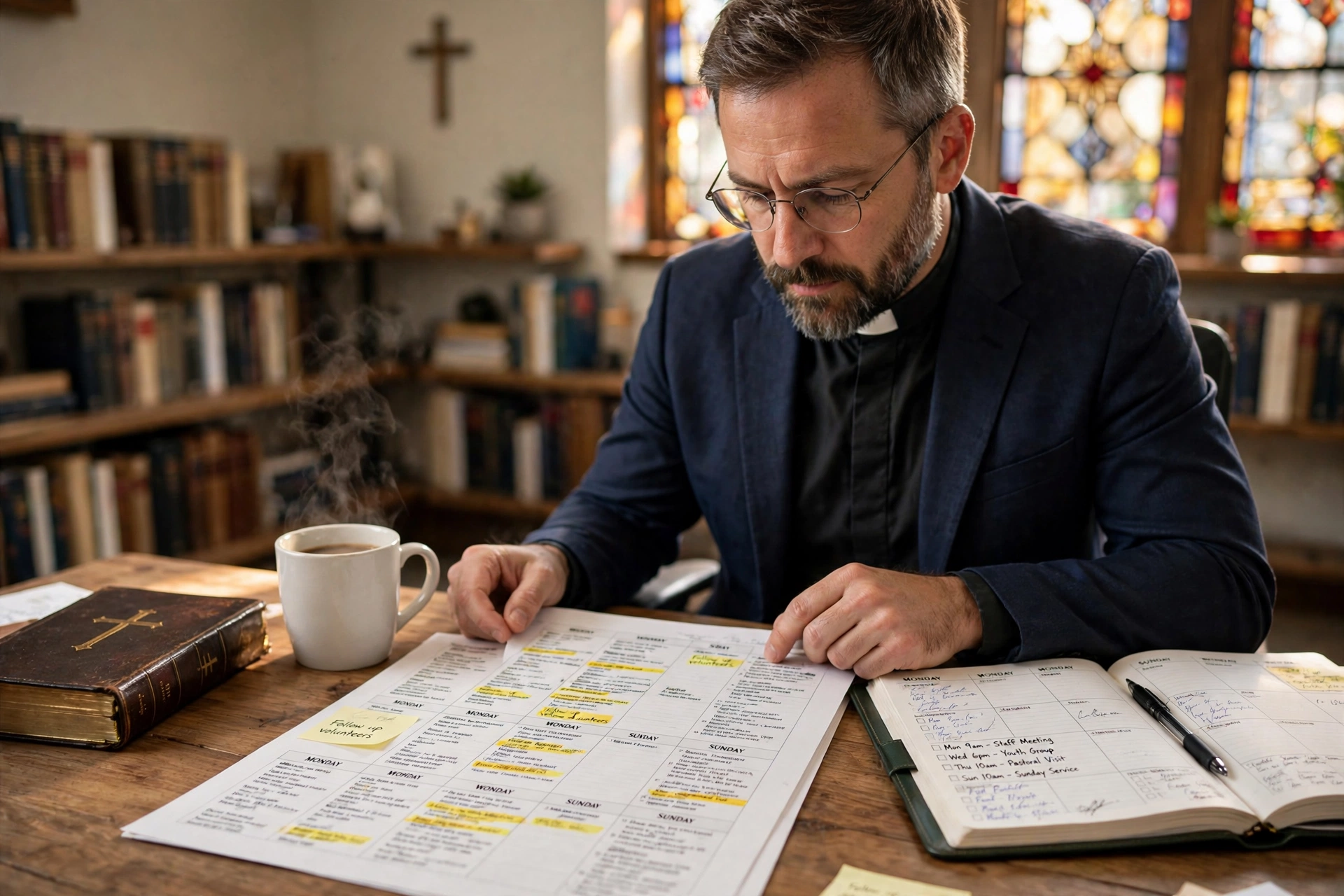
Which Scheduling Method for Pastors Actually Works in 2026?
Managing a ministry often feels like a constant battle between the need for structured administration and the unpredictable nature of pastoral care. When deciding which way to schedule with pastor availability, the "best" option isn't the one with the most features, but the one that minimizes friction for the congregation while protecting the minister's mental health. In my experience working with dozens of church leaders, the most effective systems are those that transition from "request-based" scheduling (where the pastor is a bottleneck) to "availability-based" scheduling (where the pastor sets the boundaries).
For most ministries, the best choice is a dedicated appointment booking system that syncs with a personal calendar. This removes the back-and-forth email chains and ensures that pastoral counseling doesn't bleed into sermon preparation time.
Understanding the Framework of Pastoral Scheduling
To determine which system is right for your church, you first have to understand the difference between administrative scheduling and ministerial availability. Most generic tools treat a time slot as a commodity, but in a church context, a time slot is a spiritual encounter.
📚
Definition
Availability-Based Scheduling is a method where the service provider defines specific "open" windows for appointments, allowing the end-user to select a slot that fits their needs without requiring a manual confirmation from the provider.
When we look at how leadership manages time, the "which" depends on the volume of the congregation. A small plant with 50 members can handle a manual "text me when you're free" approach. However, once a church exceeds 200 members, the administrative burden of managing a schedule with pastor requests becomes a primary driver of burnout.
According to research from the Barna Group, a significant percentage of pastors report high levels of stress and burnout, often cited as a result of the "always-on" expectation from their congregation. This data suggests that the "best" schedule is one that creates a digital boundary. If a pastor is always available via text, they are never fully present for the task at hand, whether that is studying the Bible or spending time with their own family.

The transition to a structured system isn't about removing the "heart" from ministry; it is about adding a skeleton to it. Without a framework, the ministry collapses under its own weight. I've seen pastors try to use shared Google Calendars where the congregation has "view" access, but this often leads to confusion because the congregation doesn't know which "busy" blocks are actually flexible and which are non-negotiable.
Why the Right Scheduling Choice Directly Impacts Ministry Health
Choosing the wrong method to schedule with pastor time doesn't just lead to missed appointments; it leads to "decision fatigue." Every time a pastor has to manually coordinate a meeting, they use a piece of their mental energy. When you multiply this by 15 to 20 appointments a week, the cumulative effect is a diminished capacity for deep work and spiritual reflection.
The business impact of poor scheduling in a non-profit or religious context manifests as "leakage." This isn't financial leakage, but temporal leakage. When a 30-minute counseling session turns into two hours because there was no structured appointment window, the subsequent three hours of sermon study are compromised.
According to Christianity Today, effective leadership in the modern church requires a balance between accessibility and sustainability. If the system is too rigid, the pastor seems unreachable; if it is too loose, the pastor becomes overwhelmed. The goal is to find the "Goldilocks Zone" of accessibility.
The consequences of not acting on this are severe. We see a pattern where pastors who rely on manual scheduling eventually stop taking appointments altogether because the process is too stressful. This creates a spiritual gap in the church where members feel neglected. By implementing a professional scheduling layer, the pastor can actually increase their total number of appointments because the "overhead" of organizing those meetings has been reduced to zero.
Practical Application: Implementing a Sustainable System
If you are wondering which approach to take today, the implementation should follow a three-step progression: Define, Automate, and Communicate.
First, define your "Ministry Zones." You cannot simply open your calendar to the world. You must categorize your time into blocks:
- Deep Work Zones: Sermon preparation and study (Non-negotiable).
- Administrative Zones: Email, staff meetings, and planning.
- Pastoral Care Zones: Specific windows for counseling, hospital visits, and home meetings.
Once these zones are defined, you move to automation. This is where Pastor Agenda becomes the essential tool. Instead of manually entering data, you use a system specifically designed for the nuances of ministry. A professional tool allows you to create different "appointment types", for example, a 30-minute "Quick Prayer" slot versus a 90-minute "New Member Orientation."
💡
Key Takeaway
The most sustainable schedules are not based on "finding time" for people, but on "allocating time" for specific types of ministry, ensuring no single category consumes the others.
Third, you must communicate the change to the congregation. The mistake I made early on, and that I see constantly in other ministries, is implementing a tool and expecting people to just "find it." You must frame the new way to schedule with pastor time as a way to better serve the people. Instead of saying, "I'm too busy, use this link," say, "To make sure I can give you my undivided attention and a guaranteed time slot, please use this booking page."

When using Pastor Agenda, the setup process is streamlined to ensure that the transition doesn't become another chore on the pastor's list. By automating the confirmation and reminder process, you reduce "no-shows" by up to 40%, which is a massive recovery of wasted time.
Comparing Your Scheduling Options: Which One Wins?
Not every church needs the same level of sophistication. Depending on your size and goals, you will likely fall into one of these three categories. Here is how the traditional approach compares to the modern professional approach.
| Option | Pros | Cons | Best For |
|---|---|---|---|
| Manual (Text/Email) | High personal touch, no tech barrier. | High burnout risk, massive time waste, chaotic. | Very small plants (< 75 members). |
| Generic Tools (Calendly/Google) | Fast setup, reliable syncing. | Not designed for ministry needs, lacks pastoral context. | Solo practitioners or small teams. |
| Professional (Pastor Agenda) | Ministry-specific, protects boundaries, professional image. | Requires initial setup and communication. | Growing churches and established ministries. |
Now, here's where it gets interesting: Many pastors try to "hybridize" these methods, keeping a "secret" manual list for "important" people while using a tool for everyone else. This is a recipe for disaster. It creates a perceived hierarchy of importance within the congregation. To maintain integrity and fairness in pastoral care, the system must be consistent.
If you choose a generic tool, you often find that the terminology is too "corporate." Terms like "Discovery Call" or "Consultation" don't fit a church environment. A dedicated platform like Pastor Agenda understands that the "client" is a congregant and the "service" is spiritual care. This semantic difference matters because it shapes how the member feels when they are requesting a meeting.
Common Misconceptions About Digital Scheduling
Most guides on this topic get it wrong by suggesting that automation removes the personal touch. This is a fundamental misunderstanding of how technology serves ministry.
Myth 1: "Using a scheduling tool is cold and impersonal."
The reality is that nothing is more impersonal than a pastor who forgets an appointment or is distracted by a phone call while in a counseling session. By using a tool to schedule with pastor time, you are actually creating a more personal experience because the pastor arrives at the meeting fully prepared, on time, and without the stress of administrative chaos.
Myth 2: "My congregation won't know how to use it."
In 2026, the vast majority of people are comfortable with online booking. From booking doctor appointments to scheduling haircuts, the mental model is already there. If a small percentage of your congregation struggles with the tech, your administrative staff or a youth volunteer can assist them. The benefit to the 95% far outweighs the friction for the 5%.
Myth 3: "I can just manage it in my head."
This is the fastest route to burnout. The "mental load" of remembering who needs a follow-up, who is waiting for a call, and where the gaps are in the week is exhausting. Offloading this to a system frees up the pastor's mind for the only thing that truly matters: the Word and the people.
Frequently Asked Questions
Which scheduling method is best for a growing church?
For a growing church, the best method is an automated, availability-based system. As the number of members increases, the "request-and-confirm" loop becomes a bottleneck. An automated system allows the pastor to set specific "Pastoral Care" blocks in their calendar, which members can then book into. This ensures that the pastor's schedule remains balanced and that no one is forgotten in an inbox. A tool like Pastor Agenda is ideal here because it handles the logistics of booking and reminders, allowing the church to scale its care without increasing the pastor's stress.
How do I handle emergency appointments in a structured schedule?
The key is to leave "buffer blocks" or "emergency slots" that are not visible to the general public. In my experience, leaving two to three 30-minute gaps per day specifically for crises ensures that the structured schedule doesn't become a barrier to urgent care. If an emergency arises, the pastor can manually slot it into these hidden blocks. This prevents the "domino effect" where one emergency pushes every other appointment back by an hour, creating a stressful environment for both the pastor and the congregants.
Will using a tool like Pastor Agenda make me seem unreachable?
Quite the opposite. When a pastor provides a clear, easy way to book time, it signals that they want to be available and that they value the congregant's time. Being "unreachable" is usually a result of a pastor who is so overwhelmed by manual requests that they stop responding to emails. A professional booking page provides a clear path to the pastor, removing the anxiety a member might feel about "bothering" the minister. It transforms the perception from "I hope he has time" to "I know exactly how to get on his calendar."
How do I prevent people from booking too many slots?
Most professional scheduling tools allow you to set limits on how many appointments can be booked per day or per user. For example, you can limit a single person to one appointment per week to ensure that care is distributed fairly across the congregation. Setting these boundaries is a healthy part of pastoral leadership. It prevents a few high-need individuals from monopolizing the pastor's time, which is an essential part of maintaining a healthy, balanced ministry for the entire church body.
Is it okay to charge for some types of scheduling?
While most pastoral care is free, some churches use scheduling tools to manage paid workshops, specialized counseling certifications, or administration fees for weddings and funerals. The "best" schedule is one that can distinguish between a "pastoral visit" (free) and a "wedding consultation" (which may have a fee). Using a system that allows for different appointment categories ensures that the administrative side of the church, like collecting fees for guest ministers, is handled professionally and transparently without awkward conversations.
Final Thoughts on How to Schedule with Pastor Availability
Choosing the right way to schedule with pastor time is not a technical decision; it is a leadership decision. The tools you choose dictate the boundaries of your ministry. If you continue to rely on the "chaos method" of texts and emails, you are essentially telling your congregation, and yourself, that your time has no defined value.
By implementing a system that prioritizes availability over requests, you reclaim your time for study, family, and deep spiritual work. The transition to a professional platform like PastorAgenda Blog allows you to maintain a high level of care while eliminating the administrative noise that leads to burnout.
If you are ready to stop the back-and-forth and start leading with a clear, structured calendar, it is time to move toward an automated solution. Your ministry deserves a system that supports your calling rather than one that complicates it.
Recommended Readings
To deepen your understanding of these topics, we recommend reading the following articles:
- Ensuring Absolute Privacy in Church Booking Systems
- Church Appointment Booking
- Online Appointment Booking for Modern Churches
- Automated Reminders and Communication for Congregations
Free Guide: The 7 Church Growth Hacks for 2026
Learn how modern ministries are using automated scheduling and AI pastoral assistants to save 12+ hours of admin work every week.



