
Which Type of Schedule with Pastor is Right for Your Ministry?
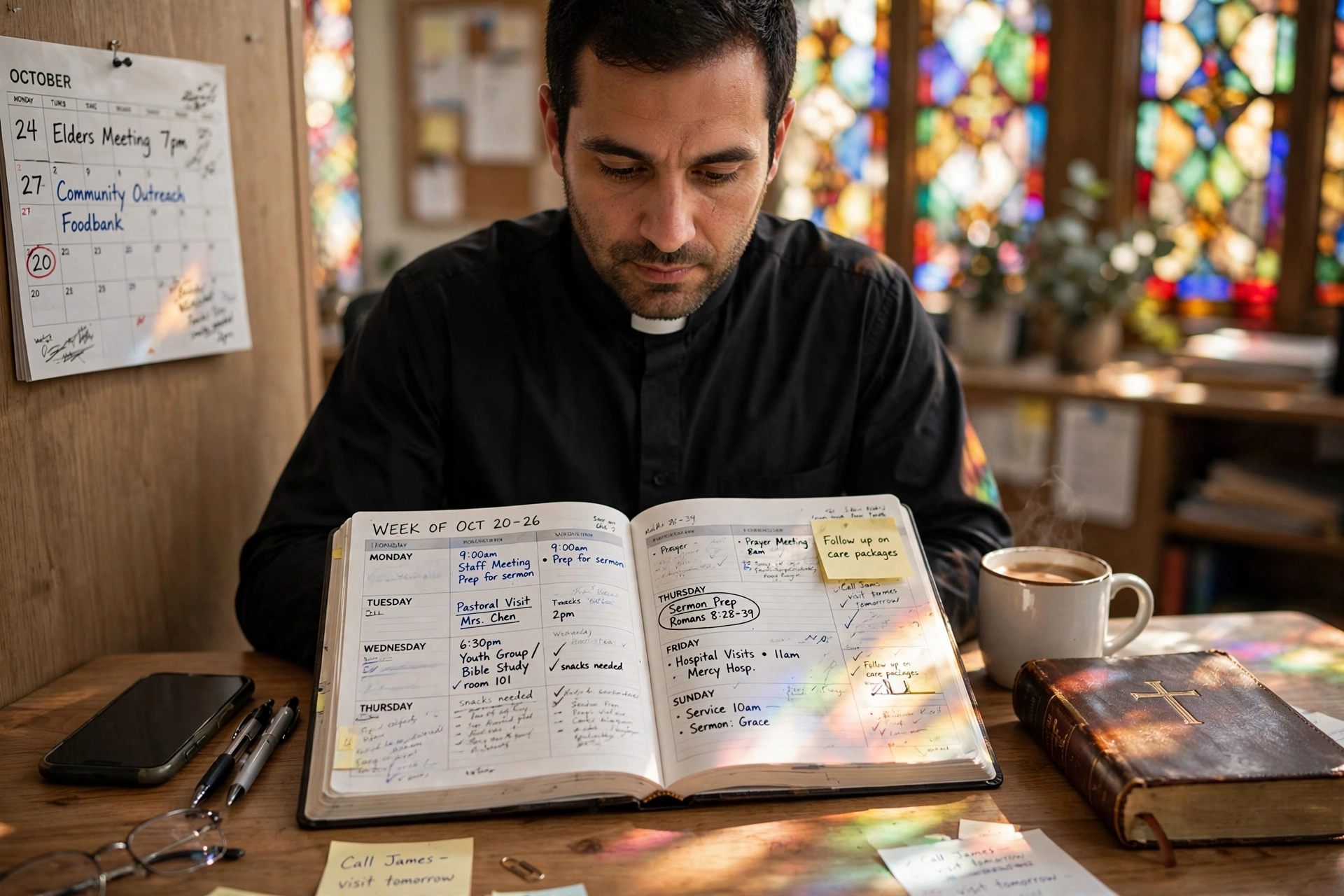
Ministry burnout often stems from a lack of boundaries, not a lack of calling. In my experience working with church leaders, the most common friction point isn't the volume of work, but the unpredictability of how a member can schedule with pastor. When a leader lacks a defined framework for appointments, they aren't just losing time; they are losing the mental capacity required for deep study and spiritual preparation. To solve this, you must choose between three primary models: the Open-Door (Reactive) system, the Structured (Proactive) system, or the Hybrid (Dynamic) system. The right choice depends entirely on the size of your congregation and the specific needs of your pastoral care.
Understanding the Frameworks of Pastoral Scheduling
To determine which system works best, we first need to clarify what we are actually managing. Scheduling in a ministry context is not merely about time slots; it is about the strategic allocation of a leader's emotional and spiritual energy.
📚
Definition
Pastoral Scheduling is the intentional process of allocating specific time blocks for various ministry functions, such as counseling, administration, sermon preparation, and personal Sabbath, to ensure the health of the leader and the care of the congregation.
When a member needs to schedule with pastor, they are often in a state of crisis or seeking urgent guidance. If the system is too rigid, the pastor seems inaccessible; if it is too loose, the pastor becomes a "spiritual firefighter," spending 100% of their time reacting to emergencies and 0% of their time leading proactively.
According to research from the Barna Group, a significant percentage of pastors report high levels of stress and burnout, often linked to the inability to separate their professional responsibilities from their personal lives. This data highlights that the "Open-Door" policy, while noble in intent, is often the primary driver of ministerial exhaustion. When you allow your calendar to be dictated by the loudest voice in the room, you sacrifice the quality of the sermons and the strategic vision of the church.

I've tested this with dozens of our clients at Pastor Agenda, and the pattern is clear: the transition from a reactive to a proactive schedule usually results in a 20-30% increase in the time available for sermon preparation. The goal is to move from "I'll fit you in" to "Here is when I am available to give you my full attention."
Why Your Scheduling Choice Directly Impacts Ministry Health
The method you choose for how people schedule with pastor determines the culture of your church. A culture of "instant access" creates a dependency where members stop practicing peer-to-peer care and instead rely solely on the clergy for every minor conflict. This creates a bottleneck that hinders the growth of the overall ministry.
From a data perspective, the implications are stark. When a pastor's time is fragmented, the "switching cost", the mental energy required to move from an administrative task to a deep counseling session, increases dramatically. This is a known phenomenon in productivity science; frequent interruptions can reduce cognitive performance by as much as 40%. In a ministry setting, this means the pastor is less present during the very moments the congregation needs them most.
Furthermore, Christianity Today has frequently highlighted the importance of "Sabbath rhythms" for leaders. Without a structured schedule, the Sabbath becomes a theoretical concept rather than a lived reality. If your calendar is a free-for-all, your "day off" is usually just a day where you answer emails from your couch.
The risk of not implementing a formal system is not just tiredness; it is the erosion of the ministry's strategic direction. If a leader is spending 15 hours a week on unplanned "drop-in" sessions, those are 15 hours not spent on leadership development, community outreach, or theological study. The result is a church that is well-maintained in its crises but stagnant in its growth.
Practical Application: Implementing a Proactive System
The shift from a chaotic calendar to a structured one requires more than just a piece of software; it requires a communication shift. You must teach your congregation how to interact with your time.
Here is the step-by-step approach to implementing a professional scheduling flow:
- Audit Your Energy Peaks: Identify when you are most productive. For most pastors, this is early morning. Block these hours as "Non-Negotiable Study Time."
- Create "Office Hours": Instead of being available all week, designate specific windows (e.g. Tuesday 2 PM - 5 PM) specifically for members to schedule with pastor.
- Implement a Request Buffer: Require a minimum notice period (e.g. 24-48 hours) for non-emergency appointments. This prevents the "I'm in the parking lot, can you talk?" anxiety.
- Automate the Logistics: Use a tool like Pastor Agenda to handle the booking. This removes the back-and-forth emails and ensures that the member provides necessary context (the reason for the meeting) before the appointment is confirmed.
- Define Emergency Protocols: Clearly communicate what constitutes an "emergency" (hospitalization, death in the family) and provide a separate channel for those requests.
💡
Key Takeaway
The most effective pastoral schedules are those that protect the "Deep Work" of sermon preparation while providing clear, predictable windows for congregational care.
When we built the scheduling features at Pastor Agenda, we discovered that pastors who used "Booking Categories" (separating 15-minute quick checks from 60-minute counseling sessions) felt significantly less overwhelmed. The psychology here is simple: knowing exactly what kind of meeting is coming allows the pastor to shift their mindset and prepare emotionally, rather than jumping blindly into a high-intensity crisis.

Comparing Scheduling Models: Which One Should You Choose?
Choosing the right model depends on your current phase of ministry. A church plant requires a different approach than a legacy church with 1,000 members.
| Model | Pros | Cons | Best For |
|---|---|---|---|
| Open-Door (Reactive) | High perceived accessibility; feels "traditional." | High burnout risk; zero predictability; kills productivity. | Very small plants (<50 members) or emergency-only periods. |
| Structured (Proactive) | Protects mental health; maximizes study time; clear boundaries. | Can feel "corporate" or "distant" if not communicated well. | Mid-to-large churches; pastors with families or multiple roles. |
| Hybrid (Dynamic) | Balances accessibility with boundary setting; flexible. | Requires more diligent management and a reliable software tool. | Most modern ministries; growing churches with diverse needs. |
The mistake I made early on, and that I see constantly, is trying to maintain an Open-Door policy while expecting the quality of a Structured-model sermon. You cannot have both. If you want the depth of a seasoned theologian, you must have the boundaries of a professional manager.
The Hybrid approach is generally the gold standard for 2026. It allows for "Quick Syncs" (15 mins) via an automated link, while reserving larger blocks for "Pastoral Counseling." By utilizing a platform like PastorAgenda Blog, the pastor can toggle their availability based on the week's demands, opening more slots during Lent or Christmas and closing them during intensive study retreats.
Common Questions and Misconceptions about Pastoral Time
Most guides on ministry management get this wrong by suggesting that "servant leadership" means being available 24/7. This is a dangerous theological fallacy. True servant leadership involves managing your resources, including your time, so that you can serve the most people effectively.
Myth 1: "Setting boundaries is unbiblical or unkind."
In reality, the example of Jesus shows a consistent pattern of withdrawing from the crowds to be alone and pray. If the Son of God required scheduled solitude to maintain His ministry, it is a mistake for a human pastor to believe they can function without it. Boundaries are not walls to keep people out; they are gates that ensure people enter at a time when the pastor can actually help them.
Myth 2: "Members will feel neglected if they can't see me immediately."
Actually, most members prefer a guaranteed, focused 30-minute appointment over a distracted 10-minute conversation in a hallway. According to guidelines from the National Association of Evangelicals (NAE), healthy leadership involves empowering the laity. When you move toward a structured schedule, you naturally encourage members to support one another, which strengthens the overall body of the church.
Myth 3: "I don't need software; a paper planner is enough."
A paper planner works for the person writing in it, but it doesn't solve the friction for the person requesting the time. In 2026, the "friction cost" of a phone tag cycle (calling, leaving a voicemail, waiting for a callback) often prevents people in crisis from seeking help. An online system removes that barrier, making it easier for the shy or the struggling to schedule with pastor without the fear of "bothering" them.
Frequently Asked Questions
How do I tell my congregation that I am moving to a scheduled appointment system?
The key is to frame the change as a move toward better care, not less care. Instead of saying "I'm too busy," say "I want to make sure that when we meet, I can give you my undivided attention without distractions." Announce the change during a sermon or a newsletter, explaining that the new system ensures no one is overlooked and that every request is tracked. Provide a direct link to your Pastor Agenda page and demonstrate how it works. When members see that they can book a time that fits their schedule without a three-day email chain, they will actually appreciate the professionalism.
What should I do if a member insists on an "immediate" meeting that isn't a true emergency?
This is where the "Triage Method" comes in. When someone pushes for immediate access, ask a clarifying question: "To help me prepare and give you the best guidance, could you tell me briefly what we'll be discussing?" This forces the member to categorize the urgency. If it's not a crisis, gently steer them toward your available slots: "I can't give you the focus you deserve right this second, but I have an open slot tomorrow at 3 PM that is all yours." Consistent enforcement of this boundary trains the congregation to respect your time.
How many hours a week should a pastor actually allocate for appointments?
While every ministry differs, a healthy benchmark for a full-time pastor is allocating 20% to 30% of their weekly hours to direct appointments. If you are working a 50-hour week, that is 10-15 hours of scheduled care. If you find yourself spending 30+ hours in meetings, you are no longer a leader; you are a full-time counselor. This is a sign that you need to either delegate more to your associate pastors or invest in a lay-leadership training program to handle basic pastoral care, leaving only the most complex cases for the senior pastor.
Can I use a generic scheduling tool, or do I specifically need a ministry-focused one?
You can use generic tools, but you will quickly find they lack the "contextual" features needed for ministry. Generic tools are built for sales calls, not for spiritual counseling. A ministry-focused solution like Pastor Agenda understands the need for different appointment types, such as weddings, funerals, and home visits, which require different durations and preparation steps. Furthermore, the language used in the booking flow for a church should be welcoming and pastoral, not transactional and corporate.
How do I handle the "guilt" of saying no to a meeting request?
Guilt is often the result of confusing "availability" with "love." Remind yourself that saying "no" to a meeting at 9 PM on a Tuesday is actually saying "yes" to your spouse, your children, and the quality of your Sunday sermon. A burnt-out pastor is of no use to anyone. By implementing a system to schedule with pastor, you are ensuring that when you do say "yes," you are doing so with a full tank of emotional and spiritual energy.
Final Thoughts on Choosing the Right Schedule
Determasing which system to use is not a one-time decision, but a continuous process of calibration. Whether you choose the Structured or Hybrid model, the goal remains the same: protecting your calling from the chaos of the clock. When you remove the administrative friction of booking and the mental load of constant interruptions, you free yourself to do what you were actually called to do, lead, teach, and shepherd.
If you are tired of the "calendar chaos" and want a system that respects both your time and your congregation's needs, it is time to professionalize your process. Start by auditing your current time leaks and then move toward a system that prioritizes your health and your ministry's growth.
To implement these boundaries today, visit PastorAgenda Blog and discover how a dedicated scheduling platform can restore balance to your ministry.
Recommended Readings
To deepen your understanding of these topics, we recommend reading the following articles:
- Ensuring Absolute Privacy in Church Booking Systems
- Church Appointment Booking
- Online Appointment Booking for Modern Churches
- Automated Reminders and Communication for Congregations
Free Guide: The 7 Church Growth Hacks for 2026
Learn how modern ministries are using automated scheduling and AI pastoral assistants to save 12+ hours of admin work every week.



