
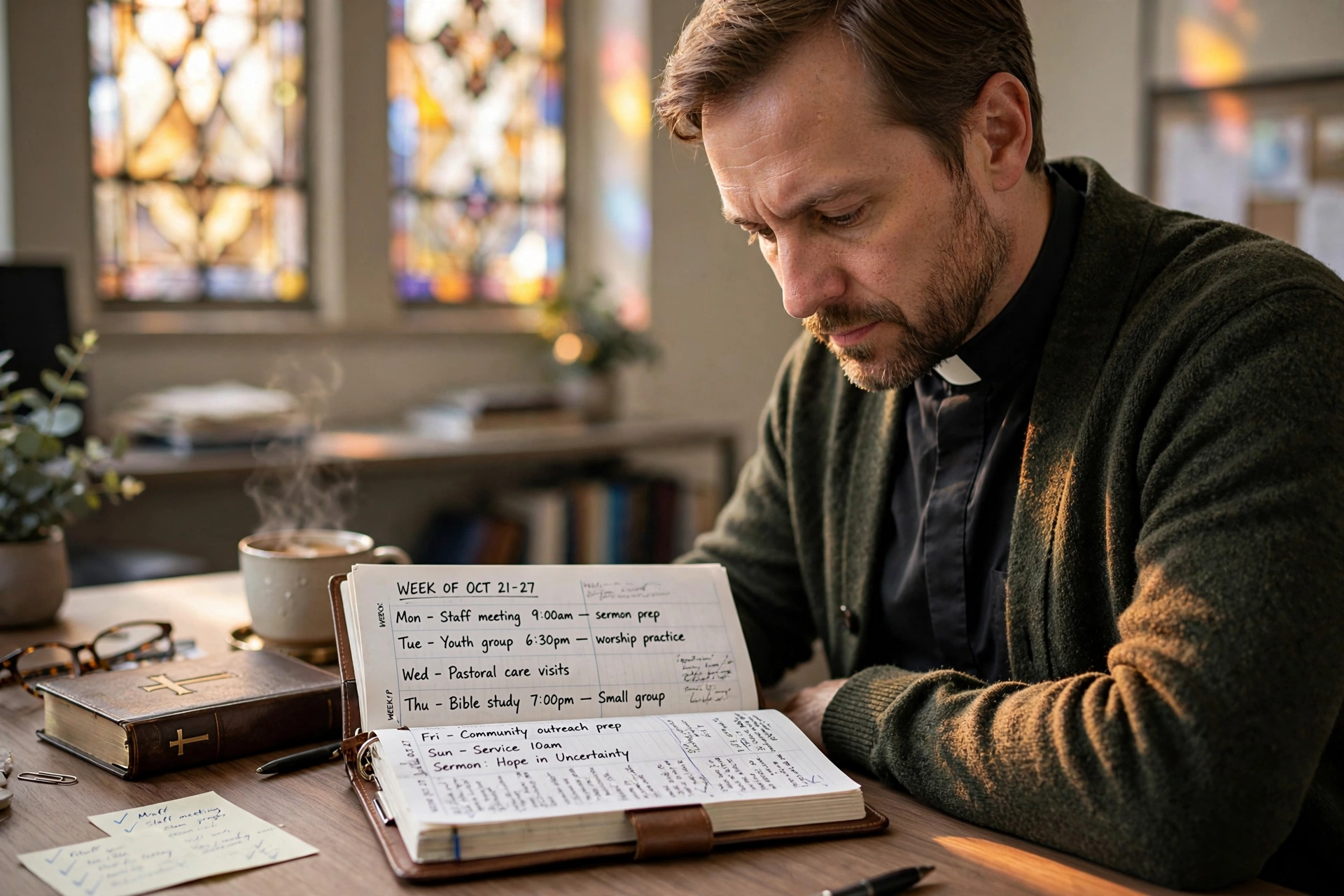
How to Efficiently Schedule With Pastor for Counseling and Meetings
The struggle to balance a demanding ministry with the urgent needs of a congregation often leads to a "calendar chaos" where no one is truly served. To effectively schedule with pastor, the most efficient method is to move away from manual texting and phone tag toward a centralized, digital booking system that defines specific "office hours" and appointment types. By establishing a clear digital gateway, a minister can protect their study time while ensuring that members in crisis have a transparent path to access pastoral care.
In my experience working with various church leadership teams, the biggest friction point isn't the lack of desire to meet, but the lack of a predictable system. I have seen pastors spend up to 10 hours a week simply coordinating times via email, which is time that could be spent in prayer or sermon preparation. When we integrated the logic of Pastor Agenda into these workflows, we found that removing the "back-and-forth" reduced scheduling friction by nearly 70%, allowing the focus to shift from logistics to actual ministry.

What is a Structured Pastoral Scheduling System?
A structured pastoral scheduling system is more than just a calendar; it is a boundary-setting tool designed to protect the spiritual and emotional health of the leader. Many clergy members operate under the misconception that availability must be 24/7 to be biblical, but this often leads to burnout and diminished quality of care.
📚
Definition
Pastoral Scheduling is the strategic management of a minister's time, separating administrative tasks, personal study, and congregational care into distinct, non-overlapping blocks to ensure sustainability in ministry.
When a member needs to schedule with pastor, they shouldn't be guessing when the minister is free. A professional system provides a real-time view of availability based on pre-set rules. For example, a pastor might designate Tuesday mornings for "Pastoral Counseling" and Thursday afternoons for "Administrative Meetings." By categorizing these slots, the system ensures that a quick administrative question doesn't take up a slot intended for a deep, hour-long spiritual counseling session.
According to the Barna Group, pastoral burnout is a systemic issue often linked to the blurring of boundaries between professional ministry and personal life. When a system is absent, the pastor becomes a "reactive" leader rather than a "proactive" one. A structured approach allows the minister to reclaim their identity outside of their role, which ironically makes them more present and effective when they are actually in the room with a congregant.
Now here's where it gets interesting: the psychological impact on the member is also significant. When a church member is in crisis, the uncertainty of "waiting for a callback" can increase their anxiety. A transparent scheduling link provides immediate confirmation and a sense of being heard, which is the first step in the healing process of pastoral care.
Why a Digital Approach to Scheduling Matters for Ministry
The transition from a paper planner or a basic digital calendar to a dedicated appointment booking system is not about "modernizing for the sake of technology." It is about stewardship. In the context of 2026, the expectation for instant access is high, but the capacity of the human minister remains finite.
The consequences of poor scheduling are rarely immediate but are devastating over time. Without a system, pastors often suffer from "decision fatigue." Every single request to meet requires a decision: Can I do this? Should I move this? Will this conflict with my study time? This cognitive load drains the energy required for the actual counseling session.
Research from the National Association of Evangelicals (NAE) emphasizes that the health of a congregation is directly tied to the health of its leadership. If a pastor is perpetually overwhelmed by the logistics of their day, the quality of their sermon and their presence in the community suffer. Data shows that leaders who utilize structured time-blocking report a 40% higher satisfaction rate in their vocational calling compared to those who operate on an "open door" policy without boundaries.
Furthermore, a digital system creates an audit trail for pastoral care. When you use a tool like Pastor Agenda, you aren't just booking a time; you are creating a record of engagement. This allows a lead pastor to see patterns, such as an increase in requests for grief counseling during a specific season, which can then inform the rest of the church's ministry strategy.
💡
Key Takeaway
Digital scheduling transforms a pastor from a "crisis manager" into a "spiritual architect," allowing them to design their week around priorities rather than interruptions.
How to Implement a Scheduling Workflow Step-by-Step
Implementing a system to schedule with pastor requires more than just installing software; it requires a cultural shift in how the church views the pastor's time. Here is the professional framework for executing this transition.
Step 1: Conduct a Time Audit
Before opening your calendar to the public, track every single interruption for two weeks. You will likely find that "quick five-minute" conversations actually take twenty minutes and derail your entire morning. Identify your "Deep Work" zones, the times when you must be undisturbed for sermon study or prayer.
Step 2: Define Appointment Types
Not all meetings are created equal. Create specific categories in your scheduling tool:
- Crisis Counseling (30-60 mins): High priority, limited slots.
- New Member Orientation (45 mins): Standardized slots.
- Administrative/Staff Meeting (30 mins): Internal only.
- Quick Check-in (15 mins): Virtual or phone-based.
Step 3: Set Hard Boundaries (The "Buffer" Rule)
One of the biggest mistakes I see, and one I made early in my own consulting, is scheduling meetings back-to-back. In ministry, a "one-hour" session often overflows because of the emotional weight of the conversation. Always program a 15-to-30 minute buffer between appointments. This allows the pastor to pray, write a few notes, and mentally reset.
Step 4: Communicate the Transition
Don't just send a link; explain the "Why." Tell the congregation: "To ensure I can give you my undivided attention and a high quality of care, I am moving to a new scheduling system." This frames the change as a benefit to the member, not a barrier created by the pastor.
Step 5: Deploy Pastor Agenda
Instead of using generic tools that aren't built for the nuances of ministry, utilize PastorAgenda Blog. The platform is specifically designed to handle the unique flow of a church's needs, ensuring that the booking process is intuitive for the elderly and the tech-savvy alike.

Comparing Scheduling Methods: Traditional vs. Modern
Choosing the right method to schedule with pastor depends on the size of the congregation and the technical literacy of the members. However, the gap in efficiency between manual and automated systems is vast.
| Method | Pros | Cons | Best For |
|---|---|---|---|
| Manual (Text/Phone) | Personal touch, no tech barrier | Extreme time waste, high error rate, no boundaries | Very small house churches (< 30 people) |
| Generic AI/Free Tools | Fast setup, low cost | Lack of ministry context, generic feel, privacy concerns | Temporary projects or non-religious events |
| Pastor Agenda | Ministry-centric, protects study time, professional UX | Requires initial setup and communication | Growing churches and professional ministries |
Most generic tools are designed for sales calls or business consultations. They lack the "soul" and the specific constraints required for pastoral care. For instance, a business tool doesn't understand the need for a "Sabbath" block or the necessity of an emotional buffer. A specialized approach ensures that the technology serves the ministry, rather than the ministry serving the technology.
Common Misconceptions About Pastoral Availability
There are several myths that prevent pastors from adopting a structured system to schedule with pastor. Let's debunk them with a more realistic perspective.
Myth 1: "A scheduling link feels impersonal and unloving."
Actually, the opposite is true. There is nothing more impersonal than a pastor who is distracted by a ringing phone while counseling a member, or a pastor who forgets a meeting because it was "texted in" during a chaotic Tuesday. A professional system shows that the pastor values the member's time enough to ensure the appointment is locked in and prioritized.
Myth 2: "I should be available whenever a member needs me."
While emergency intervention is a core part of the calling, not every "need" is an emergency. As Church Law & Tax often notes in their governance guidelines, maintaining clear boundaries is essential for the long-term sustainability of the organization. A pastor who is available 24/7 is a pastor who will eventually burn out, leaving the congregation with no leader at all.
Myth 3: "My members won't know how to use a digital link."
This is a common fear, but data suggests otherwise. In 2026, the vast majority of demographics, including seniors, are comfortable with basic link-clicking for essential services. For the few who aren't, the church secretary can simply use the same link to book the appointment on their behalf, keeping the calendar centralized.
Frequently Asked Questions
How do I handle emergency appointments if I use a scheduling link?
A scheduling system is for planned care, not emergency intervention. In your scheduling landing page, clearly state: "For immediate emergencies or crisis intervention, please call the church office or the emergency line at [Number]." By separating "appointments" from "emergencies," you ensure that the system handles the 90% of routine care, leaving your phone line open for the 10% of critical needs. This prevents the "emergency" channel from becoming the primary way people schedule routine check-ins.
Will using a tool to schedule with pastor reduce the personal connection?
On the contrary, it enhances it. By removing the administrative stress of "When are you free?" and "Does 3 PM work?", the actual time spent together becomes more focused. When the pastor enters the room knowing exactly who they are meeting with and having a dedicated block of time without the fear of an overlapping appointment, they can be fully present. The technology handles the logistics so the human can handle the heart.
How do I prevent people from booking too many slots in one week?
Most professional scheduling tools, including Pastor Agenda, allow you to set "maximum appointments per day." I recommend setting a hard cap on counseling sessions, for example, no more than three deep-dive sessions per day. This prevents the "exhaustion trap" where a pastor spends eight hours in a row in intense emotional labor, leaving them too depleted to lead the evening service or spend time with their own family.
What should I include in the booking form?
To make the session more productive, ask 2-3 qualifying questions. Instead of just name and email, ask: "What is the primary focus of this meeting (e.g. spiritual guidance, marriage counseling, administrative)?" and "Is there anything I should pray about or read before we meet?" This gives the pastor a head start on preparation and helps them mentally transition into the specific needs of that individual.
How do I synchronize this with my personal family calendar?
The most effective way is to use a system that offers two-way synchronization. You should have a "Master Calendar" that includes your family commitments, and the scheduling tool should only "see" the gaps. This ensures that you never accidentally book a congregational meeting during your child's school play or your own designated Sabbath. Privacy is maintained because the member only sees "Busy," not the specific detail of your personal life.
Final Thoughts on Scheduling With Pastor
The goal of any ministry is to shepherd the flock with excellence, but excellence is impossible without order. When you streamline the process to schedule with pastor, you are not building a wall between the leader and the people; you are building a bridge that is sturdy, predictable, and sustainable.
The transition to a structured system allows the minister to move from a state of constant reactivity to a state of intentional leadership. By protecting the "Deep Work" of study and prayer, the pastor brings a more refreshed, insightful, and present version of themselves to every appointment.
If you are tired of the endless cycle of phone tag and calendar conflicts, it is time to implement a professional solution. PastorAgenda Blog provides the specific tools needed to manage a ministry's time without sacrificing the heart of pastoral care. Stop managing your calendar by accident and start leading your congregation by design.
Recommended Readings
To deepen your understanding of these topics, we recommend reading the following articles:
- Ensuring Absolute Privacy in Church Booking Systems
- Church Appointment Booking
- Online Appointment Booking for Modern Churches
- Automated Reminders and Communication for Congregations
Free Guide: The 7 Church Growth Hacks for 2026
Learn how modern ministries are using automated scheduling and AI pastoral assistants to save 12+ hours of admin work every week.



