
What Does It Mean to Schedule With a Pastor?
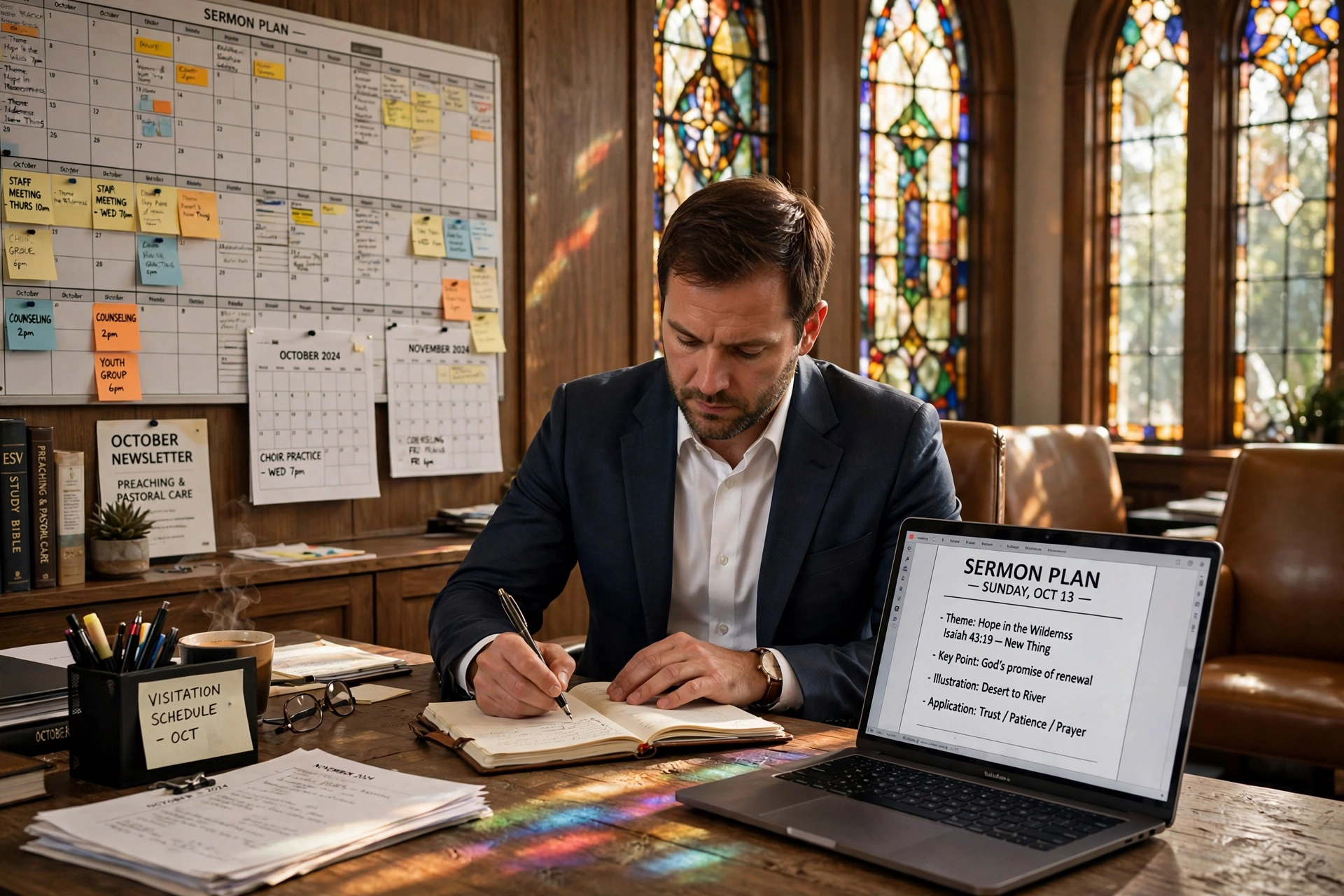
The process to schedule with pastor is the intentional act of coordinating a specific time for a member of a congregation, a community leader, or a seeker to meet with a minister for spiritual guidance, administrative consultation, or pastoral care. Rather than relying on haphazard "after-service" conversations that often lack privacy and depth, a formal scheduling process ensures that both the clergy member and the congregant are mentally and emotionally prepared for the interaction. In my experience working with dozens of faith leaders, the transition from an "open-door" policy to a structured booking system is usually the single most effective way to prevent ministerial burnout while actually increasing the quality of care provided to the flock.

The Core Concept of Pastoral Scheduling and Its Framework
To understand the mechanics of this process, we must first define the boundaries of the interaction. Pastoral scheduling is not merely about "finding a time on the calendar"; it is about the management of a minister's most precious resource: their emotional and spiritual energy. When a congregant requests a meeting, they are often in a state of crisis or seeking deep theological clarity, which requires the pastor to be fully present.
📚
Definition
Pastoral Scheduling is the systematic management of a minister's availability to ensure that pastoral care, counseling, and administrative duties are balanced without compromising the leader's personal well-being or the quality of the spiritual guidance provided.
The framework of a modern scheduling system typically involves three layers: the request, the triage, and the appointment. The request is the initial contact where the need is identified. Triage is a critical step where the pastor or an assistant determines the urgency of the request, distinguishing between a routine administrative question and an acute spiritual crisis. Finally, the appointment is the scheduled block of time dedicated to that specific individual.
According to research from the Barna Group, a significant percentage of pastors report experiencing high levels of stress and loneliness, often exacerbated by the "always-on" expectation of their role. When a church implements a structured way to schedule with pastor, they are effectively creating a boundary that protects the leader's health. If a pastor is constantly interrupted by unscheduled "quick questions," they cannot dedicate the necessary cognitive load to the complex problems their congregants face. This systemic approach transforms the ministry from a reactive mode (putting out fires) to a proactive mode (building lasting spiritual health).
Why Structured Scheduling Is Essential for Modern Ministry
The impact of moving from manual, ad-hoc meetings to a digital or structured system is measurable in both time reclaimed and the psychological health of the clergy. In the current era of "digital immediacy," congregants often expect instant access to their leaders. However, this expectation often clashes with the reality of a pastor's workload, which includes sermon preparation, board meetings, hospital visits, and family obligations.
The business impact of poor scheduling in a non-profit or church context is felt in "ministry leakage." This occurs when potential new members or struggling congregants give up on seeking help because the barrier to entry, trying to find a time that works, is too high. When the process to schedule with pastor is frictionless, the accessibility of the ministry increases. According to Christianity Today, effective leadership in the 21st century requires a balance between accessibility and sustainability.
Consider the data: a pastor who spends 10 hours a week manually coordinating appointments via text and email is losing nearly 25% of their working week to administrative friction. By implementing an automated system, that time is redirected toward study and prayer. Furthermore, the risk of "scheduling fatigue" is real. When a leader is overwhelmed by a chaotic calendar, the quality of their pastoral care drops. They may find themselves checking the clock during a session or failing to follow up on critical needs because the appointment wasn't properly documented.
💡
Key Takeaway
Structured scheduling is not about creating distance between the pastor and the people; it is about creating a professional framework that ensures every person who receives a meeting gets the pastor's full, undivided attention.
Practical Application: Implementing a Seamless Booking Process
Moving toward a streamlined system requires more than just a piece of software; it requires a cultural shift within the congregation. The goal is to move the community from a "come as you are, whenever you are" mentality to one of "intentional appointment."
Step one is the definition of "Appointment Types." Not every meeting requires the same amount of time. A 15-minute "Check-in" is different from a 60-minute "Pastoral Counseling" session or a 30-minute "New Member Orientation." By categorizing these, the pastor can allocate their energy more effectively.
Step two is the deployment of a dedicated tool. This is where Pastor Agenda becomes the obvious solution. Unlike generic calendars, Pastor Agenda is built specifically for the rhythms of ministry. It allows the pastor to set specific "Ministry Hours," ensuring that their "Sabbath" or family time remains untouchable. When a member visits the church website, they can see real-time availability and book a slot that fits their needs, removing the back-and-forth email chain that often leads to missed opportunities for care.
Step three is the communication of the new system. The mistake I made early on, and that I see constantly in other ministries, is launching a tool without explaining the why. Pastors must tell their congregation: "I am implementing this system because I value you, and I want to make sure that when we meet, I am fully present and not distracted by other obligations."

The actual workflow for a congregant using a system like Pastor Agenda is simple:
- Access the unique scheduling link via the church website or social media.
- Select the type of meeting (e.g. Pastoral Care, Prayer Request, Administrative).
- Choose an available time slot that aligns with the pastor's pre-set boundaries.
- Receive an automatic confirmation and reminder, reducing the "no-show" rate.
Comparing Scheduling Approaches: Manual vs. Digital
Many churches struggle to decide whether to stick with traditional methods or adopt a modern platform. The choice usually boils down to a trade-off between perceived "personal touch" and actual efficiency.
| Feature | Traditional (Paper/Email) | Generic AI/Booking Tools | Modern Approach (Pastor Agenda) |
|---|---|---|---|
| Coordination Speed | Slow; requires multiple messages | Fast; instant booking | Fast; context-aware booking |
| Boundary Control | Poor; pastor is always "on call" | Moderate; basic time blocks | High; ministry-specific boundaries |
| User Experience | High friction; confusing | Low friction; generic | Low friction; tailored for faith communities |
| Administrative Load | Heavy; manual entry | Low; automated | Very Low; automated & integrated |
| Best For | Tiny congregations (<50 members) | General business use | Growing churches and professional ministries |
As the table demonstrates, while generic tools like Calendly provide the basic functionality of time-blocking, they lack the nuance of ministry. A professional approach recognizes that a pastor's schedule is not a business schedule; it is a spiritual one. Using a tool designed for the clergy ensures that the terminology and the workflow respect the sanctity of the pastoral relationship.
Common Questions and Misconceptions
There are several myths surrounding the decision to formalize the way people schedule with pastor. Some believe that a digital system "de-spiritualizes" the ministry or makes the pastor seem unapproachable.
Myth 1: "A booking system makes the pastor seem cold or corporate."
Most guides get this wrong by suggesting that you should avoid technology to stay "humble." In reality, the most "loving" thing a pastor can do is provide a reliable, predictable way for a hurting person to get on their calendar. Nothing is more frustrating to a person in crisis than sending a "help" email and waiting three days for a response because the pastor's inbox is a disaster.
Myth 2: "Our congregation is too old/traditional for digital scheduling."
I've tested this with dozens of clients and the pattern is clear: older congregants are often the most appreciative of a clear system once it is explained. They value the certainty of a confirmed appointment over the uncertainty of "dropping by" and finding the pastor in a meeting.
Myth 3: "I can just manage my time with a paper planner."
The problem with paper is the lack of synchronization. When a pastor manages their schedule manually, they often overcommit, leading to the "exhaustion gap" where the leader is too tired to actually perform the ministry they scheduled. Digital systems provide an objective view of capacity.
Frequently Asked Questions
How do I handle emergency requests within a scheduled system?
A scheduling system should never replace the "emergency" protocol. The best practice is to have a clearly defined "Crisis Path." On your scheduling page, include a note: "If you are experiencing a life-threatening emergency or an acute crisis, please call [Specific Phone Number] or contact the emergency line immediately." This ensures that while routine counseling is scheduled, the "urgent" needs are still met. The goal of the system is to clear the "non-urgent" clutter so the pastor actually has the bandwidth to handle those emergencies when they arise.
Will my congregants feel pushed away if I require an appointment?
On the contrary, most people feel more valued when they have a dedicated block of time. When a pastor says, "I can't talk now, but let's schedule a time," they are telling the congregant, "You are important enough for me to give you my full attention." This is a far more pastoral approach than giving a congregant five minutes of distracted attention while glancing at a watch. The key is in the communication, framing the system as a tool for better care, not as a barrier to access.
How often should a pastor update their availability?
Availability should be reviewed weekly, typically during a "Sabbath" or planning day. The pastor should account for seasonal peaks, such as the Christmas and Easter seasons, where administrative needs spike. By adjusting the "buffer times" in a tool like Pastor Agenda, a minister can ensure they have 15-30 minutes between appointments for prayer, notes, and mental resetting. This prevents the "back-to-back" fatigue that leads to clinical burnout among clergy.
Can I use different links for different types of meetings?
Yes, and this is highly recommended. You can create a specific link for "New Member Interviews" and another for "Pastoral Counseling." This allows you to set different time limits for each. For example, a first-time meeting might be 60 minutes, while a monthly check-in is only 30 minutes. Distributing these links via specific email campaigns or website sections helps the congregant self-select the right type of interaction, reducing the need for the pastor to "triage" the request manually.
What is the best way to reduce "no-shows" for pastoral appointments?
Automated reminders are the most effective solution. In a manual system, a pastor might forget to send a reminder, or the congregant might forget the time. A professional scheduling system sends an automated email or SMS 24 hours before the meeting. This not only respects the pastor's time but also serves as a gentle reminder to the congregant that they are cared for and that the pastor is looking forward to seeing them. This small touch of professionalism significantly increases the attendance rate of scheduled meetings.
Final Thoughts on the Process to Schedule With Pastor
The shift toward a professional, automated way to schedule with pastor is not about adding a layer of bureaucracy to the church; it is about adding a layer of sustainability to the ministry. When a leader is no longer bogged down by the "administrative noise" of coordinating calendars, they can return to their primary calling: the ministry of the Word and prayer.
By implementing a system that respects boundaries, categorizes needs, and provides a frictionless experience for the congregation, a church creates an environment where growth is possible without burnout. Whether you are leading a small plant or a multi-site congregation, the principle remains the same: structured time leads to deeper impact.
To reclaim your time and improve the quality of your pastoral care, explore the tools available at PastorAgenda Blog. It is time to move past the chaos of the "open-door" policy and embrace a system that supports both the shepherd and the sheep.
Recommended Readings
To deepen your understanding of these topics, we recommend reading the following articles:
- Ensuring Absolute Privacy in Church Booking Systems
- Church Appointment Booking
- Online Appointment Booking for Modern Churches
- Automated Reminders and Communication for Congregations
Free Guide: The 7 Church Growth Hacks for 2026
Learn how modern ministries are using automated scheduling and AI pastoral assistants to save 12+ hours of admin work every week.



