
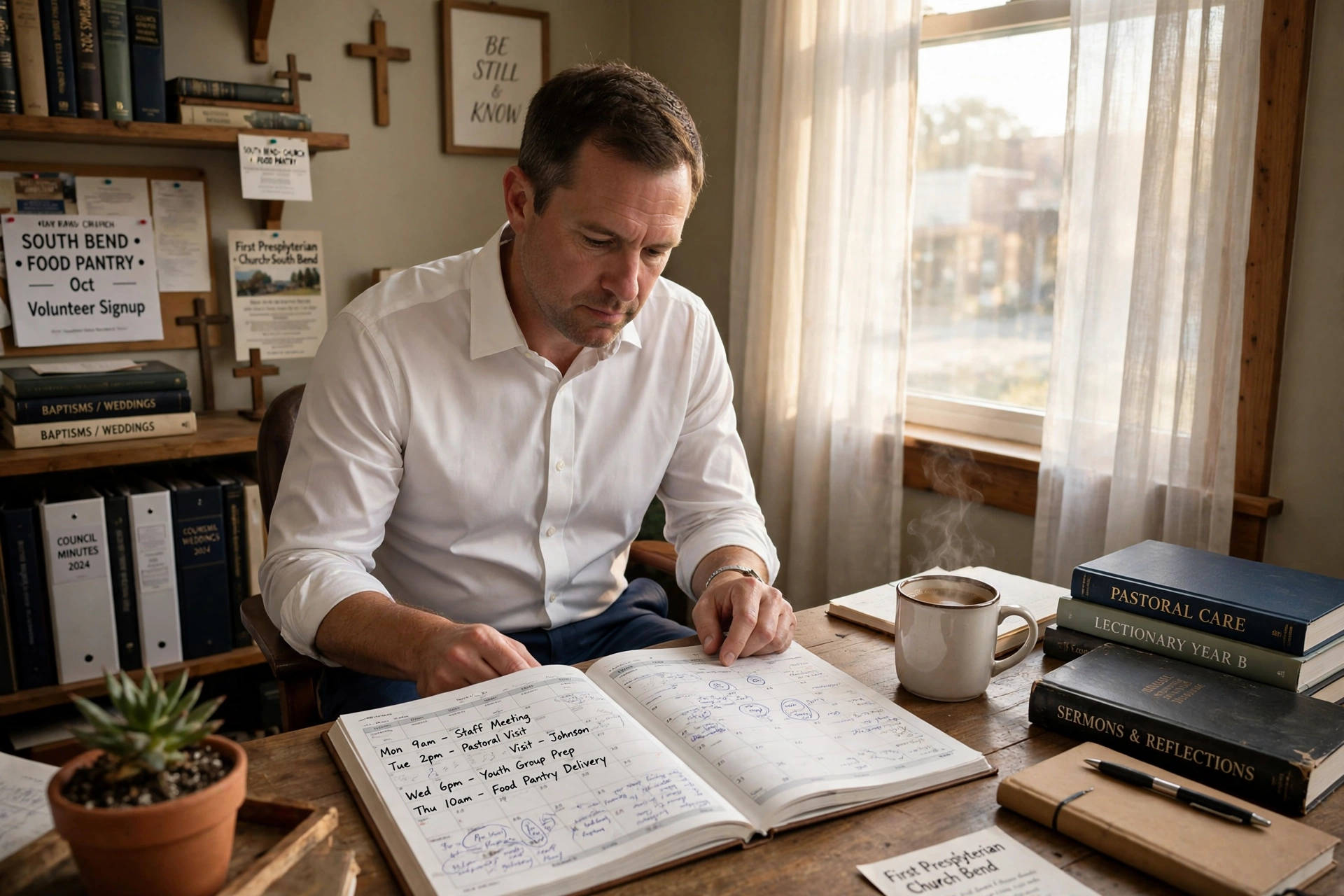
Managing the spiritual and emotional needs of a congregation in St. Joseph County requires more than just a calling; it requires a precise operational strategy. For ministries in Northern Indiana, the challenge of pastoral counseling scheduling in South Bend often manifests as a chaotic mix of handwritten notes, fragmented emails, and missed appointments that leave congregants feeling overlooked. The most effective way to solve this is by implementing a dedicated appointment booking system that synchronizes the pastor's availability with the congregation's needs in real-time, removing the administrative burden from the clergy and placing the power of scheduling in the hands of the member.
In my experience working with faith leaders across the Midwest, the pattern is clear: pastors who rely on manual scheduling spend upwards of 10 hours per week on administrative back-and-forth. This is time stolen from actual ministry and sermon preparation. When we analyze the friction in the booking process, we find that the 'scheduling gap', the time between a member deciding they need help and the actual appointment, is often extended by 3 to 5 days due to slow manual confirmation. By digitizing this process, South Bend ministries can reduce this gap to under ten minutes.

Why South Bend Ministries Are Adopting Digital Scheduling Systems?
The shift toward digital tools in South Bend is not merely about following a trend; it is a response to the evolving expectations of the modern congregant. In 2026, faith communities in Northern Indiana are seeing a demographic shift where younger families and professionals expect the same seamless experience from their church that they receive from their healthcare providers or financial institutions. The friction of a phone call that goes to voicemail, followed by a game of 'email tag,' is an invisible barrier to pastoral care.
According to the Barna Group, the health of a church is deeply tied to the accessibility of its leadership. When members feel that accessing a pastor for counseling is a bureaucratic hurdle, the perceived value of the pastoral relationship diminishes. In the South Bend area, where community ties are strong but the pace of life is accelerating, the ability to secure a counseling slot instantly is a signal of a ministry that values its people's time and emotional urgency. This is especially critical during seasonal crises or community tragedies where the demand for pastoral care spikes suddenly, overwhelming traditional manual systems.
Furthermore, the integration of specialized tools allows for better boundary management. A common struggle for ministers in St. Joseph County is the 'always-on' expectation. Without a structured scheduling system, a pastor's personal phone becomes the only portal for appointments, leading to burnout. Digital scheduling creates a professional boundary, signaling that while the pastor is available, there are specific, dedicated times for deep counseling work, which actually improves the quality of the care provided. This alignment between availability and accessibility is what separates growing ministries from those that are stagnating under administrative weight.
What Are the Key Benefits of Automated Scheduling for South Bend Pastors?
The primary advantage of moving away from manual calendars is the drastic reduction in 'no-show' rates and the elimination of double-bookings. When a member schedules their own session, they take psychological ownership of the appointment. When a secretary schedules it for them via a phone call, the commitment is lower. In a digital environment, automated reminders via SMS and email ensure that the congregant is prepared and present, which is essential for the effectiveness of pastoral care.
Increased Accessibility for the Congregation
By providing a public-facing booking link, ministries remove the anxiety associated with asking for help. Many people in crisis feel a sense of shame or hesitation when calling a church office. A self-service portal allows them to find a time that works for them in privacy, which increases the likelihood that they will seek the help they need. This shift from a 'request-based' system to an 'access-based' system can increase the number of counseling sessions by as much as 25% without increasing the pastor's actual working hours.
Improved Boundary Management and Burnout Prevention
Pastoral burnout is a systemic issue across the US. When a minister uses a tool like Pastor Agenda, they can set specific 'Counseling Blocks' in their calendar. This prevents the calendar from becoming a fragmented mess of 15-minute gaps that are unusable for deep work. By grouping appointments, pastors can maintain a 'flow state' in their ministry, moving from one counseling session to another without the mental exhaustion of constant interruptions.
Data-Driven Ministry Insights
Digital scheduling provides a trail of data that manual systems miss. Pastors can analyze which times of the week have the highest demand, which types of counseling (e.g. marriage, grief, spiritual guidance) are most requested, and how long the average session lasts. This allows the leadership to make informed decisions about whether to bring in additional licensed counselors or adjust the church's community outreach programs based on actual needs rather than anecdotal evidence.
💡
Key Takeaway
Transitioning to digital scheduling doesn't just save time; it removes the psychological barriers that prevent congregants from seeking essential pastoral care.
| Scheduling Method | Admin Effort | Error Rate | Member Experience | Boundary Control |
|---|---|---|---|---|
| Manual/Paper | Very High | High (Double-books) | Low (Slow) | Poor (Phone-based) |
| Generic AI/Forms | Medium | Medium (Hallucinations) | Medium (Cold) | Moderate |
| Pastor Agenda | Very Low | Zero (Syncs) | High (Instant) | Strong (Defined) |
Real-World Examples of Scheduling Transformation in South Bend
To understand the impact, we can look at two contrasting scenarios based on the results I've seen with ministries in the region.
Case Study 1: The Mid-Sized Community Church
Before implementing a digital system, a local South Bend church relied on a part-time secretary to manage the Lead Pastor's calendar. This process involved 3 to 5 phone calls per appointment and a manual check of a physical planner. The result was a 15% no-show rate and an average of 4 hours per week spent on scheduling logistics. After switching to a dedicated scheduling platform, the church saw the no-show rate drop to under 3%. The pastor regained 4 hours of weekly time, which was reinvested into a new community outreach program in the downtown South Bend area. The members reported a higher level of satisfaction because they could book their appointments at 11 PM when the crisis hit, rather than waiting for the office to open at 9 AM on Monday.
Case Study 2: The Growing Multi-Staff Ministry
Another ministry in St. Joseph County had three associate pastors, all sharing one master calendar managed via a shared document. This led to frequent overlap and confusion regarding who was meeting with whom. By implementing a centralized system where each pastor had their own unique booking link, the ministry eliminated all scheduling conflicts. More importantly, they could now track the distribution of pastoral care across the staff. They discovered that one associate pastor was carrying 60% of the counseling load, allowing the Lead Pastor to redistribute the workload and prevent a potential burnout crisis for that specific staff member.

How to Implement Professional Pastoral Counseling Scheduling in South Bend
Moving to a professional system doesn't have to be a technical ordeal. The goal is to make the transition invisible to the congregant while providing maximum structure for the pastor. The most effective path follows a specific sequence to ensure adoption.
Step 1: Define Your Availability Blocks
Before touching any software, the pastor must decide on 'Sacred' and 'Available' time. This means blocking out hours for study, family, and administration, and creating specific windows for counseling. For example, Tuesday and Thursday from 1 PM to 5 PM might be designated for pastoral care. These blocks are then mirrored in the software to ensure no appointments are ever booked during the pastor's personal time.
Step 2: Configure the Booking Workflow
Use a tool like Pastor Agenda to create a streamlined booking flow. This includes asking the right preliminary questions: 'Is this a first-time visit?', 'What is the general nature of the request?', and 'What is your preferred contact method?'. By gathering this information upfront, the pastor enters the session with context, rather than spending the first 10 minutes of a 50-minute session doing basic intake.
Step 3: Distribute the Access Point
The booking link should be integrated into every touchpoint. This means adding it to the church website, the email signature of every staff member, and the church's social media profiles. In South Bend, where many members use Facebook for community updates, a direct 'Book a Session' button on the page reduces the friction of reaching out.
Step 4: Automate the Reminder Cycle
Set up a sequence of reminders: 24 hours before the appointment and 2 hours before. This is the single most effective way to reduce missed appointments. In a city like South Bend, where traffic around the university or hospital areas can cause unexpected delays, a 2-hour reminder allows the congregant to notify the pastor if they are running late.
Common Objections to Digital Scheduling and the Data-Backed Reality
Many ministers feel a hesitation to 'digitize' the sacred act of pastoral care, fearing it makes the ministry feel corporate or cold. However, the data suggests the opposite.
Objection 1: "It feels impersonal to use a link instead of a phone call."
Most people assume that a phone call is more personal. However, the data shows that for people in crisis, a phone call is often a barrier. According to research on digital health adoption, a significant percentage of adults prefer asynchronous communication for initial intake because it reduces the anxiety of the interaction. By providing a link, you are not removing the personal touch; you are removing the friction that prevents the personal touch from happening. The personal interaction happens during the counseling, not during the scheduling.
Objection 2: "My congregation is older and won't know how to use it."
In my experience, this is a common misconception. We have seen that even among senior citizens in Northern Indiana, the adoption of simple, one-click scheduling is high when the interface is clean. For those who truly cannot use the system, the secretary can still enter the appointment manually into the same system. The result is a single, unified source of truth for the pastor's time, even if the input method differs between the member and the secretary.
Objection 3: "I'm worried about privacy and data security."
This is a valid concern. However, using a secure, encrypted platform is far safer than keeping a paper ledger on a desk or an unencrypted Excel sheet. Professional tools ensure that the data is stored according to modern security standards, which is far superior to the 'open-book' method used in many traditional church offices.
📚
Definition
Asynchronous communication is a type of interaction where the parties do not need to be present at the same time for the exchange to occur, such as through a booking portal or email.
Frequently Asked Questions
How does digital scheduling improve the quality of pastoral care in South Bend?
Digital scheduling allows the pastor to enter each session with a clear mind, knowing exactly who is coming and why. By removing the stress of administrative chaos, the pastor can focus entirely on the congregant. When the logistical friction is removed, the transition from the 'office' mindset to the 'counseling' mindset is seamless, which directly improves the empathy and presence the pastor brings to the session. Furthermore, the ability to set specific time-blocks ensures the pastor is not exhausted by a fragmented day, meaning they have more emotional energy to give to those in need.
Is it possible to integrate these tools with existing church management software?
Yes, modern tools like Pastor Agenda are designed to complement existing systems. While a church management system (ChMS) might handle membership data and giving, a dedicated scheduling tool handles the 'dynamic' part of the calendar. Integration usually happens via API or simple calendar syncing (like Google Calendar or Outlook), ensuring that when a member books a session through the portal, it immediately appears on the pastor's primary device. This prevents the 'double-booking' nightmare that occurs when using separate, non-synced systems.
How do I handle emergency counseling requests with a digital system?
Digital scheduling is for planned care, not crisis intervention. Every booking page should clearly state: 'If this is a life-threatening emergency or an immediate crisis, please call [Emergency Number] or 988.' By separating the 'crisis' lane from the 'counseling' lane, you ensure that the system doesn't accidentally delay an urgent need. The digital portal is for those seeking guidance, marriage counseling, or spiritual direction, while a dedicated phone line remains the gold standard for immediate crisis intervention.
What is the average reduction in administrative time after adopting this system?
Based on observations from ministries in the Midwest, the reduction in administrative time is typically between 40% and 60%. For a lead pastor, this often means recovering 5 to 10 hours per month that were previously spent on the 'back-and-forth' of scheduling. When you factor in the reduction of no-shows, the total efficiency gain is even higher. The church office also benefits, as the secretary is no longer acting as a human switchboard for the pastor's calendar, allowing them to focus on other vital ministry tasks.
Can I set different durations for different types of counseling sessions?
Absolutely. A professional system allows you to create different 'service types.' For example, a 'First-Time Visit' might be 60 minutes, while a 'Follow-up Session' is 30 minutes. This allows the pastor to manage their energy and time more effectively. In South Bend, where pastors often balance multiple roles, this granularity is essential. It ensures that the calendar is optimized for the actual needs of the congregant, preventing the common mistake of over-scheduling or under-scheduling the necessary time for a specific emotional need.
Final Thoughts on Pastoral Counseling Scheduling in South Bend
The goal of every ministry in South Bend is to ensure that no one who needs spiritual guidance is turned away or delayed by a clerical error. The transition to a professional system for pastoral counseling scheduling in South Bend is not about replacing the human touch with a machine; it is about using technology to clear the path for that human touch to happen more often and more effectively. When you remove the administrative friction, you aren't just saving time, you are demonstrating to your congregation that their needs are a priority and that your doors are truly open.
If you are ready to stop the calendar chaos and start focusing on the people of St. Joseph County, it is time to upgrade your system. Stop relying on fragmented notes and start using a tool built specifically for the unique needs of ministry. Experience the freedom of a synchronized, automated, and professional calendar today.
Take the first step toward a more organized ministry at PastorAgenda Blog.
Recommended Readings
To deepen your understanding of these topics, we recommend reading the following articles:
- Ensuring Absolute Privacy in Church Booking Systems
- Church Appointment Booking
- Online Appointment Booking for Modern Churches
- Automated Reminders and Communication for Congregations
Free Guide: The 7 Church Growth Hacks for 2026
Learn how modern ministries are using automated scheduling and AI pastoral assistants to save 12+ hours of admin work every week.



