📖This article is part of the complete guide to Integrating Tech: QR Codes and Apps in Faith Communities.
I remember a conversation with a lead pastor in 2026 who was frustrated because his congregation ignored the expensive custom app he had commissioned. He had the best intentions, but his members found the friction of downloading, updating, and logging into a standalone app too high for a simple counseling request. This is a classic tension in ministry: the desire for a 'branded' experience versus the actual user behavior of a diverse congregation. For a comprehensive overview, explore our guide on church technology tools.
What is Church Mobile App Booking Compared to Web Booking?
📚
Definition
Church mobile app booking refers to the process of scheduling appointments, counseling sessions, or ministry slots through a dedicated application installed on a smartphone. Web booking, conversely, involves a browser-based portal accessible via a URL or QR code without requiring an installation.
When we analyze the friction points of a congregation, the distinction becomes clear. Mobile app booking is an "ecosystem" play. It aims to keep the member inside a controlled environment where the church can push notifications, share sermons, and manage profiles. Web booking is an "access" play. It prioritizes the immediate need, getting an appointment on the calendar, without forcing the user to commit storage space on their device.
In my experience working with various ministries, the "app fatigue" of 2026 is real. People are increasingly hesitant to download new software unless it provides a daily, essential utility. A scheduling tool, which a member might use once every three months for pastoral care, often doesn't justify a permanent app install. This is why many churches are shifting toward Progressive Web Apps (PWAs) or highly optimized web portals. These provide the "feel" of an app, fast, responsive, and intuitive, while remaining accessible via a simple link.

Why Does the Choice Between Apps and Web Booking Matter for Your Ministry?
Choosing the wrong interface can inadvertently create a barrier between a pastor and a hurting member. If a person is in a crisis and needs immediate pastoral care, the requirement to "Download our app from the App Store, create an account, and verify your email" can be a deterrent. The goal of any church scheduling system should be the removal of friction.
According to Barna Group, the digital habits of faith communities are shifting toward "on-demand" access. When members seek spiritual guidance, they want the path of least resistance. A web-based system allows a member to click a link in a text message or a social media post and be booked in under 60 seconds. This immediacy is fundamental to effective ministry.
Furthermore, the cost of maintenance is a significant factor. Developing and maintaining a native iOS and Android app requires constant updates to keep pace with operating system changes. A web-based booking system, such as the one offered by Pastor Agenda, is updated centrally. The pastor doesn't have to worry about whether a member is running an outdated version of the app that crashes during the booking process. This ensures that the technology serves the ministry, rather than the ministry serving the technology.
Consider the impact on accessibility. Many members of a congregation may use older devices with limited storage. Forcing a 100MB app download just to book a 15-minute check-in is a logistical hurdle. Web booking is device-agnostic; it works on a 10-year-old Android phone just as well as the latest iPhone, provided there is an internet connection.
💡
Key Takeaway
Web booking lowers the barrier to entry, making pastoral care more accessible to the widest possible demographic within the church.
How to Implement the Best Booking Strategy for Your Congregation
To maximize engagement, the most effective approach is a hybrid strategy that leverages the strengths of both platforms. You don't necessarily need to choose one or the other, but you must prioritize the user experience.
1. Establish a High-Conversion Web Portal
Start by creating a dedicated booking page. This page should be mobile-responsive and lightweight. Instead of a complex menu, lead with the primary goal: "Schedule Time with Your Pastor." Use a clear, calendar-based interface where members can see available slots in real-time. This removes the back-and-forth of emails and phone calls, which often leads to scheduling errors.
2. Deploy Strategic Access Points
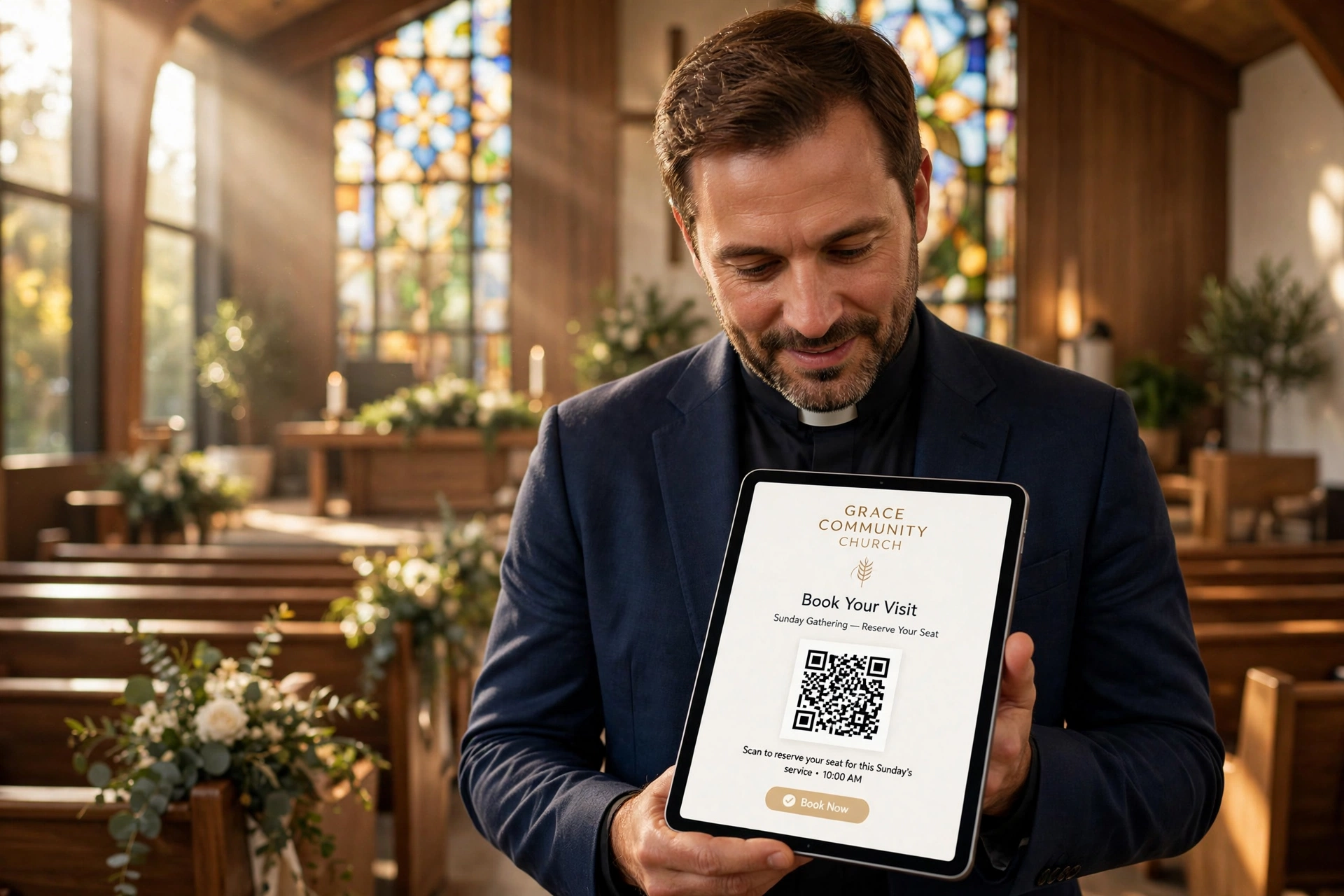
Don't just hide your booking link in the footer of your website. Use a custom church QR code booking banner in the physical sanctuary. When a member hears a call for counseling during a sermon, they can scan the code and book their slot before they even leave their seat. This converts a spiritual impulse into a scheduled action immediately.
3. Use Apps for High-Frequency Interactions
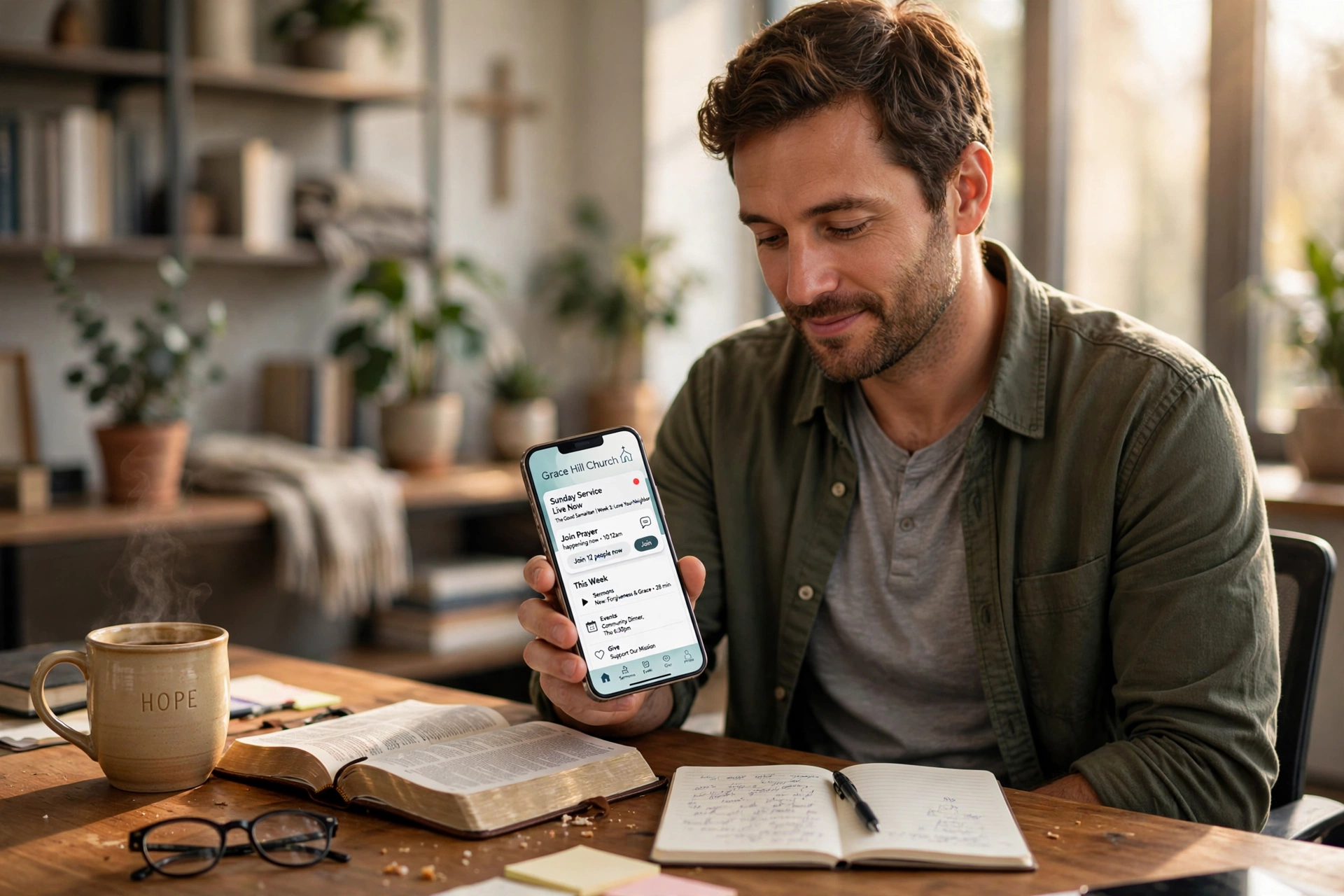
If your church has a dedicated app, use it for things members do weekly, like giving, reading the weekly bulletin, or signing up for small groups. Within that app, simply embed a link to your web booking portal. This gives you the best of both worlds: the branded environment of the app and the frictionless functionality of web scheduling.
4. Implement a Simplified Onboarding Process
Whether using an app or web portal, minimize the fields required for booking. Name, email, and the reason for the visit are usually sufficient. Asking for a full biography or complex account registration at the start of the process increases the drop-off rate significantly.
5. Provide Clear Digital Guidance
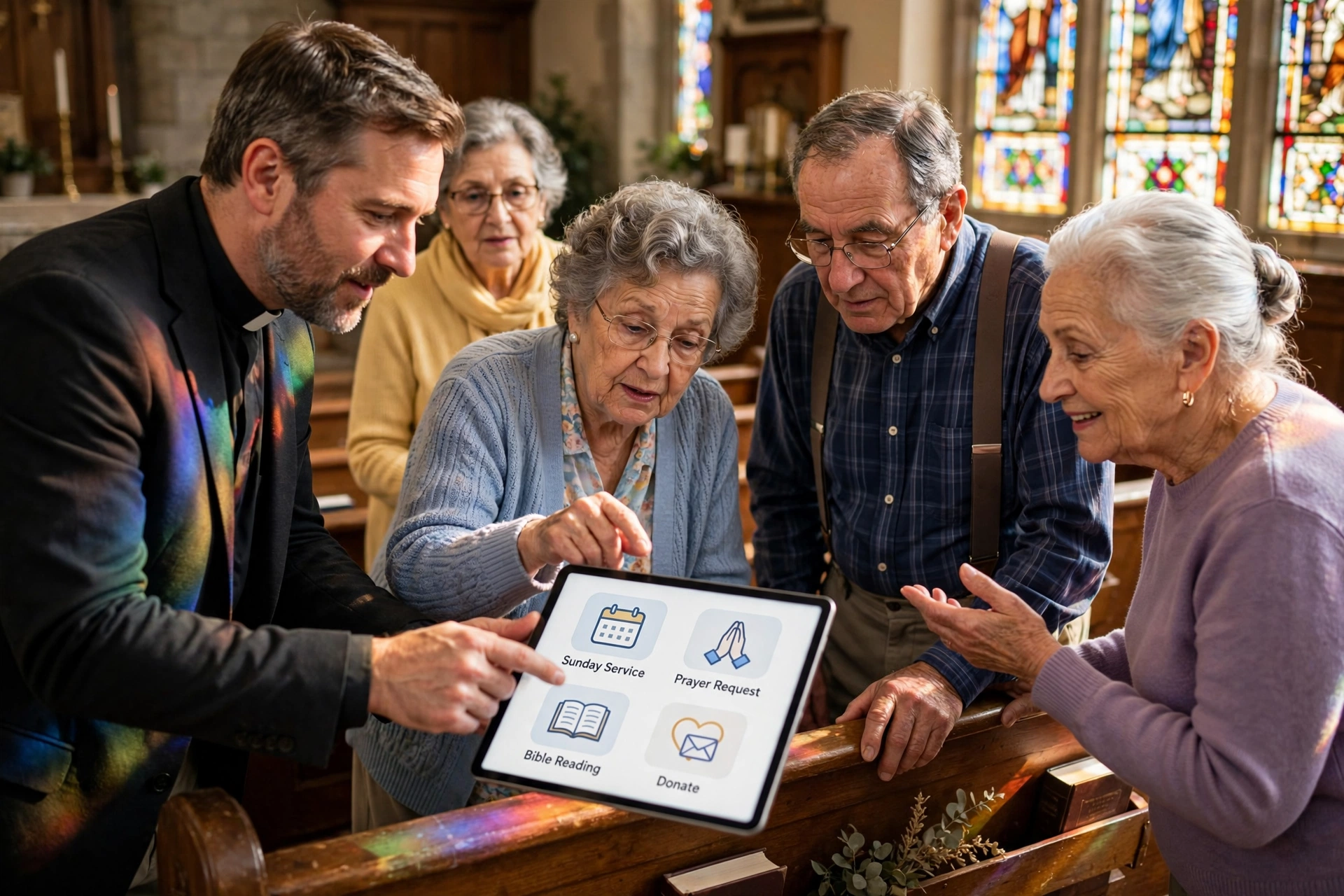
Not everyone is tech-savvy. To ensure no one is left behind, create a short video tutorial or a printed one-pager. If you find that your seniors are struggling, you can implement specific strategies on how to help older congregation members adopt digital booking apps, ensuring the digital divide doesn't become a spiritual divide.
Comparison: Traditional vs. Generic AI vs. Modern Scheduling
When evaluating how to handle booking, it's important to see where most churches fall. Many still rely on the "Traditional" method, while some try to use generic AI bots that often hallucinate or fail to understand the nuance of pastoral care.
| Feature | Traditional Approach | Generic AI Approach | Modern Approach (Pastor Agenda) |
|---|---|---|---|
| Booking Method | Phone calls, handwritten lists | Chatbots on website | Integrated Web Portal/QR Codes |
| User Friction | High (waiting for callback) | Medium (bot misunderstandings) | Low (direct self-scheduling) |
| Consistency | Prone to human error | High hallucination risk | Precise and synchronized |
| Accessibility | Limited to office hours | 24/7 but impersonal | 24/7 and pastor-configured |
| Maintenance | Manual tracking | Constant prompt tuning | Automated and managed |

Common Mistakes and What to Avoid
In my years of analyzing church administration, I see the same three mistakes repeated. Avoiding these will put your ministry ahead of 90% of other organizations.
Mistake 1: The "App-First" Fallacy
Many leaders believe that having an app makes them look "modern." However, a modern church is one that is accessible, not one that has a fancy app that no one uses. If your primary method of booking is an app, you are effectively telling your members that they must change their device's storage to access your care. Always provide a web-based alternative.
Mistake 2: Over-Automating the Human Element
While scheduling software is great, the confirmation should still feel pastoral. A generic "Your appointment is confirmed" email can feel cold. Ensure your system allows for personalized confirmation messages. For example, "I'm looking forward to our time together, [Name]. I'll be praying for our conversation in the meantime." This maintains the heart of the ministry while using the efficiency of the tool.
Mistake 3: Ignoring the "Digital Divide"
Assuming that everyone in the congregation is an expert with a smartphone is a recipe for exclusion. If you move entirely to digital booking, you must maintain a manual fallback. Whether it's a sign-up sheet in the foyer or a dedicated church secretary, there must be a way for the non-digital member to be seen. The technology should expand the reach, not shrink the audience.
Mistake 4: Lack of Synchronization
Nothing damages a pastor's credibility more than double-booking a counseling session because the "app" didn't sync with the "web portal." Ensure you are using a single source of truth for your calendar. This is where a dedicated tool like Pastor Agenda excels, as it synchronizes all entries across all access points instantly.
Mistake 5: Collecting Too Much Data
Asking for a member's full address, date of birth, and marital status just to book a 15-minute coffee chat is overkill. In the digital age, people are protective of their data. Only ask for what is essential for the appointment. You can gather more detailed information during the actual session.
Frequently Asked Questions
Should I build a custom app for my church if I only need booking?
No, building a custom app solely for booking is generally an inefficient use of church resources. Custom apps are expensive to build and even more expensive to maintain. For the specific need of scheduling, a mobile-responsive web portal is significantly more effective because it requires zero installation from the member and works across all devices instantly. Focus your budget on tools that integrate seamlessly into your existing workflow rather than maintaining a standalone piece of software.
How do I transition members from phone calls to web booking?
The transition should be gradual and incentivized. Start by mentioning the new booking link during Sunday services and include it in your weekly email newsletter. When someone calls to book, the church secretary can say, "I can certainly get you on the calendar, but for next time, you can actually pick your exact slot instantly using this link we'll text you." By showing them the convenience of the web portal in real-time, you move them toward a more efficient system without making them feel abandoned.
Does web booking impact the privacy of pastoral counseling?
When implemented correctly, web booking is just as secure as a phone call. The key is using a platform that employs SSL encryption and follows data protection standards. The booking portal should only collect the minimum necessary information. Avoid asking for sensitive counseling details in the "notes" section of a booking form; instead, use that section for a general topic (e.g. "Marriage Guidance" or "Baptism Inquiry") and save the deeper details for the private session.
Can web booking handle complex schedules with multiple pastors?
Yes, modern scheduling software is designed specifically for this. You can create separate booking pages for different ministers or a single portal where the member selects which pastor they wish to see. The system then only shows the available slots for that specific person. This prevents the administrative nightmare of a secretary trying to coordinate three different calendars manually, which is a common point of failure in larger congregations.
Will a web portal alienate my older members?
Not if you provide a bridge. The goal is not to replace the human touch but to supplement it. By using a combination of clear signage, simple interfaces, and a few "tech-helpers" in the lobby to walk seniors through their first booking, you can actually empower them. Many seniors appreciate the independence of booking their own time without having to wait for a return phone call. The key is providing the support needed to overcome the initial learning curve.
Recommended Readings
To deepen your understanding of these topics, we recommend reading the following articles:
- How to Help Older Congregation Members Adopt Digital Booking Apps
- Ensuring Absolute Privacy in Church Booking Systems
- Church Appointment Booking
- Online Appointment Booking for Modern Churches
Conclusion
In the balance between church mobile app booking and web-based systems, the evidence points toward a clear winner for accessibility: the web portal. While apps have their place for community engagement and daily devotionals, the act of seeking pastoral care is often an urgent or occasional need. Adding the friction of an app download to a moment of spiritual crisis is a risk no ministry should take.
By prioritizing a lightweight, responsive web experience, you ensure that every member, regardless of their device or technical proficiency, has a direct line to their leadership. This is the essence of digital stewardship: using technology to remove barriers, not build new ones. Whether you are a small house church or a large cathedral, the goal remains the same: getting the person and the pastor in the same room at the right time.
For a deeper dive into how these tools fit into a larger strategy, visit our Integrating Tech: QR Codes and Apps in Faith Communities pillar. If you are ready to stop the calendar chaos and start providing seamless access to your ministry, explore how PastorAgenda Blog can automate your scheduling and let you focus on what truly matters: your congregation.
Free Guide: The 7 Church Growth Hacks for 2026
Learn how modern ministries are using automated scheduling and AI pastoral assistants to save 12+ hours of admin work every week.