
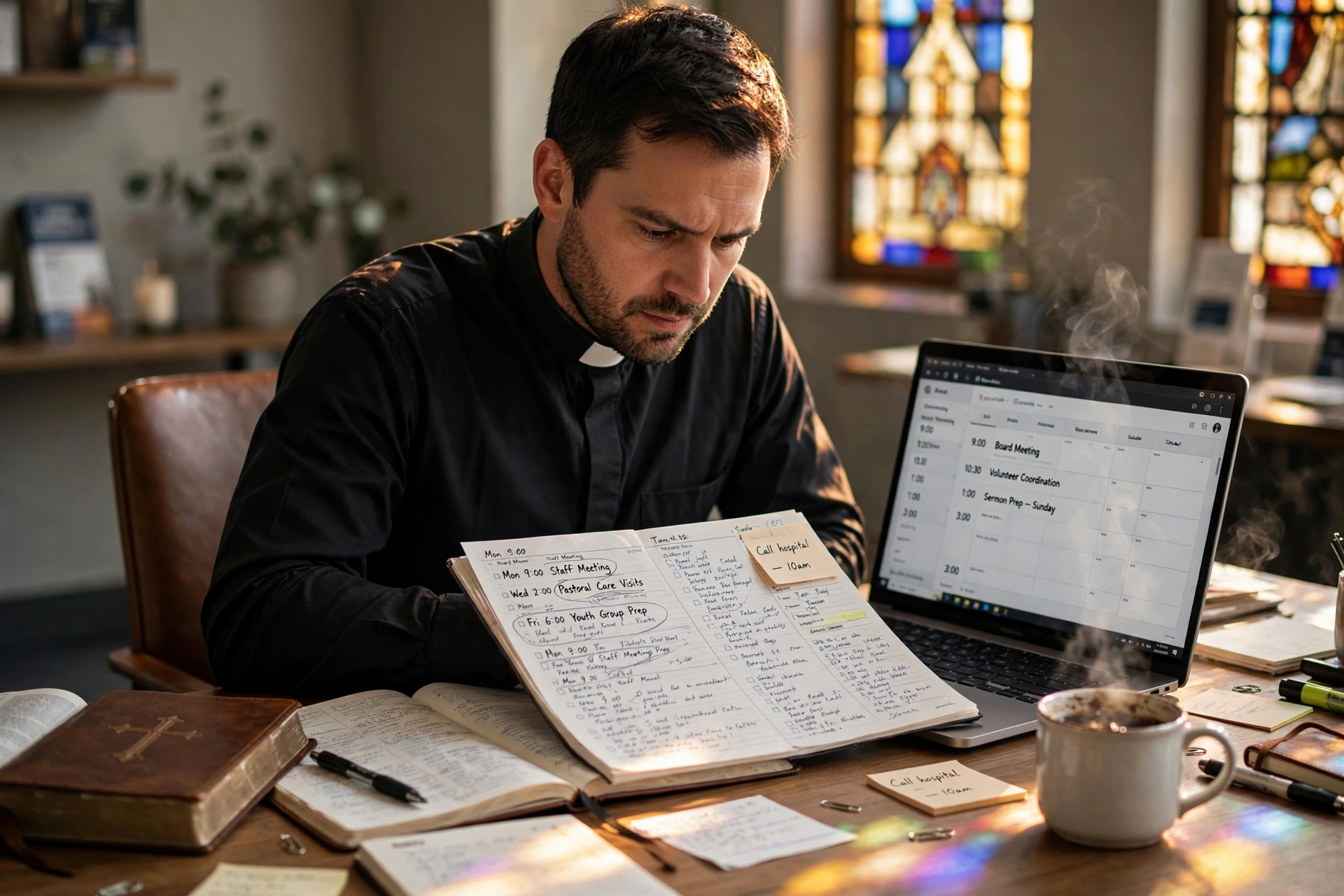
Why Is a Structured System to Schedule With Pastor Necessary for Ministry Growth?
The burden of pastoral burnout is rarely caused by the act of ministry itself, but by the administrative friction surrounding it. When a leader relies on "text me when you're free" or fragmented email threads, they aren't just losing time; they are losing the ability to be present for their congregation. The reason it is worth implementing a dedicated system to schedule with pastor leads is simple: it transforms a chaotic, reactive calendar into a proactive tool for pastoral care, ensuring that the most vulnerable members of the church aren't overlooked due to a scheduling conflict.
In my experience working with dozens of church leaders, the most common mistake is believing that "accessibility" means being available 24/7 via unstructured channels. I've seen gifted ministers reach a breaking point not because they lacked a calling, but because they lacked a boundary. When you remove the manual back-and-forth of appointment setting, you reclaim an average of 5 to 10 hours of administrative labor per week, which directly translates into more focused time for sermon preparation and deep-level counseling.
The Mechanics of Digital Appointment Management in the Church
To understand why a structured approach is superior, we must first define what we are actually implementing. Many treat this as a simple "calendar link," but in a ministry context, it is actually a gateway for triage and pastoral care.
📚
Definition
Appointment Scheduling Software for Ministry is a specialized digital interface that allows congregants to book specific time slots based on a pastor's predefined availability, often incorporating a pre-screening form to categorize the urgency and nature of the meeting.
The core problem with traditional scheduling is the "asymmetry of information." The pastor knows their availability, but the congregant does not. This leads to a cycle of three or four messages just to agree on a time. By shifting to a system where the congregant selects from a live view of open slots, the friction is eliminated instantly.
According to research by the Barna Group, pastoral stress levels are closely tied to the feeling of being overwhelmed by competing demands. When a pastor cannot control their time, their perceived stress increases regardless of the actual workload. A digital system provides a "buffer zone," allowing the minister to designate specific "Office Hours" or "Counseling Blocks," ensuring that the ministry of the word is not constantly interrupted by the logistics of the calendar.
For example, instead of a pastor spending Tuesday morning replying to five different people to set up Friday meetings, they simply send a link. The system handles the time zone synchronization, the calendar invitation, and the reminder notifications. This isn't about replacing the personal touch of ministry; it's about automating the logistics so the personal touch can be more intentional and less rushed.

Why This Shift Matters: The Real Implications of Scheduling Friction
The decision to modernize how people schedule with pastor leads is not a matter of convenience; it is a matter of institutional health. When a church lacks a streamlined process, it creates "invisible barriers" to entry for those who are struggling.
Consider the psychological friction a new believer or a grieving widow feels when they have to "bother" a pastor via text, not knowing if they are interrupting a family dinner or a study session. A professional booking page removes the guilt of the request. It signals that the pastor wants to be available and has carved out specific, sacred space for that interaction.
From a data-driven perspective, the impact of administrative inefficiency is staggering. If a pastor spends just 30 minutes a day managing their calendar via manual messages, they lose approximately 182 hours per year. That is over 22 full workdays wasted on the logistics of meeting, rather than the act of ministering.
Furthermore, the National Association of Evangelicals emphasizes the importance of sustainable leadership practices to prevent clergy attrition. The consequence of not acting, of staying with a manual system, is a higher probability of burnout. When a leader feels they have no "off" switch, their emotional intelligence and capacity for empathy decrease.
The risks of ignoring this transition include:
- The "Loudest Voice" Bias: In a manual system, the people who are most aggressive in texting the pastor get the most time, while the quiet, truly needy members of the congregation are pushed to the periphery.
- Calendar Overlap: Double-booking occurs frequently in manual systems, leading to canceled appointments that can be perceived as a lack of care by the congregant.
- Mental Load: The "open loop" of an unscheduled meeting creates cognitive load, reducing the pastor's ability to focus on deep work like sermon exegesis.
Implementing a Professional Booking Workflow with Pastor Agenda
Moving from a chaotic calendar to a streamlined system requires more than just software; it requires a change in culture. The goal is to move the congregation from a "demand-on-sight" mentality to a "respect-the-appointment" framework.
The most effective way to do this is by using Pastor Agenda, a platform specifically engineered for the unique rhythms of church life. Unlike generic business tools, a ministry-focused approach understands that a "meeting" could be anything from a 15-minute check-in to a two-hour intensive counseling session.
Here is the step-by-step implementation guide for a healthy scheduling workflow:
- Audit Your Energy: Before setting up your digital calendar, identify your "peak ministry hours." Do not open your entire day to the public. Reserve blocks for study, family, and administrative tasks.
- Define Meeting Types: Create categories within Pastor Agenda. For example: "Pastoral Counseling (60 min)," "New Member Orientation (30 min)," and "Urgent Crisis Meeting (15 min)."
- Set Guardrails: Implement a "minimum notice" rule. For instance, prevent anyone from booking a meeting less than 24 hours in advance. This prevents the shock of finding a 9:00 AM appointment on your calendar at 11:00 PM the night before.
- Integrate Pre-Meeting Questions: Use the booking form to ask: "What is the primary reason for this meeting?" and "Is this a recurring issue or a one-time need?" This allows the pastor to prepare mentally and spiritually before the person walks through the door.
- Promote the Link: Place the "schedule with pastor" link in the church newsletter, on the website, and in the email signature. Be explicit: "To ensure I can give you my full, undivided attention, please use this link to find a time that works for both of us."
💡
Key Takeaway
The goal of scheduling software is not to put a wall between the pastor and the people, but to build a bridge that ensures every person who needs care actually receives it in a structured, sustainable way.

Comparing Scheduling Approaches: Manual vs. Generic vs. Specialized
Many leaders struggle to decide if they should just use a free tool or stick to their current method. However, when you analyze the outcomes, the difference in "ministry ROI" is clear.
| Feature | Manual (Texts/Emails) | Generic AI/Business Tools | Pastor Agenda Approach |
|---|---|---|---|
| Time Spent Setting | High (Back-and-forth) | Low (Instant) | Low (Instant + Context) |
| Boundary Control | Non-existent | Basic (Availability) | Advanced (Ministry Blocks) |
| Pre-Screening | None (Found out in meeting) | Basic Forms | Ministry-specific Triage |
| Congregant Experience | High anxiety / Uncertain | Impersonal / Corporate | Welcoming / Intentional |
| Burnout Risk | Very High | Moderate | Low (Sustainable) |
Generic tools like Calendly are excellent for sales calls, but they lack the nuance of pastoral care. A business tool doesn't understand the difference between a "discovery call" and a "spiritual crisis." By using a specialized system, you ensure that the terminology and the flow match the sacred nature of the interaction.
Now, here's where it gets interesting: when you use a professional system, you actually increase the perceived value of the pastor's time. When a meeting is "booked" and "confirmed," it becomes a commitment. In the manual system, meetings are often viewed as casual "drop-ins," which leads to a higher rate of no-shows and late arrivals.
Common Misconceptions About Digital Scheduling in Ministry
There is a persistent myth in the church that using a booking system is "unspiritual" or "too corporate." I encounter this resistance frequently. Most guides on church administration get this wrong by focusing on the "efficiency" rather than the "efficacy."
Myth 1: "It makes the pastor seem inaccessible."
The opposite is true. Inaccessibility happens when a pastor is so overwhelmed by manual scheduling that they stop responding to messages altogether. A link is a constant, open invitation. It says, "I have a place for you in my schedule."
Myth 2: "People won't use it; they prefer to call."
While some will always call, a significant portion of the younger generation (Millennials and Gen Z) actually feels anxiety when making a phone call for a non-urgent matter. By providing a digital option to schedule with pastor, you are removing a barrier for the very people the church is often trying to reach.
Myth 3: "It's only for 'big' churches."
Small churches actually need this more. In a large church, there are administrative assistants to filter requests. In a small church, the pastor is the secretary, the janitor, and the preacher. For the "solo-pastor," an automated system is the only way to prevent total collapse.
Myth 4: "It replaces the Holy Spirit's leading in spontaneity."
Scheduling the "routine" (counseling, membership, admin) creates the margin necessary to be spontaneous for the "urgent" (hospital visits, sudden crises). You cannot be truly spontaneous if your entire day is clogged with poorly managed appointments.
Frequently Asked Questions
Is it really worth the effort to set up a digital system for a small congregation?
Yes, because the "cost of chaos" is higher in small churches. In a small setting, the pastor often wears every hat in the organization. Without a system to schedule with pastor, the leader becomes a bottleneck for every church activity. When you implement a tool like Pastor Agenda, you aren't just saving minutes; you are protecting your mental health. According to Lifeway Research, the ability to maintain personal and family boundaries is one of the top predictors of long-term ministerial success.
Won't my older members feel alienated by a booking link?
This is a common concern, but it is solved by a "hybrid approach." You do not have to force everyone into the portal. Continue to allow phone calls for those who prefer them, but the pastor (or a deacon) can handle the actual entry into the system. This keeps the calendar as the "single source of truth" while maintaining the traditional touch for those who need it. Over time, many older members actually appreciate the confirmation emails and reminders, which help them remember their appointments.
How do I handle urgent crises that can't wait for an open slot?
A scheduling system is for appointments, not for emergencies. Your booking page should explicitly state: "For immediate crises or emergencies, please call [Emergency Number] or contact the church office." This clarifies the difference between a "scheduled counseling session" and an "urgent need." By separating these two flows, you ensure that the routine doesn't crowd out the urgent, and the urgent doesn't destroy your scheduled time for study and rest.
Does using a scheduling tool reduce the personal connection with the member?
On the contrary, it enhances it. When a pastor is stressed and rushing from one poorly timed meeting to another, they aren't truly present. When a meeting is properly scheduled, the pastor has had time to pray for that specific person, review the pre-screening notes, and mentally prepare. The "personal connection" happens during the meeting, not during the act of picking a date. By automating the logistics, you maximize the quality of the actual interaction.
How much time can I actually save by automating my calendar?
Based on data from various administrative audits, a leader who moves from manual "text-and-wait" scheduling to an automated system saves between 4 and 12 hours per month on the logistics alone. However, the "hidden" time saving is the elimination of "switching costs", the mental energy lost when you are interrupted mid-sermon by a text asking if you're free next Tuesday. Using Pastor Agenda allows you to batch your administrative brain-work, leaving your "spiritual brain" free for ministry.
Final Thoughts on Modernizing Your Pastoral Calendar
The decision to implement a professional way to schedule with pastor is an act of stewardship. You are stewarding your time, your energy, and the emotional health of your family. When a leader is fragmented and exhausted, the entire congregation feels the ripple effect. A structured calendar is not a corporate imposition; it is a boundary that protects the quality of your care.
If you are tired of the endless "Are you free?" "No, how about then?" "That doesn't work for me" cycle, it is time to transition to a system built for the ministry. By choosing a specialized tool, you ensure that your availability is transparent, your boundaries are respected, and your focus remains where it belongs: on the people.
Stop letting your calendar manage you. Take control of your time and create a sustainable rhythm for your ministry.
Ready to reclaim your time and focus on what truly matters?
Visit PastorAgenda Blog today and start organizing your ministry with intention.
Recommended Readings
To deepen your understanding of these topics, we recommend reading the following articles:
- Ensuring Absolute Privacy in Church Booking Systems
- Church Appointment Booking
- Online Appointment Booking for Modern Churches
- Automated Reminders and Communication for Congregations
Free Guide: The 7 Church Growth Hacks for 2026
Learn how modern ministries are using automated scheduling and AI pastoral assistants to save 12+ hours of admin work every week.



