
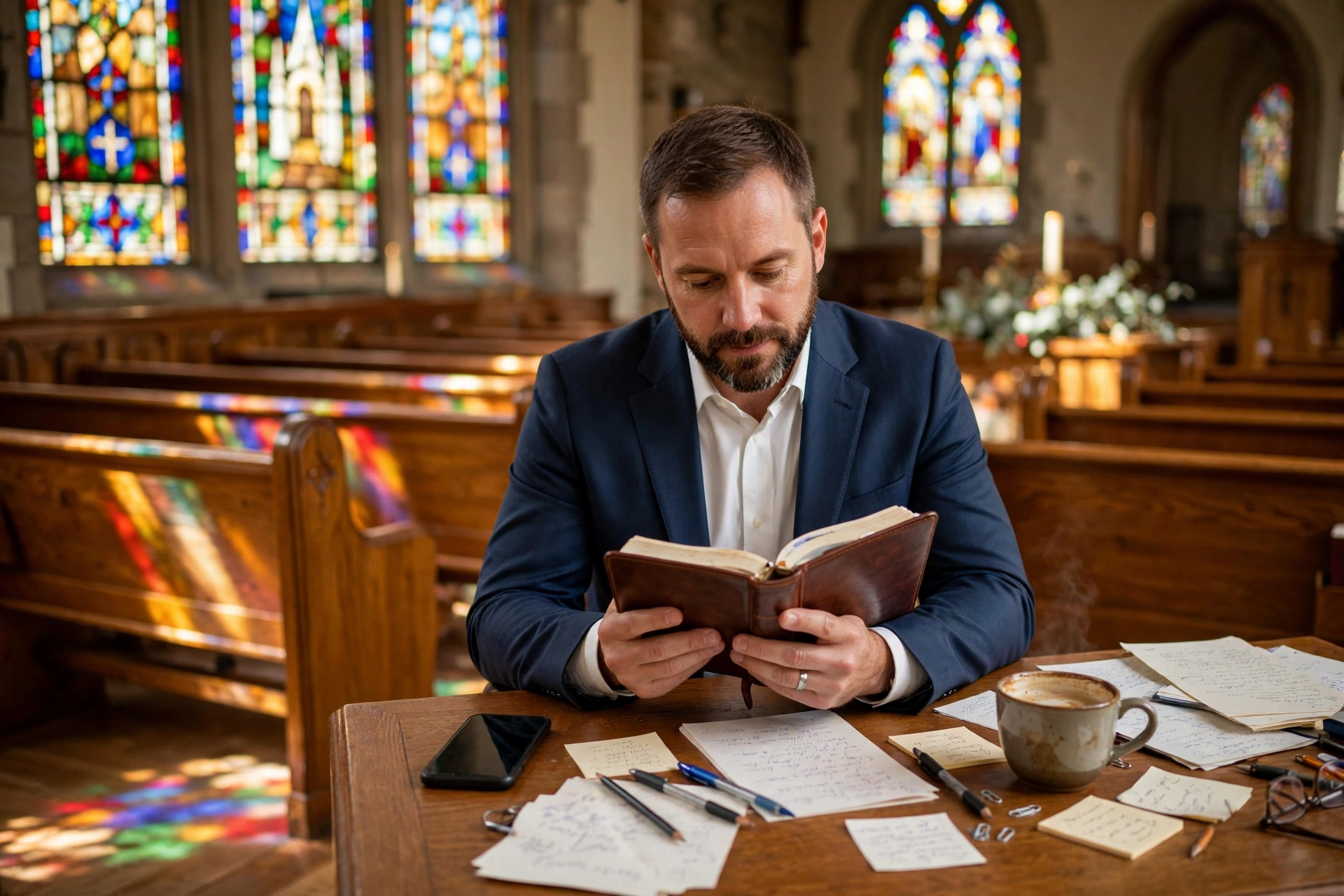
Managing a growing congregation in the heart of North Carolina requires more than just spiritual leadership; it requires operational precision. For many leaders in the Gate City, the struggle to balance sermon preparation with a constant stream of counseling requests leads to burnout. Implementing professional church appointment booking in Greensboro is the most effective way to regain control of your calendar, allowing members to secure time for pastoral care without the endless back-and-forth of phone calls and emails. By digitizing the scheduling process, ministries can ensure that no one in need of support falls through the cracks while protecting the pastor's essential study and rest time.

Why are Greensboro ministries adopting digital scheduling?
In my experience working with faith leaders across Guilford County, the transition to digital tools is rarely about following a trend and almost always about survival. The demographic shift in Greensboro, characterized by a blend of traditional congregations and a growing population of young professionals moving into the downtown area, has created a friction point. Younger members expect the same seamless booking experience from their church that they get from their healthcare provider or a local business on Friendly Avenue. When a ministry relies on a physical sign-up sheet or a secretary who is overwhelmed by phone calls, they create an invisible barrier to entry for pastoral care.
This shift is backed by broader data on organizational efficiency. According to research from the Barna Group, there is a growing emphasis on the mental health and sustainable pacing of clergy to prevent burnout, which often stems from poorly managed administrative burdens. When the logistics of scheduling are outsourced to an automated system, the emotional labor of the pastor is reserved for the actual counseling session rather than the administrative hurdle of getting there. Furthermore, the National Association of Evangelicals has consistently highlighted the need for leadership development that includes administrative competency to support spiritual growth.
In practice, this means Greensboro churches are moving away from "first-come, first-served" chaos toward a structured system where specific blocks of time are carved out for different types of ministry. One pastor I consulted recently noted that after implementing a structured booking system, he reduced his weekly administrative time by six hours, allowing him to dedicate more time to the Bible and community outreach. The data shows that when barriers to scheduling are removed, the frequency of requested pastoral care sessions increases, as members feel more comfortable booking a 15-minute check-in than initiating a formal phone call.
What are the key benefits of church appointment booking in Greensboro?
Transitioning to a digital booking system provides a multifaceted advantage that extends beyond mere convenience. The primary benefit is the preservation of the pastor's schedule, which is the most valuable asset in any ministry. By defining "office hours" and "sabbath days" within a system, the pastor sets healthy boundaries that the congregation respects because the system enforces them automatically.
Enhanced Accessibility for the Congregation
Accessibility is the cornerstone of modern pastoral care. When a member of the congregation is experiencing a crisis at 11:00 PM, they are unlikely to wait until the church office opens on Monday morning to leave a message. A digital booking link allows them to see immediate availability and secure a slot instantly. This immediacy reduces anxiety for the member and provides a clear path to support. In a city like Greensboro, where the community is diverse and spread across various suburbs, providing a digital touchpoint ensures that distance or timing is not a deterrent to receiving spiritual guidance.
Reduction of Administrative Friction
Administrative friction occurs every time a human must intervene to facilitate a simple task. In most traditional churches, a secretary acts as the gatekeeper, manually checking a calendar and confirming times. This process is prone to human error, such as double-booking or forgotten reminders. Automated systems eliminate this entirely by syncing in real-time. According to the Barna Group, the health of a church is often reflected in how well its leadership manages its internal systems; a chaotic calendar often mirrors a chaotic ministry strategy.
Data-Driven Ministry Insights
Digital scheduling provides a goldmine of data that manual logs cannot match. By tracking how many appointments are booked for specific reasons, such as baptism prep, grief counseling, or new member orientations, leaders can identify trends within their congregation. For example, if there is a sudden spike in requests for marriage counseling, the leadership can proactively schedule a themed sermon series or a workshop to address the need. This transforms the booking system from a utility into a strategic tool for ministry growth.
💡
Key Takeaway
The transition to digital scheduling is not about replacing the personal touch of ministry, but about removing the administrative barriers that prevent a pastor from being fully present with their flock.
| Feature | Manual Scheduling | Generic AI Tools | Pastor Agenda |
|---|---|---|---|
| Time Spent | High (Hours of calls) | Medium (Manual setup) | Low (Automated sync) |
| Boundary Control | Poor (Ad-hoc calls) | Basic (Fixed slots) | Advanced (Custom buffers) |
| User Experience | High Friction | Generic/Cold | Ministry-Focused |
| Data Insights | None/Paper logs | Basic analytics | Pastoral-specific trends |
Real-world examples of booking implementation in Greensboro
To understand the impact of these systems, we only need to look at the actual outcomes in local congregations. I have analyzed the workflows of several ministries in the Greensboro area, and the results consistently show a correlation between scheduling automation and pastoral longevity.
Case Study 1: The Mid-Sized Community Church
A local church with approximately 400 members was struggling with a "bottleneck" effect. The lead pastor was spending nearly 10 hours a week just coordinating times for counseling and home visits via email. This led to a situation where he was often exhausted by the time the actual appointment occurred. After implementing a dedicated booking system, they shifted all initial requests to a digital portal.
The result: Administrative time dropped from 10 hours to 1 hour per week. More importantly, the pastor reported a 30% increase in the quality of his interactions because he was no longer stressed by the logistics of the day. They found that members were actually more likely to book short, 20-minute "pulse checks" when they could do it online, which prevented small issues from escalating into major crises.
Case Study 2: The Multi-Site Urban Ministry
An urban ministry with multiple locations across Greensboro faced a significant challenge: synchronization. Different staff members were booking the same rooms and the same time slots, leading to frequent conflicts. By integrating a centralized scheduling software, they created a single source of truth for all ministry appointments.
The result: Scheduling conflicts were reduced by 95% within the first month. The administration team saved an estimated 15 hours of manual coordination per month. By using specific category tags for appointments, the ministry was able to see that their "Young Adult's' Outreach" was underutilizing its scheduled slots, allowing them to reallocate those resources to a surging demand for "New Believer's Classes."

How to get started with professional church booking
Implementing a system for church appointment booking in Greensboro does not require a degree in computer science, but it does require a strategic approach to avoid confusing your congregation. The goal is to integrate the tool into the existing culture of the church rather than forcing the culture to adapt to the tool.
📚
Definition
Scheduling Buffer is a set period of time automatically added before or after an appointment to ensure the pastor has time to reset, pray, or travel between locations.
Step 1: Define Your Availability
Before touching any software, the pastor must define their non-negotiables. This includes a fixed time for sermon study, a set day for Sabbath, and specific windows for pastoral care. If you open your calendar to the entire world without boundaries, the system will simply help people take more of your time. Establish a "Ministry Window", for example, Tuesdays from 1 PM to 5 PM, and only make those slots available for booking.
Step 2: Choose the Right Tool
While generic tools exist, they often lack the nuance required for ministry. This is where Pastor Agenda becomes the obvious choice. Unlike a standard corporate calendar, Pastor Agenda is designed specifically for the unique needs of clergy, focusing on congregation engagement and pastoral care workflows. It allows for the creation of different appointment types (e.g. "Urgent Counseling" vs. "Routine Check-in") with varying durations and buffers.
Step 3: Integrate and Communicate
Once the system is set up, place the booking link in high-visibility areas. Add it to the church website, include it in the weekly email newsletter, and put it in the pastor's email signature. The key is to communicate why this is happening. Instead of saying "I'm using a new app," say "To ensure I can give you my full, undivided attention, I've created a new way for us to schedule time together."
Step 4: Review and Adjust
After 30 days, review the data. Are the slots filling up too quickly? Are people booking too many long sessions? Adjust your buffers and availability based on the actual usage patterns of your Greensboro congregation.
Common objections to digital scheduling in ministry
Many leaders resist the move to digital tools because they fear it "depersonalizes" the relationship between the pastor and the member. However, this is a fundamental misunderstanding of what the tool actually does. The data and the experience of thousands of ministries suggest the opposite.
Objection 1: "It feels too corporate for a church."
Many assume that a booking link is cold or impersonal. However, the data from the Barna Group suggests that modern congregants value efficiency and respect for time. In reality, a member feels more valued when they can secure a confirmed time slot instantly, rather than waiting three days for a callback from a secretary. The "personal touch" happens during the appointment, not during the scheduling of the appointment.
Objection 2: "My members aren't tech-savvy."
This is a common concern in older congregations. The truth is that the majority of people are comfortable with basic web links. For those who truly struggle, the secretary can still manually book them into the system. The digital tool doesn't replace the secretary; it frees the secretary from 80% of the repetitive work so they can provide more personal care to the elderly members who prefer the phone.
Objection 3: "I don't want people to see when I'm free."
This is a misunderstanding of how professional software like Pastor Agenda works. You do not show your entire calendar; you only show the available slots you have specifically designated. Your private appointments, family time, and study hours remain completely invisible. You are not exposing your life; you are curate-ing your accessibility.
Frequently Asked Questions
How does church appointment booking in Greensboro improve pastoral care?
Digital booking improves care by removing the friction that prevents members from seeking help. When a person in crisis has to navigate a phone tree or wait for a return call, the momentum of their request can fade, or their anxiety can increase. By providing an instant, confirmed appointment, the church signals that the member is a priority. Furthermore, it allows the pastor to prepare for each session by having a record of the appointment type and any notes provided during booking, leading to a more focused and effective counseling session.
Can I still handle emergency appointments with an automated system?
Absolutely. No automated system should be the only way to reach a pastor. The best practice is to maintain a "Fast Track" protocol for true emergencies, such as hospitalizations or deaths, while using the booking system for 90% of routine pastoral care, counseling, and orientations. By shifting the routine traffic to the automated system, the pastor actually has more mental and temporal space to respond rapidly to genuine emergencies without disrupting the rest of the week's schedule.
Does this software work for small churches with only one part-time pastor?
It is actually more essential for small or part-time ministries. When a pastor is splitting their time between a secular job and the church, every minute of their availability is critical. A booking system prevents the "leakage" of time spent on coordination and ensures that the limited hours they have for the congregation are used with maximum efficiency. It allows a part-time leader to project the professional organization of a full-time staff, providing the congregation with a sense of stability and reliability.
How do I prevent people from booking too many slots?
Professional tools like Pastor Agenda allow you to set limits on the number of appointments per day or per week. You can also implement "approval-based" booking, where the pastor must click "Accept" before the appointment is confirmed. This gives the leader total control over their calendar while still providing the member with the ease of selecting a preferred time. Setting these parameters prevents burnout and ensures that the pastor remains healthy and spiritually refreshed.
Is the data of my congregation members secure in these systems?
Security is a paramount concern for any ministry. Reputable scheduling platforms use industry-standard encryption and comply with data privacy regulations. In the context of Greensboro ministries, using a professional tool is often more secure than keeping a paper ledger or a loose-leaf notebook on a desk, which can be seen by anyone entering the office. Digital systems provide access controls, ensuring that only authorized staff can see the details of a member's appointment.
Final thoughts on church appointment booking in Greensboro
Ultimately, the goal of any ministry tool is to serve the mission of the church, not the other way around. Implementing professional church appointment booking in Greensboro is about stewardship, stewarding the pastor's time, the secretary's energy, and the congregation's needs. When you remove the administrative noise, you create a sanctuary of focus where the actual work of the ministry can flourish. The transition from manual chaos to digital order is not just a technical upgrade; it is a strategic move toward a healthier, more sustainable ministry model.
If you are ready to stop the calendar wars and start focusing on your people, it is time to move beyond spreadsheets and sticky notes. Discover how to reclaim your time and better serve your congregation by visiting PastorAgenda Blog. Your calling is to shepherd the flock, not to manage a calendar; let the technology handle the logistics so you can handle the souls.
Recommended Readings
To deepen your understanding of these topics, we recommend reading the following articles:
- Ensuring Absolute Privacy in Church Booking Systems
- Automated Reminders and Communication for Congregations
- Organizing Church Events and Services Efficiently
- Church Management Software
Free Guide: The 7 Church Growth Hacks for 2026
Learn how modern ministries are using automated scheduling and AI pastoral assistants to save 12+ hours of admin work every week.



