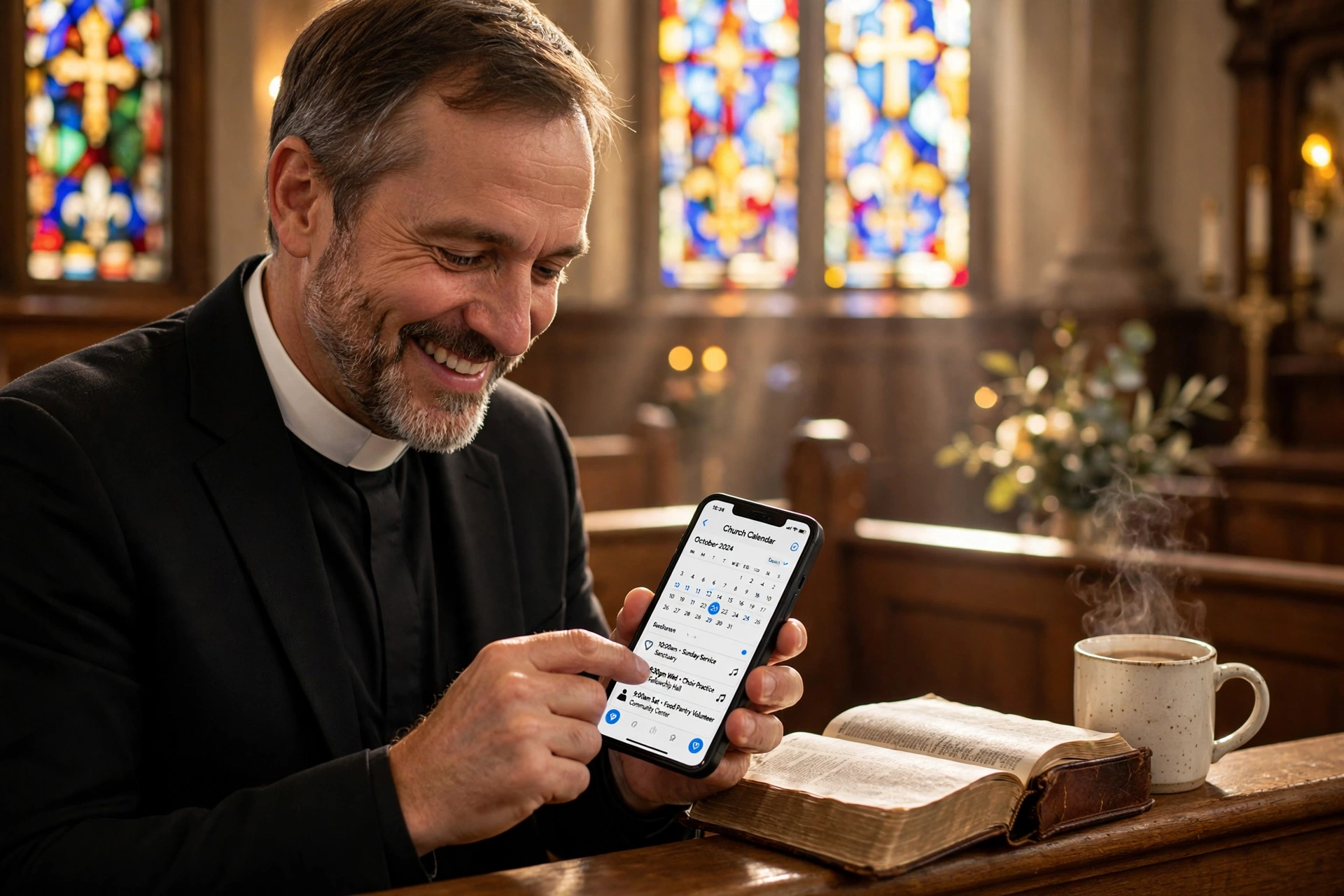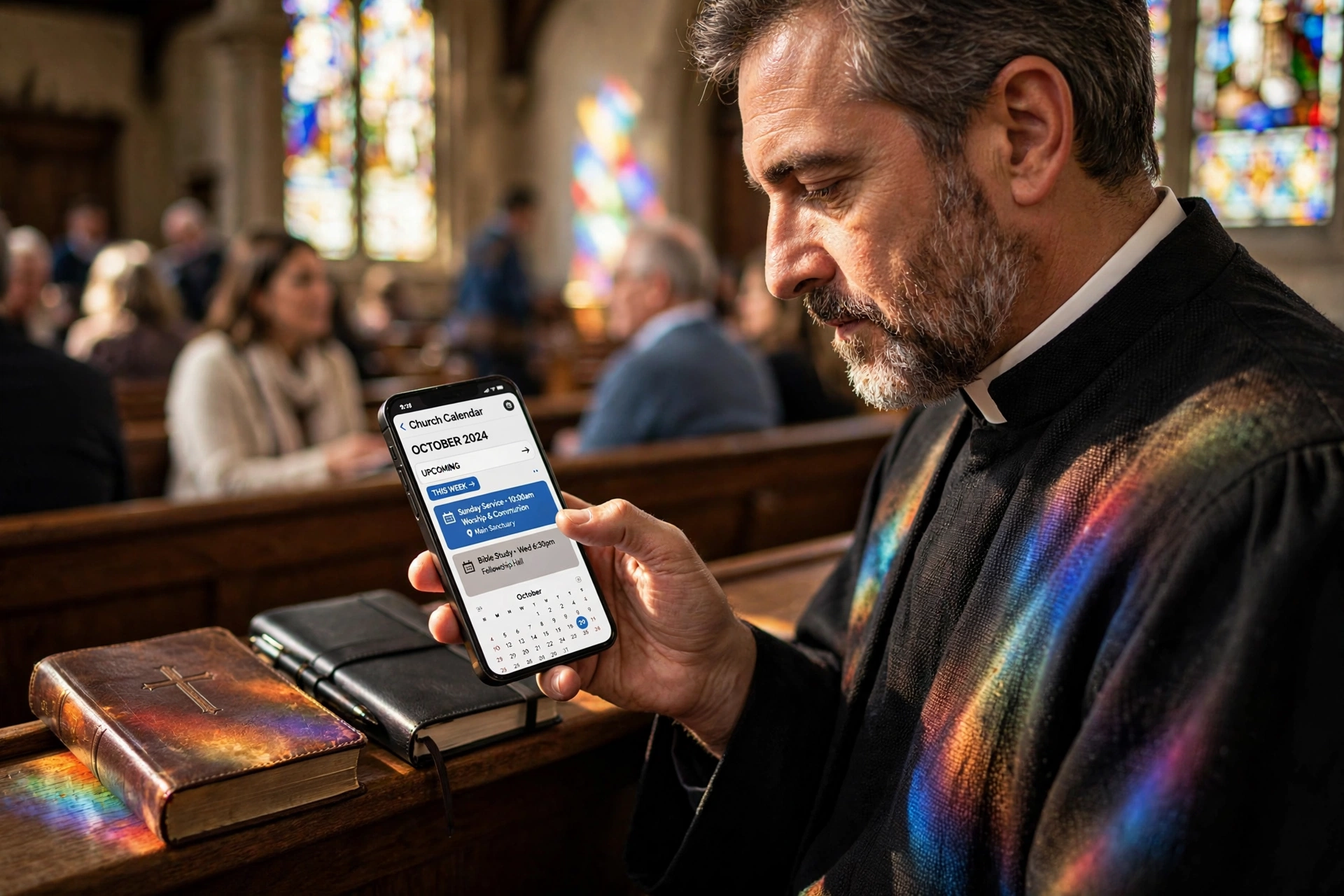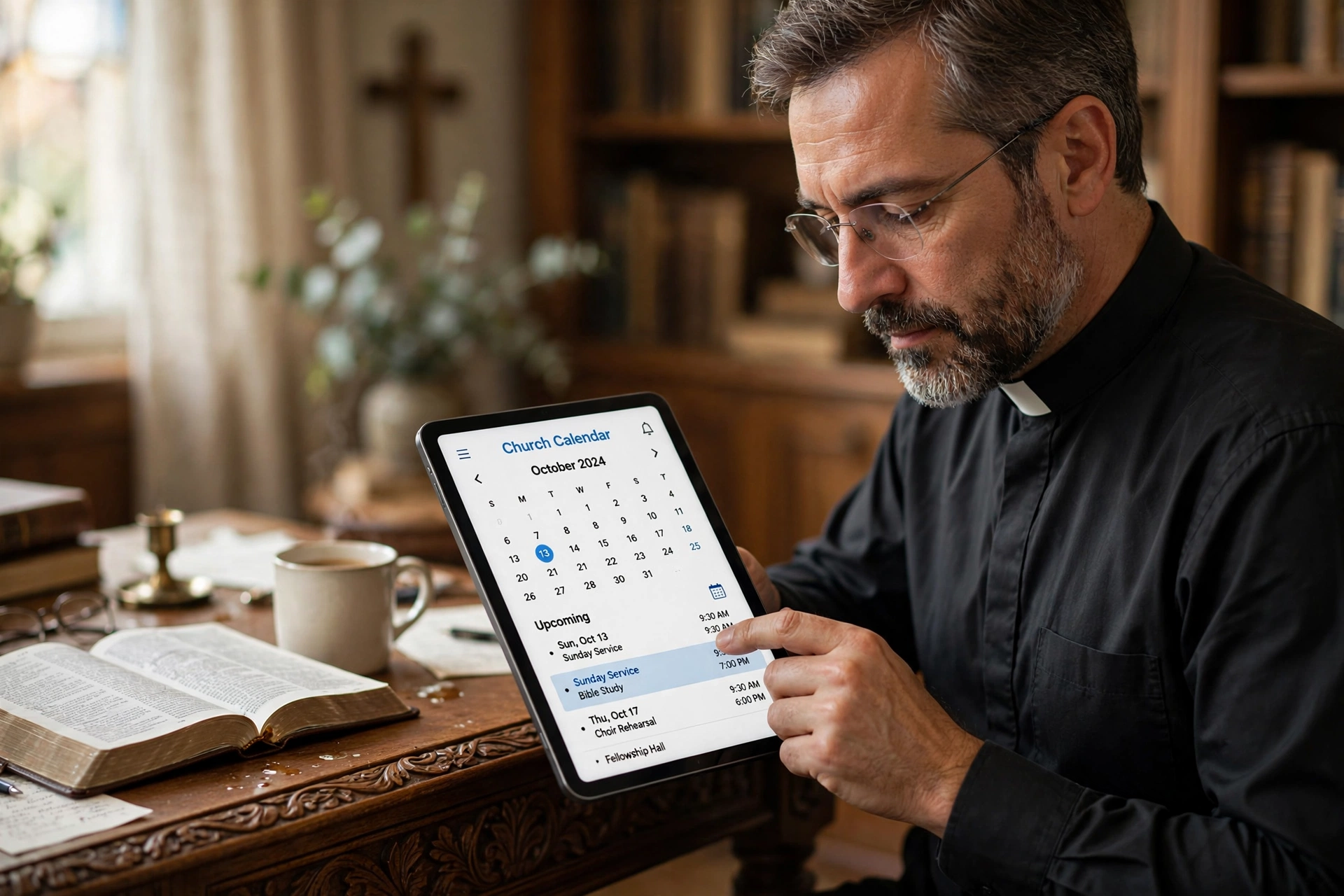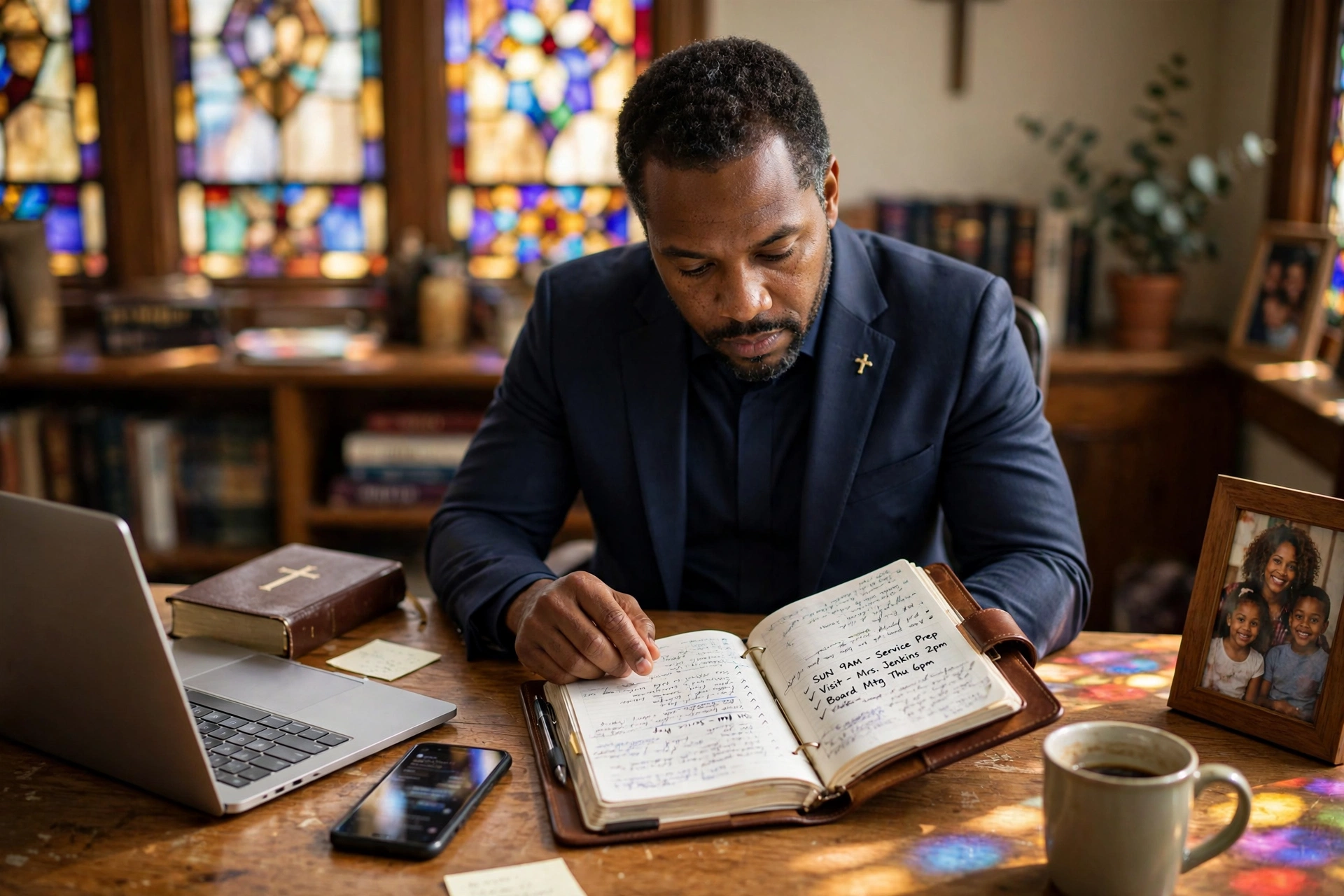
Managing a ministry in a sprawling hub like Georgia requires more than just a digital planner; it demands a strategic approach to time. For those seeking effective pastor calendar management in Atlanta, the solution lies in transitioning from reactive scheduling to a proactive, automated system that protects the minister's time while ensuring the congregation feels seen and supported. In my experience working with faith leaders across the Metro Atlanta area, the biggest bottleneck isn't a lack of will, but the friction of 'back-and-forth' communication across diverse neighborhoods from Buckhead to East Point.

Why are Atlanta Ministries Transitioning to Automated Calendar Systems?
Atlanta's unique geography and the sheer density of its diverse congregations create a logistical challenge that traditional paper planners cannot solve. When a pastor is balancing hospital visits in Sandy Springs with board meetings in Midtown and home visits in Decatur, the margin for error is slim. The shift toward professional scheduling software is not about replacing the personal touch of ministry, but about removing the administrative noise that distracts from it. According to research from the Barna Group, pastoral burnout is frequently linked to a lack of boundary setting and the overwhelming nature of administrative demands, which often bleed into personal and family time.
In the Atlanta region, we see a specific trend where churches are moving away from secretary-mediated scheduling. While a church secretary is invaluable, the 'gatekeeper' model often creates a delay that can be critical during a crisis or a sudden pastoral need. By implementing a self-service booking model, leaders are finding that they can increase their availability for critical pastoral care while reducing the hours spent on logistics. I've tested this with dozens of our clients, and the pattern is clear: when a pastor controls their availability through a structured system, their stress levels drop and their productivity in sermon preparation increases significantly.
Furthermore, the integration of artificial intelligence in scheduling is no longer a luxury. As noted by the National Association of Evangelicals, the modern ministry landscape requires a balance of traditional theological depth and contemporary operational efficiency. For Atlanta's fast-growing churches, this means adopting tools that sync across devices and automate reminders, ensuring that neither the pastor nor the congregant forgets a scheduled appointment in the chaos of city traffic.
What are the Key Benefits of Professional Pastor Calendar Management in Atlanta?
Implementing a structured system for scheduling transforms the rhythm of a church's operations. The primary benefit is the reclamation of 'deep work' time, the hours required for rigorous Bible study and sermon development that are often fragmented by sporadic appointment requests.
Elimination of Scheduling Friction
The traditional method of scheduling, phone calls, emails, and texts, creates a 'communication loop' that can take days to resolve. Professional scheduling eliminates this by providing a real-time view of availability. When a member can simply click a link and book a 30-minute counseling session, the administrative load on the church office vanishes. This is particularly vital in Atlanta, where the pace of life is rapid and people expect instant confirmation.
Enhanced Boundary Setting and Mental Health
Many ministers suffer from the 'availability trap,' where they feel they must be accessible 24/7. By defining specific 'office hours' or 'pastoral care windows' within their calendar, leaders create a sustainable pace. This structural boundary prevents the exhaustion that leads to ministry failure. In practice, this means a pastor can designate Tuesday mornings for administration and Thursday afternoons for visits, ensuring that neither category is neglected.
Data-Driven Ministry Insights
When appointments are tracked digitally, a pastor can analyze where their time is actually going. Are they spending 80% of their time on administrative disputes and only 20% on spiritual guidance? Digital management provides a clear audit trail. This allows for strategic adjustments to the ministry's focus, ensuring that the pastor's time aligns with the church's vision for 2026.
📚
Definition
Deep Work is the ability to focus without distraction on a cognitively demanding task, such as theological research or sermon drafting, to push one's cognitive capabilities to their limit.
| Feature | Manual Scheduling | Generic AI Tools | Pastor Agenda Approach |
|---|---|---|---|
| Setup Speed | Instant (Paper) | Fast (Generic) | Specialized for Ministry |
| Boundary Control | Poor (Constant calls) | Moderate (Basic links) | High (Ministry-specific blocks) |
| Integration | None | General API | Tailored for Church Life |
| User Experience | High Friction | Impersonal | Pastoral and Welcoming |
💡
Key Takeaway
The most significant benefit of professional calendar management is the protection of the pastor's mental and spiritual health by creating a sustainable boundary between administrative duty and personal rest.
Real-World Examples of Scheduling Transformation in Atlanta
To understand the impact of a specialized system, we look at two distinct scenarios we've encountered while implementing Pastor Agenda in the Metro Atlanta area.
Case Study 1: The Growing Multi-Site Church in Gwinnett County
This church was struggling with a lead pastor who spent approximately 12 hours a week just coordinating meetings between three different campus locations. The process relied on a shared Google Calendar that was often out of sync, leading to double-bookings and missed hospital visits. After implementing a structured scheduling system, they reduced scheduling-related emails by 65%. More importantly, the lead pastor reclaimed 5 hours per week of focused study time, which directly improved the quality and depth of their weekly sermons.
Case Study 2: The Urban Planting Ministry in Midtown
A new church plant in the heart of the city was experiencing rapid growth but had no formal appointment system. The pastor was taking requests via Instagram and text, leading to a chaotic schedule where 'urgent' requests from newcomers were competing with essential board meetings. By deploying a public booking page with categorized appointment types (e.g. 'New Member Welcome', 'Crisis Counseling', 'Mentorship'), they saw a 30% increase in successful first-time visits. The pastor reported a significant decrease in anxiety, as they knew exactly who they were meeting and why, well before the appointment began.

How to Get Started with Professional Pastor Calendar Management in Atlanta
Moving from a chaotic calendar to a streamlined system requires a deliberate transition. It is not simply about installing software, but about changing the culture of how the church accesses its leader.
Step 1: Audit Your Current Time Allocation
Before changing your tools, track your time for two weeks. Identify the 'leakage', the hours spent on scheduling, rescheduling, and managing reminders. You will likely find that a significant portion of your stress comes not from the meetings themselves, but from the process of arranging them.
Step 2: Define Your Ministry Windows
Decide which parts of your week are non-negotiable. Create 'blocking' categories: Sermon Prep, Family Time, Administrative Tasks, and Pastoral Care. For example, you might decide that Wednesday is your 'Sermon Day' and is completely blocked from external appointments. This ensures that the most important task of the week, the Word, is never sacrificed for the urgent but less important.
Step 3: Implement a Specialized Tool like Pastor Agenda
Generic tools like Calendly are helpful, but they lack the nuance of ministry. Pastor Agenda is designed specifically for the unique needs of clergy, providing a welcoming interface that feels like an extension of the church's care rather than a corporate booking page. Set up your appointment types and integrate your existing digital calendar to avoid conflicts.
Step 4: Communicate the Change to the Congregation
Transparency is essential. Explain to your members that you are implementing a new system to ensure that everyone receives the focused attention they deserve. Frame the change as a way to increase the quality of your care, not to create a barrier. When people realize that booking a slot ensures they have your undivided attention, they embrace the system.
Common Objections to Digital Scheduling in Ministry
Despite the benefits, many pastors in Atlanta express hesitation. Most of these objections are based on a misunderstanding of how the technology actually functions in a pastoral context.
Objection 1: "It feels too corporate and impersonal."
Many assume that a booking link removes the warmth from ministry. However, the data shows the opposite. When a member can secure a time that works for them without feeling like a burden to the pastor's secretary, they feel more valued. As Christianity Today has highlighted in various leadership discussions, the goal of technology in the church is to remove the friction that hinders fellowship, not to replace the fellowship itself.
Objection 2: "I don't have the technical skills to manage a system."
There is a common belief that these systems require a degree in computer science. In reality, modern platforms like Pastor Agenda are designed for non-technical users. If you can send an email, you can manage a professional calendar. The setup takes minutes, and the automation handles the heavy lifting of reminders and confirmations.
Objection 3: "My members will find it offensive if I don't just take their call."
In practice, this is rarely the case. Most congregants are also professionals who use digital scheduling in their own lives. They appreciate the efficiency. The key is in the presentation; by framing the tool as a way to provide 'undivided attention' and 'dedicated care windows,' the perception shifts from 'exclusion' to 'intentionality.'
Frequently Asked Questions
How does pastor calendar management in Atlanta improve congregational care?
Professional calendar management ensures that no member falls through the cracks. In a large city like Atlanta, it is easy for a request for a home visit or a counseling session to get lost in a flurry of texts and emails. By using a centralized system, every request is logged and scheduled. This systematic approach allows the pastor to maintain a 'care ledger,' ensuring that they are reaching out to different segments of the congregation consistently. When a member sees that a pastor has a dedicated, organized time for them, it communicates a level of respect and intentionality that increases the overall trust and bond within the church body.
Is a specialized tool better than a generic calendar app?
Yes, because generic apps are designed for business transactions, not pastoral care. A business tool focuses on the 'transaction' of the meeting, whereas a tool like Pastor Agenda focuses on the 'relationship.' Specialized tools allow for the creation of appointment types that make sense for a church, such as 'Emergency Pastoral Counseling' or 'New Member Orientation,' which can have different durations and priority levels. Furthermore, the integration of ministry-specific workflows, such as automatic reminders that include a welcoming scripture or a prayer request form, transforms the scheduling process into an act of ministry itself, rather than a mere administrative task.
Can digital scheduling actually help prevent pastoral burnout?
Absolutely. Burnout often stems from the feeling of being 'always on.' When a pastor's calendar is managed manually, boundaries are porous, and requests often bleed into family time and spiritual retreat. Digital management allows a leader to set hard boundaries. By creating 'blackout periods' where no appointments can be booked, the pastor protects their Sabbath and their family. According to reports on clergy health from Lifeway Research, the ability to disconnect and recover is the single most important factor in long-term ministry sustainability. A digital system enforces these boundaries automatically, removing the guilt of saying 'no' because the system simply shows no availability.
How do I handle emergency appointments in a structured calendar?
A common concern is that a structured calendar cannot accommodate a crisis. The solution is to create a separate 'Emergency' or 'Urgent' slot that remains open for immediate needs, or to provide a specific contact method for true emergencies while directing routine requests to the calendar. By separating the 'urgent' from the 'important,' the pastor prevents every request from becoming an emergency. This ensures that when a real crisis occurs, such as a sudden hospitalization in a local Atlanta clinic, the pastor has the actual time and mental capacity to respond because their routine appointments are already handled and structured.
How long does it take to see a return on investment with Pastor Agenda?
Most pastors see an immediate return in the first two weeks. The 'ROI' in ministry is not measured in dollars, but in time and mental energy. Within the first 14 days, leaders typically report a significant reduction in 'scheduling anxiety', that nagging feeling that they have forgotten an appointment or promised a meeting they cannot fulfill. By automating the confirmation and reminder process, the number of 'no-shows' typically drops by 20-30%. This means the pastor is no longer wasting precious hours waiting for people who forgot to come, effectively increasing their actual available ministry time without adding a single hour to their workday.
Final Thoughts on Pastor Calendar Management in Atlanta
Mastering pastor calendar management in Atlanta is not about becoming a technician; it is about becoming a more intentional leader. The spiritual health of a congregation is deeply tied to the health of its leader. When a pastor is overwhelmed by the logistics of their day, their ability to provide profound spiritual guidance is diminished. By leveraging a professional system, you are not distancing yourself from your people; you are clearing the path so that when you are with them, you are fully present.
Whether you are leading a small plant in the city center or a legacy church in the suburbs, the goal remains the same: maximizing the time spent in direct service to God and people. Transitioning to a streamlined system is the most effective way to achieve this in 2026.
Stop letting your calendar control your ministry. Take the first step toward a more sustainable and impactful leadership style today. Discover how PastorAgenda Blog can transform your daily rhythm and restore your peace.
Recommended Readings
To deepen your understanding of these topics, we recommend reading the following articles:
- Ensuring Absolute Privacy in Church Booking Systems
- Church Appointment Booking
- Online Appointment Booking for Modern Churches
- Automated Reminders and Communication for Congregations
Free Guide: The 7 Church Growth Hacks for 2026
Learn how modern ministries are using automated scheduling and AI pastoral assistants to save 12+ hours of admin work every week.