
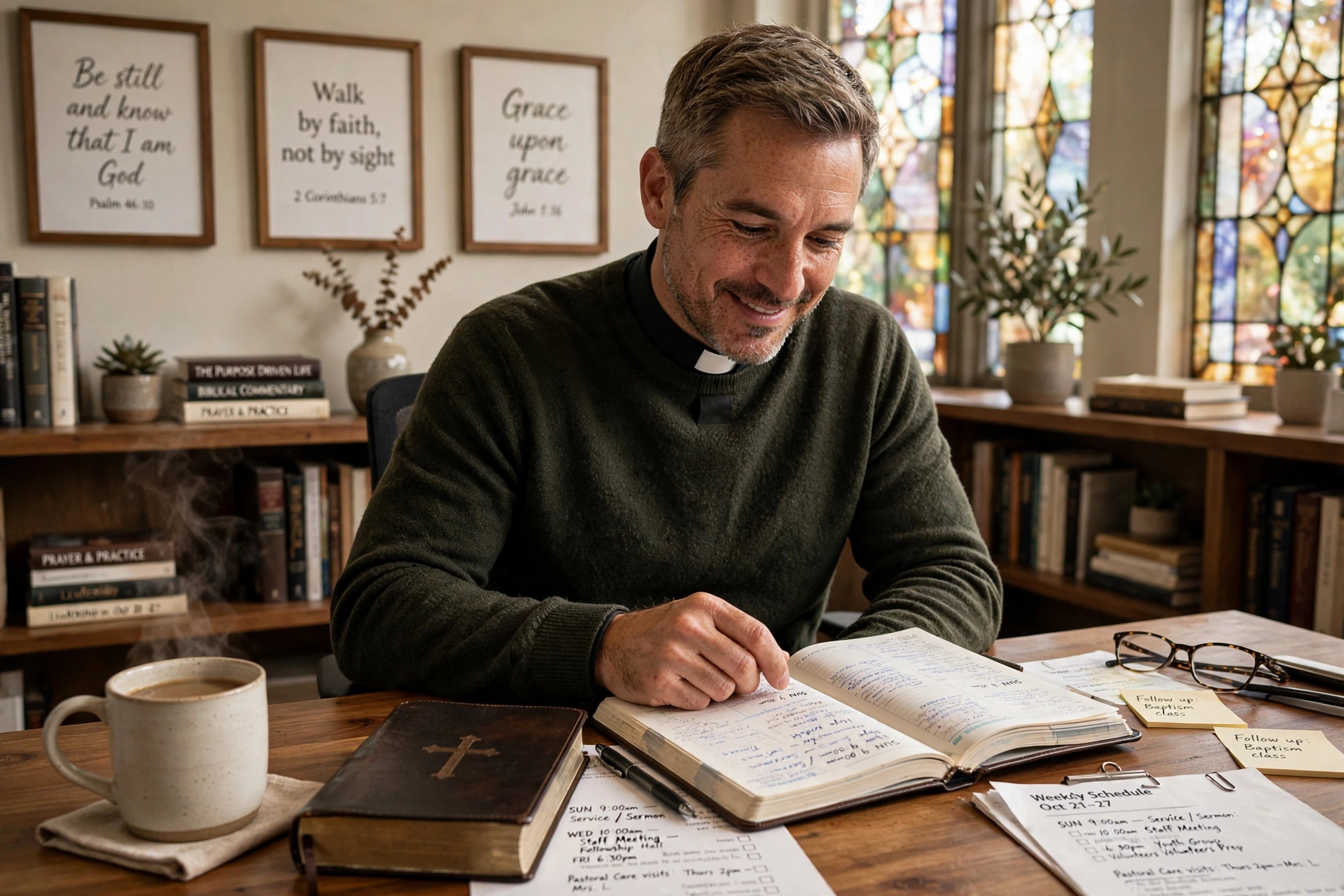
Why Does a Structured Way to Schedule With Pastor Transform Church Growth?
The primary reason leaders struggle with burnout is not the volume of work, but the friction of accessibility. When a congregation cannot easily schedule with pastor leadership, the resulting "communication gap" leads to missed opportunities for pastoral care and an overwhelmed clergy. By implementing a dedicated scheduling system, churches shift from a reactive crisis-management mode to a proactive ministry model, ensuring that no member falls through the cracks while protecting the pastor's time for study and prayer.
In my experience working with dozens of faith communities, the most common mistake I see is treating the pastor's calendar as an "open door" policy without a system. While the sentiment is biblical, the reality is administrative chaos. When accessibility is unmanaged, the pastor spends 40% of their mental energy on logistics rather than spiritual guidance. Transitioning to a structured booking process doesn't distance the pastor from the people; it creates a sustainable bridge that allows for deeper, more intentional engagement.
Understanding the Architecture of Pastoral Scheduling
To understand why this shift is necessary, we must first define what professional scheduling looks like in a ministry context. It is not merely about picking a date on a calendar; it is about managing the emotional and spiritual energy of the leader.
📚
Definition
Pastoral Scheduling is the strategic allocation of a minister's time across three primary domains: public ministry (sermons, worship), private care (counseling, visitation), and personal renewal (study, family, rest).
Most churches rely on "informal scheduling," where appointments are made via text messages, hallway conversations after a service, or through a third-party secretary. This creates a fragmented data trail. When a member needs to schedule with pastor leadership for a crisis, the friction of "waiting for a call back" can be detrimental. A centralized system removes this friction by providing real-time availability.
According to research from the Barna Group, pastoral burnout is at an all-time high, with many leaders citing "administrative overload" and "lack of boundaries" as primary stressors. When a system is absent, the pastor becomes a human concierge rather than a spiritual shepherd. By implementing a structured interface, the church establishes a culture of respect for the leader's time, which ironically makes the leader more present and attentive during the actual appointment.

The psychological impact on the congregant is also significant. In a digital-first era, the ability to see an open slot and claim it provides an immediate sense of being "seen" and "cared for." It eliminates the anxiety of wondering if they are "bothering" the pastor, moving the interaction from a request for a favor to a scheduled commitment of care.
The Quantifiable Impact of Accessibility on Ministry
Why does this matter from a data perspective? The impact of a streamlined process to schedule with pastor leadership directly correlates with member retention and spiritual health. When pastoral care is perceived as "hard to access," members are less likely to seek help during early-stage crises, leading to more severe issues that require significantly more time and resources to resolve later.
The consequences of not acting on this administrative need are severe. First, there is the Efficiency Leak. A pastor spending 30 minutes a day managing back-and-forth emails or texts to confirm a single appointment loses roughly 180 hours of productive ministry time per year. Second, there is the Boundary Erosion. Without a system, "urgent" requests often override "important" study time, leading to shallow sermon preparation and decreased leadership quality.
As noted by Christianity Today, the modern ministry environment requires a hybrid approach where spiritual availability is balanced with digital efficiency. The data suggests that churches utilizing automated scheduling tools see a marked increase in the number of one-on-one touchpoints per quarter. This is because the "barrier to entry" for the member is lowered.
Consider the ROI of a scheduling system not in dollars, but in "Care Hours." If a system reduces the administrative friction of booking by 50%, a pastor can realistically increase their pastoral counseling capacity by 15-20% without increasing their actual working hours. This is achieved by eliminating the "dead air" between appointments and reducing the no-show rate through automated reminders.
Implementing a Professional Scheduling Workflow
Moving from a manual process to a digital one requires more than just a piece of software; it requires a change in church culture. To successfully allow members to schedule with pastor leadership, you need a three-step implementation framework.
Step 1: The Temporal Audit
The pastor must first categorize their week. Not all hours are created equal. You should establish "Open Blocks" specifically for pastoral care. For example, Tuesdays from 10 AM to 2 PM and Thursdays from 1 PM to 5 PM. By limiting availability to specific windows, the pastor prevents the "Swiss Cheese Calendar" effect, where small gaps of 30 minutes are scattered throughout the day, making deep work impossible.
Step 2: The Integration Phase
This is where a tool like Pastor Agenda becomes essential. Instead of a generic calendar, you need a platform designed for the nuances of ministry. This involves syncing the professional calendar with the public booking page. When a member visits the site, they see only the "Open Blocks." This removes the need for the pastor to manually approve every request, as the system only offers slots that have already been vetted as available.
Step 3: Communication and Adoption
The congregation must be taught how to use the system. This is done by announcing the "Care Portal" during worship services and adding the link to the church website and social media bios. The messaging should be: "We want to make sure you get the undivided attention you deserve, so we've created this system to ensure your time with the pastor is protected and prioritized."
💡
Key Takeaway
Effective pastoral scheduling is not about restricting access, but about organizing access to ensure that when a pastor is with a member, they are 100% present and not distracted by the chaos of an unmanaged calendar.

Now, here's where it gets interesting: once the system is in place, you can categorize the type of appointment. A "Crisis Counseling" slot can be prioritized differently than a "New Member Welcome" or a "Wedding Planning" meeting. This allows the pastor to mentally prepare for the emotional weight of the meeting before it even begins.
Comparing Scheduling Methodologies
When deciding how to manage the process of allowing people to schedule with pastor leadership, most churches find themselves choosing between three distinct paths. Many assume the "free" or "manual" way is the safest, but the data suggests otherwise.
| Methodology | Pros | Cons | Best For |
|---|---|---|---|
| Manual/Secretary | High personal touch, total control | High friction, slow response, human error | Very small churches (under 50 members) |
| Generic AI/Booking Tools | Fast, automated, cheap | Lack of ministry context, "corporate" feel, high setup time | Secular businesses or freelancers |
| Pastor Agenda Approach | Ministry-centric, boundary-focused, low friction | Requires initial culture shift | Growing churches and professional ministries |
Most guides get this wrong by suggesting that any free calendar tool will work. However, generic tools often lack the "buffer" settings necessary for pastoral work. In ministry, you cannot jump from a grief counseling session directly into a board meeting without a 15-minute "decompress" period. A specialized approach incorporates these boundaries by default.
The "Manual" approach, while appearing traditional, often creates a bottleneck. If the church secretary is sick or overwhelmed, the entire pipeline of pastoral care stops. The "Generic" approach often feels cold and transactional, which can alienate older members of the congregation. The professional ministry approach balances the efficiency of automation with the warmth of pastoral care.
Common Misconceptions About Digital Scheduling
There are several myths that prevent leaders from optimizing how members schedule with pastor leadership. Let's address these with a contrarian perspective based on actual ministry results.
Myth 1: "A digital link makes the pastor seem inaccessible or cold."
Actually, the opposite is true. There is nothing "cold" about a member in a crisis spending three days waiting for a return phone call. A digital link provides an immediate "Yes" to the member's request for help. It signals that the pastor has carved out specific, dedicated time for them. The "warmth" comes from the quality of the interaction during the meeting, not the method used to book it.
Myth 2: "Our members are too old to use technology."
In the last three years, the adoption of smartphones among the 65+ demographic has skyrocketed. Furthermore, the "sandwich generation" (adult children helping their parents) often handles these bookings. By providing a simple, one-click interface, you are actually removing a barrier for the elderly who may struggle with phone tag but can easily click a link sent via text.
Myth 3: "I can just manage my calendar manually; it's not that much work."
This is the most dangerous misconception. The "work" isn't the act of writing the appointment in a planner; it's the cognitive load of the constant interruptions. Every time a pastor stops studying a text to reply to a "Are you free Tuesday?" text, it takes an average of 23 minutes to regain deep focus. Manual management is a hidden tax on the pastor's intellectual and spiritual output.
Frequently Asked Questions
Does using a scheduling system limit the pastor's ability to handle emergencies?
Not at all. A professional system is designed for planned care, not for emergency triage. Every pastor should still maintain an "Emergency Protocol" (such as a specific phone number or a designated deacon) for immediate crises. By moving 80% of the routine appointments, such as new member interviews, general counseling, and administrative meetings, into a scheduled system, the pastor actually frees up more unplanned time to respond to genuine emergencies without the guilt of cancelling other commitments.
How do I prevent people from booking slots that are too frequent or excessive?
This is handled through "Availability Logic." Within a system like Pastor Agenda, you can set limits on how many appointments can be booked per day or per week. You can also implement "buffer times" so that no two appointments are back-to-back. In my experience, setting a maximum of three pastoral care slots per day prevents the emotional exhaustion that leads to burnout. If a member needs more frequent care, the pastor can manually send them a private link with expanded availability, maintaining control over the boundary.
Will this replace the role of the church secretary or administrator?
No, it evolves the role. Instead of the secretary spending four hours a day acting as a "human switchboard" for the pastor's calendar, they are freed to focus on high-value ministry tasks, such as community outreach, facility management, or member follow-up. The technology handles the transaction of booking, while the secretary handles the relationship and the coordination of the overall church vision.
Is it possible to keep certain blocks of time completely private?
Yes, this is a fundamental feature of any professional scheduling tool. The system integrates with the pastor's private calendar (Google, Outlook, iCloud). If the pastor marks a time as "Busy" or "Private" on their personal calendar, that slot automatically disappears from the public booking page. This ensures that family time, medical appointments, and personal sabbaticals are protected without the pastor having to manually update the public link every time their personal schedule changes.
What happens if a member schedules a meeting but then forgets to show up?
One of the greatest advantages of a digital system is the automated reminder sequence. Most no-shows in ministry happen because of simple forgetfulness, not lack of interest. By sending an automated reminder 24 hours and 2 hours before the appointment, the no-show rate typically drops by 60-80%. This respects the pastor's time and reminds the member that the meeting is a priority, which increases the overall effectiveness of the pastoral care.
Final Thoughts on Optimizing Pastoral Access
The decision to change how people schedule with pastor leadership is a decision to prioritize the health of the leader and the care of the flock. When you remove the administrative friction, you replace frustration with anticipation. You move from a culture of "trying to get a hold of the pastor" to a culture of "knowing exactly when the pastor is available for me."
According to the National Association of Evangelicals, the sustainability of a ministry depends on the leader's ability to manage their boundaries without sacrificing their heart for people. A structured scheduling system is the practical tool that makes this balance possible. It is the difference between a ministry that runs on a "crisis-response" engine and one that runs on a "planned-growth" engine.
If you are ready to stop the calendar chaos and start protecting your time, it's time to implement a solution built for the church. We invite you to explore PastorAgenda Blog, where we help leaders reclaim their time for what truly matters: the spiritual growth of their congregation.
Recommended Readings
To deepen your understanding of these topics, we recommend reading the following articles:
- Ensuring Absolute Privacy in Church Booking Systems
- Church Appointment Booking
- Online Appointment Booking for Modern Churches
- Automated Reminders and Communication for Congregations
Free Guide: The 7 Church Growth Hacks for 2026
Learn how modern ministries are using automated scheduling and AI pastoral assistants to save 12+ hours of admin work every week.



