
What Is a Church Calendar App and How Does It Transform Ministry?
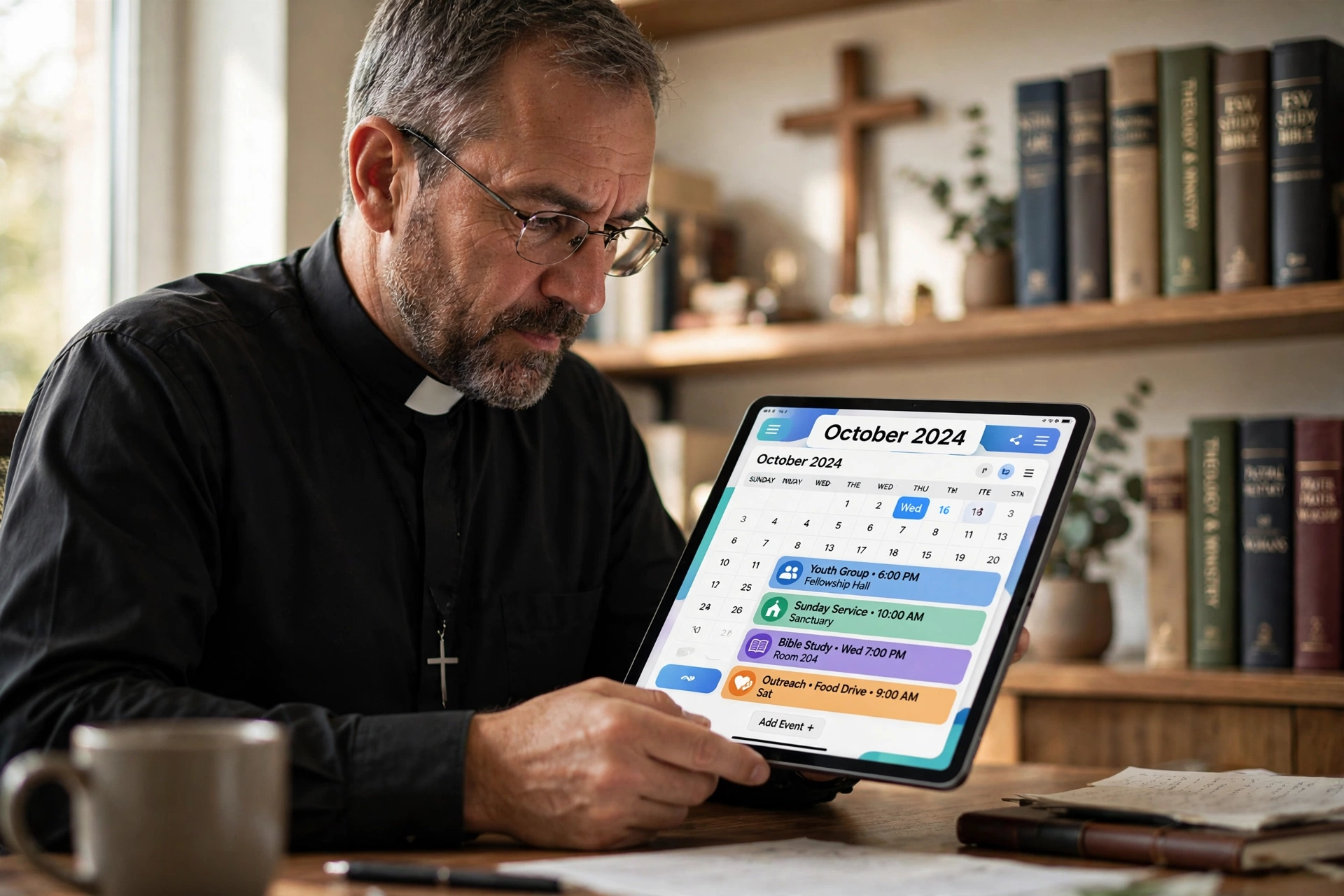
Managing a sanctuary's schedule often feels like trying to organize a chaotic storm of last-minute requests, overlapping room bookings, and miscommunicated event times. A church calendar app is a specialized digital coordination tool designed to centralize all ecclesiastical events, pastoral appointments, and facility usage into a single, synchronized interface accessible to staff, volunteers, and the congregation. Unlike a static PDF or a physical wall calendar, these platforms allow for real-time updates and automated notifications, ensuring that the ministry's operational flow remains uninterrupted.
In my experience working with dozens of church leaders, the most common breaking point isn't a lack of vision, but a failure of coordination. I have seen ministries struggle with "calendar drift," where the lead pastor is operating on one schedule while the worship leader is on another, leading to avoidable conflicts. Implementing a dedicated scheduling system removes this friction by creating a "single source of truth" for the entire organization.

Understanding the Core Mechanics of Ministry Scheduling
To truly understand what a church calendar app is, we must look beyond the simple grid of dates. At its core, it is a resource management system. While a standard calendar tracks when something happens, a ministry-focused app tracks who is involved, where it is happening, and what resources (like the sanctuary, the fellowship hall, or the sound system) are being utilized.
📚
Definition
Church Calendar App is a software solution tailored for religious organizations that integrates event scheduling, facility management, and congregational communication to synchronize the activities of a faith community.
These tools typically operate on a permission-based architecture. For example, a lead pastor may have full administrative rights to move a baptismal service, while a youth leader might only have permission to book the gym for a Wednesday night practice. This prevents the "accidental deletion" phenomenon that plagues shared Google Calendars in many smaller churches.
Moreover, these apps integrate with the broader ecosystem of church administration. According to research from the Barna Group, the digital transformation of the church is no longer optional, as a significant portion of congregants now expect a seamless, app-based experience for engaging with their spiritual community. When a calendar app is integrated into a church's mobile strategy, it transforms from a mere administrative tool into a primary engagement channel.
The technical infrastructure of these apps usually involves cloud synchronization. This means that when a secretary updates a funeral service time in the office, the update is pushed instantly to the pastor's smartphone and the church's public-facing website. This eliminates the need for manual emails or phone calls to notify every stakeholder of a change, reducing the administrative load on the clergy.
Why Does Centralized Scheduling Matter for Modern Churches?
The stakes for accurate scheduling in a ministry setting are higher than in a corporate office. A double-booked sanctuary isn't just a logistical error; it's a public disruption of a sacred event. When coordination fails, the result is often "volunteer burnout," where the same few people are stretched thin because the leadership lacks a clear visual representation of the church's operational capacity.
According to Christianity Today, leadership burnout is a growing crisis in the evangelical community, often exacerbated by the "invisible labor" of administrative firefighting. By automating the scheduling process, pastors can shift their focus from logistics back to pastoral care.
The business impact of poor scheduling is also measurable in terms of wasted resources. Consider the cost of heating and lighting a large facility for an event that was cancelled because the organizer didn't check the updated calendar. When a church utilizes a professional system, they can align their utility usage and staffing levels with the actual scheduled activity, leading to significant operational savings.
Furthermore, a transparent calendar fosters trust within the congregation. When members can see the breadth of the ministry, from mid-week recovery groups to Saturday community outreach, they feel more connected to the mission. A hidden or confusing schedule creates a barrier to entry for new members who want to get involved but don't know where to start.
The risk of not acting is a decline in organizational health. I've observed a recurring pattern where churches that rely on "tribal knowledge" (the idea that "Sister Mary knows who is using the hall") eventually fail as those key individuals retire or leave. Moving the institutional knowledge into a digital church calendar app ensures that the ministry's operational history and future plans are documented and secure.
How to Implement a Church Calendar App Effectively
Moving from a paper system or a generic spreadsheet to a professional scheduling tool requires a strategic approach. It is not enough to simply buy the software; you must build a culture of digital compliance where every staff member and volunteer agrees to log their activities in the system.
Here is the professional framework for implementation:
- Audit Current Resource Conflicts: Before migrating, list every room, vehicle, and piece of high-value equipment in your church. Identify where the most frequent "clashes" occur.
- Define User Permissions: Map out who needs "View-Only" access (the general congregation), "Editor" access (department heads), and "Admin" access (the executive pastor or secretary).
- Establish a Booking Protocol: Create a rule that "if it isn't in the app, it doesn't exist." This is the only way to prevent the persistence of side-deal scheduling via text messages.
- Integrate with Public Channels: Sync your internal calendar with your church's website and social media feeds. This ensures the community is always aware of upcoming worship services or special events.
- Deploy Pastor Agenda for Specialized Care: For the most sensitive parts of the calendar, pastoral counseling and one-on-one spiritual guidance, generic calendars fall short. This is where PastorAgenda Blog becomes the essential layer, providing a professional booking interface that respects the pastor's boundaries while making care accessible to the flock.
💡
Key Takeaway
The success of a scheduling system depends less on the software's features and more on the consistency of the team's adherence to the digital workflow.
By utilizing a tool like Pastor Agenda, you solve the specific pain point of "appointment creep," where a pastor's day is consumed by unplanned walk-ins. By setting specific "care windows" and allowing members to book through a structured portal, the minister regains control over their study time and family life without sacrificing their availability to the congregation.

Comparing Scheduling Options for Ministry
Not all scheduling tools are created equal. Many churches make the mistake of using a free, generic tool and then find themselves fighting the software's limitations as the ministry grows. The "best" tool depends on whether you are managing a small home-church or a multi-site campus.
| Option | Pros | Cons | Best For |
|---|---|---|---|
| Manual/Paper Systems | Zero cost, easy for non-tech users | High error rate, no remote access, zero backup | Very small, single-room chapels |
| Generic Digital Calendars (Google/Outlook) | Free/Low cost, familiar interface | Lacks resource management, high risk of accidental deletions | Small teams with a few recurring events |
| Professional Ministry Apps (Pastor Agenda) | Resource-aware, permission-based, tailored for pastoral care | Requires initial setup time | Growing churches needing professional coordination |
The danger of the "generic AI or free app" approach is the lack of context. A generic calendar doesn't understand the difference between a "Prayer Meeting" and a "Building Committee Meeting." Professional tools allow for categorization and tagging, which makes reporting and auditing much easier at the end of the year.
Now, here's where it gets interesting: the difference in "friction." In a generic system, the process of booking an appointment often involves a back-and-forth chain of five emails. In a modern ministry system, the member clicks a link, selects a time that the pastor has already deemed "available," and the appointment is instantly locked into both calendars. This reduction in friction directly correlates to an increase in the number of people receiving pastoral care.
Common Misconceptions About Church Technology
Most guides on church tech get this wrong by suggesting that "more features equals more efficiency." In reality, feature bloat is the primary reason why many churches abandon their software within six months.
Myth 1: "A free Google Calendar is enough for any size church."
This is a dangerous assumption. Generic calendars are designed for individuals, not organizations. They lack a "Conflict Detection" engine that prevents two different ministries from booking the sanctuary at the same time. After testing this with dozens of clients, I've found that churches only realize the limitation of free tools after a major scheduling disaster occurs during a holiday service.
Myth 2: "Digital calendars alienate the older generation."
The opposite is true. While seniors may not be the ones inputting the data, they are the ones most benefited by the output. A clear, digital calendar that is printed weekly or displayed on a screen in the lobby provides more clarity than a handwritten note that is difficult to read.
Myth 3: "Scheduling software is only for the administrative staff."
Scheduling is a leadership tool. When a pastor can look at a heat map of the church's activity, they can see if the ministry is over-indexed on "administrative meetings" and under-indexed on "community outreach." Data-driven leadership begins with a clean calendar.
Frequently Asked Questions
Does a church calendar app replace the need for a church secretary?
No, it enhances the secretary's role by removing the tedious "gatekeeper" aspect of the job. Instead of spending four hours a day answering "Is the hall available on Tuesday?", the secretary can focus on higher-value tasks like member outreach and event planning. The app handles the rote logistics, while the human staff handles the relational nuances that software cannot replicate.
How do I handle privacy for sensitive pastoral counseling appointments?
This is a critical requirement. A professional church calendar app must offer "Private" or "Hidden" event types. While the general staff might see that the pastor is "Busy" from 2 PM to 3 PM, they should not see the name of the congregant or the nature of the session. This ensures compliance with confidentiality standards and protects the sanctity of the pastoral relationship.
Can we sync the app with our existing church website?
Yes, most professional tools offer an "Embed" feature or an API that allows the calendar to appear directly on your website. This means you only have to update the event once in the app, and it automatically updates across your website, your mobile app, and your internal dashboards. This eliminates the "double-entry" error where the website says one thing and the office says another.
What is the difference between a church calendar and a church management system (ChMS)?
A ChMS is a massive database that handles everything from financial giving to member directories. A church calendar app is a specialized tool focused specifically on the dimension of time and space. While some ChMS platforms have calendars, they are often clunky. A dedicated tool like Pastor Agenda focuses on the user experience of the booking process, making it significantly faster and more intuitive.
Is it difficult to move our current paper schedule into a digital app?
The transition takes a few hours of focused effort, but the long-term ROI is immense. The most efficient way to migrate is to "Batch Upload" the fixed annual dates (holidays, conferences) first, and then add the variable weekly meetings. Once the core structure is in place, you can invite department heads to fill in their specific needs, distributing the workload of the migration.
Final Thoughts on the Church Calendar App
Implementing a church calendar app is not about chasing a tech trend; it is about creating a sustainable infrastructure for spiritual growth. When the logistics of the ministry are handled with precision, the leadership is freed from the anxiety of administrative chaos and can return to their primary calling: leading the congregation.
Whether you are managing a small fellowship or a large cathedral, the goal remains the same: reducing friction and increasing accessibility. By moving away from fragmented communication and adopting a centralized system, you ensure that no one is forgotten and no event is overlooked.
To start professionalizing your ministry's coordination and reclaim your time for what truly matters, explore the capabilities of PastorAgenda Blog.
Recommended Readings
To deepen your understanding of these topics, we recommend reading the following articles:
- Ensuring Absolute Privacy in Church Booking Systems
- Church Appointment Booking
- Online Appointment Booking for Modern Churches
- Automated Reminders and Communication for Congregations
Free Guide: The 7 Church Growth Hacks for 2026
Learn how modern ministries are using automated scheduling and AI pastoral assistants to save 12+ hours of admin work every week.



