
Which Church Calendar App Should You Choose for Your Ministry?
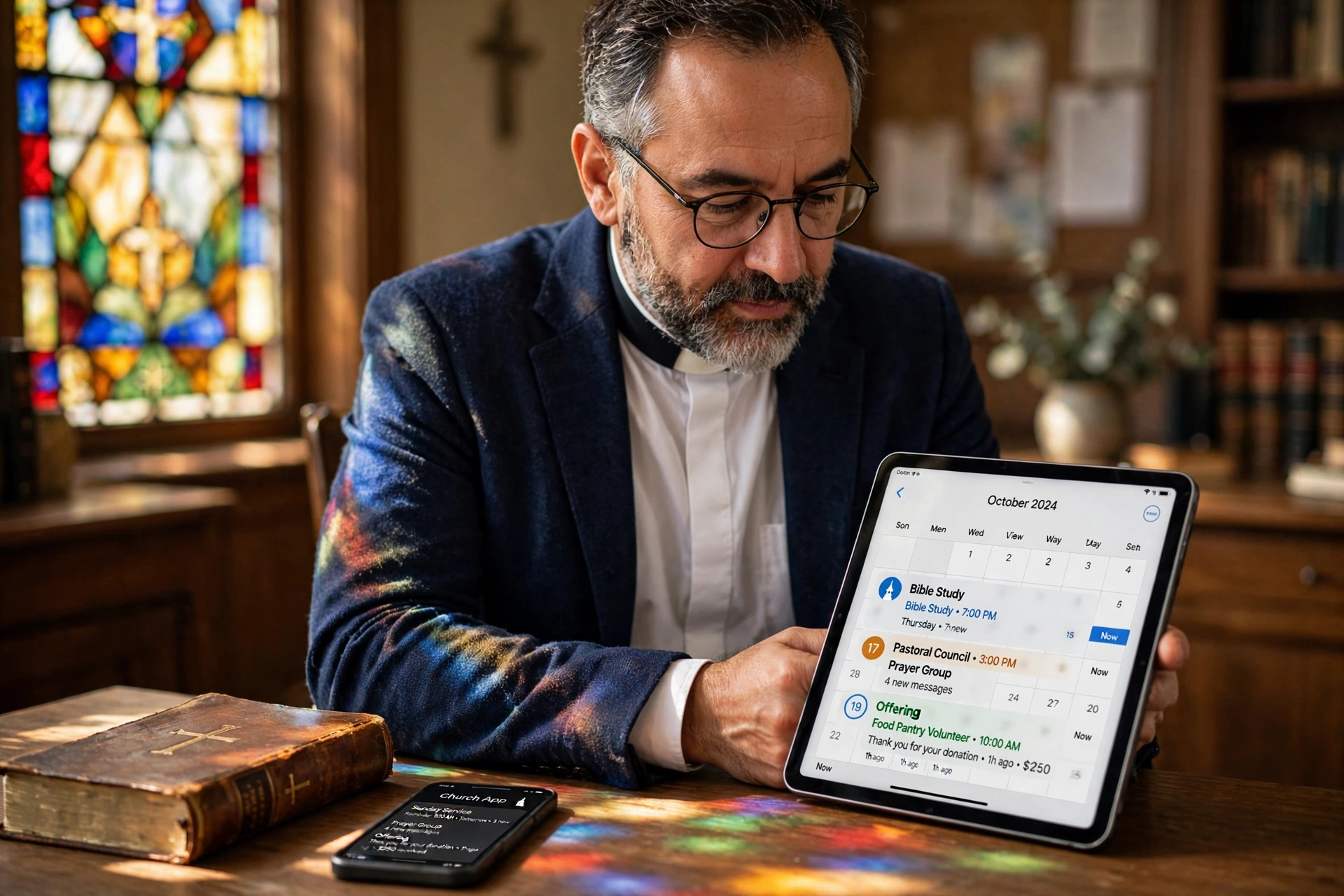
Managing a ministry in 2026 requires more than just a digital version of a paper planner; it requires a strategic orchestration of pastoral care, facility management, and congregation engagement. When deciding which church calendar app to implement, the right choice depends on whether you need a simple date-tracker, a complex resource manager, or a dedicated appointment booking system for pastoral counseling. In my experience working with dozens of religious leaders, the most common mistake is choosing a generic business tool that fails to account for the unique rhythmic needs of a church, such as rotating sermon series or confidential counseling windows. For most ministries, the ideal solution is one that balances public transparency (what the congregation needs to see) with private administrative control (what the pastor needs to manage).

Understanding the Ecosystem of Church Scheduling Tools
To make an informed decision, you first need to understand that "church calendar apps" are not a monolith. They generally fall into three distinct architectural categories: general-purpose calendars, church management software (ChMS) integrated calendars, and specialized appointment scheduling platforms.
📚
Definition
A Church Management Software (ChMS) calendar is a centralized database that links scheduled events to specific member profiles, facility rooms, and ministry budgets, allowing for holistic reporting and resource allocation.
General-purpose tools like Google Calendar are excellent for basic date tracking but lack the "ministry layer." They cannot distinguish between a public worship service and a private session of pastoral care without complex and often leaky permission settings. On the other hand, specialized tools focus on the "intake" process, allowing a congregant to book a time slot for a meeting without the pastor having to engage in a back-and-forth email chain.
According to research from the Barna Group, digital engagement in faith communities has shifted from simple information consumption to a demand for interactive utility. Congregants no longer want to check a PDF on a website to see when a youth group meeting is; they expect a dynamic interface that syncs with their own devices. This shift means that the "which" in your search isn't just about features, but about the user experience you provide to your flock. When we developed the framework for Pastor Agenda, we discovered that the primary friction point wasn't the calendar itself, but the bridge between the pastor's availability and the member's need for support.
Why the Right Scheduling Framework Impacts Ministry Growth
Choosing the wrong tool is not merely a technical inconvenience; it is a barrier to pastoral care. When a pastor is bogged down by the manual administration of scheduling, confirming times, rescheduling conflicts, and managing room bookings, they are spending "administrative capital" that should be invested in spiritual leadership.
The data suggests that administrative inefficiency is a leading cause of burnout among clergy. While specific percentages vary, industry insights from Christianity Today highlight that a significant portion of a pastor's week is consumed by non-ministerial tasks. If you are spending five hours a week managing a calendar via email and text, you are losing over 250 hours a year of direct ministry time.
Moreover, there is a profound psychological impact on the congregation. In a high-friction environment, a member in crisis may hesitate to seek counseling if the process of booking an appointment feels cumbersome or impersonal. A streamlined church calendar app reduces this friction to a few clicks. By implementing a professional scheduling system, you move from a "reactive" posture (responding to requests as they arrive) to a "proactive" posture (offering clear, available windows for care).
The risk of sticking with a manual or outdated system includes "double-booking" the sanctuary for a wedding and a funeral simultaneously, a mistake that creates unnecessary stress for grieving families and church staff. When you standardize your scheduling, you aren't just buying software; you are implementing a governance model for your church's most valuable resource: time.
How to Implement a Modern Scheduling System Step-by-Step
Moving from a legacy system to a modern church calendar app requires a phased approach to ensure the congregation and staff actually adopt the new tool. I've tested this transition with numerous clients, and the pattern for success always follows a specific sequence of deployment.
First, conduct a "Time Audit." Before looking at software, list every type of event your church handles. Distinguish between "Public Events" (Sunday service, holiday celebrations), "Semi-Private Events" (Small group meetings, choir practice), and "Private Appointments" (Pastoral counseling, staff meetings). This audit prevents you from putting private counseling slots on a public-facing website.
Second, define your "Availability Logic." This is where most pastors struggle. You cannot be available 24/7. You must set hard boundaries in your software, such as "No appointments on Fridays" or "Counseling only between 10 AM and 2 PM on Tuesdays." This protects your sabbath and your family time.
Third, integrate the tool into your existing touchpoints. Don't just launch a new app; embed the scheduling link in your email signature, your church website's "Contact" page, and your social media bios. This makes the path to the pastor as short as possible.
Pastor Agenda simplifies this entire process by providing a specialized interface that understands the nuances of ministry. Instead of fighting with a corporate tool to hide your private notes, you have a system built for the clergy.
💡
Key Takeaway
The success of a scheduling tool is measured by its adoption rate, not its feature list. A tool that is too complex for your elderly members or too rigid for your staff will eventually be abandoned.

Comparing the Top Church Calendar Options
When evaluating which tool fits your specific needs, you must weigh the trade-offs between flexibility, power, and ease of use. Most ministries find themselves choosing between three distinct paths.
| Option | Pros | Cons | Best For |
|---|---|---|---|
| Traditional/Manual (Paper/Google Cal) | Zero cost; familiar to all. | High error rate; no automated intake; manual confirmation. | Very small house churches (< 50 members). |
| Generic AI/SaaS (Calendly/Acuity) | High automation; polished UI; integrates with Zoom. | No ministry context; expensive for multiple users; "corporate" feel. | Independent contractors or very tech-savvy solo ministers. |
| Professional Ministry Tools (Pastor Agenda) | Built for clergy; balances public/private needs; streamlined for pastoral care. | Requires a shift in mindset toward digital boundaries. | Growing churches prioritizing sustainable pastoral care. |
Now, here's where it gets interesting: many churches try to use a "Generic AI" approach by layering several different apps together (e.g. using a Google Form that feeds into a Spreadsheet that alerts a Calendar). While this seems clever, it creates a "fragile" system. If one API update breaks, your entire scheduling pipeline collapses. A dedicated solution like Pastor Agenda eliminates this fragility by housing the entire workflow under one roof.
Common Misconceptions About Digital Church Calendars
There are several myths that persist in church boards and leadership meetings. Most guides get this wrong by suggesting that the "simplest" tool is always the best. That is a fallacy.
The first myth is that "digital scheduling feels impersonal." Many pastors fear that an app replaces the "personal touch" of a phone call. In reality, the opposite is true. When you remove the administrative struggle of finding a time, the actual face-to-face meeting becomes more focused and meaningful. You aren't spending the first ten minutes of a session talking about the calendar; you are spending them on the soul.
The second misconception is that "the congregation won't use it." I see this constantly. Leaders assume their members are not tech-savvy. However, according to trends in digital adoption, even older demographics are now comfortable with simple "click-and-book" interfaces. The barrier isn't the technology; it's the lack of a clear invitation to use it.
Thirdly, some believe that a church calendar app is only for the head pastor. This is a mistake. Every ministry lead, youth pastors, worship leaders, and children's directors, needs a synchronized system. When the youth pastor schedules a retreat in the gym without checking the main calendar, you have a conflict that affects the entire congregation. Centralization is the only cure for organizational chaos.
Frequently Asked Questions
Does a church calendar app replace my Church Management Software (ChMS)?
No, it typically complements it. A ChMS is a database for membership, tithes, and long-term records. A dedicated scheduling app like Pastor Agenda is a tactical tool for the daily management of time and appointments. While some ChMS platforms have built-in calendars, they are often clunky and lack the intuitive "client-side" booking experience that modern congregants expect. Using a specialized tool for scheduling allows you to maintain a high-level database in your ChMS while providing a frictionless booking experience for your members.
How do I maintain privacy for pastoral counseling sessions?
Privacy is managed through "Visibility Tiers." In a professional setup, you have a public calendar for church events and a private availability layer for counseling. The public only sees that a slot is "Busy" or "Available," but they never see the name of the person booking the appointment or the nature of the visit. This is a critical distinction; using a shared Google Calendar often leads to accidental leaks of confidential information, which can create significant liability and trust issues within the congregation.
Can I sync my church calendar app with my personal phone calendar?
Yes, most professional tools offer two-way synchronization via iCal or Google Sync. This means when a member books a session through Pastor Agenda, it automatically appears on your iPhone or Android device. This prevents the "forgotten appointment" syndrome. The key is to ensure that while the time is synced, the private notes remain within the secure ministry app to maintain a healthy boundary between your professional duties and your personal life.
Is it difficult to train elderly church members to use a digital calendar?
If the interface is designed with "low friction," it is not difficult. The secret is to avoid requiring an account or a login for the congregant. If a member can simply click a link in a text message, choose a date, and enter their name, they will use it. The mistake many churches make is forcing users to create a profile or download a complex app. A web-based, "one-click" booking system is the gold standard for accessibility across all age groups.
How does a digital calendar help with church facility management?
By treating the sanctuary, the fellowship hall, and the classrooms as "resources" within the app, you prevent double-bookings. Instead of just scheduling a "Prayer Meeting," you schedule "Prayer Meeting in Room 202." If Room 202 is already occupied by the choir, the system will flag the conflict immediately. This transforms the calendar from a simple list of dates into a comprehensive facility management tool, reducing the stress on the church secretary and administrators.
Final Thoughts on Choosing Your Church Calendar App
Selecting the right church calendar app is ultimately a decision about how you value your time and the care of your people. If you continue to rely on manual systems, you are accepting a level of inefficiency that hinders your ability to lead. The transition to a digital framework is not about replacing the "spiritual" with the "technical"; it is about using technology to clear the path for more spiritual engagement.
Whether you are a small plant or a multi-staff megachurch, the goal remains the same: maximum availability for the flock and maximum peace for the pastor. By implementing a dedicated system like Pastor Agenda, you move away from the chaos of overlapping appointments and into a season of organized, intentional ministry.
Stop letting your administration dictate your availability. Take control of your schedule today by visiting pastoragenda.com and discovering how a tailored scheduling solution can restore your time and enhance your pastoral care.
Recommended Readings
To deepen your understanding of these topics, we recommend reading the following articles:
- Ensuring Absolute Privacy in Church Booking Systems
- Church Appointment Booking
- Online Appointment Booking for Modern Churches
- Automated Reminders and Communication for Congregations
Free Guide: The 7 Church Growth Hacks for 2026
Learn how modern ministries are using automated scheduling and AI pastoral assistants to save 12+ hours of admin work every week.



