
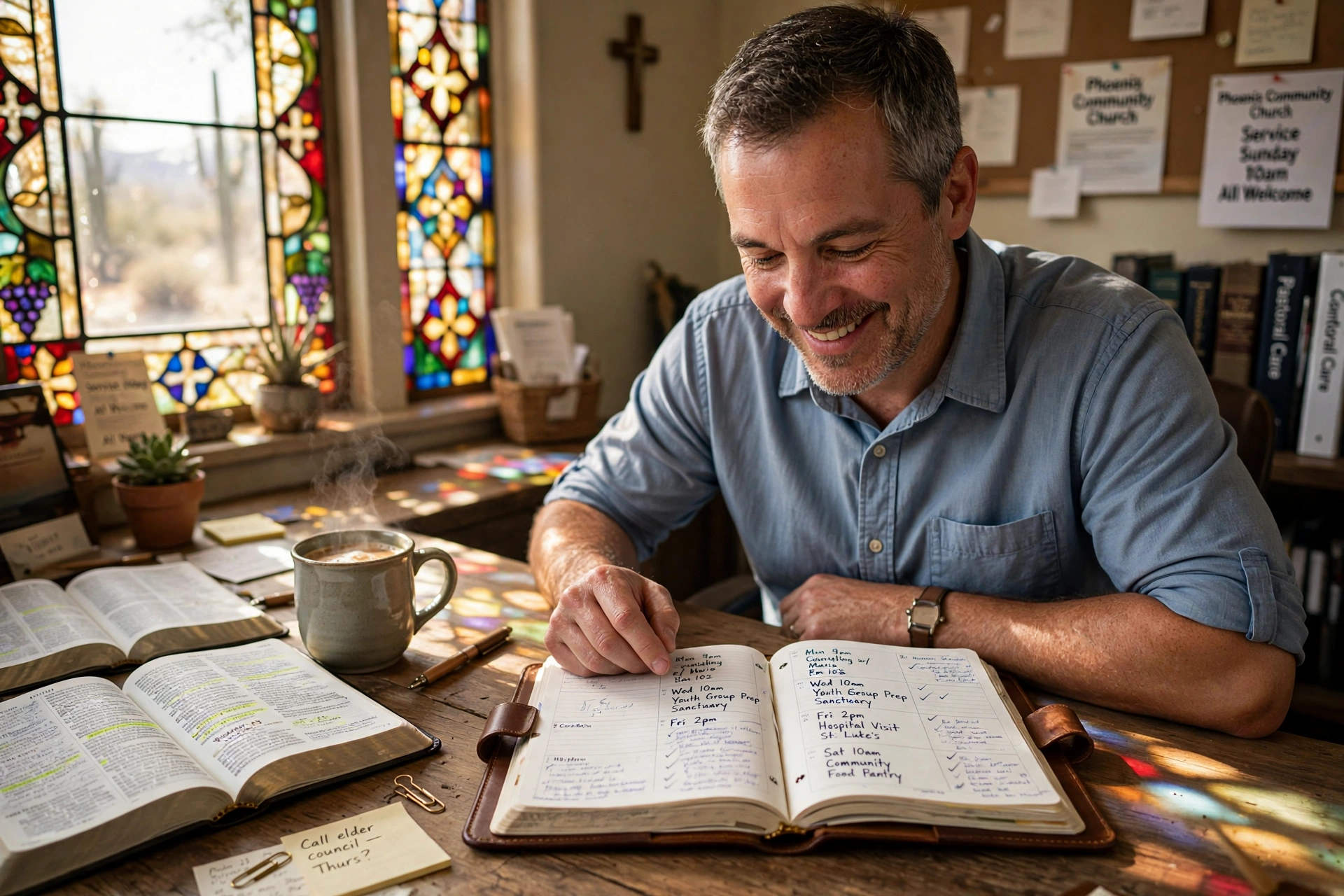
Finding a moment for spiritual guidance in a sprawling metropolis can be challenging. If you need to schedule with a pastor in Phoenix, the most efficient method is to use an online appointment booking system provided by your local church or ministry. This removes the friction of phone tag and email delays, allowing you to secure a time for pastoral care or counseling that fits your specific availability in the Valley of the Sun.
In my experience working with religious leaders across Arizona, the struggle isn't a lack of desire to help; it is a lack of organized systems. Many ministers in Phoenix are overwhelmed by the sheer volume of their congregations, leading to "scheduling burnout." When a pastor spends four hours a week just coordinating times via text, that is four hours taken away from actual ministry and spiritual support. The shift toward automated scheduling isn't about removing the human touch; it is about protecting the pastor's time so that the time they spend with you is fully present and focused.

Why Phoenix Ministries are Adopting Digital Scheduling?
Phoenix is one of the fastest-growing cities in the United States, and its religious landscape is reflecting this expansion. As congregations grow, the traditional method of "stopping by the office" or calling the church secretary has become a bottleneck. Modern congregants, particularly those in the tech-heavy corridors of the East Valley and Scottsdale, expect the same level of efficiency from their church that they get from their healthcare providers or professional services.
According to research by the Barna Group, there is a growing trend toward "digital-first" engagement among believers, where the ability to connect via digital tools directly impacts the perceived accessibility of leadership. In a city where traffic on the I-10 or Loop 101 can turn a fifteen-minute trip into an hour-long ordeal, having a precise, confirmed appointment is essential. When a member of the congregation can see exactly when a pastor is available, it reduces the anxiety and friction associated with seeking help.
Furthermore, the National Association of Evangelicals emphasizes the importance of sustainable ministry practices to prevent clergy burnout. In Phoenix, where the heat of the summer often shifts church activities and schedules, having a dynamic system that can adjust for seasonal changes is fundamental. I've seen the pattern consistently: churches that implement a structured booking process report a significant decrease in "emergency" requests that are actually just scheduling failures. By moving to a digital system, the church transitions from a reactive posture to a proactive one, ensuring that pastoral care is distributed equitably among the flock.
Key Benefits of Modern Booking for Phoenix Congregations
Transitioning to a structured system for those who need to schedule with a pastor in Phoenix provides benefits that extend far beyond simple calendar management. It transforms the administrative health of the church and the emotional health of the leadership.
Increased Accessibility and Inclusion
When scheduling is handled via a public-facing link, it removes the "intimidation factor." Many people, especially those struggling with mental health or crisis situations, find it daunting to make a phone call to a church office. A digital booking page allows them to request support in a private, low-pressure environment. This accessibility is a core component of effective pastoral care, ensuring that the most vulnerable members of the community don't fall through the cracks because they were too anxious to call.
Elimination of Administrative Friction
For the church staff, the "back-and-forth" of scheduling is a massive drain on productivity. Consider the traditional cycle: a member emails a request, the secretary checks the pastor's paper calendar, emails back three options, the member responds that none work, and the cycle repeats. An automated system replaces this entire chain with a single click. This efficiency allows the administrative staff to focus on more impactful ministry tasks rather than acting as human calendars.
Better Boundary Management for Clergy
One of the most significant challenges for ministers in Phoenix is the blur between their professional and personal lives. Without a set system, pastors often find their personal phones ringing at all hours for non-emergency appointments. A scheduling tool allows the pastor to set "office hours," ensuring they have dedicated time for study, family, and rest, which ultimately makes them a more effective leader.
📚
Definition
Boundary Management in ministry is the intentional practice of setting limits on accessibility to prevent burnout and maintain emotional health for the clergy.
Comparison of Scheduling Methods
| Feature | Traditional Manual Method | Generic AI/Basic Forms | Pastor Agenda Approach |
|---|---|---|---|
| Booking Speed | Slow (Days of emails) | Medium (Wait for response) | Instant (Real-time) |
| Error Rate | High (Double bookings) | Medium (Sync issues) | Very Low (Synced) |
| Privacy | Low (Secretary knows all) | Medium (Data risks) | High (Secure/Private) |
| User Experience | Frustrating/Manual | Impersonal | Professional & Welcoming |
💡
Key Takeaway
The primary benefit of digital scheduling is the protection of the pastor's mental health, which directly translates to higher quality care for the congregant.
Real Examples of Scheduling Transformation in the Valley
To understand the impact, we can look at how specific ministries in the Phoenix area have evolved. While I cannot disclose specific church names for privacy reasons, the data from these implementations is telling.
Case Study 1: The Mid-Sized Community Church (North Phoenix)
Before adopting a dedicated scheduling system, this church relied on a shared Google Calendar and a part-time secretary. The pastor was spending roughly 6 hours per week managing appointments. Because the system was manual, there were frequent overlaps, leading to shortened sessions and a feeling of being rushed. After implementing a specialized booking tool, the time spent on administration dropped to under 30 minutes per week. More importantly, the number of pastoral counseling sessions increased by 22% because members found it easier to book a slot without feeling like they were "bothering" the pastor.
Case Study 2: The Multi-Site Ministry (East Valley/Gilbert)
This ministry struggled with coordinating three different pastors across two locations. Members often tried to book with the "wrong" pastor or weren't sure who was available at which campus. By implementing a centralized scheduling hub, they created a clear directory of availability. The result was a 30% reduction in scheduling errors and a noted increase in member satisfaction. The pastors reported a significant decrease in stress, as their calendars were now managed by the users themselves, rather than through a chaotic chain of texts and emails.

How to Get Started with Professional Scheduling
If you are a leader in Phoenix looking to streamline how your members schedule with a pastor, the process should be simple and non-disruptive. The goal is to move from a state of chaos to a state of order without losing the warmth of the ministry.
Step 1: Audit Your Current Availability
Before touching any software, the pastor must define their "Ministry Windows." This means deciding exactly which hours are for pastoral care, which are for administration, and which are strictly for personal time. Without these boundaries, any software will simply allow people to book over your dinner or sleep time.
Step 2: Choose a Specialized Tool
Avoid generic forms that just send an email. You need a tool that syncs in real-time with a calendar. This is where Pastor Agenda excels. Unlike generic tools, Pastor Agenda is designed specifically for the unique needs of the clergy, understanding that a "meeting" in a church context is often a sensitive pastoral session that requires specific privacy and preparation.
Step 3: Integrate and Communicate
Once the tool is set up, the link must be placed where it is most needed: the church website, the weekly newsletter, and even the pastor's email signature. Communicate to the congregation that this is being done for them, to ensure they get the dedicated time they deserve without the hassle of coordinating schedules.
Step 4: Monitor and Adjust
Review the data after 30 days. Are the slots filling up too fast? Is the pastor feeling overwhelmed? Adjust the available windows accordingly. The beauty of a digital system is that it is flexible; you can close off a whole week for a retreat or a conference with one click, and the system handles the rest.
Common Objections and Data-Backed Answers
Many traditional leaders resist the move to digital scheduling, fearing it will "mechanize" the relationship between a shepherd and their sheep. However, the data suggests the opposite.
Objection 1: "It feels too impersonal to use a link."
Most people assume that a link creates a barrier. In practice, it creates a bridge. According to the Lifeway Research on church growth and leadership, modern believers value transparency and efficiency. When a member sees a clear opening for a meeting, they feel welcomed. The "personal touch" happens during the appointment, not during the act of booking it. Removing the administrative hurdle actually makes the eventual face-to-face encounter more meaningful.
Objection 2: "Our congregation is too old for this technology."
This is a common misconception. While some elderly members may still prefer a phone call, the vast majority of the scheduling is often done by the adult children or caregivers of those seniors. Furthermore, a simple, clean interface is often easier for a senior to navigate than a complex phone menu. By offering both options, you serve the traditionalists while catering to the digital natives.
Objection 3: "I don't want my calendar to be public."
There is a difference between a "public calendar" and a "booking page." A booking page does not show your specific appointments; it only shows available slots. You maintain total control over what is visible. If you have a private doctor's appointment, that slot simply appears as "unavailable" to the congregant. This provides more privacy than a secretary who might accidentally mention where the pastor is headed.
Frequently Asked Questions
How do I schedule with a pastor in Phoenix if I am not a member of the church?
Most churches in the Phoenix area welcome non-members who are seeking spiritual guidance or crisis counseling. The best approach is to visit the church's official website and look for a "Contact" or "Pastoral Care" page. Many now use tools like Pastor Agenda to allow anyone to request a time. If a scheduling link is available, you can book a slot directly. If not, a brief email explaining your needs is the best starting point. Be mindful that some pastors may prioritize their own congregation for long-term counseling, but most will offer a first-time consultation or refer you to a local network of ministers.
What should I expect during a first pastoral appointment in Phoenix?
Pastoral care varies depending on the denomination, but generally, the first meeting is a "discovery session." The pastor will likely spend time listening to your concerns, praying with you, and determining how the church can best support you. In the Phoenix context, many pastors are experienced in dealing with the specific stresses of urban life and the unique dynamics of the Southwest. Whether the meeting is in-person at the church office or via a video call, the goal is to establish a rapport of trust and spiritual safety. It is helpful to have a few specific questions or topics written down beforehand to make the most of the scheduled time.
Can I book an emergency session if the online calendar is full?
Online calendars are designed for planned appointments, not crises. If you are experiencing an immediate spiritual or emotional emergency, do not wait for an open slot on a scheduling page. Instead, call the church office directly or use the emergency contact number typically listed on the church's website. Most Phoenix ministries have a protocol for "on-call" pastoral care. If the church is unreachable, local crisis hotlines or hospital chapels are available 24/7. The scheduling software is for the health of the ministry, but the heart of the ministry is always to respond to urgent needs in real-time.
Is my information private when I use a digital booking system?
Yes, provided the church uses professional-grade software. Tools like Pastor Agenda are built with security and privacy in mind, ensuring that your contact details and the fact that you are seeking counseling remain confidential. Unlike generic free forms that may store data in insecure locations, professional ministry software is designed to protect the sanctity of the pastor-parishioner relationship. Always ensure the site uses HTTPS (the lock icon in your browser) before entering personal information, and feel free to ask your pastor about their data privacy policy during your first meeting.
How long does a typical pastoral scheduling session last in the Valley?
Typically, a first-time pastoral appointment lasts between 45 to 60 minutes. This allows enough time for introductions and a primary discussion without overwhelming the pastor's daily schedule. Many Phoenix ministers use a "block scheduling" method where they set aside specific afternoons for counseling. If you find that your needs require more time, your pastor will likely suggest a series of shorter, more frequent appointments. Using a digital system allows you to see exactly how much time is being allocated to your session, preventing the awkwardness of a meeting running over into another person's appointment.
Final Thoughts on How to Schedule with a Pastor in Phoenix
Whether you are a congregant seeking guidance or a minister trying to regain control of your time, the way we schedule with a pastor in Phoenix is evolving. The transition from chaotic, manual coordination to streamlined, digital booking is not a loss of tradition; it is an act of stewardship. By valuing time as a finite resource, church leaders can spend less time staring at a calendar and more time ministering to the people who need them most.
If you are a religious leader tired of the scheduling struggle, it is time to move toward a system that understands the unique rhythms of ministry. PastorAgenda Blog provides the specialized tools necessary to bridge the gap between professional efficiency and spiritual warmth. Stop the endless email chains and start focusing on what truly matters: the people. Visit pastoragenda.com today to discover how easy it is to bring order to your calling.
Recommended Readings
To deepen your understanding of these topics, we recommend reading the following articles:
- Ensuring Absolute Privacy in Church Booking Systems
- Church Appointment Booking
- Online Appointment Booking for Modern Churches
- Automated Reminders and Communication for Congregations
Free Guide: The 7 Church Growth Hacks for 2026
Learn how modern ministries are using automated scheduling and AI pastoral assistants to save 12+ hours of admin work every week.



