📖This article is part of the complete guide to Ensuring Absolute Privacy in Church Booking Systems.
A single leaked appointment calendar can dismantle decades of trust between a pastor and their congregation. In my experience working with church leadership, the most dangerous vulnerability isn't a sophisticated hack, but a simple shared Google Calendar where a member's name is visible next to the words 'Crisis Counseling' or 'Marital Conflict.' When privacy is breached in a ministry context, the damage isn't just technical; it is spiritual and relational.
For a comprehensive overview, explore our guide on church booking system privacy.
What Does it Mean to Protect Congregant Privacy in Digital Booking?
📚
Definition
Protecting congregant privacy refers to the implementation of technical safeguards and administrative policies that ensure a member's identity, the nature of their appointment, and their contact details are shielded from unauthorized access within a scheduling ecosystem.
To protect congregant privacy is to recognize that the digital interface is the first point of contact for a person in distress. When a member seeks pastoral care, they are often at their most vulnerable. If the booking process feels like a public registration form, the barrier to seeking help increases. True privacy in this context means moving beyond basic password protection and implementing a system of 'least privilege access,' where only the designated minister can see the sensitive details of the booking.
In the current landscape of 2026, generic scheduling tools often fail because they treat every appointment as a business transaction. However, in a church ministry, an appointment is a sacred confidence. Protecting this privacy involves encrypting data at rest, ensuring that notification emails don't leak the purpose of the visit to shared family inboxes, and providing options for anonymity. When we built the core architecture at Pastor Agenda, we discovered that the most requested feature wasn't more calendar views, but the ability to completely decouple a user's identity from the booking record for specific types of counseling.

Why Protecting Privacy is Essential for Modern Ministry
Protecting congregant privacy is not merely a matter of IT compliance; it is a foundational requirement for effective pastoral care. When members trust that their seeking of help will remain confidential, they are more likely to reach out before a crisis reaches a breaking point. According to the Barna Group, trust in leadership is a primary driver for congregational engagement and spiritual growth. If a church is perceived as careless with personal data, that trust evaporates instantly.
From a risk management perspective, the stakes are incredibly high. Digital footprints are permanent. A generic tool that stores data in a non-encrypted cloud environment exposes the church to potential data breaches. While many ministries view themselves as too small to be targeted, the reality is that automated bots scan for vulnerabilities across all domains. Furthermore, as noted by Church Law & Tax, failure to protect sensitive information can lead to significant liability, especially when dealing with vulnerable populations or sensitive family disputes.
Moreover, the psychological safety of the congregant is paramount. If a member knows that their appointment is being logged in a system that might be accessible to the church secretary or a volunteer administrator, they may self-censor the reasons for their visit. This creates a gap in the pastoral care process, where the pastor only receives a sanitized version of the problem, delaying the actual healing process. By utilizing a dedicated system like Pastor Agenda, churches can ensure that the 'digital front door' is as private as the pastor's office.
How to Implement Privacy Safeguards in Your Booking Process
Implementing privacy requires a multi-layered approach that combines technical settings with clear boundaries. You cannot simply install a piece of software and assume privacy exists; you must configure it specifically for the sensitivities of ministry.
Step 1: Audit Your Access Levels
The first step is to implement a strict access hierarchy. Not every staff member needs to see who is meeting with the pastor. Ensure that your scheduling software allows for 'private' events. In a professional setup, the administrative assistant might see that the pastor is 'Busy' from 2:00 PM to 3:00 PM, but they should not see the name of the congregant or the reason for the meeting. This prevents accidental disclosures during casual office conversations.
Step 2: Optimize Notification Settings
One of the most common privacy leaks happens via email notifications. Generic tools often send an email saying, "You have a new appointment: Marital Counseling with John Doe." If the congregant shares an email account with a spouse, or if the pastor's email is open on a shared screen, privacy is gone. You should configure your system to send generic reminders, such as "You have an appointment with Pastor Smith at 2:00 PM," without listing the specific nature of the visit.
Step 3: Provide Anonymous Entry Points
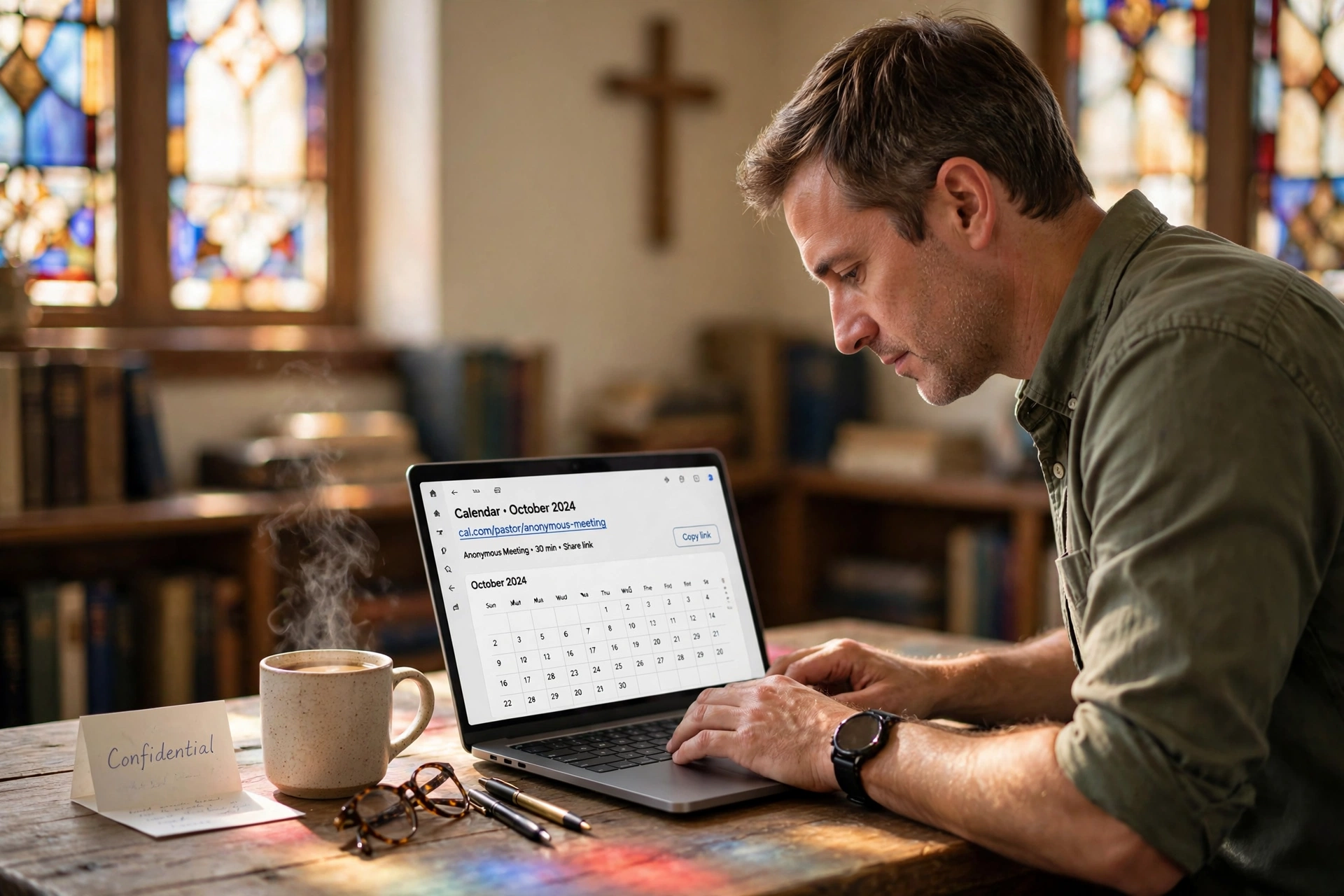
For high-sensitivity issues, the best way to protect privacy is to allow the user to remain anonymous until they are physically in the room. This is where offering anonymous scheduling links becomes a game-changer. By allowing a user to book a slot without providing a full name or email, you remove the digital trail that often intimidates people in crisis.
Step 4: Secure Data Storage and Encryption
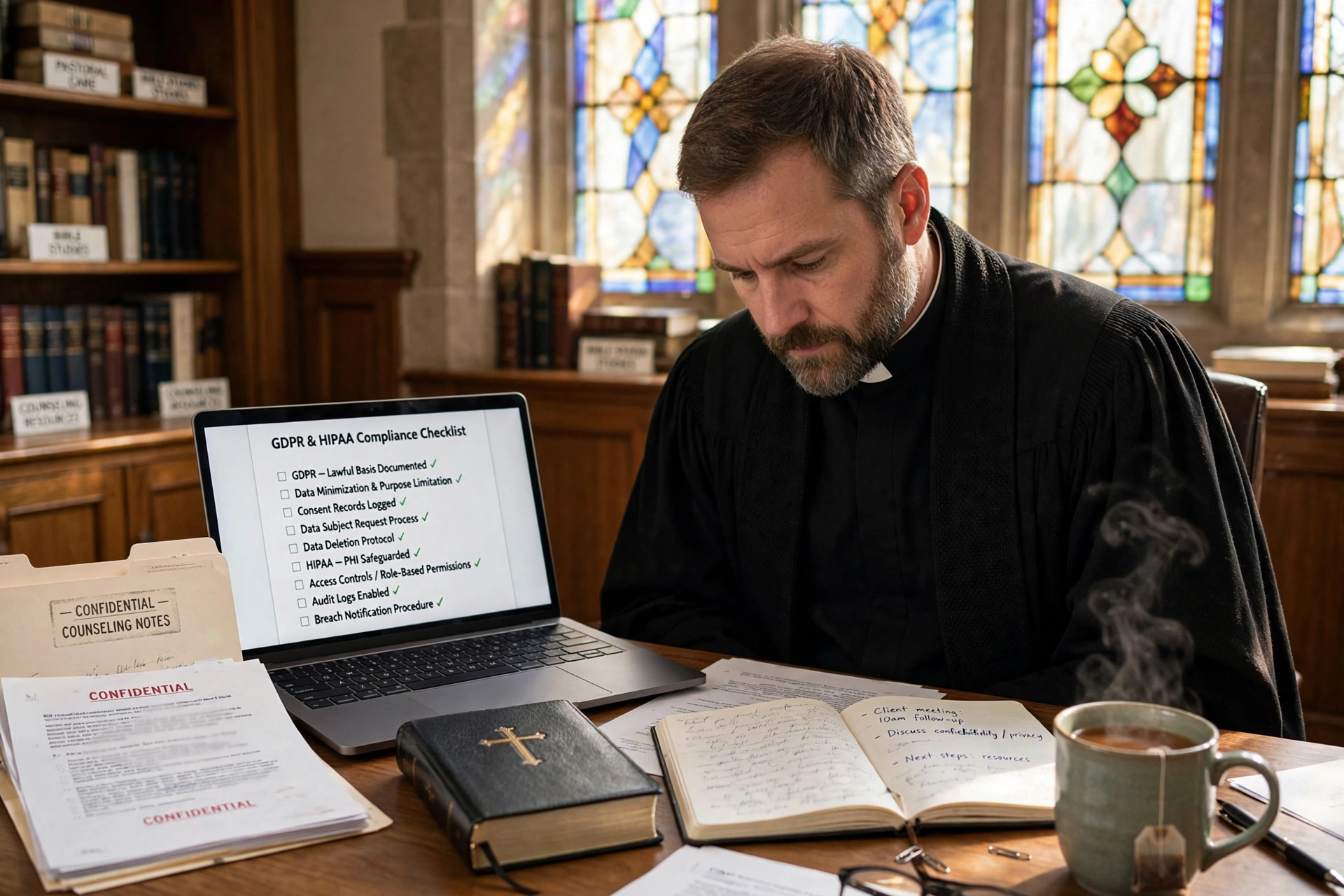
Ensure that your data is encrypted both in transit (SSL/TLS) and at rest. This means that even if a database backup were somehow intercepted, the information would be unreadable. For those concerned with high-level regulatory standards, it is important to investigate GDPR and HIPAA considerations in pastoral counseling data storage to ensure the church isn't inadvertently violating regional laws regarding health or personal data.
💡
Key Takeaway
Privacy is not a single feature but a workflow. It starts with the first click of the booking link and ends with the secure deletion of sensitive session notes.
Comparing Privacy Approaches in Scheduling
When choosing how to manage your church's calendar, you will likely encounter three different levels of privacy. It is essential to understand the risks associated with each.
| Approach | Privacy Level | Risk Profile | Result |
|---|---|---|---|
| Manual/Paper/Open Calendar | Low | High: Physical theft or accidental sightings by others. | Total lack of confidentiality. |
| Generic AI/Free Tools | Medium | Medium: Data mining, third-party tracking, and generic notifications. | Functional but leaks metadata and lacks ministry context. |
| Professional Ministry Systems | High | Low: End-to-end encryption, role-based access, and anonymity options. | Secure, trust-based environment tailored for pastoral care. |

Common Privacy Mistakes to Avoid
In my years of analyzing how churches handle their digital transitions, I have seen the same mistakes repeated. The most dangerous is the "Trust-Based Configuration," where a pastor assumes that because their staff is godly and trustworthy, they don't need technical restrictions. Trust is a spiritual virtue, but security is a technical requirement. Trusting a staff member with the keys to the building is different from giving them unrestricted access to a database of congregant crises.
Another frequent error is the use of "Publicly Viewable" calendars for internal coordination. Some churches create a public link to their calendar so members can see when the pastor is free. However, if the calendar isn't meticulously scrubbed, members can see the patterns of other members' visits. Even if names are removed, the frequency of visits by certain individuals can be deduced, leading to gossip within the congregation.
Furthermore, many ministries neglect the "off-boarding" process. When a volunteer administrator or a part-time secretary leaves the church, their access to the booking platform is often left active. This creates a massive security hole. A professional privacy protocol requires a monthly audit of who has access to the scheduling system and the immediate revocation of credentials for anyone no longer in a trusted role.
Finally, avoid the temptation to use "free" tools that monetize your data. If a tool is free, the product is often the data. While it may seem harmless, these platforms may use the metadata of your congregants' bookings to build advertising profiles. This is an ethical breach of the pastoral relationship. Using a dedicated platform like Pastor Agenda ensures that your data is not being sold to the highest bidder in the advertising market.
Deep Dive: The Psychology of Digital Trust
To truly protect congregant privacy, one must understand the psychology of the person clicking the "Book Now" button. When a person is experiencing a spiritual or emotional crisis, they are hyper-aware of judgment. If the booking interface asks for too much information, such as a home address, phone number, and a detailed description of the problem, before the appointment is even secured, the user may experience "friction-induced anxiety."
This anxiety leads to a high abandonment rate. The person doesn't book the appointment, and the crisis goes unaddressed. Therefore, the most private systems are also the most effective systems. By reducing the required fields to the bare minimum (perhaps just a first name and a time slot), you signal to the congregant that their privacy is your priority. This is not just about data security; it is about creating a digital environment that mirrors the grace and safety of the church itself.
According to the National Association of Evangelicals, the role of the pastor is to provide a safe harbor for the weary. In 2026, that safe harbor must extend to the digital realm. If your booking platform feels like a government form, you are inadvertently building a wall between your ministry and the people who need it most.
Frequently Asked Questions
Is it enough to just use a password on my calendar?
No, a password is only the first layer of security. True privacy requires role-based access control (RBAC), which ensures that different users have different levels of visibility. For example, while a pastor needs to see the full details of a counseling session, a church administrator only needs to see that the time slot is occupied. Relying solely on a password means that anyone with the password has total access to all sensitive congregant data, which is a significant risk in a team environment.
How do I handle the conflict between transparency and privacy?
Transparency is important for church operations, but it should never supersede the confidentiality of pastoral care. The best approach is to use a "Two-Tiered Calendar." The first tier is a public-facing availability calendar that shows only open and closed slots. The second tier is the private administrative calendar where the actual identities of the congregants are stored. This allows the church to be transparent about the pastor's availability without compromising the privacy of the individuals seeking help.
Can I use a free scheduling tool for my ministry?
While free tools are tempting, they often lack the specific privacy controls needed for ministry. Many free platforms are designed for business sales calls, not confidential counseling. They often include tracking cookies, share data with third-party advertisers, and have simplistic notification systems that can leak sensitive information in email headers. For a ministry, the small investment in a professional tool like Pastor Agenda is an insurance policy against the devastating loss of congregational trust.
What should I do if a data breach occurs in my booking system?
First, immediately secure the account by changing all passwords and revoking all active sessions. Second, identify exactly what data was exposed. If sensitive personal information was leaked, you have an ethical and potentially legal obligation to inform the affected congregants. Be transparent, apologize, and explain the steps you are taking to fix the vulnerability. Finally, migrate to a more secure, dedicated system that offers better encryption and audit logs to prevent future occurrences.
Does the law require me to store pastoral counseling records differently?
Depending on your jurisdiction, general pastoral counseling may not fall under the same strict legal mandates as licensed clinical therapy (like HIPAA in the US). However, the ethical standard for the clergy is often higher than the legal minimum. Following the guidelines suggested by Lifeway Research regarding leadership and integrity, it is best practice to treat all counseling data as "highly sensitive." This means using encrypted storage and limiting access to a single point of contact to avoid unnecessary exposure.
Recommended Readings
To deepen your understanding of these topics, we recommend reading the following articles:
- How to Offer Anonymous Scheduling Links for Confidential Meetings
- GDPR and HIPAA Considerations in Pastoral Counseling Data Storage
- Church Appointment Booking
- Online Appointment Booking for Modern Churches
Conclusion
Protecting congregant privacy in the digital age is not a luxury, it is a mandate of the modern ministry. As we move further into 2026, the tools we use to manage our time must reflect the values we preach from the pulpit. When a pastor secures their scheduling process, they are not just managing a calendar; they are guarding the hearts and souls of their people. By removing the friction of intrusive data collection and implementing rigorous access controls, you create a bridge of trust that allows the broken and the hurting to seek help without fear.
Do not let a generic software choice become the point of failure in your pastoral care strategy. Transitioning to a professional, ministry-focused system ensures that your focus remains on the person, not the platform. For a deeper dive into building a secure environment for your church, return to our comprehensive guide on Ensuring Absolute Privacy in Church Booking Systems and start building a sanctuary of trust today.
Ready to secure your ministry's scheduling? Visit pastoragenda.com to see how we prioritize the privacy of your congregation.
Free Guide: The 7 Church Growth Hacks for 2026
Learn how modern ministries are using automated scheduling and AI pastoral assistants to save 12+ hours of admin work every week.