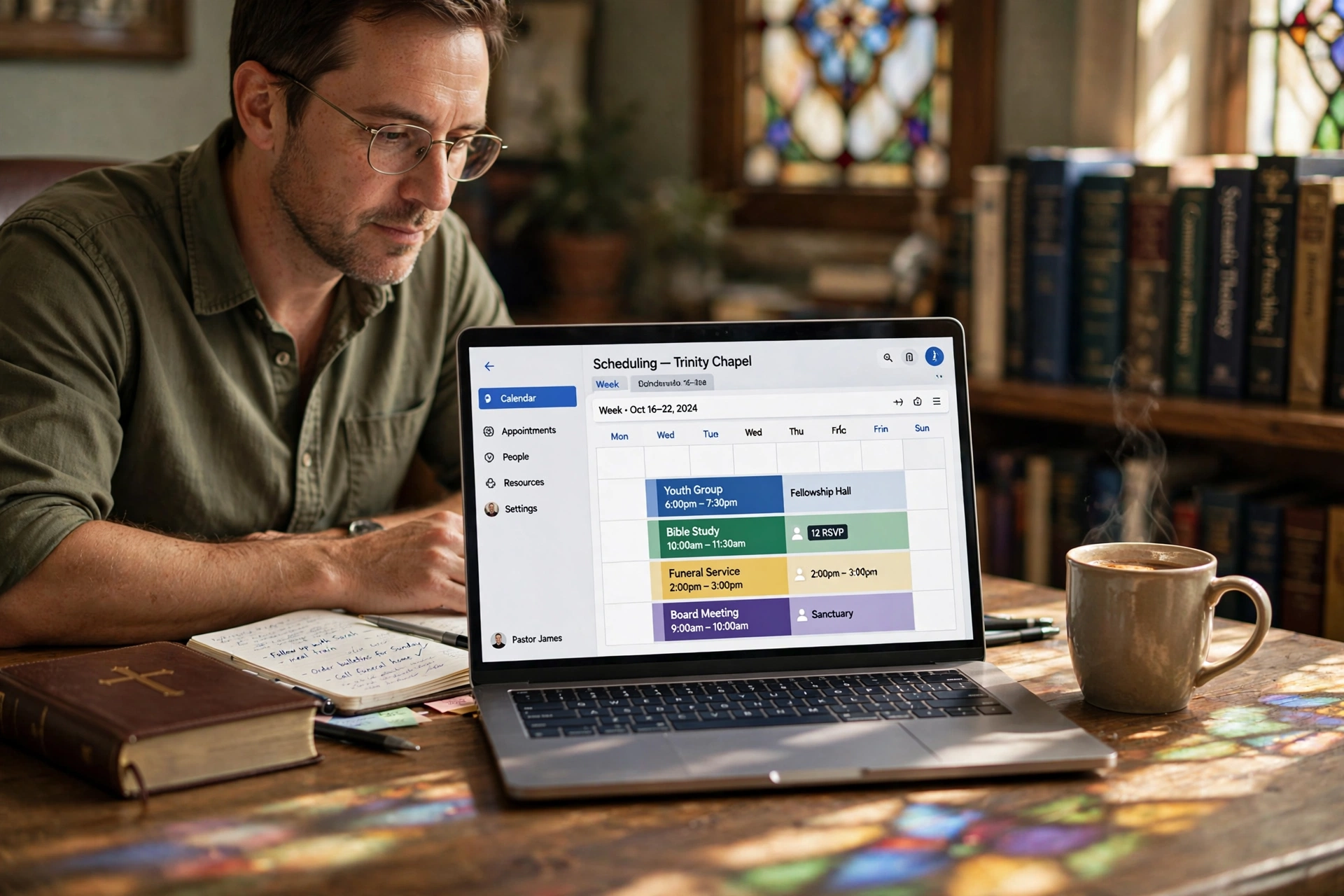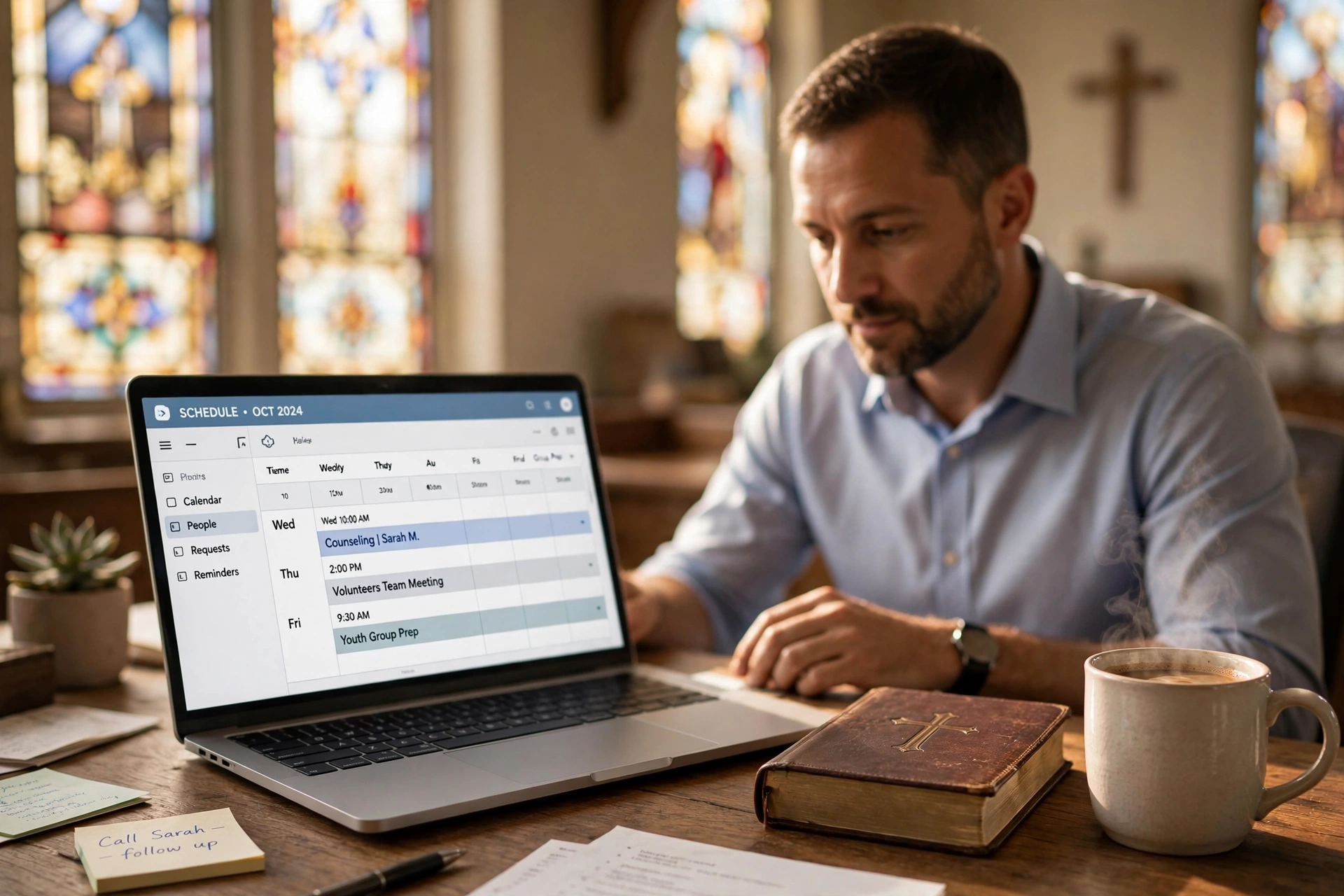

Managing a ministry in a city as diverse and sprawling as Birmingham requires more than just a spiritual calling; it requires operational precision. For leaders in Alabama's largest city, pastoral counseling scheduling in Birmingham is best solved by moving away from manual calendars and adopting automated, secure scheduling software that allows congregants to book time without the friction of back-and-forth phone calls. This shift ensures that urgent pastoral care is prioritized while the administrative burden on the clergy is minimized.
In my experience working with church leadership across the Southeast, I have seen a recurring pattern: pastors in Birmingham often over-commit their schedules because they lack a visible boundary between their personal time and their ministry availability. When a minister relies on a secretary or a handwritten ledger, the 'invisible' time—travel between neighborhoods like Mountain Brook and Hoover, or preparation for a sermon—is often ignored. This leads to burnout and a decrease in the quality of care provided to the congregation.
Why Birmingham Ministries Are Adopting Digital Scheduling Systems?
Birmingham's unique demographic landscape, combining urban density with sprawling suburban communities, creates a logistical challenge for any church. As we move through 2026, the expectation for immediate, digital access to services has permeated the religious sector. Congregants no longer want to wait for a Tuesday office hour to request a Friday afternoon counseling session; they expect a real-time view of availability.
According to research from the Barna Group, there is a significant correlation between the accessibility of leadership and the overall health of the congregation. When spiritual guidance is difficult to access due to administrative bottlenecks, members often seek help from secular sources or, worse, suffer in silence. In Birmingham, where the intersection of faith and mental health is a high priority, removing the friction from the booking process is a matter of ministerial effectiveness.
Furthermore, the National Association of Evangelicals emphasizes the importance of maintaining boundaries for the longevity of the minister's career. Automated scheduling allows a pastor to set 'hard' blocks for study, family, and self-care, which prevents the common trap of the '24/7 availability' myth. By implementing a structured system, Birmingham churches are seeing a reduction in clerical burnout and an increase in the punctuality of their attendees.
📚
Definition
Asynchronous Scheduling is the process where a client chooses a time slot from a pre-defined set of available windows without requiring a live conversation with the provider.
What Are the Key Benefits of Modernizing Pastoral Care Booking?
Moving to a professional system changes the dynamic of the church office from a reactive hub to a proactive center of care. The primary benefit is the reclamation of time. When a pastor is not spending three hours a week playing "calendar tag" via email, those hours are redirected toward deeper study and more intentional presence with the flock.
Improved Accessibility for the Congregation
In a city where traffic on I-65 or US-280 can derail an entire afternoon, providing a digital interface for scheduling allows congregants to plan their visits with precision. A member living in Vestavia Hills can see exactly when a pastor is available in the downtown office and book a slot that accounts for their travel time. This transparency reduces the anxiety often associated with seeking counseling, as the process becomes a simple, private transaction rather than a public request in the church lobby.
Enhanced Privacy and Confidentiality
Confidentiality is the cornerstone of pastoral care. Traditional scheduling—where a secretary handles all calls—creates an unnecessary layer of exposure. With an automated system, the interaction remains between the pastor and the congregant. This is particularly essential for sensitive issues such as marital strife or addiction recovery, where the individual may not want the church staff to be aware of the frequency or timing of their sessions.
Reduction in "No-Shows" and Missed Appointments
One of the most frustrating aspects of ministry is the empty chair. Automated reminders via SMS or email significantly reduce the rate of missed appointments. When a system automatically pings a congregant 24 hours before their scheduled time, the likelihood of a forgetful skip drops precipitously. This ensures the pastor's time is used efficiently and that those in urgent need of care are not blocked by ghost appointments.
💡
Key Takeaway
The transition to automated scheduling isn't about replacing the human touch; it's about removing the administrative noise so the human touch can be more focused and effective.
| Feature | Manual Ledger/Secretary | Generic AI Bot | Pastor Agenda Approach |
|---|---|---|---|
| Privacy | Low (Staff sees all) | Moderate (Data risks) | High (Encrypted & Direct) |
| Setup Time | None (Old way) | High (Complex prompts) | Low (Ministry-focused) |
| Boundaries | Poor (Always available) | Rigid (No nuance) | Dynamic (Custom blocks) |
| Reminders | Manual/Forgettable | Generic/Cold | Pastoral/Warm |
Real-World Examples of Scheduling Optimization in Birmingham
To understand the impact, we look at two distinct Birmingham-based ministries that shifted their approach to scheduling in recent years.
Case Study 1: The Multi-Campus Suburban Church
This organization operated across three campuses in the Birmingham metro area. Their lead pastor was spending approximately 8 hours per week managing his calendar via a shared Google Doc and a secretary. This resulted in double-bookings and frequent overlaps. After implementing a dedicated scheduling tool, they consolidated all requests into one portal. The result was a 35% increase in counseling throughput and a total elimination of double-booking errors. The pastor reported a significant decrease in stress, as his "Sabbath" blocks were now digitally protected and unchangeable by staff.
Case Study 2: The Urban Community Outreach Center
A smaller, downtown Birmingham ministry focused on crisis intervention struggled with an erratic schedule. They had a high volume of walk-ins and erratic phone calls, leading to a chaotic office environment. By implementing a structured booking system and encouraging their community to use a link for non-emergency counseling, they saw a 50% reduction in lobby congestion. This allowed the staff to focus on actual crises while ensuring that regular counseling was handled with dignity and order. They noted that the professionalism of the scheduling process actually increased the trust the community had in their services.
How to Get Started with Professional Pastoral Scheduling?
Transitioning from a manual system to a digital one can feel overwhelming for a leader who is already stretched thin. However, the process is straightforward when approached as a ministry upgrade rather than a technical chore.
Step 1: Define Your Availability Windows
Before touching any software, you must decide when you are truly available. Do not simply open your calendar. Create specific "Counseling Blocks"—for example, Tuesdays from 9 AM to 12 PM and Thursdays from 2 PM to 5 PM. This prevents the "death by a thousand cuts" where small appointments scatter throughout your week, destroying your ability to focus on sermon preparation.
Step 2: Choose a Ministry-Centric Tool
Avoid generic corporate tools that feel cold or overly commercial. This is where Pastor Agenda excels. Unlike generic platforms, Pastor Agenda is built specifically for the rhythms of ministry. It understands that a pastor's day isn't just a series of 30-minute meetings, but a mix of spiritual labor, administrative duties, and emergency response. Using pastoragenda.com allows you to set up a portal that feels welcoming to your congregation while maintaining strict professional boundaries.
Step 3: Communicate the Change to the Congregation
Don't just launch the link; explain the why. Tell your members: "To ensure I can give you my undivided attention and a dedicated time slot, we are moving to a new scheduling system." When you frame the change as a way to provide better care, the congregation will embrace the technology rather than resent it.
Step 4: Iterate and Adjust
After one month, review your data. Are you seeing too many appointments on Mondays? Are your Thursday afternoons consistently empty? Adjust your availability windows based on the actual needs of your Birmingham community. The beauty of digital scheduling is the ability to pivot in real-time.
Common Objections and Data-Backed Answers
Many pastors resist the move to digital scheduling due to a few common misconceptions. Let's address these with a contrative, data-driven perspective.
Objection 1: "It feels too corporate and impersonal for a church."
Most people assume that a booking link removes the warmth of the ministry. However, the data suggests the opposite. When a congregant struggles to get a hold of their pastor, they feel neglected. When they can see a clear opening and book it instantly, they feel cared for. Professionalism is not the opposite of pastoral care; it is the framework that allows pastoral care to happen without chaos.
Objection 2: "I don't want my calendar to be public."
There is a common fear that a scheduling link reveals too much. In reality, professional tools like Pastor Agenda do not show your events; they only show availability. Your congregant doesn't see that you have a "Doctor's Appointment" or a "Board Meeting"; they only see a blank slot. This provides more privacy than a secretary who might accidentally mention another appointment while trying to find a time.
Objection 3: "Our members aren't tech-savvy enough."
This is a pervasive myth. According to recent digital adoption trends in the US, even senior populations have shifted heavily toward mobile interfaces for essential services. If they can use a smartphone to text their grandchildren, they can use a scheduling link. For the 5% who truly cannot, the pastor still maintains the ability to manually enter them into the system, ensuring no one is left behind while the 95% are handled efficiently.
Frequently Asked Questions
How does automated scheduling improve pastoral care in Birmingham?
Automated scheduling removes the administrative friction that often prevents people from seeking help. In a fast-paced city like Birmingham, the ability to book a session instantly means a person in crisis doesn't have to wait for a return phone call that may take days. By organizing the calendar, the pastor is less stressed and more mentally present during the session, which directly improves the quality of the counseling. It transforms the process from a logistical struggle into a streamlined path toward spiritual support.
Is it possible to keep certain times private while using a scheduling link?
Yes, the core functionality of professional scheduling software is the ability to create "blocked time." You can mark hours as unavailable for reasons such as sermon preparation, family time, or administrative work. These blocks are completely invisible to the end user. They only see the windows you have explicitly opened for counseling. This allows a minister to maintain a healthy work-life balance while still appearing accessible to the congregation, preventing the burnout common in high-pressure city ministries.
What is the best way to handle emergency pastoral needs in a scheduled system?
A scheduling system should never be a barrier to emergency care. The best practice is to provide a "Fast Track" or emergency contact method—such as a specific phone number or a designated "Crisis' tag in the booking form—alongside the standard link. In the portal, you can clearly state: "For non-urgent counseling, please use the calendar below. For immediate crises, please call the emergency line." This ensures that the schedule remains orderly for routine care while remaining flexible for urgent spiritual needs.
How do I prevent "calendar creep" where counseling takes over my whole day?
Calendar creep happens when you leave your availability too open. The solution is to use "buffer times." Professional tools allow you to automatically add 15 to 30 minutes between appointments. In Birmingham, this is essential to account for travel or the fact that counseling sessions often run over. By enforcing these buffers, you ensure that one long session doesn't cascade into a day of delays, keeping your ministry professional and your stress levels manageable.
Can I integrate my pastoral scheduling with other church management software?
Most modern scheduling platforms are designed to sync with the calendars you already use, such as Google Calendar or Outlook. This means that when a member books a slot via Pastor Agenda, it automatically appears on your phone and laptop, and the slot is removed from the public view instantly. This synchronization is what prevents the dreaded double-booking and ensures that your administrative team and your personal devices are always in alignment, regardless of where you are in the city.
Final Thoughts on Pastoral Counseling Scheduling in Birmingham
Improving pastoral counseling scheduling in Birmingham is not about replacing the Holy Spirit with an algorithm; it is about using the best available tools to steward the time God has given you. When you remove the friction of booking, you remove the barriers between your congregants and the care they desperately need. By implementing a system that protects your boundaries and respects your time, you ensure that you can serve your community for decades, not just a few years before burning out.
If you are ready to move away from the chaos of manual calendars and provide your congregation with a professional, private, and efficient way to access your guidance, it is time to upgrade. Experience the difference that a ministry-first approach makes. Visit pastoragenda.com today and start reclaiming your time for what truly matters: the ministry of the Word and the care of souls.
Recommended Readings
To deepen your understanding of these topics, we recommend reading the following articles:
- Ensuring Absolute Privacy in Church Booking Systems
- Church appointment booking
- Online Appointment Booking for Modern Churches
- Pastor scheduling
Free Guide: The 7 Church Growth Hacks for 2026
Learn how modern ministries are using automated scheduling and AI pastoral assistants to save 12+ hours of admin work every week.