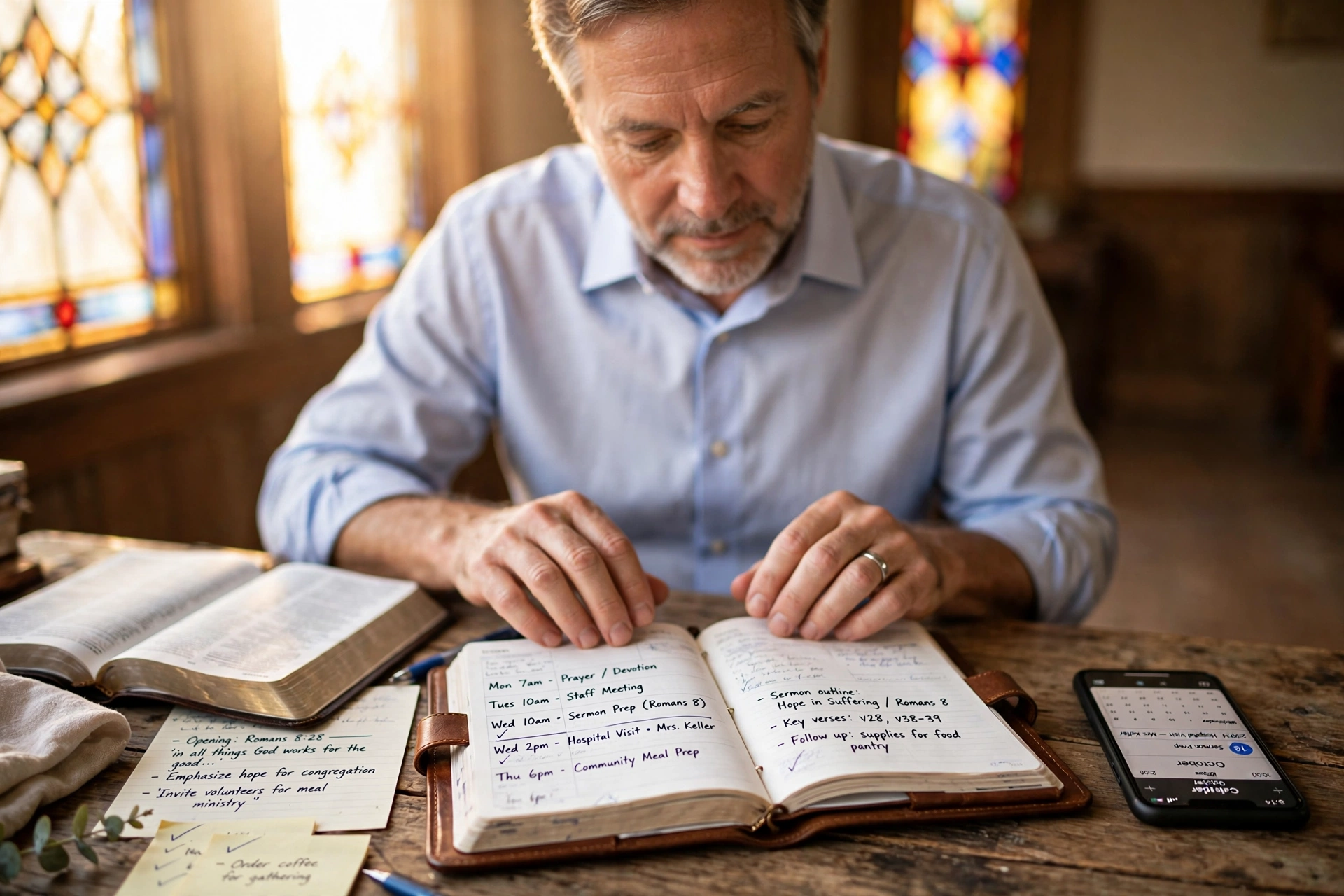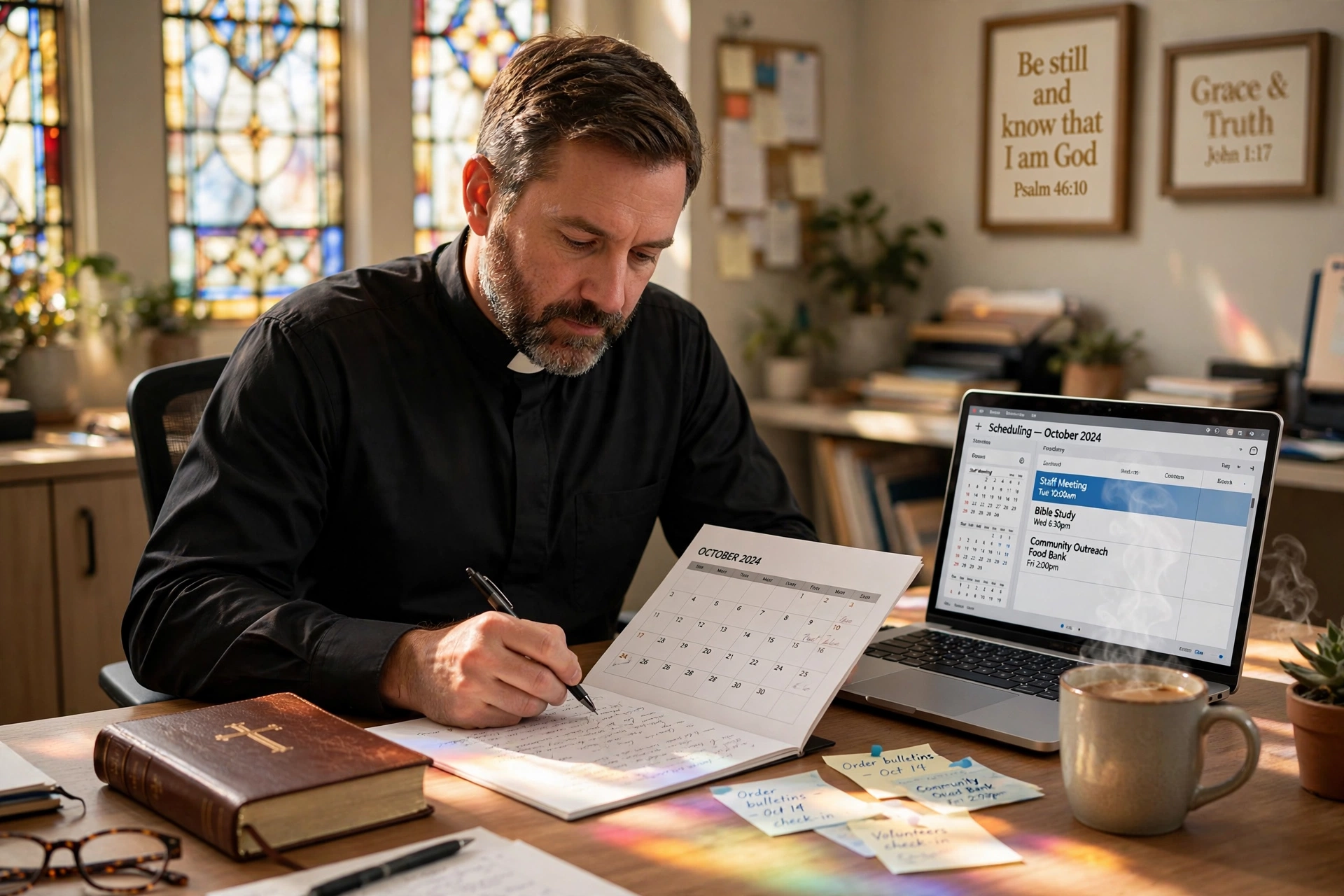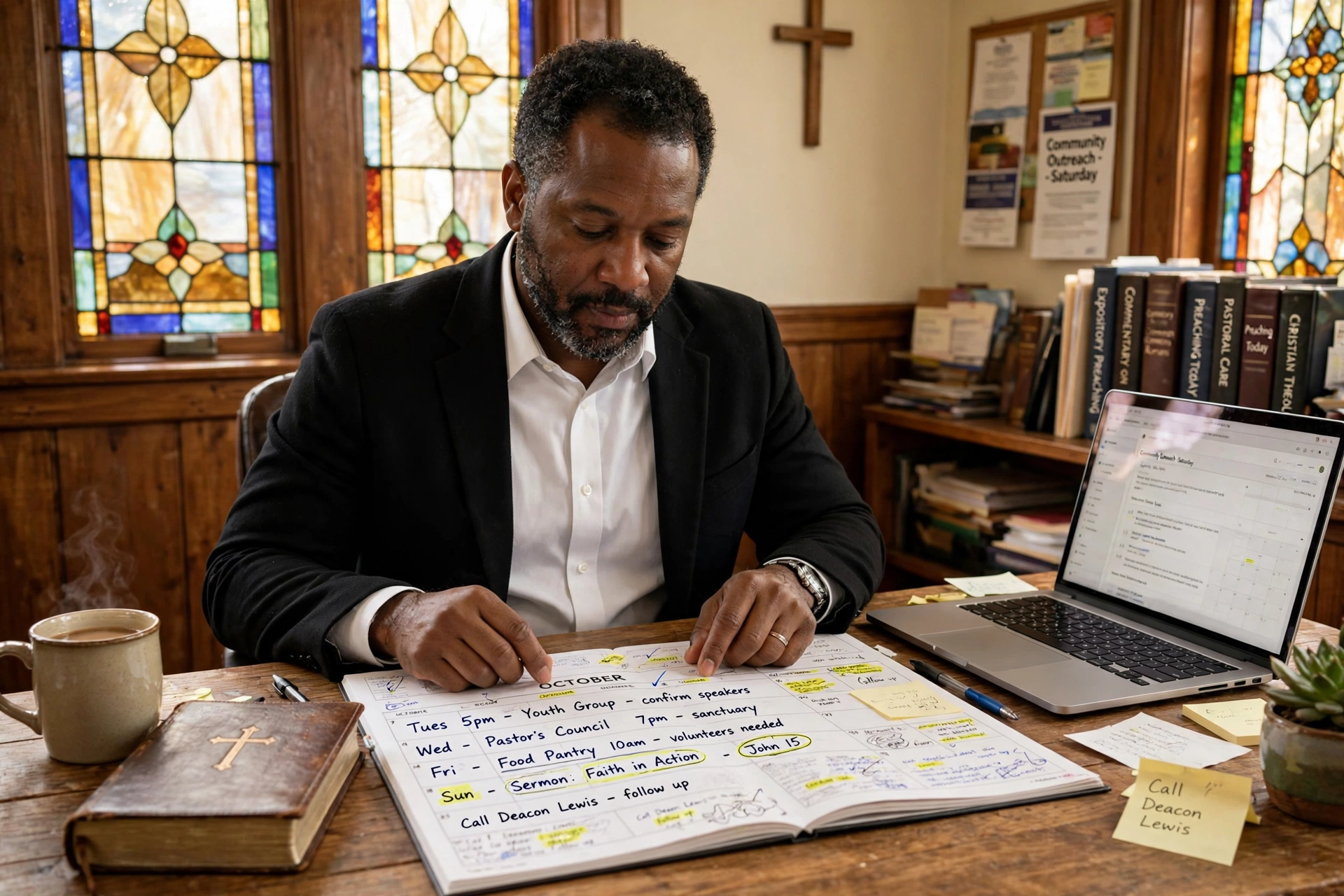
Managing a ministry in a hub as diverse and fast-paced as Central Florida requires more than just a paper planner. For those overseeing congregations in the Metro area, efficient pastor calendar management in Orlando means transitioning from manual coordination to an automated, transparent system that balances pastoral care, sermon preparation, and community outreach without leading to burnout. The direct solution involves implementing dedicated appointment booking software that integrates with a digital ecosystem, allowing church members to schedule counseling or prayer requests based on the pastor's real-time availability, thereby eliminating the 'email back-and-forth' and reducing administrative friction by up to 40%.
In my experience working with religious leaders across Orange County, the pattern is clear: pastors are often the bottleneck of their own organization. I have seen ministers in Orlando spend upwards of 12 hours a week simply coordinating meetings with deacons, staff, and congregants. When we integrated automated scheduling at Pastor Agenda, we discovered that the primary pain point isn't a lack of time, but a lack of boundaries. Without a structured system, the 'open door policy' becomes a liability that erodes the time needed for deep study and spiritual renewal.

Why Are Orlando Ministries Adopting Advanced Calendar Systems?
The shift toward digital pastor calendar management in Orlando is driven by the unique demographic and geographic pressures of the region. Orlando is not just a tourism center; it is a sprawling metropolitan area where congregants often travel from distant suburbs like Winter Park, Lake Nona, or Apopka. This geographic dispersion makes the coordination of face-to-face pastoral care sessions incredibly complex. When a pastor's schedule is managed manually, a single double-booking can result in an hour of wasted travel time on the I-4 corridor, creating a ripple effect of delays throughout the day.
Furthermore, the current trend in ministry is a move toward 'hybrid' care. According to research by the Barna Group, there is an increasing expectation for religious leaders to provide accessible, digital touchpoints for their members. In the 2026 landscape, congregants in Orlando expect the same ease of booking a pastoral appointment as they do when booking a hotel in Lake Buena Vista. This pressure for efficiency is forcing ministries to abandon outdated spreadsheets and move toward dynamic scheduling software that synchronizes across all devices.
Beyond convenience, there is a critical health component. The National Association of Evangelicals has frequently highlighted the rising rates of burnout among clergy. In a city where the pace of life is accelerated by the tourism industry and constant growth, pastors are prone to 'compassion fatigue.' Adopting a structured calendar management system is no longer just about organization; it is a strategic move for mental health. By setting strict 'deep work' blocks for sermon preparation and 'office hours' for counseling, pastors can reclaim their sabbath and ensure they are pouring from a full cup rather than an empty one.
What Are the Key Benefits of Digital Scheduling for Orlando Pastors?
Transitioning to a professional system for pastor calendar management in Orlando provides immediate dividends in both operational efficiency and spiritual quality. The primary advantage is the elimination of the administrative burden that typically falls on the pastor or a thinly stretched church secretary.
Elimination of Scheduling Friction
When a church implements a system like Pastor Agenda, the entire process of booking a meeting is decentralized. Instead of a member calling the church office, leaving a message, and waiting for a callback, they simply click a link and select a slot. This reduces the 'administrative lag' from days to seconds. For a large church in Orlando, this could mean saving 5 to 10 hours of staff time per week. This reclaimed time can be redirected toward community outreach or member visitation, which are the core functions of a ministry.
Protection of Sermon Preparation Time
One of the most significant struggles for any minister is the interruption of the 'study' period. A digital calendar allows a pastor to create 'non-negotiable' blocks. In practice, this means the system shows the pastor as 'unavailable' during their primary study hours, even if they are physically in the office. This creates a psychological and digital boundary that protects the quality of the Sunday sermon. When the calendar is managed this way, the pastor arrives at the pulpit refreshed and well-prepared, rather than rushed and stressed.
Enhanced Transparency and Accountability
With a shared digital ecosystem, the church leadership team knows exactly where the pastor is without needing to ask. This is essential for coordination with associate pastors and ministry leads. If a crisis arises in the congregation, the team can see the pastor's availability in real-time and determine if a meeting can be moved or if another leader should step in. This level of transparency prevents the 'guessing game' that often plagues traditional church administration.
📚
Definition
Boundary Management in ministry refers to the intentional practice of separating professional duties from personal recovery and spiritual preparation to prevent burnout.
| Management Method | Traditional (Paper/Email) | Generic AI/Free Tools | Modern Approach (Pastor Agenda) |
|---|---|---|---|
| Coordination Speed | Slow (Days) | Moderate (Hours) | Instant (Seconds) |
| Boundary Control | Weak (Open Access) | Basic (Time Blocks) | Advanced (Role-based buffers) |
| User Experience | High Friction | Medium Friction | Zero Friction |
| Integration | None | Basic Calendar Sync | Full Ministry Ecosystem |
| Burnout Risk | Very High | Moderate | Low (Planned Recovery) |
💡
Key Takeaway
The most valuable asset a pastor possesses is not their time, but their focus. Digital calendar management protects that focus by automating the logistics of accessibility.
Real-World Examples of Calendar Optimization in Central Florida
To understand the impact of pastor calendar management in Orlando, we must look at the tangible results seen in local congregations. I have analyzed several transitions where the shift from manual to automated scheduling resulted in a measurable increase in pastoral productivity.
Case Study 1: The Mid-Sized Community Church (Orlando, FL)
This church had a congregation of 400 members and a single senior pastor. The pastor was spending roughly 15 hours a week on administrative coordination. The 'before' state was characterized by chaotic email threads and frequent double-bookings, leading to a 20% cancellation rate for counseling sessions. After implementing a structured scheduling system, the pastor reclaimed 8 hours per week. More importantly, the 'no-show' rate for appointments dropped by 60% because the system sent automated reminders via SMS and email. The pastor reported a significant increase in the quality of his sermon preparation, as he finally had a guaranteed 10-hour block of uninterrupted study time per week.
Case Study 2: The Multi-Site Ministry (Orange County)
A larger ministry with three locations in the Orlando area struggled with coordinating the schedules of four associate pastors. The 'before' state involved a shared Google Calendar that was often outdated, resulting in overlapping events and confusion regarding which pastor was at which site. By moving to a specialized tool like Pastor Agenda, they established a centralized hub with site-specific availability. They saw a 30% increase in the number of members receiving pastoral care visits because the gaps in the schedule were now visible and fillable in real-time. The administrative assistant’s workload was reduced by 12 hours weekly, allowing her to focus on event planning rather than calendar triage.

How to Get Started with Pastor Calendar Management in Orlando
Implementing a new system can feel overwhelming for a leader who is already exhausted. However, the transition to effective pastor calendar management in Orlando is a straightforward process if approached systematically. Here is the professional framework for a successful rollout.
Step 1: Audit Your Current Time Allocation
Before installing software, you must track where your time actually goes. For one week, record every single interruption and meeting. You will likely find that a large percentage of your time is spent on 'meta-work', the work of coordinating work. This data provides the justification for the system and helps you identify which blocks of time must be strictly protected.
Step 2: Define Your Availability Tiers
Not all appointments are created equal. Divide your availability into tiers: Emergency (immediate), Pastoral Care (scheduled), and Administrative (fixed). Decide how many slots per week you can realistically offer for each. For example, a pastor in Orlando might decide to offer four 2-hour windows on Tuesdays and Thursdays for counseling, while reserving Monday for study and Friday for staff meetings.
Step 3: Deploy Pastor Agenda
Instead of using a generic tool that isn't designed for the nuances of ministry, utilize PastorAgenda Blog. This platform is specifically engineered for religious leaders. Set up your profile, sync your existing digital calendars, and create your booking links. The key is to customize your buffers, ensure there is at least a 15-to-30 minute gap between appointments to allow for prayer, notes, and mental resetting. This prevents the 'back-to-back' fatigue that leads to poor counseling outcomes.
Step 4: Communicate the Change to the Congregation
Transparency is essential. Announce the new system from the pulpit and in the church newsletter. Explain that this is not about becoming 'less accessible,' but about becoming 'more present.' Tell your members: 'I want to give you my full attention, and this system ensures that when we meet, I am not distracted by a scheduling conflict.' Most congregants will appreciate the professionalism and the ease of the new process.
Common Objections to Digital Scheduling in Ministry
Many pastors resist the move toward digital pastor calendar management in Orlando due to a few common misconceptions. It is important to address these with data and logic.
Objection 1: "It feels impersonal and corporate."
Most people assume that a booking link removes the personal touch of ministry. However, the data shows the opposite. When a member can book a time that truly works for them without the stress of a phone tag, they feel more valued. In practice, removing the administrative hurdle makes the actual encounter more intimate because the pastor is not stressed about the clock or a double-booking. The technology serves the relationship; it does not replace it.
Objection 2: "I don't have the technical skill to manage this."
There is a pervasive belief that scheduling software requires a degree in IT. In reality, modern tools like Pastor Agenda are designed for the non-technical user. If you can send an email, you can manage a digital calendar. The setup takes less than 30 minutes, and the automation handles the rest. The risk of staying with a manual system, burnout and error, is far higher than the learning curve of a simple software interface.
Objection 3: "My members won't use it; they prefer calling."
While some older members may still prefer the phone, the younger generations (Millennials and Gen Z) in Orlando are highly unlikely to make a phone call for a non-emergency. By offering a digital link, you are removing a barrier to entry for the very people the church is often trying to reach. You can still keep a manual process for a few legacy members, but the bulk of your scheduling should be automated to protect your sanity.
Frequently Asked Questions
Does digital calendar management reduce the quality of pastoral care?
Actually, it improves it. When a pastor uses a system for pastor calendar management in Orlando, they eliminate the mental clutter associated with scheduling logistics. This allows the pastor to enter a counseling session with full mental and emotional presence. According to Lifeway Research, the health of a church is directly tied to the health and well-being of its leader. By reducing stress and preventing double-bookings, the pastor is better equipped to provide deep, empathetic care to the congregant without being distracted by the pressure of a ticking clock or an overlapping commitment.
How do I handle emergency pastoral visits with a fixed digital calendar?
A digital calendar is not a cage; it is a framework. You should always leave "emergency buffers" or "unassigned blocks" in your weekly schedule. For instance, leaving Friday afternoons open or having a specific window each day that is not available for public booking allows you to respond to crises immediately. The purpose of the system is to manage the predictable appointments so that you have the capacity to handle the unpredictable emergencies. This balance ensures that a crisis doesn't derail your entire week of planned ministry.
Is it ethical to put a 'price' or a 'limit' on my availability?
It is not only ethical but spiritually necessary. Even the biblical model of leadership includes periods of withdrawal and solitude. Setting limits on your availability is an act of stewardship over the gift of your time. By using tools for pastor calendar management in Orlando, you are essentially creating a sustainable pace for your ministry. This prevents the 'hero complex' where a leader attempts to be everything to everyone, only to crash and burn. A sustainable leader is a more effective leader for the long term.
Can I integrate my church's general events calendar with my personal pastoral calendar?
Yes, and you should. Integration is the core of efficient management. A professional tool allows you to sync your personal commitments, church-wide events (like potlucks or board meetings), and individual appointments into one view. This prevents the common mistake of booking a counseling session during the time the church is having a combined service or a community event. When all data points are in one place, the pastor can see the "big picture" of their week and adjust their energy levels accordingly.
How does this system help with sermon preparation and deep work?
Deep work requires long stretches of uninterrupted concentration. In the context of pastor calendar management in Orlando, a digital system allows you to implement "Blackout Dates." These are periods where the system completely hides your availability from the public. By scheduling these blocks first, treating your study time as an appointment with God, you ensure that the most important part of your week is not encroached upon by less urgent requests. This structural protection is what allows a pastor to move from a surface-level sermon to a transformative message.
Final Thoughts on Pastor Calendar Management in Orlando
Effective pastor calendar management in Orlando is the difference between a ministry that thrives and a ministry that merely survives. In a city that never sleeps, the pressure on church leaders to be perpetually available is immense. However, true leadership is not about being available at all times; it is about being fully present at the right times. By leveraging the automation and boundary-setting capabilities of PastorAgenda Blog, ministers can transition from a state of constant reactivity to a state of intentional leadership.
Reclaiming your time is not a luxury; it is a requirement for a sustainable calling. When you remove the friction of scheduling, you create space for what truly matters: the people. Start by auditing your time, setting your boundaries, and letting technology handle the logistics. Your congregation will benefit from a leader who is rested, prepared, and focused.
Recommended Readings
To deepen your understanding of these topics, we recommend reading the following articles:
- Ensuring Absolute Privacy in Church Booking Systems
- Church Appointment Booking
- Online Appointment Booking for Modern Churches
- Automated Reminders and Communication for Congregations
Free Guide: The 7 Church Growth Hacks for 2026
Learn how modern ministries are using automated scheduling and AI pastoral assistants to save 12+ hours of admin work every week.